Most Kenya safari advice starts and ends with one prescription: book the Maasai Mara between July and October. That advice isn't wrong, but it's incomplete enough to make an expensive trip less comfortable, less flexible, and often more crowded than it needs to be. The Mara delivers spectacular predator viewing and the possibility of river crossings, yet Kenya's strongest itinerary usually combines ecosystems, seasons, and accommodation styles instead of chasing one headline event.
Kenya remains a major international wildlife destination and a substantial national industry. The country recorded about 2.4 million international arrivals in 2024, up from roughly 2.0 million in 2023, while total visitors including domestic travelers reached 7.5 million. Tourism earnings reached KSh 452.2 billion in 2024, and broader tourism activity was estimated at about KSh 1.2 trillion in GDP contribution in 2025, supporting roughly 1.7 million jobs. These figures, reported in Kenya's tourism market overview, explain why the best camps and flights become difficult to secure at short notice.
Why the Default Kenya Safari Plan Is Worth Rethinking
The standard Mara-and-migration itinerary works brilliantly for travelers who want one concentrated wildlife experience and can accept peak-season prices. It's a poor default for everyone else. A first-time visitor who spends the entire trip in the Mara may see exceptional cats and large herbivore herds, but they'll miss Kenya's northern species, walking experiences, elephant habitats, and quieter conservancies.
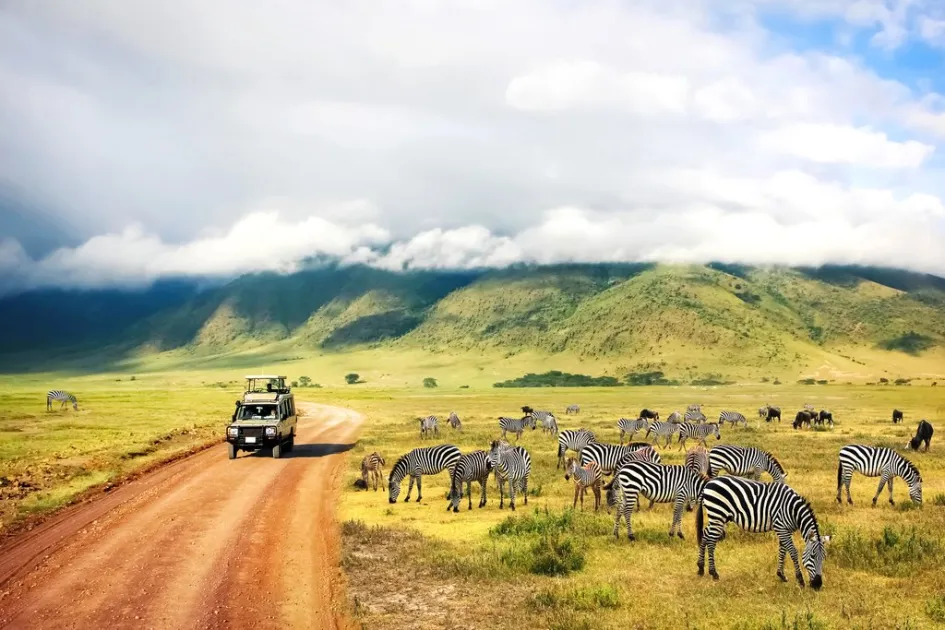
The June-to-October dry season is the core wildlife window in the Maasai Mara, with the most sought-after river crossings generally concentrated from July through October and often peaking around August and September. Dry conditions reduce forage and surface water, which concentrates animals into more predictable areas and helps guides find predators. The seasonal pattern is documented in this Maasai Mara migration guide, but the practical lesson is more important than the calendar itself: a crossing is possible, never guaranteed on a specific day.
Planner's rule: Build around the migration's likely arrival period, not a promised crossing date.
The better planning model
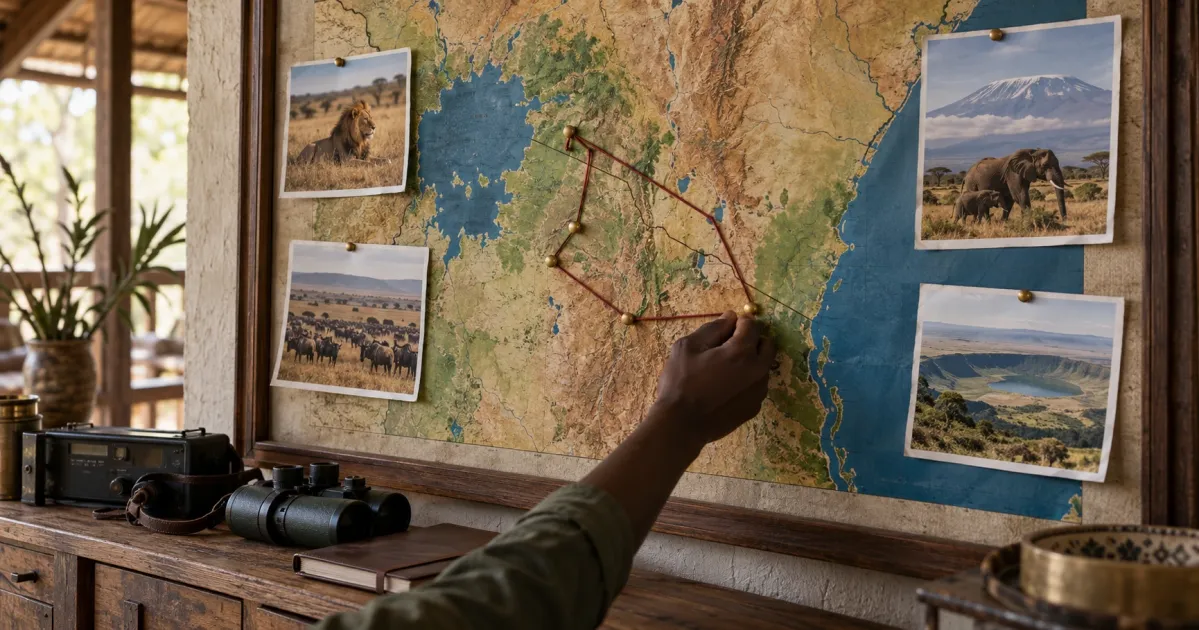
Use the Mara as one part of the itinerary, then add a contrasting region. Laikipia works for walking, rhino tracking, and horseback activities. Samburu adds northern species and a markedly different terrain. Amboseli brings elephants and Kilimanjaro views, while Tsavo offers a much broader, wilder-feeling circuit.
The cross-border migration involves roughly 1.5 million wildebeest, along with hundreds of thousands of zebras and antelope, moving between Tanzania and Kenya according to rain and grazing conditions. Because the herds respond to those conditions, exact crossing dates change from year to year, as explained by the Oceanic Society's Kenya conservation safari background.
A second strong option is January through March, particularly for travelers who prioritize reliable game viewing without making river crossings the central objective. Northern and central Kenya can be excellent during this period, and a Laikipia or Samburu stay can give you a more varied trip than adding extra Mara nights.
The best Kenya safari is therefore a fit problem, not a popularity contest. Choose the Mara for big-cat density and migration drama, but don't choose it automatically.
Kenya's Top Safari Parks and What Each One Does Best
Kenya's parks aren't interchangeable. They differ in scenery, species, guiding style, road pressure, and the activities available outside standard game drives. A well-built route uses those differences rather than trying to collect famous names.
Match the park to the experience
Masai Mara is the strongest choice for first-time travelers who want a high chance of seeing lions, cheetahs, leopards, buffalo, and large herbivore herds in a relatively compact area. The reserve and surrounding conservancies also offer the clearest opportunity for migration viewing, especially from late July into early October. Start with the Masai Mara National Reserve park guide when comparing reserve and conservancy locations.
Amboseli is the elephant specialist. Views toward Kilimanjaro can be extraordinary when conditions cooperate, but the park is less compelling if your only goal is the greatest possible concentration of predators.
Tsavo East and Tsavo West suit travelers who value scale, remote-feeling drives, and fewer vehicles around sightings. The combined Tsavo region is associated with red elephants and distinctive lion populations, including maneless lions in some areas. Distances are substantial, so Tsavo works better when you're willing to give it proper time rather than treating it as a quick detour.
Samburu and the northern reserves provide a different species mix, including Grevy's zebra, reticulated giraffe, and Beisa oryx. The terrain is drier and more rugged than the Mara, and visitor pressure is generally lower. Choose Samburu if you've already seen southern Kenya or want a more distinctive photographic portfolio.
Laikipia is the most versatile alternative for active travelers. Private conservancies can support walking safaris, horseback outings, rhino tracking, and flexible guiding. It's also an excellent counterweight to the Mara for families and couples who don't want every day to follow the same game-drive rhythm.
Lake Nakuru makes sense for rhinos, birdlife, and a compact stop within a larger circuit. Meru is better suited to repeat visitors who want a wilderness reset and don't need the reassurance of Kenya's most famous wildlife areas.
| Park | Signature | Crowding | Best For |
|---|---|---|---|
| Masai Mara | Big cats and migration | Highest in peak periods | First-time visitors and photographers |
| Amboseli | Elephants and Kilimanjaro views | Moderate to high at key sightings | Elephant-focused trips |
| Tsavo East and West | Scale, red elephants, distinctive lions | Generally lower | Longer, wilder-feeling circuits |
| Samburu | Northern specialty species | Lower | Repeat visitors and wildlife enthusiasts |
| Laikipia | Walking, horseback, rhino experiences | Low to moderate by conservancy | Active travelers, families, and couples |
| Lake Nakuru | Rhinos and birdlife | Moderate | Short circuit additions |
| Meru | Remote wilderness | Lower | Experienced safari travelers |
Pairing the Mara with Laikipia or Samburu gives you more ecological variety and reduces the risk that your trip feels like an expensive version of the same drive repeated.
When to Go for Wildlife, Weather, and Value
The most popular season isn't automatically the best season. Choose the timing based on your priority, then select parks that perform well in that period.
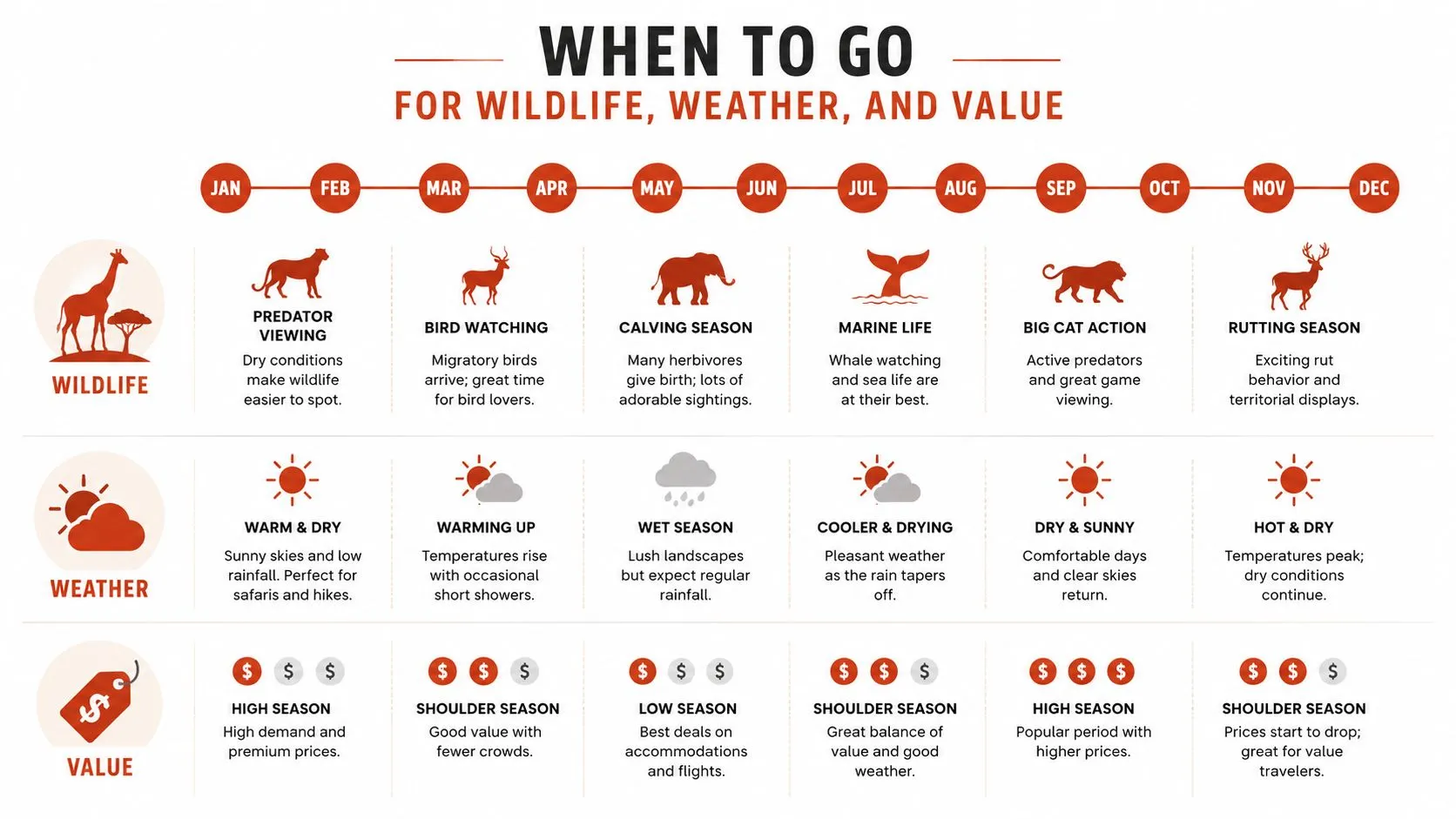
The long dry season, roughly late June through October, is the obvious choice for migration-focused Mara trips. Guides generally have easier access across dry roads, animals gather in more predictable areas, and predator sightings can be highly productive. River crossings are the exception to that reliability. They depend on herd position, rain, water levels, and animal behavior.
The short dry season, from January through early March, is my preferred alternative for travelers who want strong wildlife viewing without making peak migration crowds the defining feature. Samburu and Laikipia are particularly attractive then, and the Mara can still deliver excellent resident wildlife.
Use shoulder periods strategically
Late May to mid-June can be rewarding as rains taper and roads improve, while late October may offer softer demand and the possibility of seeing remaining migration herds. November and the longer rainy period from mid-March through late May can bring lush scenery and quieter camps, but muddy roads and temporary camp closures require more operational flexibility.
Climate patterns are less dependable than old guidebooks suggest. Don't book a sensitive rainy-season route without asking the operator about current road conditions, camp operations, and alternative routing.
For a park-by-park decision, use this Kenya safari timing guide. My direct recommendation is simple: choose July to October only if the migration is central to your trip. Otherwise, January to March usually gives you the cleaner balance of wildlife, access, and value.
Lodging Tiers from Tented Camps to Luxury Lodges
Accommodation changes the character of a Kenya safari more than many travelers expect. The question isn't only whether your room has canvas walls or stone walls. It's whether the property sits inside a conservancy, how experienced the guiding team is, whether you share vehicles, and which costs appear outside the nightly rate.
Budget camping offers the most basic setup and can feel wonderfully close to the land, but comfort, privacy, and bathroom arrangements are limited. It suits travelers who care more about time in the field than polished service.
Midrange tented camps are usually the value choice. They can provide comfortable beds, private bathrooms, meals, and scheduled game drives without the full service layer of an upscale camp. You'll often share vehicles and pay separately for drinks, gratuities, specialty activities, and sometimes park access.
What higher tiers actually buy
Upscale permanent lodges add stronger infrastructure, more dependable comfort, better public areas, and often more experienced guiding operations. They're a good fit for families and travelers who want a smooth trip without paying for every luxury detail.
Luxury camps justify their price through privacy and access. Private vehicles, flexible departure times, dedicated hosts, premium locations, laundry, and conservancy activities can make a real difference. They don't guarantee better sightings, but they give your guide more freedom to pursue the experience you want.
Use this guide to luxury safari lodges in Kenya to compare the service layer rather than judging properties by room photographs alone.
| Tier | USD/Night | Game Drives | What's Extra |
|---|---|---|---|
| Budget camping | Confirm current operator quote | Basic or shared drives | Park fees, drinks, tips, selected activities |
| Midrange tented camp | Confirm current operator quote | Usually scheduled or shared | Conservancy fees, drinks, tips, premium activities |
| Upscale lodge | Confirm current operator quote | Stronger guiding and vehicle access | Park fees, drinks, tips, private vehicle upgrades |
| Luxury camp | Confirm current operator quote | Flexible, often private | Conservancy access, flights, premium experiences, tips |
Avoid trusting a tier label by itself. Ask for the exact inclusions, vehicle arrangement, park location, transfer plan, and whether the quoted rate covers the full night inside a conservancy.
What a Kenya Safari Really Costs in 2026
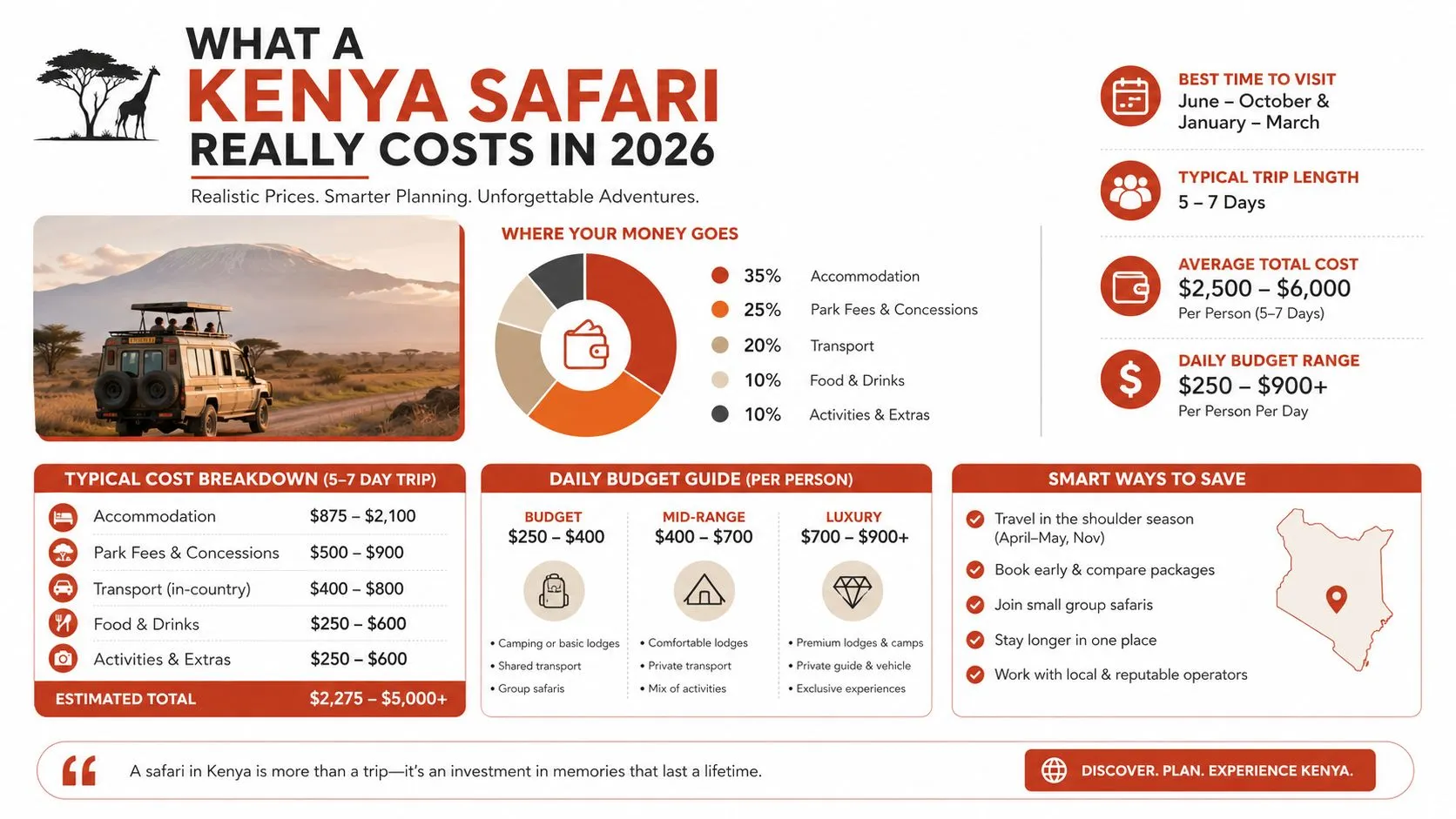
A headline safari rate is only the first layer of the budget. Recent industry reporting places the average Kenya safari trip near $6,000 per person in 2026, while park and conservancy fees, domestic flights, and all-inclusive tented camp pricing are each reported as roughly 15% to 30% higher than pre-2022 ranges. See the 2026 Kenya safari cost analysis for the market context behind that pressure.
Start with the advertised accommodation and vehicle rate, then audit every item below:
Park entry: Confirm whether the quote includes non-resident park fees and how many entries are required.
Conservancy access: Mara conservancies can add a substantial nightly charge beyond reserve entry, so compare the full total rather than the room rate.
Domestic flights: Flying between Nairobi and safari areas saves time but can cost more than road transfers, particularly during busy periods.
Transfers: Ask whether airport pickups, inter-camp moves, and park-transfer surcharges are included.
Single occupancy: Solo travelers may face a single supplement, especially in smaller camps.
Extras: Drinks, gratuities, laundry, balloon flights, cultural visits, and private vehicles frequently sit outside the base price.
Protection and entry documents: Budget separately for travel insurance with medical evacuation and required travel documentation.
How to audit a quote
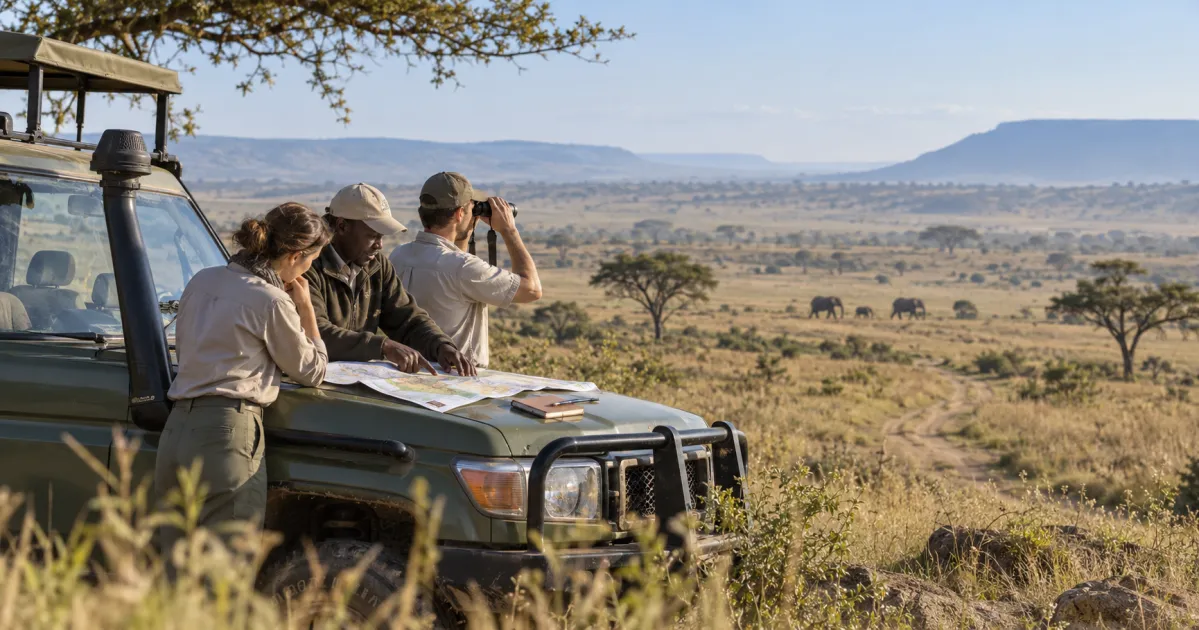
For a seven-day midrange couple's trip, request a line-item total showing accommodation, shared or private vehicle use, park fees, conservancy charges, internal flights or road transfers, and every listed exclusion. Don't accept a daily rate as the final figure.
For a seven-day upscale family trip, verify child rates, room configuration, private vehicle requirements, meal inclusions, and whether the property charges adult conservancy fees for each traveler. A family quote can look attractive until room supplements and transfer costs are added.
Three levers control the budget without gutting the experience. Travel in January through March rather than peak migration weeks, combine a premium conservancy with a more moderately priced park, and fly only where the time saved materially improves the itinerary. You can also choose shared drives while keeping one private vehicle day for photography or a special celebration.
Ask one question before paying a deposit: “What will I still pay after this quoted price?”
Sample Itineraries for Families, Couples, and Adventurers
The right itinerary gives each traveler a different answer to the same problem: how to spend more time watching wildlife and less time changing camps.
Family itinerary
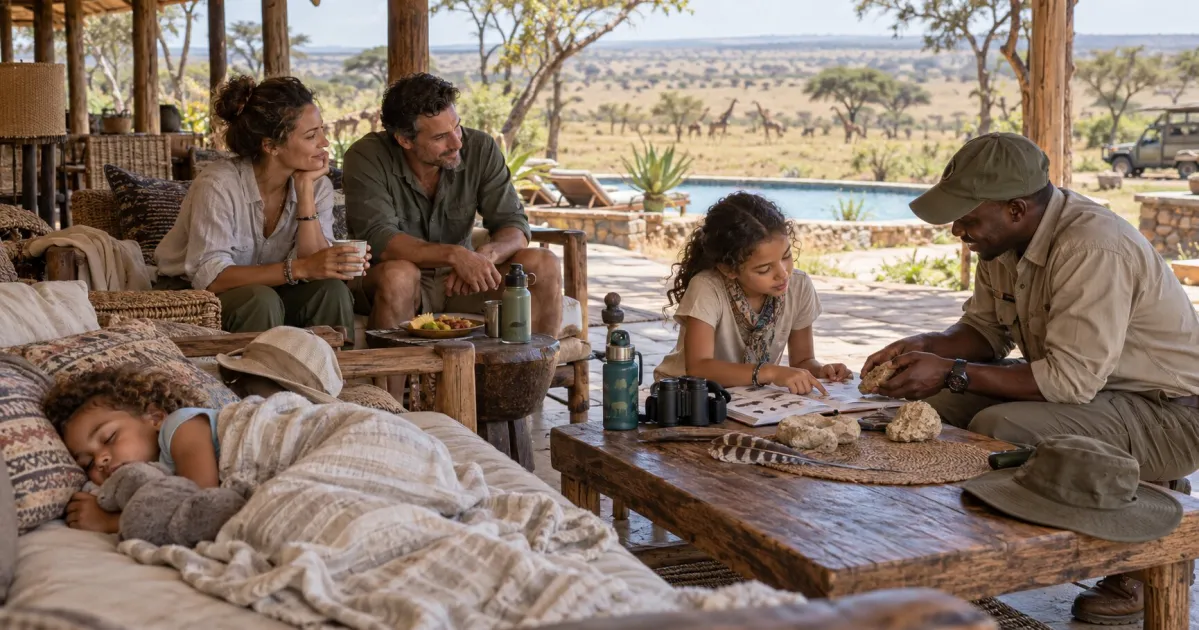
For a family with children aged 8 to 14, I'd choose a seven-day route that limits long road transfers and mixes active experiences with classic drives.
Day 1: Arrive in Nairobi and transfer to Laikipia.
Day 2: Take a gentle game drive, then choose horse riding or a dog-walking activity suitable for the children.
Day 3: Spend a full day in the conservancy, with a flexible drive and a relaxed afternoon around the lodge.
Day 4: Move by the most efficient available connection toward the Masai Mara, avoiding an unnecessarily long overland transfer.
Day 5: Explore the Mara on a family-friendly game-drive schedule.
Day 6: Take another Mara drive focused on whichever animals the children most want to see.
Day 7: Depart through the planned air or road connection.
Choose properties with pools, family rooms, short activity options, and guides who can adjust the pace. Two Mara nights are enough to deliver the signature experience without forcing the entire holiday into peak-pressure conditions.
Couple's celebratory itinerary
For a once-in-a-decade trip, use eight days and pay for privacy where it changes the experience.
Spend the opening days in a private Mara conservancy with a private vehicle, flexible drives, and a carefully planned sundowner. Add a hot-air balloon flight if it matters to you, but treat it as a premium experience rather than a core wildlife requirement. Move to the Laikipia plateau for a contrasting terrain, walking opportunities, and a slower final stretch.
The value here isn't a more beautiful room. It's control over departure times, the ability to stay with an interesting sighting, and the chance to build a day around your interests instead of a shared vehicle schedule.
Adventure itinerary
An adventure traveler should consider nine days across three ecosystems:
Amboseli: Begin with elephants and open views toward Kilimanjaro.
Masai Mara conservancies: Continue with big cats, open-country drives, and a more concentrated wildlife setting.
Samburu or Lake Naivasha: Finish with northern species or a walking-focused environment, depending on whether wildlife variety or activity matters more.
Use fly-out connections between the major regions where the schedule justifies them. Include a walking safari only with an operator that clearly explains the guide qualifications, route, safety procedures, and age restrictions.
Don't cram all three regions into a rushed trip. If a choice comes down to one extra park or more time in the field, choose the extra time.
Booking Through a Marketplace, Agent, or Direct
There isn't one universally superior booking channel. The right choice depends on how much itinerary design you need and how comfortable you are checking exclusions.
Direct booking can work well when you already know the camp, dates, and route. You'll communicate directly with the operator and may find flexible arrangements, but you'll also need to coordinate flights, park access, transfers, emergency support, and cancellation terms yourself.
A traditional travel agent earns their place on complex multi-park trips, family logistics, or high-value journeys where one person should own the moving parts. The trade-off is a service markup, commonly described in the market as 10% to 15%, so ask exactly what planning and support that fee covers.
A marketplace such as Explola sits between those models by allowing travelers to compare operator itineraries, pricing, inclusions, and reviews, then send direct inquiries to verified operators. Customization may be narrower than with a dedicated agent, so confirm whether the listed price includes park fees, flights, transfers, and conservancy charges.
Channel | Typical Pricing | Customization | Support Level | Best For |
|---|---|---|---|---|
Direct operator | Often a clear base quote | High after direct discussion | Depends on operator | Experienced planners |
Travel agent | Includes planning markup | Very high | Strong pre-trip support | Complex or first-time trips |
Marketplace | Comparable quotes across operators | Moderate to high | Inquiry and comparison support | Travelers auditing value |
Cancellation rules vary sharply between camps, operators, and booking channels. Read the deposit schedule before paying, and arrange medical evacuation coverage rather than treating ordinary trip cancellation insurance as sufficient. This international travel insurance guide is useful when comparing medical, evacuation, cancellation, and baggage provisions.
Your Next Steps and Common Mistakes to Avoid
Before you request final quotes, run this five-point check:
Passport validity: Confirm your passport meets Kenya's entry requirements for your travel dates.
Health documents: Check whether you need a yellow fever certificate or other recommended vaccinations based on your route.
Medical evacuation: Buy travel insurance that explicitly covers safari-area evacuation and medical care.
Deposit timing: Ask how much is due, when the balance is payable, and what happens if a camp or flight changes.
Baggage limits: Confirm the internal-flight allowance before packing. Soft luggage is usually easier for light-aircraft operations.
The most common planning mistakes are predictable. Travelers book only the Mara, then realize they wanted elephants, northern species, or walking activities. They chase the migration without checking herd location for the actual month, underestimate the distance between parks, and approve quotes without separating park fees from conservancy charges.
Peak July-to-October camps also fill early, particularly properties with private vehicles and limited room counts. Waiting until the preferred dates are close can leave you choosing between an inferior location and a higher price.

Final decision test: If your itinerary doesn't name the park, season, vehicle arrangement, transfer method, and every major exclusion, it isn't ready to book.
Choose your travel month, select one primary goal, and shortlist a contrasting second ecosystem today. Then request itemized quotes that show park fees, conservancy costs, flights, transfers, and extras separately.
Use Explola to compare Kenya safari itineraries by park, budget, lodging level, and travel style, then send a direct inquiry to verified operators for an itemized quote. Shortlist a Mara combination with Laikipia, Samburu, or Amboseli, and book the itinerary that matches your priorities rather than the loudest migration headline.

Daniel writes for the Explola blog, where he covers African safari destinations, wildlife, travel trends, and practical trip planning. His work is centered on making safari travel easier to understand, compare, and plan.
Get Safari Tips & Destination Guides
Join our newsletter for exclusive travel tips, wildlife insights, and safari planning advice.