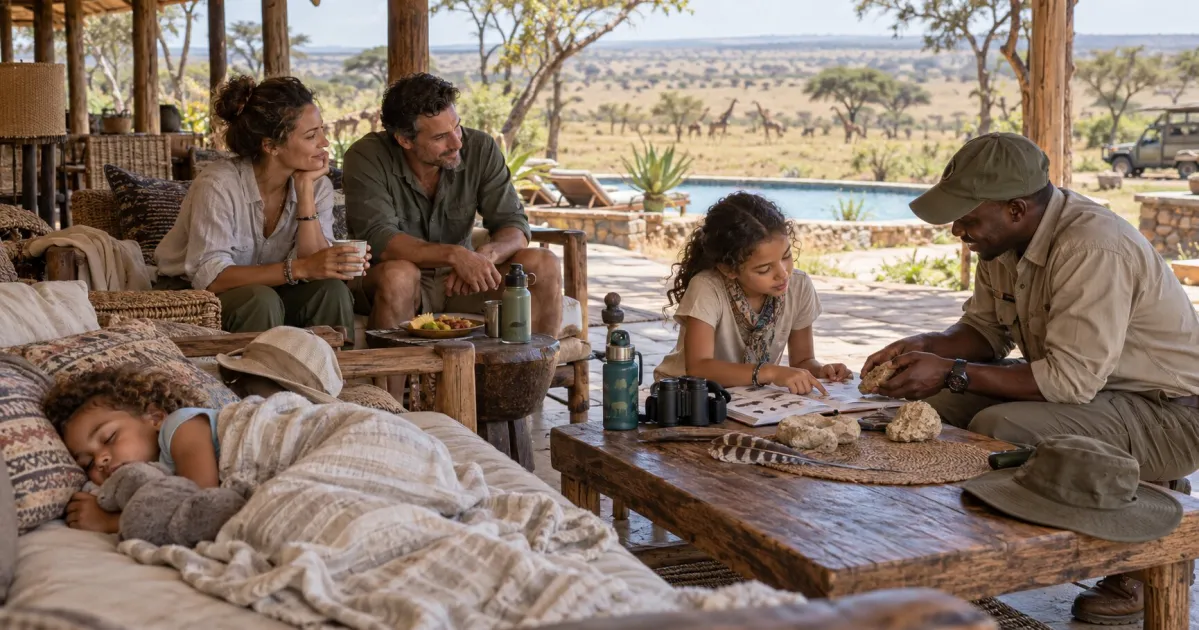
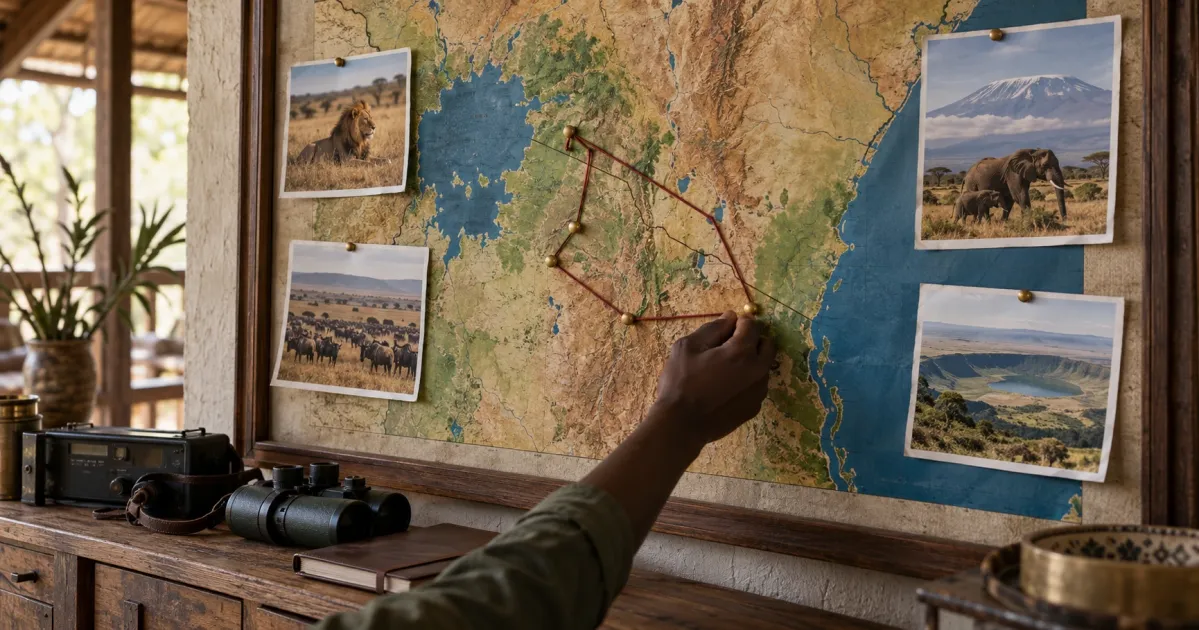
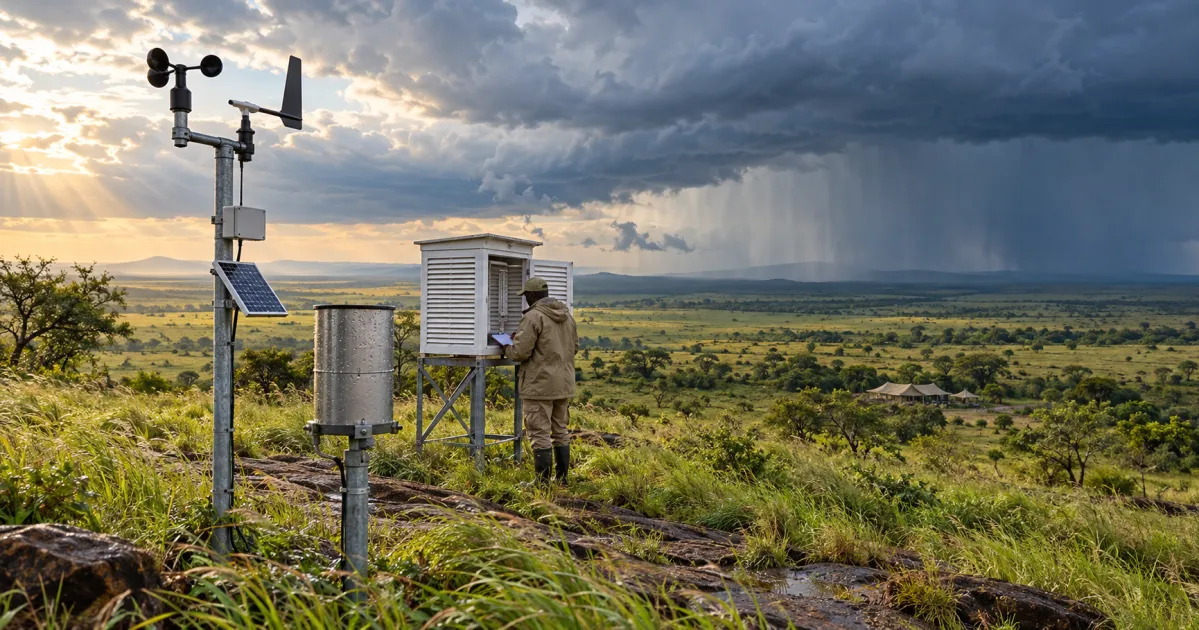
Most guides answer the Kenya safari best time question with a single window, usually July to October. That advice is useful if your only goal is the Great Migration, but it's incomplete for almost everyone else. You may care more about clear photographic light, quiet vehicles, birdlife, lower rates, family-friendly conditions, or finding the right camp before it sells out.
Kenya rewards travelers who plan around an objective rather than a calendar slogan. The long dry season is the safest all-round recommendation, while January to March can deliver excellent wildlife viewing with a different atmosphere. The rainy months aren't automatically a mistake either. They can suit photographers, birders, and flexible travelers who accept softer roads and less predictable sightings in exchange for greener scenery and better value.
Why the Best Time Depends on Your Safari Goal
There isn't one best month for every Kenya safari because the country offers several different experiences under the same national label. A traveler chasing a Mara River crossing needs precise timing in the Maasai Mara. Someone photographing elephants beneath dramatic skies may prefer a greener period, while a first-time family traveler may value reliable roads and comfortable game drives above all else.
The most useful question is simple: what would make the trip successful for you? If the answer is “large herds and easy wildlife sightings,” prioritize the dry seasons. If it's “fewer vehicles and distinctive sceneries,” look toward shoulder or green-season travel. If you want birds, newborn animals, or a safari combined with other activities, migration timing shouldn't dominate the decision.
Match the calendar to the experience
The long dry season, from June through October, remains the strongest general recommendation. Rainfall is minimal, daytime temperatures are manageable, vegetation becomes thinner, and wildlife often concentrates around dependable water sources. These conditions make animals easier to locate and improve the reliability of long game drives.
January through March deserves more attention than it usually gets. Guides frequently describe this period as mild, mostly dry, and consistently productive for game viewing, giving Kenya two dependable high-season periods rather than one. January and February can be especially appealing when you want strong sightings without the full migration-season atmosphere.
Planning principle: Choose the month that supports your primary objective, then build the itinerary around the parks and camp locations that make that objective realistic.
The trade-off most guides skip
Peak wildlife conditions bring demand. July through September is the period when premium Mara properties become hardest to secure, and popular sightings can attract more vehicles. A quieter month may produce a more relaxed experience even when it lacks the headline event that dominates safari marketing.
Your best answer may therefore be September for a migration-focused trip, January or February for a quieter dry-season safari, or November for a value-oriented itinerary with green scenery and birdlife. Treat “best” as a personal planning decision, not a universal rating.
Kenya Safari Seasons Explained
Kenya's year divides broadly into two dry seasons and two rainy seasons, but the practical difference between them matters more than the labels. Dry weather generally improves visibility and road conditions, while rain changes the scenery, disperses animals, and can make some routes more difficult. The right choice depends on how much reliability you need and what you're prepared to trade for quieter parks or lower rates.
Long dry season from June to October
This is Kenya's classic safari window. Rainfall is minimal, vegetation becomes less dense, and animals increasingly gather around permanent water sources. Those conditions improve wildlife visibility across major parks and make the long dry season the clearest recommendation for first-time visitors who want dependable game drives.
June is a useful shoulder point before the busiest migration months. Wildlife viewing is already strong, but demand generally hasn't reached its seasonal intensity. July through October brings the dry-season experience most travelers picture, with the Maasai Mara becoming particularly important for migration watchers.
The drawback is predictable. Higher demand means more pressure on camps, vehicles, and prices, especially in the Mara during migration season. If you're evaluating safari styles and park options before choosing dates, you can browse wildlife tour features to compare the type of experience different operators provide.
Short dry season from January to March
January through March is a strong alternative when you want mostly dry conditions without centering the trip on river crossings. The climate is generally mild, wildlife viewing remains reliable, and the scenery can still hold more greenery than during the later dry season.
January and February are particularly attractive for travelers who want a quieter safari with concentrated wildlife activity. March can remain rewarding, but the long rains become a growing consideration as the month progresses.
Long rains from March to May
The long rains are the most challenging period for a conventional, tightly scheduled safari. Roads can become muddy, some routes may be difficult to traverse, and thicker vegetation can make animals harder to spot. That doesn't make the season worthless. Photographers and birders may appreciate the lush scenery, changing skies, and quieter parks, while flexible travelers may find better availability.
Short rains from November to December
The short rains are often more manageable than the long rains, although conditions still vary by location and year. Lush greenery, birdlife, newborn animals, fewer visitors, and improved availability can make November a smart choice for travelers who don't need guaranteed dry weather.
December needs careful date selection. Conditions can be appealing outside the holiday rush, but festive-period demand changes availability and pricing. For any rainy-season booking, ask the operator which roads, camps, and activities are operating during your exact dates rather than relying on a national season label.
Great Migration Timing in the Maasai Mara
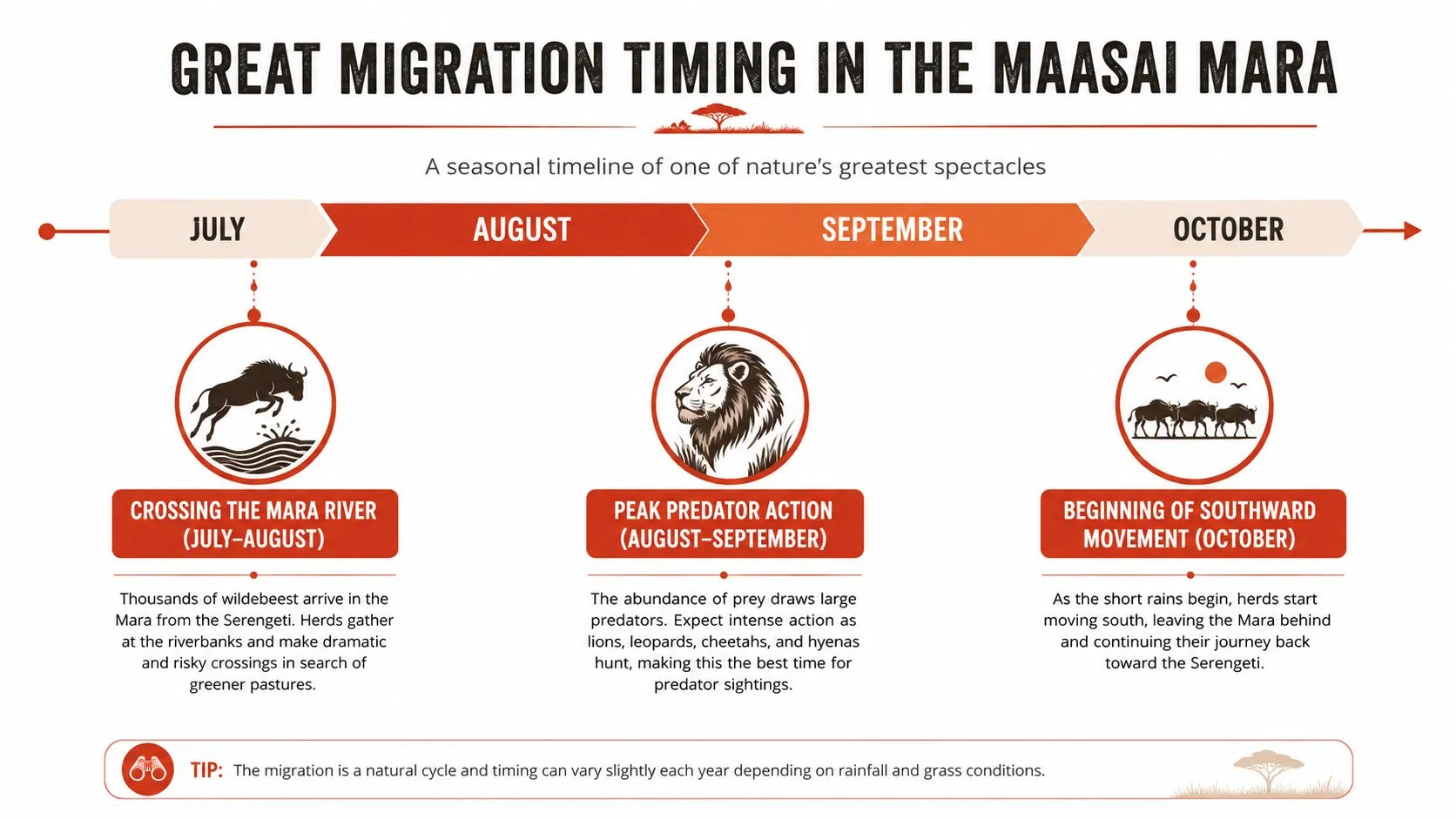
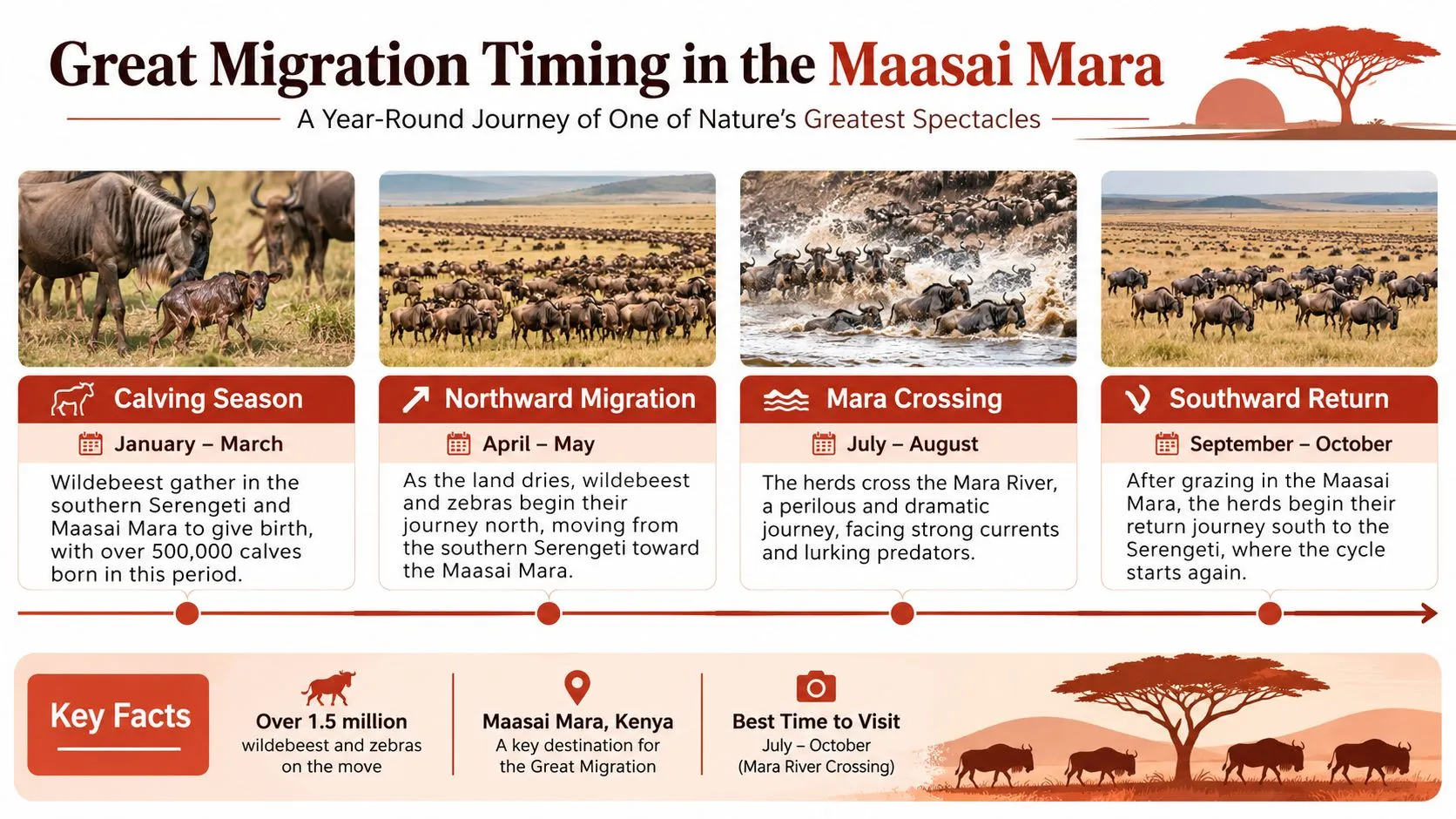
The Great Migration isn't a single event that arrives on a fixed date. It's a moving sequence shaped by rainfall, grazing conditions, and herd behavior. In Kenya, the practical migration season runs from late July through October, with August and September offering the strongest historical likelihood of major river crossings and high herd concentrations, according to this Maasai Mara migration timing guide.
July brings the first major arrivals
The earliest herds may enter the Mara in July, and crossings can begin during that month. Early-season travel has an important advantage: you may encounter the migration before the busiest pressure of the peak period. The risk is that the herds may not yet be positioned where you expect them, and a specific crossing may not happen during your stay.
July works best for travelers who want a genuine chance at migration activity while retaining some flexibility. Don't book it assuming the river will be active on arrival day.
August and September offer the strongest crossing prospects
August and September are the most sensible choices when the crossing is the central purpose of the trip. Herd concentrations are often strongest, predator activity can be compelling, and the dry-season environment supports clear viewing. September is especially attractive for travelers who want peak-quality wildlife with an atmosphere that may feel less intense than the busiest August period.
Still, a crossing is never guaranteed. Herd movement can shift by several weeks as rainfall patterns change, so a narrow target window is more realistic than treating an entire month as equally promising. For detailed itinerary decisions, use this Maasai Mara safari guide alongside advice from an operator who knows current local conditions.
October is the strategic late-season option
Migration can remain active into October, particularly earlier in the month, while resident Mara wildlife continues regardless of herd movement. This makes October a strong choice if you care about big cats and general game viewing but don't want to pay exclusively for the highest migration pressure.
Reality check: If witnessing a crossing matters more than simply seeing migrating animals, build the trip around a focused window and keep your dates as flexible as your budget allows.
Because the timing shifts annually, ask about recent herd positions, crossing reports, camp location, and vehicle access before paying a deposit. The farther your plan moves from the most likely August and September period, the more important those operational details become.
Best Months by Park and Region
Kenya's parks don't share one identical seasonal rhythm. A countrywide itinerary can work well, but only if you understand that the Mara's migration calendar is different from Amboseli's mountain views or Samburu's arid wildlife patterns.
| Park / Region | Peak Months | Shoulder Months | Seasonal Highlight |
|---|---|---|---|
| Maasai Mara | August to September | July and October | Strongest migration and river-crossing prospects |
| Amboseli | January to February, June to October | March and November | Elephants, open plains, and possible Kilimanjaro views |
| Tsavo East and West | January to February, June to October | November and December | Broad landscapes and strong dry-season visibility |
| Samburu | January to February, June to October | November and December | Arid scenery and wildlife around shrinking water sources |
| Laikipia | June to October | January to March | Conservancy-based wildlife viewing and quieter settings |
| Kenyan Coast | January to February, June to October | November and December | Beach extensions paired with inland safari travel |
Maasai Mara
Choose August or September for the best chance of seeing major migration activity. July and October can be strategically better if you're willing to accept less certainty in exchange for potentially lighter pressure.
Amboseli
Amboseli is about more than a generic dry-season game drive. January and February can offer appealing conditions for elephant-focused trips and scenic photography, while June through October favors clear, dry safari routines. Before committing, compare park logistics and itinerary design through an Amboseli National Park guide.
Tsavo East and West
Tsavo's scale changes the feel of the trip. June through October generally supports easier dry-season viewing, while January and February provide another strong window. The parks can suit travelers who want a broader, less Mara-centered circuit.
Samburu and Laikipia
Samburu's dry conditions can make water-dependent wildlife patterns easier to read, especially as natural water sources shrink. Laikipia is particularly useful for travelers seeking conservancies, specialized activities, and a less crowded alternative to the Mara's peak-season concentration.
The coast
For a safari-and-beach combination, January and February are sensible choices, while June through October can also work well. November and December require more careful weather planning, especially if the beach extension is as important as the safari.
Timing Your Safari by Interest and Travel Style
Your travel style should determine the calendar before you choose a park. A photographer, birder, honeymoon couple, and family may all visit Kenya in the same year, yet the best month for each can be completely different.
Wildlife photography
For clean backgrounds and easier animal detection, choose the dry seasons, especially June through October or January through February. Thin vegetation helps reveal wildlife, and animals are more likely to gather near reliable water sources.
For creative work, green-season travel has the stronger visual argument. Lush vegetation, storm light, fresh color, and changing skies can produce images that peak-season travelers won't see. The compromise is obvious: animals may be harder to find, and rain can interrupt a carefully planned drive.
Birding
January through March is a strong birding window, with resident and migratory birdlife adding variety to the safari. November and December are also attractive for bird-focused travelers who enjoy greener scenery and active breeding displays.
Birding works particularly well in an itinerary that doesn't demand constant large-mammal sightings. You'll spend more time noticing habitats, calls, plumage, and smaller species rather than measuring success only by lion or leopard encounters.
Budget travel
March through May usually offers the strongest value potential, but it also carries the greatest weather and road uncertainty. November is the more balanced budget choice, with fewer crowds, better availability, greener scenery, and generally more manageable short rains.
Families and honeymoons
Families often benefit from the long dry season because dependable conditions simplify long drives and reduce the chance that rain disrupts the itinerary. January and February can provide a quieter alternative if school calendars allow.
Honeymooners should decide whether privacy or headline wildlife comes first. A private conservancy or a quieter shoulder period may create a more intimate experience than a famous migration sighting surrounded by vehicles. If the crossing is essential, accept the higher demand and secure the right camp early.
The Case for Shoulder and Green Season Travel
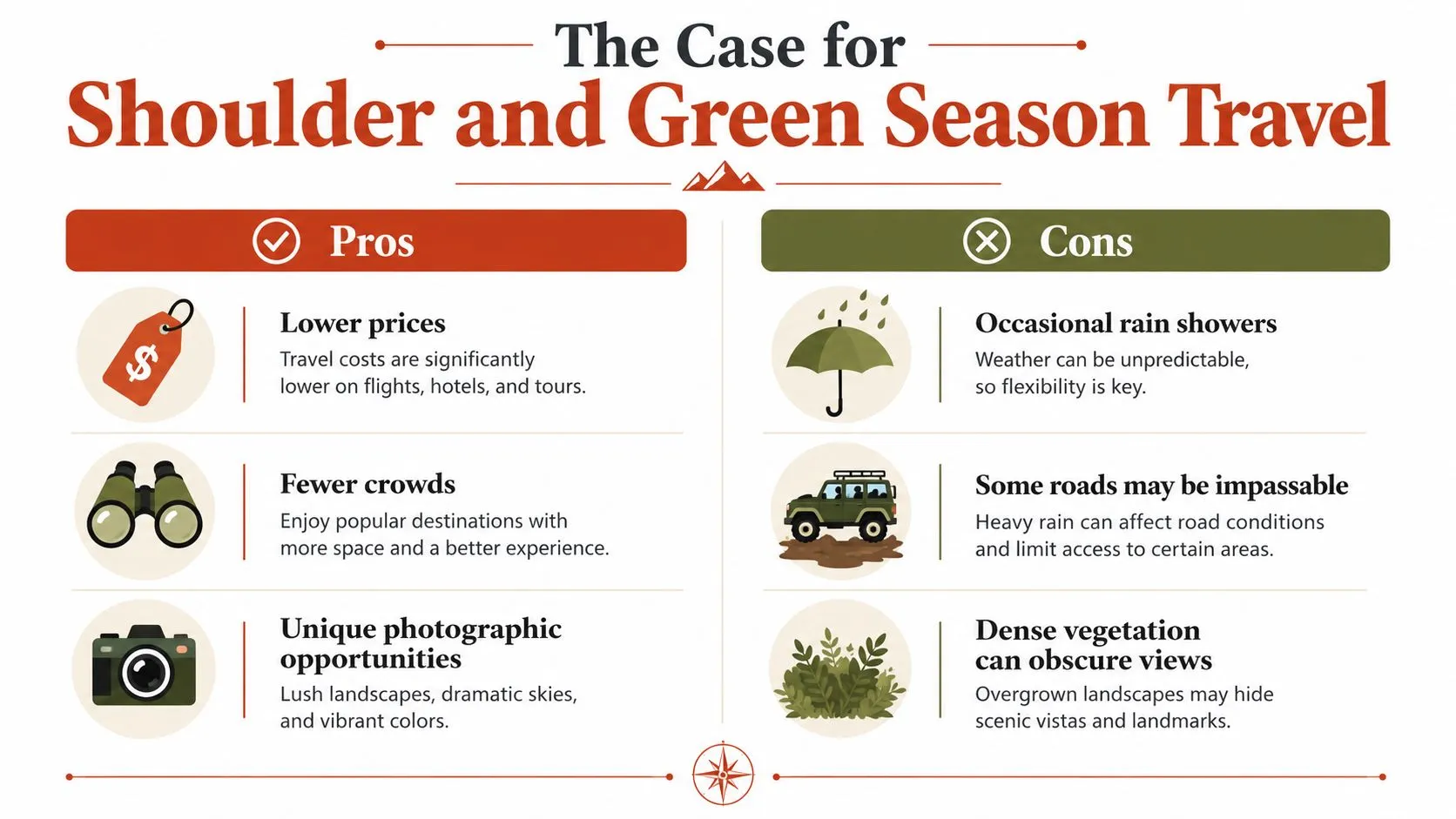
Peak season is popular for good reasons, but it also asks travelers to accept crowded sightings, constrained camp choice, and stronger demand. That's why shoulder and green-season travel deserves a more confident recommendation than it usually receives.
June is a particularly practical shoulder month. The long dry season is beginning, wildlife viewing is improving, and the Mara has not yet reached the main migration pressure. October can also work well, especially if your focus is resident wildlife rather than a guaranteed crossing. November offers the most persuasive balance of green scenery, fewer visitors, and strong value among the short-rain months.
Why photographers should look beyond peak season
Rain transforms the visual character of the bush. Fresh vegetation adds depth, clouds create dramatic backgrounds, and the terrain feels less familiar than the dry-season version seen in most brochures. Newborn animals and active birdlife can add subjects that a migration-only itinerary may overlook.
The main mistake is assuming green season means uninterrupted rain. Conditions can change quickly, and a shower doesn't automatically cancel a safari, but the practical risks remain real. Roads may become difficult, dense vegetation can obstruct views, and some camps may reduce operations or close during the wettest periods.
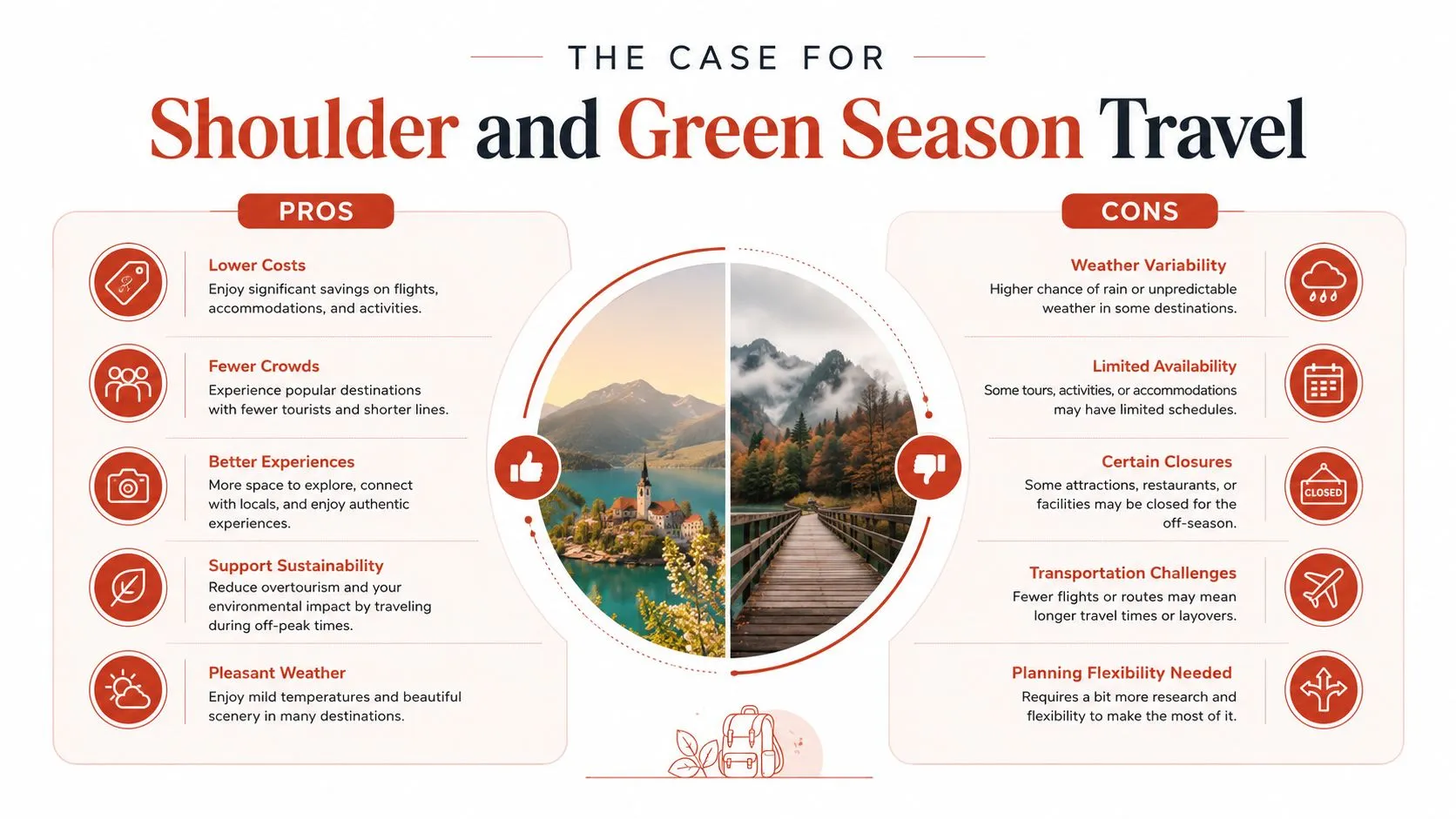
My recommendation: Choose November if you want a greener, quieter safari without taking on the full logistical risk of the long rains. Choose March through May only when your priorities clearly include photography, birding, or value and you can tolerate disruption.
Green-season travelers should ask direct operational questions before booking. Is the camp open throughout the stay? Which routes remain usable after heavy rain? Does the itinerary include backup activities if a drive is shortened? A transparent answer matters more than a glossy seasonal description.
When to Book Based on Your Travel Dates
The right travel month won't help if the camp, vehicle, or route you want is already gone. Booking lead time matters most in the Maasai Mara, where migration demand concentrates around a limited number of strategically located properties and transport arrangements.
Recent safari planning guidance indicates that top Mara properties for July through September can require six to twelve months of advance booking (seasonal safari booking guidance). Premium migration camps in prime crossing areas may need even earlier attention, while January through March and June often remain easier to arrange.
| Travel Season | Months | Recommended Lead Time | Camp Availability | Key Booking Notes |
|---|---|---|---|---|
| Peak migration | July to September | Six to twelve months or earlier | Most constrained | Prioritize camp location and flexible dates |
| Late migration and dry season | October | Several months ahead | Better than peak, but popular camps remain limited | Confirm whether migration or resident wildlife is your priority |
| Short dry season | January to March | Shorter lead time is often possible | Generally better | Good alternative for strong game viewing without migration pressure |
| Shoulder period | June | Shorter lead time is often possible | Improving demand | Useful for dry cond |
Ready to experience this?
Explore Related Safaris
Destinations Mentioned

Daniel writes for the Explola blog, where he covers African safari destinations, wildlife, travel trends, and practical trip planning. His work is centered on making safari travel easier to understand, compare, and plan.
Get Safari Tips & Destination Guides
Join our newsletter for exclusive travel tips, wildlife insights, and safari planning advice.