You're staring at two quotes on your screen. One looks sane, a $6,000 per person Kenya trip that sounds like a polished dream. The other, a $24,000 Botswana fly-in, feels outrageous until you notice what's inside it, private vehicles, lighter logistics, better camp positioning, and a level of exclusivity the cheaper quote can't deliver. That gap is exactly where most travelers get confused, and where most safari marketing gets sloppy.
The smart move is to stop asking, “Is this luxury?” and start asking, which luxury lane am I buying. African safari tours luxury splits into two real categories, premium and ultra-luxury, and the right answer depends on what you care about most, wildlife access, privacy, comfort, or efficiency. The best trips are not the flashiest ones, they're the ones that match your budget to the way you actually travel.
Planning a Luxury African Safari Worth the Splurge
The wrong safari quote can feel expensive before you've even landed. A traveler comparing a $6,000 Kenya itinerary with a $24,000 Botswana fly-in is usually comparing two very different products, not two versions of the same thing. One may lean on shared drives, longer road legs, and comfortable but standardized lodges. The other may bundle private guiding, secluded concessions, and lighter-touch transfers that cut friction out of the trip.
Start with the wildlife moment you care about most
The first decision is simple, but it shapes everything else. If you want the Big Five, a place like South Africa can make sense. If your priority is the Great Migration, Kenya and Tanzania move to the top of the list, while gorilla tracking pulls you into a different conversation entirely. If you're serious about photography, off-road access and the ability to position the vehicle properly matter more than a glossy suite.
Practical rule: choose the wildlife experience first, then build the trip around it. Luxury is wasted if the itinerary misses the animal behavior you came for.
Fixed lodge or mobile circuit
A fixed lodge base gives you stability, better unpack-once convenience, and often stronger service polish. A mobile fly-in circuit is better if your goal is movement, remoteness, and following wildlife patterns across more than one ecosystem. The trade-off is real, fixed camps can be easier, but a well-designed circuit usually gives you more interesting viewing and less time in transit.
Private vehicle or scheduled departures
Your budget will vary quickly at this point. A private vehicle and guide buys you control over the day, your pace, your stop times, and your photographic angles. Shared departures are perfectly fine for many travelers, but they make the schedule rigid and the sighting experience less personal. If you're paying for luxury and still sharing a vehicle, you should know exactly why.
Don't ignore timing and hidden cost traps
Season matters, and so do the little charges people forget to ask about. Peak-week premiums, single-supplement markups, and badly timed international flights can distort the quote more than the lodge itself. A properly built luxury safari should explain where every major cost sits, not hide it behind a pretty brochure.
What Luxury Really Means on an African Safari
Luxury on safari is not one thing. It's a stack of different upgrades, and if you don't separate them, you'll pay for a feeling instead of a useful benefit. The four pillars are lodges, mobile camps, private concessions, and services. Each one changes the trip in a different way.
The lodge, the camp, the concession, the service layer
A permanent lodge like &Beyond Bateleur Camp, Singita Sasakwa, or Wilderness Vumbura Plains usually gives you fixed suites, high-touch dining, and polished on-site operations. These properties often sit inside private concessions, which matters because it usually means better vehicle control and more freedom to drive off-road where allowed. That's a real upgrade, not a brochure word.
Mobile fly-in camps work differently. Operators such as Legendairy and Time + Tide move seasonal tented camps to follow wildlife patterns, often to places where a permanent lodge would be the wrong format. That can be a smarter luxury than marble and glass because the camp is built around the season, not around a property that has to work year-round.
A luxury safari should feel quieter, not busier. If the property has a polished lobby but crowded sightings, you're paying for décor, not access.
Private concessions matter because they cap pressure. In the Okavango, Masai Mara, or Sabi Sands, low vehicle density changes the whole tone of a sighting. Services finish the job, private guides, resident trackers, in-suite dining, helicopter transfers, spa treatments, and same-day laundry all reduce friction. Mid-tier properties may give you a nice room, but they usually don't bundle the same level of time control or field privacy.
| Pillar | What It Is | Example Properties | Premium Upgrade |
|---|---|---|---|
| Lodge | Fixed property with permanent suites | &Beyond Bateleur Camp, Singita Sasakwa, Wilderness Vumbura Plains | Better comfort, dining, and consistency |
| Mobile camp | Seasonal tented camp that relocates | Legendairy, Time + Tide | Closer wildlife positioning, more remote feel |
| Private concession | Leased wildlife area with controlled access | Okavango, Masai Mara, Sabi Sands | Lower vehicle density, off-road flexibility |
| Services | The operational extras around the stay | Private guide, helicopter transfer, in-suite dining | More privacy, less wasted time |
Top Countries and Parks for High-End Safari Experiences
The right country depends on the kind of luxury you want. Some travelers want icons, some want privacy, and some want an easy add-on to a broader African trip. If you're choosing between the main luxury safari destinations, the differences are practical, not abstract.
Kenya, Tanzania, South Africa, Botswana, and Zambia
Kenya works best for the Masai Mara, Laikipia, and Samburu. You go there for Great Migration river crossings, strong community-conservation models, and a trip style that can feel both classic and social. It's a smart choice if you want a safari with clear dramatic peaks and relatively easy flight connections.
Tanzania is the place for scale. The Serengeti, Ngorongoro Crater, Tarangire, and Ruaha deliver sweeping terrain and a remote-camp feel that suits travelers who want space, not just sightings. South Africa is the easiest all-rounder, especially if you want Sabi Sands, Kruger, or Madikwe, plus an optional Cape Town extension. It's also the most straightforward pick for travelers who want strong Big Five viewing without committing to the most remote logistics.
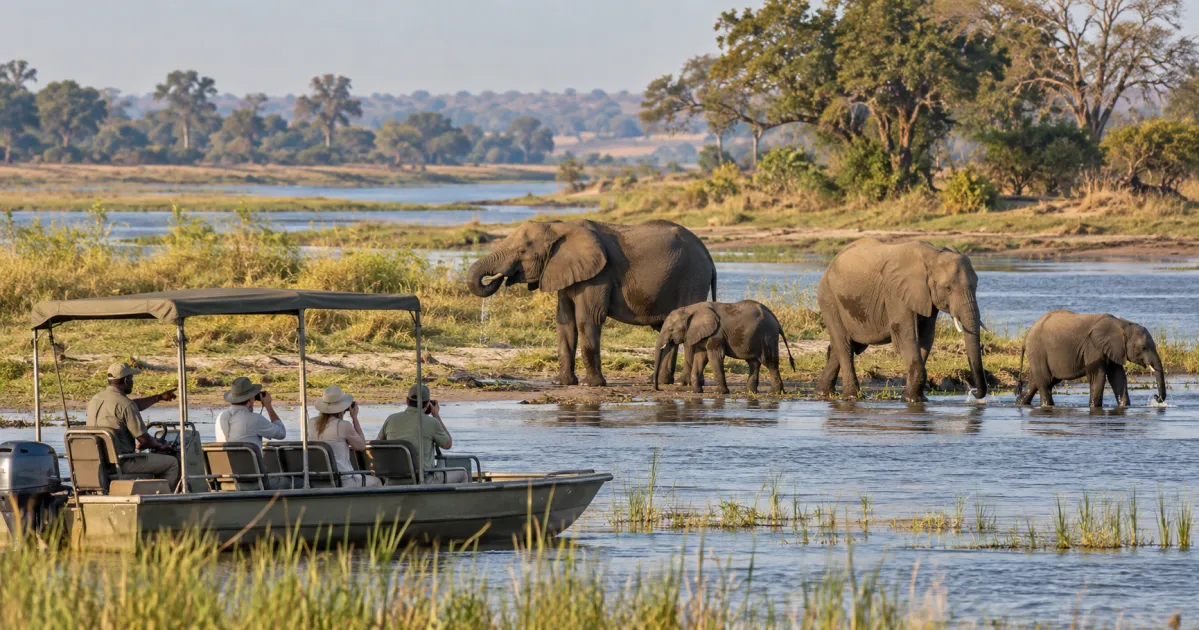
Botswana is the ultra-luxury benchmark. The Okavango Delta, Linyanti, and Chobe are built around low-density concessions, water-based activities, and a quieter, more exclusive safari rhythm. Zambia is a better fit for travelers who want walking-safari heritage and a less polished but more adventurous field style, especially in South Luangwa and Lower Zambezi.
For a broader destination map, this Explola guide to top African safari destinations for 2026 trips is useful if you're still narrowing the country list.
| Country | Signature Parks | Headline Wildlife | Best For |
|---|---|---|---|
| Kenya | Masai Mara, Laikipia, Samburu | Migration crossings, Big Five, northern species | Classic safari with community focus |
| Tanzania | Serengeti, Ngorongoro, Tarangire, Ruaha | Migration, predators, caldera game viewing | Big landscapes and remote camps |
| South Africa | Sabi Sands, Kruger, Madikwe | Big Five, leopard viewing | First-timers, easy logistics, Cape add-ons |
| Botswana | Okavango, Linyanti, Chobe | Elephant, water-based sightings, low-density game | Ultra-luxury and privacy |
| Zambia | South Luangwa, Lower Zambezi | Walking safari, leopard, river wildlife | Adventure-led luxury |
Premium Versus Ultra-Luxury Price Lanes
Luxury safari pricing gets clearer when you stop using broad adjectives. The market data points to a real split between premium and ultra-luxury, and recent coverage describes those two lanes as buying very different outcomes, not just better linen. Luxury safari pricing is also highly season-sensitive, with independent industry guides placing properly all-inclusive luxury safaris at about $1,200 to $4,500 per person per night, and peak-season rates often 30% to 50% above green-season pricing, depending on dates and destination. See luxury safari cost guide.
What the two lanes actually buy
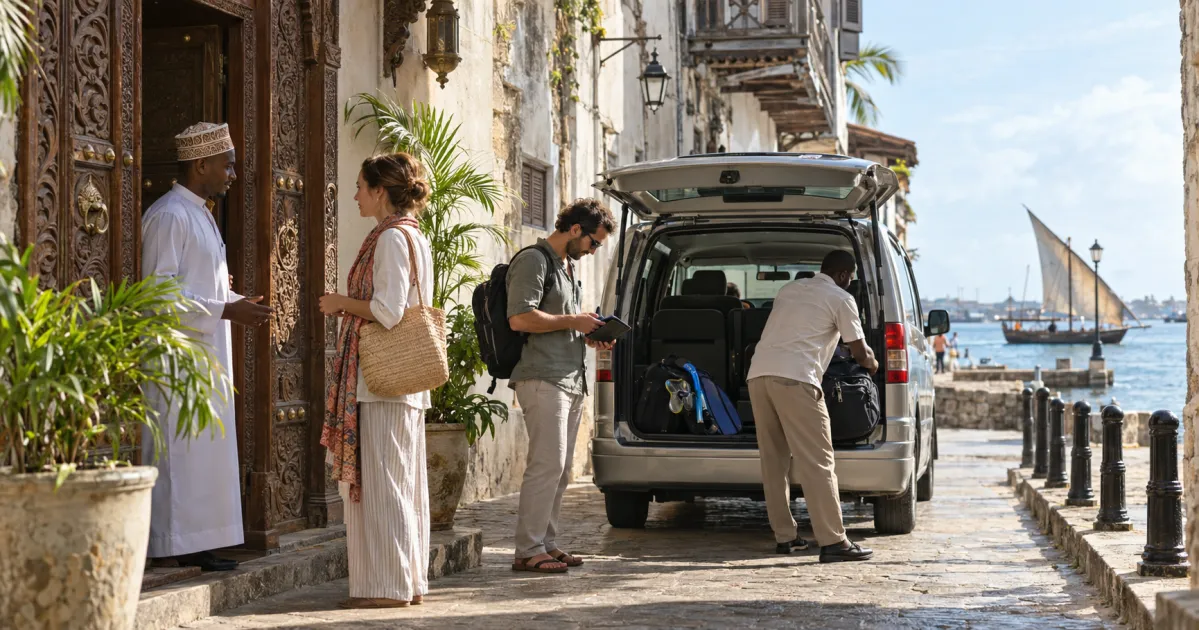
Premium usually means shared game drives in modified 4x4s, comfortable suites, scheduled transfers, and a set activity menu. Ultra-luxury is where you pay for privacy, flexibility, and exclusivity. That means private vehicles, more room to shape the day, lighter aircraft transfers, and access to harder-to-replicate concession space.
| Feature | Premium ($700-$1,500/night) | Ultra-Luxury ($1,500-$3,000+/night) |
|---|---|---|
| Vehicle | Shared or semi-shared | Private vehicle and guide |
| Suite | Comfortable, well-finished | Larger suite, plunge pool, more privacy |
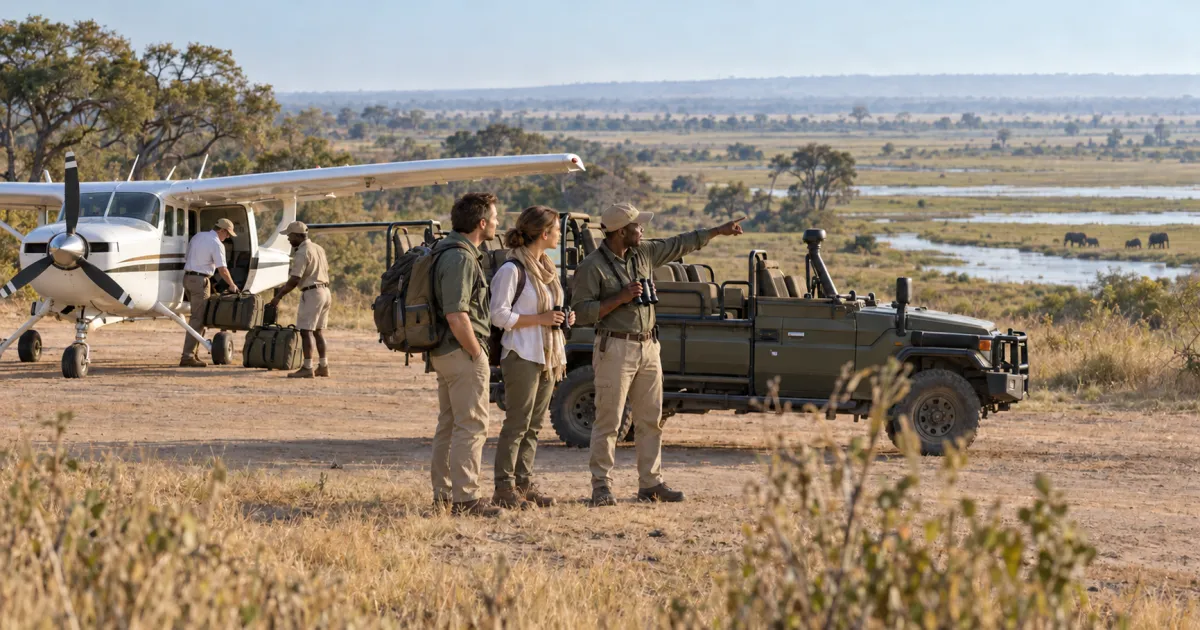
| Transfer | Scheduled road or group transfer | Fly-in, light aircraft, tighter routing |
| Activities | Set menu | Flexible timing and custom pacing |
| Concession access | Standard reserve access | Private concession or lower-density area |
| Value driver | Efficient comfort | Exclusivity and control |
The question is not which one looks nicer. It's whether the quote explains where the money goes. If a tour can't tell you how much of the price is tied to private guiding, flights, concession fees, or single occupancy, treat that as a warning sign.
Use four numbers to compare quotes
Per-night price is only the first filter. The other three are group size, transfer type, and concession access. Those four metrics tell you whether the itinerary is premium by design or ultra-luxury by default.
If the operator can't explain the premium in plain language, you're probably paying for markup, not value.
Signature Itineraries and Activities for Luxury Travelers
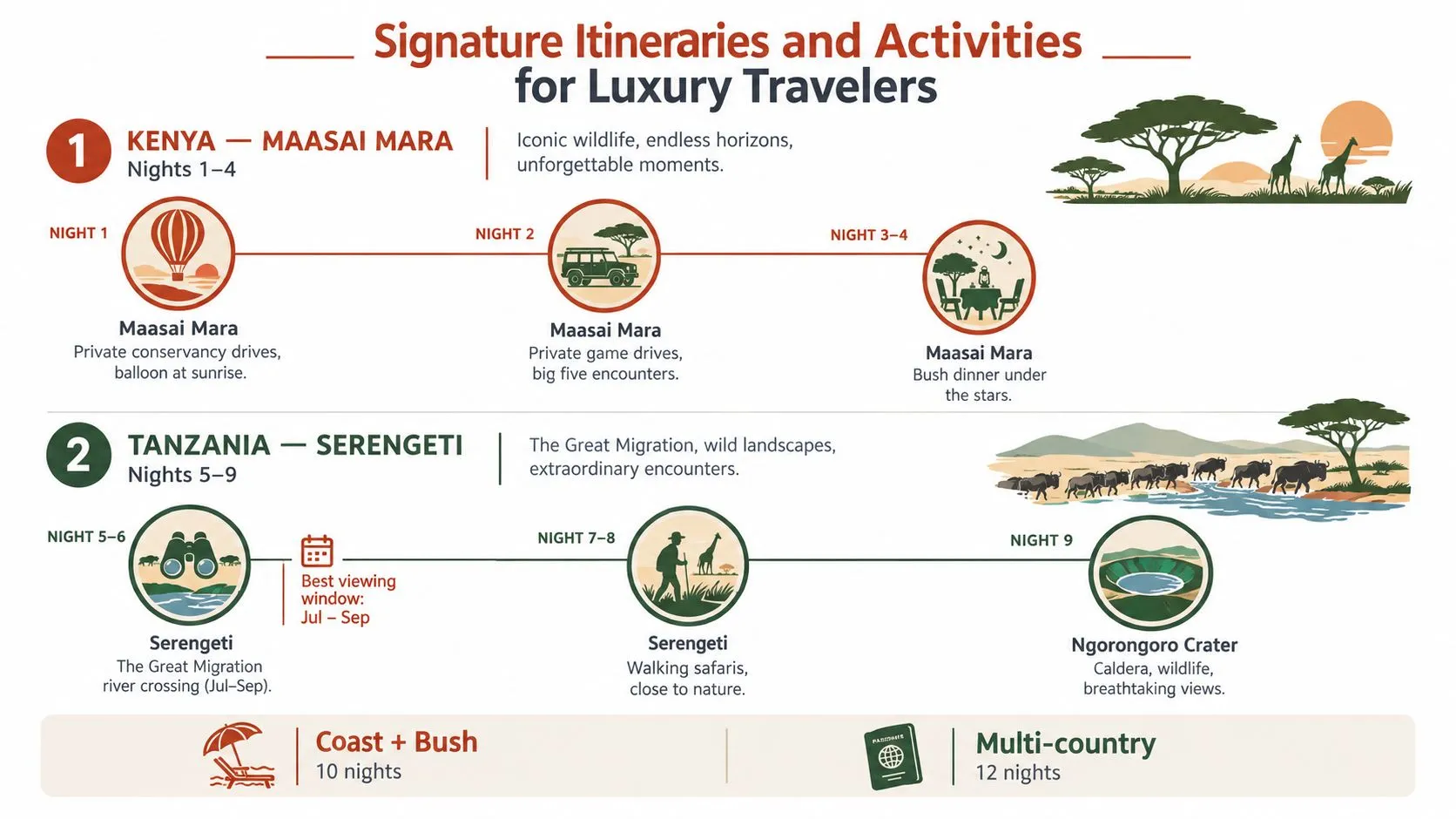
Luxury safari itineraries work best when the pacing makes sense. If every day is packed with long drives, the trip starts feeling like logistics. The right sequence gives you high-energy viewing early, then slows the rhythm with a better camp, better food, and time to breathe.
East Africa works best as a two-part trip
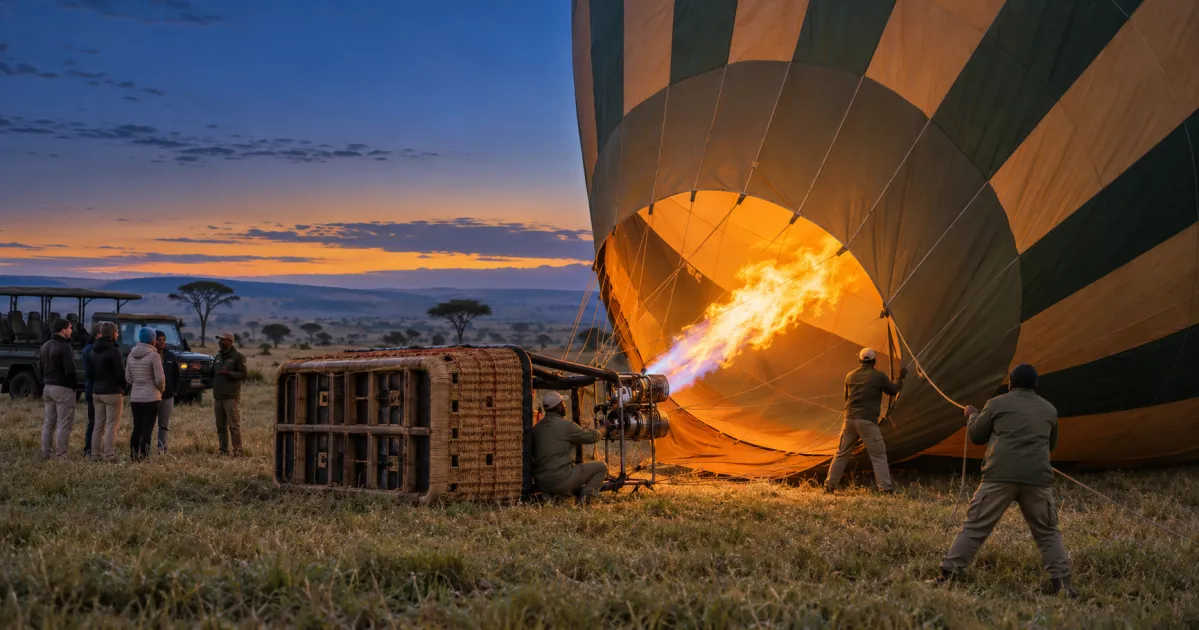
For Kenya and Tanzania, the strongest shape is usually 8 to 10 nights split between a migration area and a private conservancy. Start in the Maasai Mara or Serengeti, then move to a quieter base where drives are less rushed and the camp can slow the tone down. Add dawn and dusk game drives, one hot-air balloon flight, a cultural visit, and at least one walking safari if the property allows it.
A bush dinner has value only if the rest of the day isn't over-scripted. The most satisfying itineraries leave some empty time around the good moments so the wildlife, not the schedule, drives the memory.
Southern Africa should mix water and dry country
In Southern Africa, the winning pattern is a two-center itinerary. Pair a water-based camp in the Okavango or Lower Zambezi with a drier Big Five reserve. A private canoe or boat safari at sunset is worth adding, not because it's trendy, but because it transforms the entire atmosphere of the terrain.
Private guides and fly-in connections are what separate a standard safari from a luxury one. The less time you burn on road transfers, the more time you get for meaningful viewing and proper downtime. A good luxury itinerary also front-loads the more active drives, then ends with a lodge that has a spa or a private deck where you can process the trip.
Why Conservation and Low-Impact Design Now Define Luxury
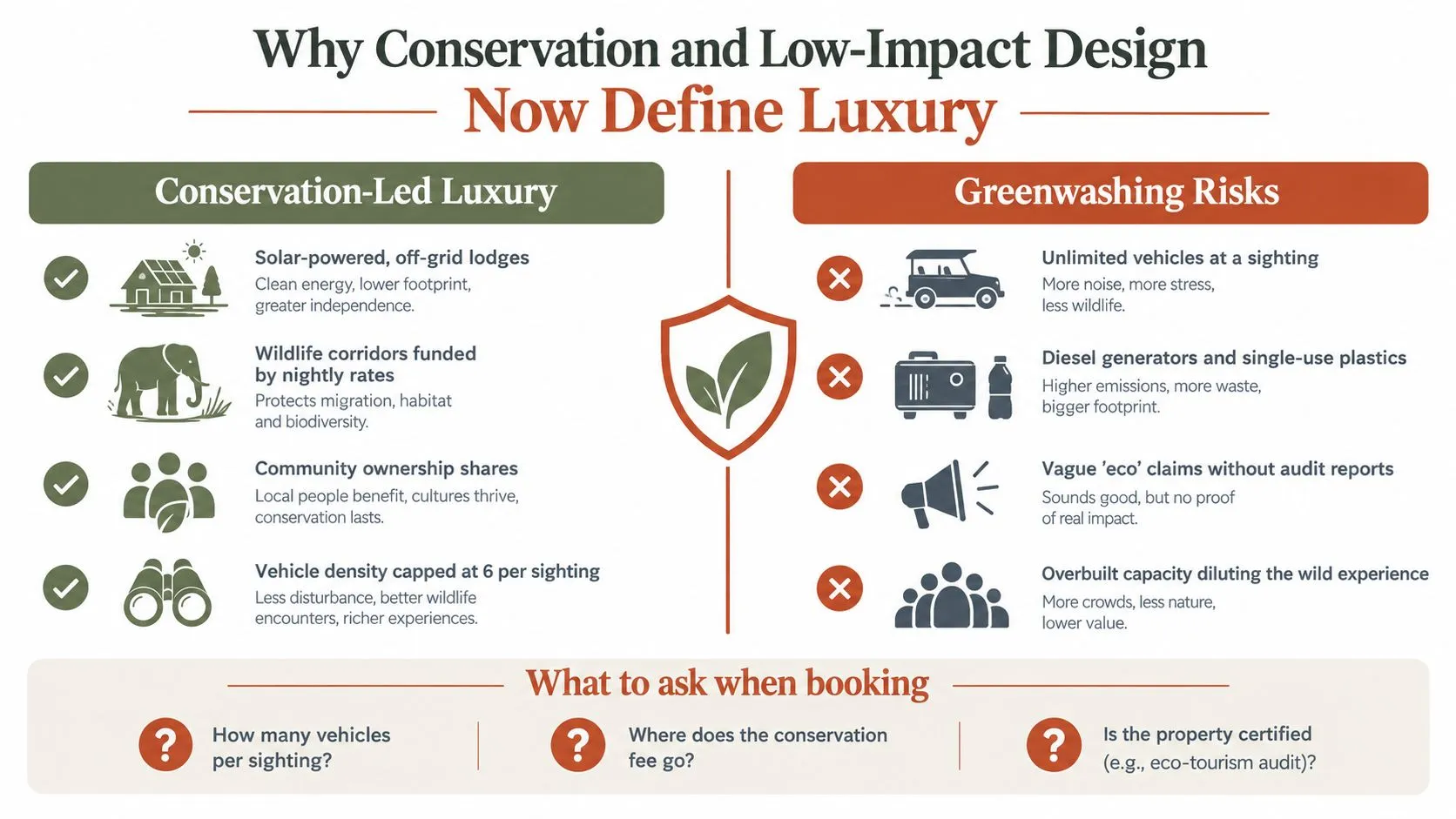
A polished room doesn't make a safari luxurious on its own. The bigger upgrade is quieter sightings, fewer vehicles, better-managed land, and a property that treats wildlife as the point of the trip. That's why low-impact design belongs in the luxury conversation, not in a separate “ethical travel” bucket.
Luxury should create better wildlife conditions
Properties that limit vehicle density, restrict off-road driving where needed, and employ local guides usually produce better sightings and less noise around the animal. That's not theory, it's the direct result of how the operation is run. If your money supports anti-poaching work or community programs, that adds meaning to the stay without sacrificing comfort.
This is also where many “eco” claims fall apart. Ask where the conservation fee goes, whether the property is certified, and how many vehicles are allowed at a sighting. If the answers are vague, the sustainability story is mostly branding.
Ask about the actual operating model
The best-known ultra-luxury names, including Wilderness Safaris, &Beyond, and Singita, publish impact reporting and work with conservation partners. Smaller or mid-tier properties can still do this well, especially in private concessions in the Mara, Laikipia, or the Okavango. The point is to look for structure, not slogans.
For a practical companion read, the Explola article on how responsible tourism helps protect wildlife in East Africa is worth a look before you book. It helps you separate a real conservation model from a decorative one.
Buy the quieter sighting, not the louder brochure. Luxury is strongest when the land feels protected and the wildlife feels unpressured.
Using Explola to Compare and Book Verified Safari Operators
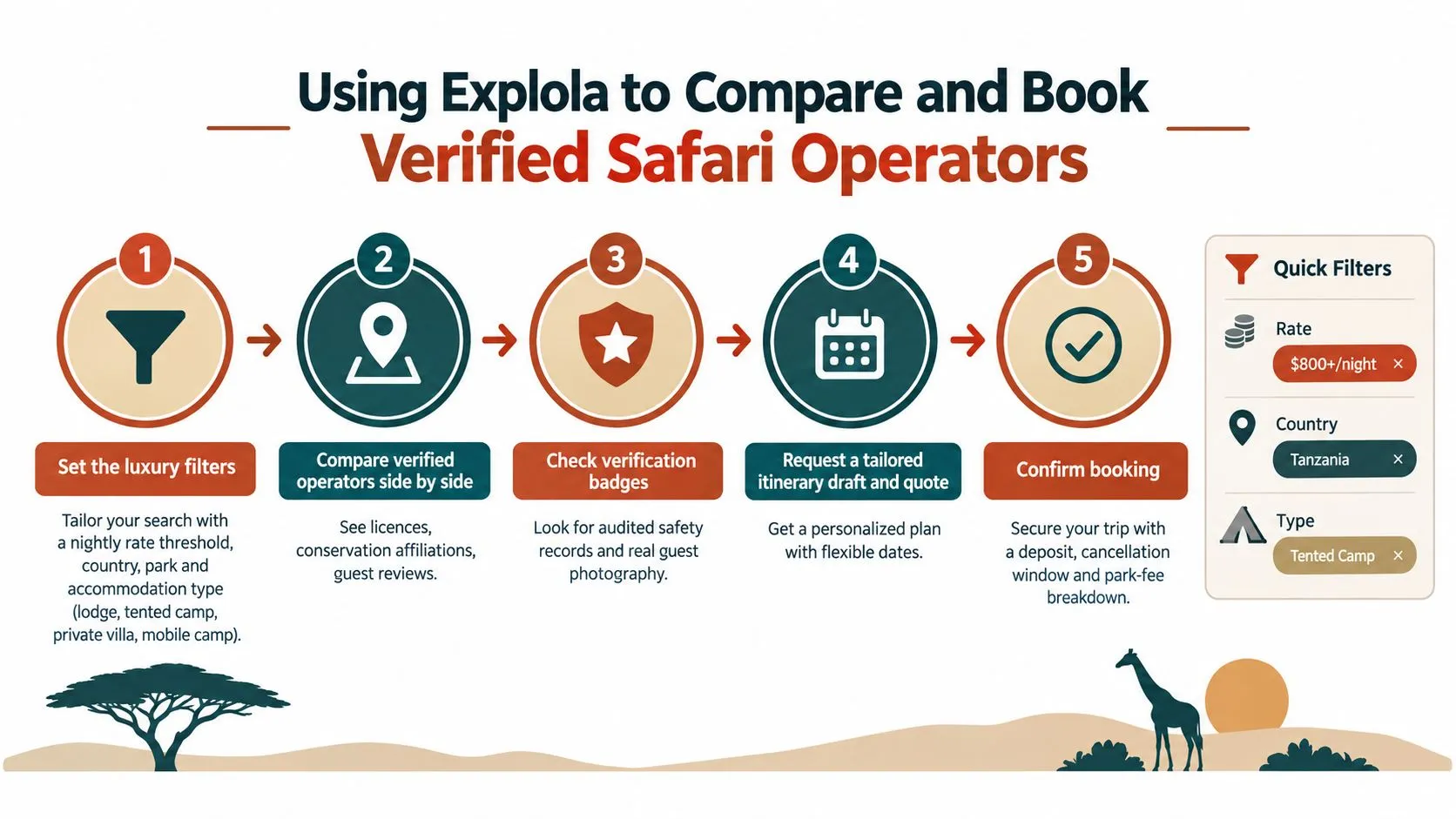
Most safari quotes become confusing because they're hard to compare. One operator includes flights, another bundles drinks, a third excludes the private guide you thought you were getting. Explola fixes that by centralizing discovery, comparison, and direct booking with verified operators, so you can line up the genuine differences before you send a single inquiry.
Start with the filters that actually matter
Use the luxury filters first, nightly rate threshold, country, park, accommodation type, and travel month. That immediately cuts out the noise and keeps you focused on properties that fit the trip you want. If you're choosing between lodge, tented camp, private villa, or mobile camp, you're already in the right frame.
The verified badge matters because it signals that the operator has completed document checks rather than just calling itself trustworthy. Use the side-by-side comparison to line up room count, guide-to-guest ratio, vehicle type, private concession access, and inclusions like inter-camp flights and beverages. That comparison is where value shows up.
Use the inquiry flow to clean up the fine print
Good safari planning turns on awkward details. Ask about single-supplement waivers, child policies, walking add-ons, and gorilla permits if they apply. Save the shortlists, review them with your travel partner, and only then send an inquiry to the operator that best matches your budget and style.
Explola is one option for that workflow, because it lets travelers compare verified safari operators directly and manage the shortlist in one place.
Seasons, Packing, Health, and Final Booking Checklist
Season is not a footnote. It decides what you see, how crowded it feels, and how much you'll pay for the same type of trip. Africa's safari tourism market was valued at US$18.3 billion in 2026, after historical growth of 4.9% CAGR from 2020 to 2025, and luxury lodges and resorts were estimated to capture 42% of accommodation revenue in 2026 market data. That tells you exactly where demand has concentrated, so book early if you want the best camps.
Plan around the right months
For planning, the broad pattern is straightforward. Kenya and Tanzania are strongest around the migration windows, Botswana and Zambia shine in the dry months, and South Africa's Cape region peaks in its own summer season. The continent reached 96% of its 2019 international-arrival level in 2023, equivalent to 66.4 million international visitors, and the UNWTO projected that number could rise to 134 million by 2030 tourism recovery data, so the pressure on top safari dates isn't going away.
Pack for function, not fashion
Neutral layers work better than bright clothes. Bring broken-in walking boots, quality binoculars, a wide-brim hat, high-SPF sunscreen, and insect repellent. If you want a tighter packing checklist, this luxury safari packing guide is a useful cross-check before you start packing your case.
Don't overpack hard shells and don't underpack layers. Dawn drives can be cold, midday can be bright, and the best safari wardrobe handles both.
Final booking checklist
Passport: make sure it has six months of validity left.
Health: check yellow fever rules, malaria prophylaxis, routine boosters, and travel insurance that covers evacuation.
Logistics: confirm park fees, airport transfers, inter-camp flights, and the correct tipping currency.
Gear: bring the right adaptor plugs, camera batteries, and a documented medication list.
Timing: popular luxury camps can sell out nine to twelve months ahead, so don't wait for the “perfect” moment.
For one more practical reference, the Explola African safari packing list can help you sanity-check the essentials before you lock the trip in.
If you want a clean way to compare African safari tours luxury without drowning in inconsistent quotes, use Explola to filter by budget, park, and accommodation type, then compare verified operators side by side. It's the fastest way to see whether you're buying premium comfort or true ultra-luxury, and to book the safari that actually fits your priorities.
Ready to experience this?
Explore Related Safaris

Daniel writes for the Explola blog, where he covers African safari destinations, wildlife, travel trends, and practical trip planning. His work is centered on making safari travel easier to understand, compare, and plan.
Get Safari Tips & Destination Guides
Join our newsletter for exclusive travel tips, wildlife insights, and safari planning advice.