You're up before sunrise, pulling on a fleece while the vehicle waits outside. The first game drive feels cool and quiet, but by late morning the temperature has climbed, dust has settled on your sleeves, and you're deciding whether the water bottle, repellent, camera battery, and passport copies are within reach. Later, you may walk between camp buildings, relax at the lodge, or head out again for an afternoon drive.
A useful African safari packing list has to work across that entire day. It should protect you from sun, insects, dust, and changing temperatures without filling a soft bag you'll struggle to load onto a bush plane. The right choices depend on your operator's itinerary, destination, season, aircraft rules, accommodation, and planned activities. A lodge-based game-drive safari needs a different footwear strategy from a walking safari or a Kilimanjaro extension.
The eight categories below follow the workflow of a real safari. Prepare documents and health supplies first, then build clothing around layers, add sun and insect protection, plan hydration, and choose photography and outdoor equipment according to the trip you've booked.
1. Binoculars and Camera Equipment
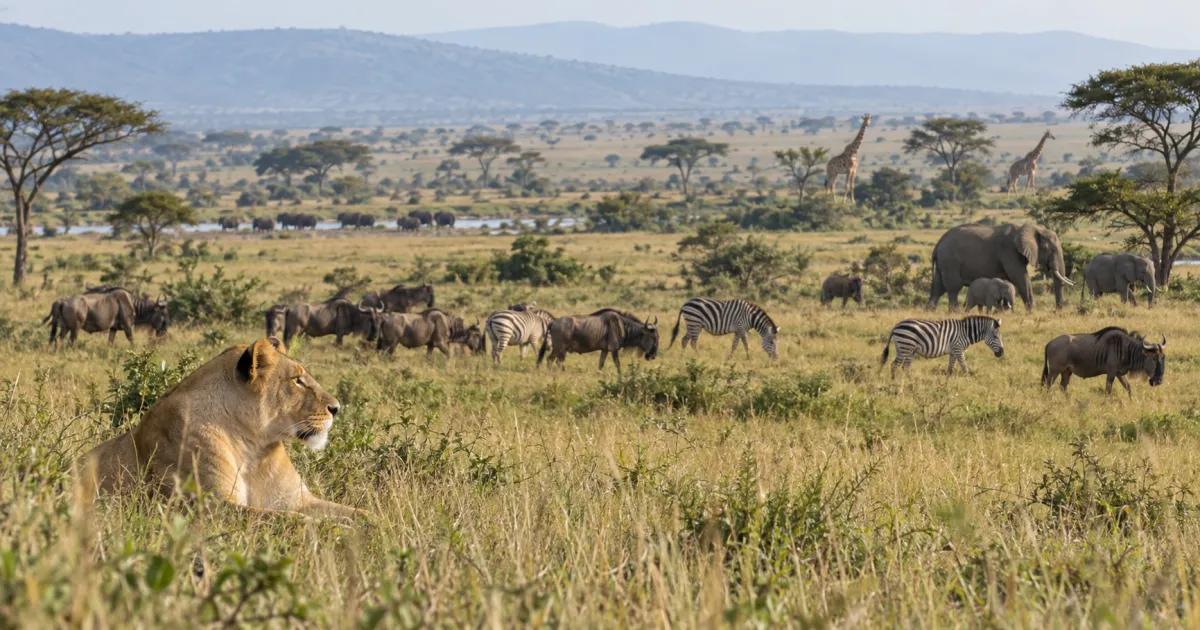
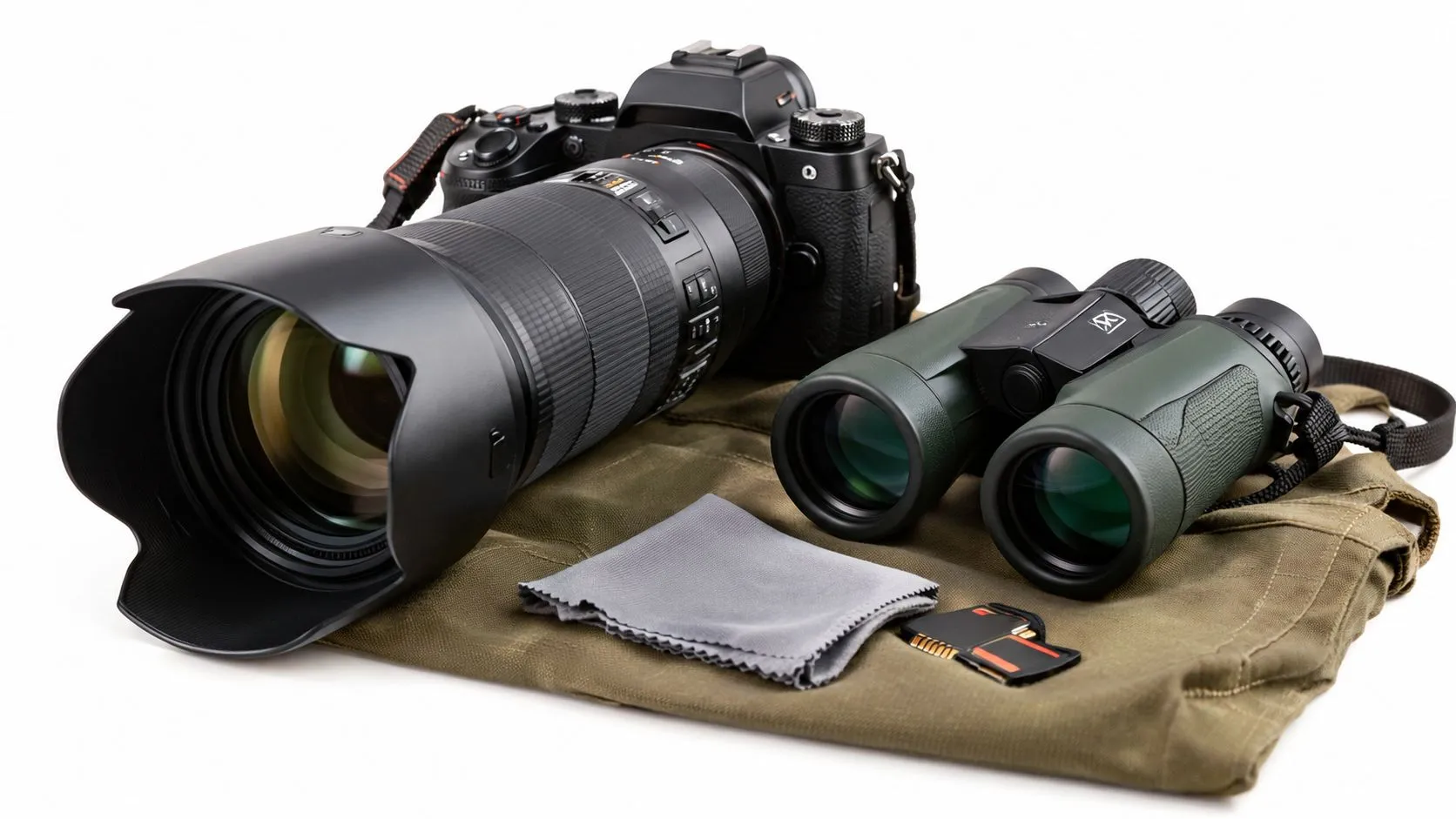
Wildlife rarely appears at the distance you'd prefer. A pride may rest in shade beyond the vehicle, a leopard may sit high in a tree, or a bird may vanish into a distant wetland before the guide can reposition. Binoculars give every traveler a better view, even when nobody is carrying a professional camera.
An 8x42 binocular configuration is widely recommended for safari viewing because it offers a practical balance of magnification, brightness, and stability in a moving vehicle, as reflected in established safari packing guidance from Alluring Africa's wildlife and luggage recommendations. You don't need professional optics to enjoy a game drive, but very cheap binoculars can make distant animals dim, shaky, or difficult to find.
Match camera gear to how you'll use it
A camera system should fit your patience, experience, and baggage allowance. A wildlife photographer may choose a Canon EOS R6 with a Canon RF 100-500mm lens or a Nikon Z9 with a Nikkor Z 180-600mm. Those systems can produce excellent results, but they also consume space and attention. A Fujifilm X-T5 with an XF 55-200mm lens is a more compact alternative, while a capable bridge camera or phone may be the better choice for travelers who want to watch rather than manage settings.
Bring spare memory cards, charged batteries, a padded weather-resistant bag, and a microfiber cloth. Dust is part of the environment, so clean the outside of the equipment regularly and avoid changing lenses in an exposed vehicle whenever possible. A lens pen and protective filter can help reduce handling damage, but no filter replaces careful cleaning.
Practical rule: Pack the camera you'll actually carry on every drive, not the largest system you can technically afford.
Store delicate equipment in a dry bag or protected case overnight, particularly where humidity changes sharply. For a deeper equipment comparison, review this guide to the best wildlife camera for 2026, then confirm the operator's baggage policy before committing to a large lens.
2. Sun Protection and Skin Care
Sun protection needs to stay accessible, not buried beneath clothing in your luggage. On a game drive, the vehicle may offer shade from one direction while your face, neck, forearms, and the tops of your feet remain exposed from another. Dust and wind can also make skin feel dry, so a simple routine works better than a large cosmetics bag.
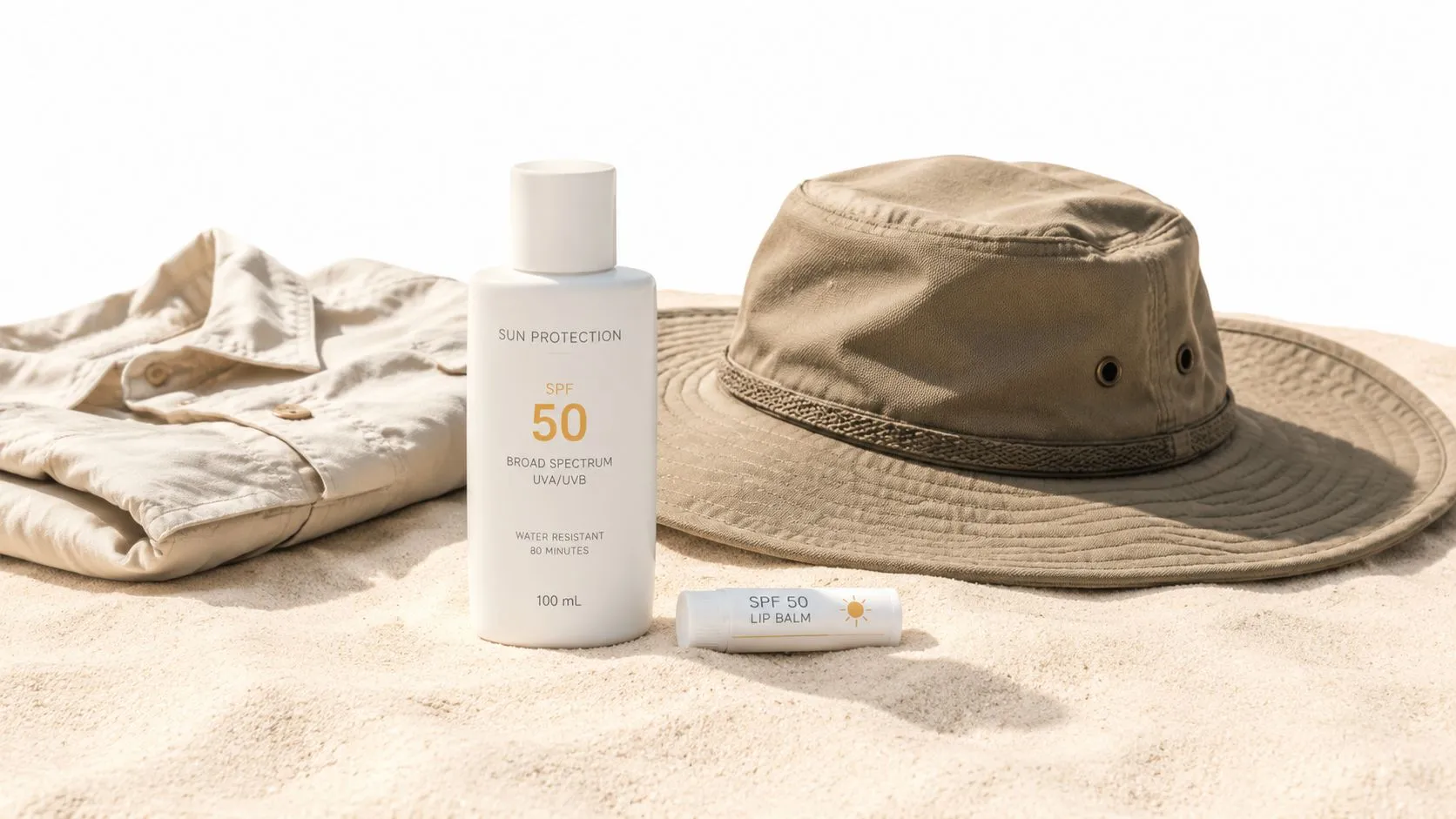
Choose a broad-spectrum sunscreen you'll tolerate using repeatedly. Options such as La Roche-Posay Anthelios, Blue Lizard Australian Sunscreen, Neutrogena Ultra Sheer Dry-Touch, and Coppertone Sport cover different preferences for texture and price. A solid sunscreen stick is useful for the face, ears, nose, and lips because it reduces spill risk in a crowded day bag. The sun-safe travel skincare guidance from Healtsy also supports keeping skincare practical and portable.
Protect the places travelers miss
Apply sunscreen before leaving for the first drive and keep a small amount available for later reapplication. Don't overlook:
Ears and the back of the neck: These areas receive direct exposure in open vehicles.
Hands and forearms: They stay exposed when you hold binoculars or a camera.
Part lines and lips: A hat doesn't protect the scalp part, and ordinary lip balm may not provide sun protection.
Tops of feet: Sandals and low shoes leave this area vulnerable around camp.
A wide-brimmed hat provides more useful coverage than a fashion cap, especially when the vehicle is moving and the sun shifts. Lightweight long sleeves offer a second layer of protection without requiring constant lotion application. Sunglasses should fit securely and remain easy to remove when you're using binoculars.
Keep sunscreen and lip balm in the same small pouch as your repellent and water supply. That way, you can refresh protection during a vehicle stop rather than discovering the bottle is in the main duffel. If you're flying with larger liquid containers, check the relevant airline and airport rules instead of assuming one baggage policy applies throughout the journey.
3. Lightweight, Neutral-Colored Clothing
A safari day can begin in cool air, continue through heat and dust, and end with a sudden shower. Clothing must handle those changes without filling your bag with separate outfits. Choose layers that dry quickly, pack small, and work for drives, camp, and planned walks.
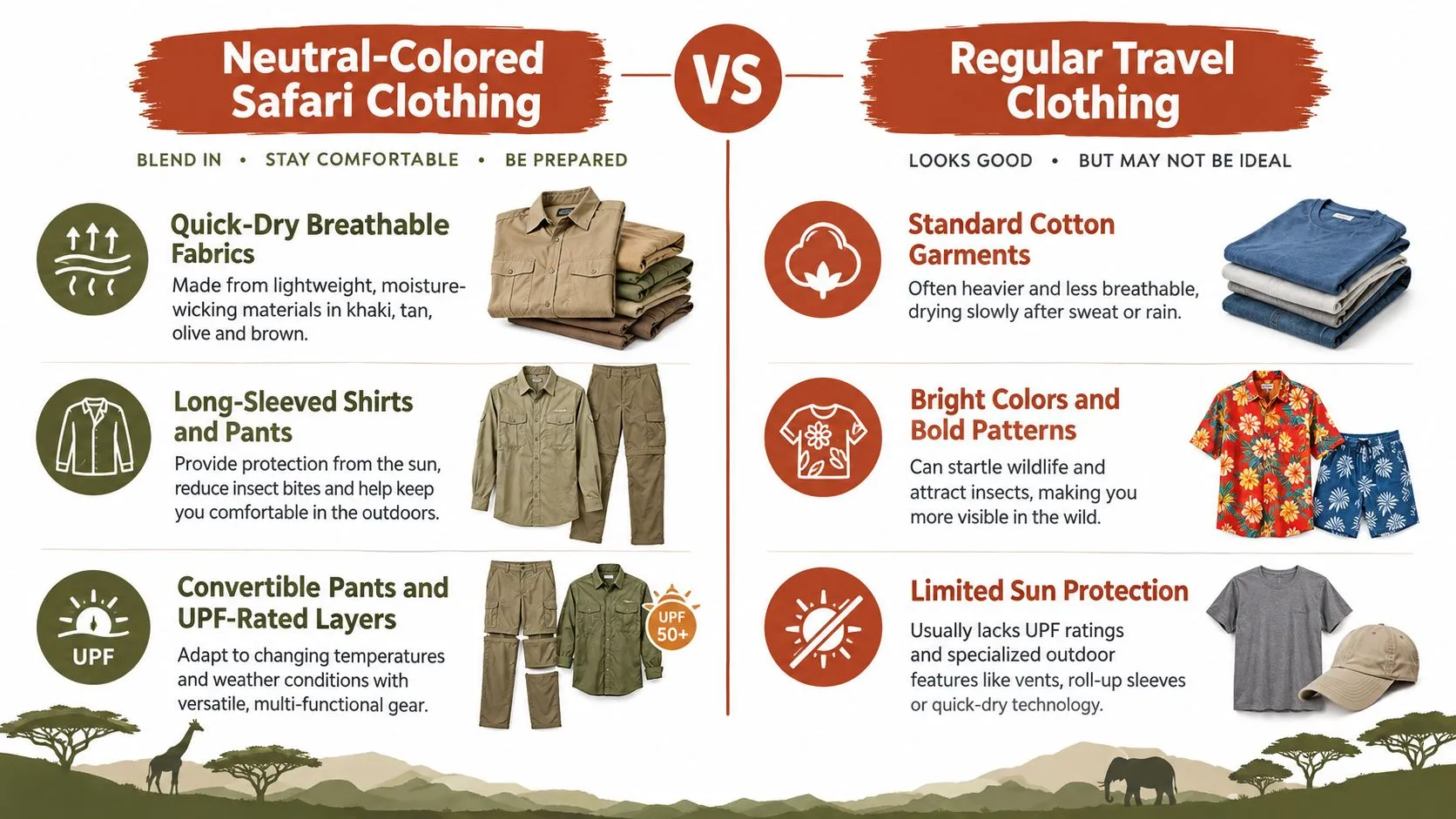
Pack neutral-colored shirts, trousers, and shorts that can be mixed and reworn. For longer trips, about 3–4 re-wearable outfits are usually enough when lodge laundry is available, as explained in Condé Nast Traveler's safari packing guidance. Select clothing that can be washed, dried, layered, and worn again instead of planning a different outfit for every meal.
Build the clothing list around your itinerary. Lightweight shirts, comfortable trousers, underwear, socks, and one warm mid-layer cover the basic range. A fleece, cardigan, or light jacket helps on an early drive. Zip-off or convertible trousers suit days that move between cooler mornings and warmer afternoons. Add a packable rain jacket when the route, season, or forecast makes one useful.
Muted greens, tans, browns, and khaki are practical around dust and vegetation. Bright white shows dirt quickly, and loud patterns may feel conspicuous on walking activities. Existing travel clothes can work if they meet the same needs, so avoid buying a complete branded safari wardrobe.
Choose quick-drying fabrics: They are easier to wash at camp and more practical than heavy cotton when laundry time is limited.
Pack one reliable warm layer: Several bulky sweaters take up space, particularly when luggage allowances are tight.
Bring broken-in walking shoes: New footwear can cause blisters during a short camp walk.
Add a rain layer when appropriate: Ask the operator about route and season conditions rather than relying on a generic list.
For route-specific preparation, consult this Kenya safari packing guide, especially if the itinerary combines game drives with walking, cultural visits, or different lodge settings. Clothing should support those activities, not dictate them.
4. Medications and First-Aid Supplies
Health preparation comes before shopping for safari clothing. A minor illness or injury is harder to manage when camp is distant from a pharmacy or clinic, so build your plan around the destination, season, elevation, trip length, and planned activities.
Arrange a travel-medicine consultation for malaria prevention and recommended vaccinations. The suitable antimalarial depends on your health history and destination. Do not choose atovaquone-proguanil, doxycycline, mefloquine, or another medicine only because another traveler used it. Doxycycline can increase sun sensitivity, and other options have their own precautions and side effects. Travelers combining safari with high-altitude trekking should also ask whether altitude medication is appropriate.
Pack prescriptions in their original labeled containers and keep them in your carry-on. Checked luggage can be delayed or lost. Bring a written prescription or clinician's letter when appropriate, store a copy securely online, and keep a medication log if changing time zones or disrupted travel days may affect your routine.
Build the first-aid pouch around problems you can reasonably handle between medical visits:
Personal prescriptions: Carry enough for the entire trip and allow for delays.
Traveler's diarrhea supplies: Ask a clinician or pharmacist what is suitable for you.
Pain and allergy relief: Pack products you have already used safely.
Antiseptic and dressings: Cover small cuts, blisters, and bites promptly.
Rehydration supplies: Oral rehydration salts may help if illness causes fluid loss.
Motion-sickness medicine: Consider it for winding roads or light-aircraft flights.
Keep the pouch accessible during airport transfers, road journeys, and camp check-in rather than buried in the main luggage. A small second supply of key items in your day bag provides backup when the vehicle and luggage are separated.
Malaria prevention also depends on repellent, suitable coverage, sleeping arrangements, and the times you will be outdoors. Medication supports that plan, but it does not replace the other layers of protection.
5. Insect Repellent and Mosquito Protection
Repellent works best as part of a layered plan. Dawn and dusk game drives, evening meals, and walks around camp can expose skin when mosquitoes are active, while long sleeves and trousers reduce the amount of skin that needs coverage.
Look for an EPA-registered repellent containing 20–30% DEET or about 20% picaridin, ranges highlighted in practical safari health guidance from Travel With Wandr's safari packing recommendations. Apply it to exposed skin according to the product instructions, and use your hands to apply it carefully around the face rather than spraying close to the eyes or mouth.
Combine repellent with physical barriers
Repellent isn't a substitute for medical advice or malaria prophylaxis. It's one part of a broader exposure strategy. Long sleeves, full-length trousers, socks, and a hat can reduce bites, particularly during evening activities.
Permethrin-treated clothing may be useful for certain itineraries, but follow the treatment label and never apply clothing-only products directly to skin. Test any new repellent on a small area before departure. If your skin reacts, you'll have time to choose another option.
Keep a small bottle in the vehicle bag and another with your evening items. Lodges may provide mosquito nets, but confirm what's included rather than assuming every camp uses the same sleeping setup. Ask the operator whether your route includes walking after dark, camping, or remote camps, since those details change how much protection you'll use.
Don't wait until you see mosquitoes. Apply protection before the drive or evening activity begins.
Avoid storing aerosol products in direct heat, and protect repellent from leaks by placing it inside a sealed pouch. The best product is the one you'll apply correctly and keep available throughout the day.
6. Appropriate Footwear
Choose footwear from the itinerary, not from the word “safari.” A lodge-based vehicle trip usually calls for comfortable shoes that handle uneven paths between tents. Walking safaris and forest treks may require deeper grip, ankle support, and better protection from vegetation. Sand, stones, thorns, mud, and wet ground expose poor fit quickly.
Long drives create a separate trade-off. Stiff boots can become tiring when your feet stay in one position for hours, while flimsy sandals leave feet exposed on rough paths. Hiking-oriented designs such as Salomon Quest 4D, Merrell Moab, Keen Targhee, and Garmont Dakota Lite are examples to compare. Fit, terrain, and operator guidance matter more than the brand.
Test the footwear before departure
Wear the shoes at home on walks of similar length, using the socks you plan to pack. Check for pressure points, heel movement, and rubbing before travel. Moisture-wicking hiking socks generally suit walking activities better than cotton. Put blister supplies in the day bag, where they remain available during drives and walks.
Pack around the trip's actual demands:
Primary activity shoes: Comfortable, sturdy footwear suited to the hardest planned walk.
A backup pair: Useful if the main pair becomes wet, dirty, or causes unexpected rubbing.
Lodge footwear: Lightweight sandals or camp shoes for time around camp.
A gaiter can help in tall grass, but ordinary vehicle safaris often do not require one. Heavy expedition boots may also waste luggage space on an itinerary focused on game drives. Confirm whether the route includes walking, trekking, wet forest, or rocky ground before choosing specialized footwear.
After each activity, clean and dry the shoes. Keep dusty pairs outside the main clothing compartment, and store blister supplies in the day bag rather than the duffel. Freshly tested, itinerary-specific footwear is more useful than extra equipment bought for appearance.
7. Travel Documents and Vaccination Records
Sort documents before buying extra safari gear. A missing passport, entry permission, insurance detail, or vaccination record can delay a border crossing, internal flight, lodge check-in, medical treatment, or insurance claim.
Check requirements against your nationality and route through official government or consular channels. Ask the operator whether the itinerary crosses borders and which documents they need in advance. Yellow fever documentation may apply on particular routes, while vaccination decisions should come from a certified travel clinic. For general guidance, review vaccines for travel abroad.
Build one accessible document pack
Keep originals in a waterproof pouch inside your carry-on, not in checked luggage. Place secure digital copies in an offline folder and a trusted cloud account. A phone can lose power or connectivity, so carry paper backups as well.
Include:
Passport and visas: Confirm validity and entry rules before departure.
Insurance and emergency contacts: Check that the policy covers medical care and evacuation for your planned activities.
Vaccination records: Carry the original certificate when a route requires it.
Prescription information: Keep copies with the medication.
Operator and lodge details: Save confirmation numbers, pickup times, and transfer instructions.
Emergency contacts: Record family, insurer, clinician, and local operator numbers.
Share only the documents an operator needs, and retain control of sensitive information. The East Africa travel advice for first-time visitors can help identify planning questions before you finalize a regional itinerary.
Before leaving, open the pack and test the backup process. Confirm that files are available without internet access, paper copies are legible, and medication information matches what you carry. Keeping everything in your day-accessible luggage protects your identity, treatment access, and insurer contact options if a checked bag is delayed.
8. Hydration and Electrolyte Replacement Systems
Water belongs in your daily workflow, not at the bottom of your luggage. You may spend long periods in an open vehicle, walk under strong sun, or arrive at a camp after a dusty transfer. Thirst is a poor planning signal when conversation, photography, and wildlife viewing distract you.
Start each activity with a filled reusable bottle. Hydro Flask and Nalgene bottles are familiar choices, while a CamelBak bladder can make hands-free drinking easier during walks. If you're unsure about refill conditions, ask the operator whether vehicles and lodges provide treated drinking water. A LifeStraw or Sawyer Squeeze can be useful for specific camping or trekking itineraries, but it's unnecessary equipment when the route already includes reliable potable water.
Use electrolytes selectively
Electrolyte powders or tablets from brands such as Nuun, GU, or Gatorade may suit travelers who sweat heavily or spend extended time outdoors. Test the flavor and ingredients before the trip. A product that upsets your stomach is a poor emergency solution, especially on a remote transfer day.
Pack a small supply in an accessible pouch, keep the bottle clean, and refill it during meals or scheduled stops. Don't assume every vehicle has the same storage capacity or water arrangement. Ask directly before departure, particularly if the route includes camping, walking, or high-altitude trekking.
Water strategy: Confirm provision with the operator, carry one dependable bottle, and keep any filtration system proportional to the actual itinerary.
Avoid treating coffee or alcohol as hydration, especially before early drives or walks. Your operator's guidance should take priority when local conditions, medical needs, or activity intensity require a different approach. This Tanzania safari camping guide is a useful reference when your trip includes camping rather than lodge-only travel.
8-Point African Safari Packing Comparison
Item | Core features ✨ | Value / Why it matters 💰 | Quality ★ | Target audience 👥 | Key USP 🏆 |
|---|---|---|---|---|---|
Binoculars and Camera Equipment | 8x/10x 42 binoculars; telephoto lenses; weather‑sealed bodies; tripods; spare batteries | 💰 High upfront cost; enables close observation & pro-quality photos | ★★★★☆ | 👥 Photo-enthusiasts, reviewers, serious travelers | 🏆 Captures operator-highlighted moments; boosts review/shareable content |
Sun Protection and Skin Care | SPF50+ broad‑spectrum; water‑resistant; mineral options; lip SPF; after‑sun | 💰 Low–Medium; prevents sunburn, long‑term skin damage, improves comfort | ★★★★☆ | 👥 All travelers, sensitive-skin, high-altitude guests | 🏆 Essential for all-day outdoor comfort; often noted in itineraries |
Lightweight, Neutral-Colored Clothing | Quick-dry/UPF fabrics; khaki/olive palette; long sleeves; convertible pants; permethrin options | 💰 Medium; blends for better sightings, layers for temperature control | ★★★★☆ | 👥 Safari-focused travelers, photogs, multi-day guests | 🏆 Neutral tones improve wildlife approachability & photos |
Medications and First-Aid Supplies | Antimalarials; antibiotics; anti‑diarrheals; Diamox; full first‑aid kit | 💰 Medium–High (clinic + meds); prevents escalation in remote locations | ★★★★★ | 👥 All travelers, trekkers, chronic-condition holders | 🏆 Critical for safety & continuity; reduces evacuation risk |
Insect Repellent and Mosquito Protection | DEET 20–30% / picaridin; permethrin-treated clothing; bed nets; coils | 💰 Low–Medium; lowers disease risk (malaria, dengue); lightweight pack | ★★★★☆ | 👥 Dawn/dusk drivers, low-elevation park visitors | 🏆 Proven chemical + passive clothing protection combo |
Appropriate Footwear | Ankle‑support boots; puncture‑resistant soles; quick‑dry; broken‑in fit; camp shoes | 💰 Medium–High; prevents injury, reduces fatigue across terrains | ★★★★–★★★★★ | 👥 Walking-safari participants, trekkers, active travelers | 🏆 Safety & comfort tailored to activity (walking vs. vehicle) |
Travel Documents & Vaccination Records | Passport 6+ months; visas; yellow fever cert; travel insurance; prescriptions | 💰 Low (fees) but high impact; ensures legal entry & medical support | ★★★★★ | 👥 All international travelers, families, solo adventurers | 🏆 Mandatory for entry/health clearance; operator-required documentation |
Hydration & Electrolyte Systems | 2–3L bottles/bladders; LifeStraw/Sawyer filters; electrolyte powders; insulated bottles | 💰 Low–Medium; prevents dehydration, aids altitude adaptation, eco-friendly | ★★★★☆ | 👥 High-activity guests, trekkers, Kilimanjaro climbers | 🏆 Health-critical plus conservation benefit (reusable/refillable) |
Turn the Checklist Into a Trip-Specific Plan
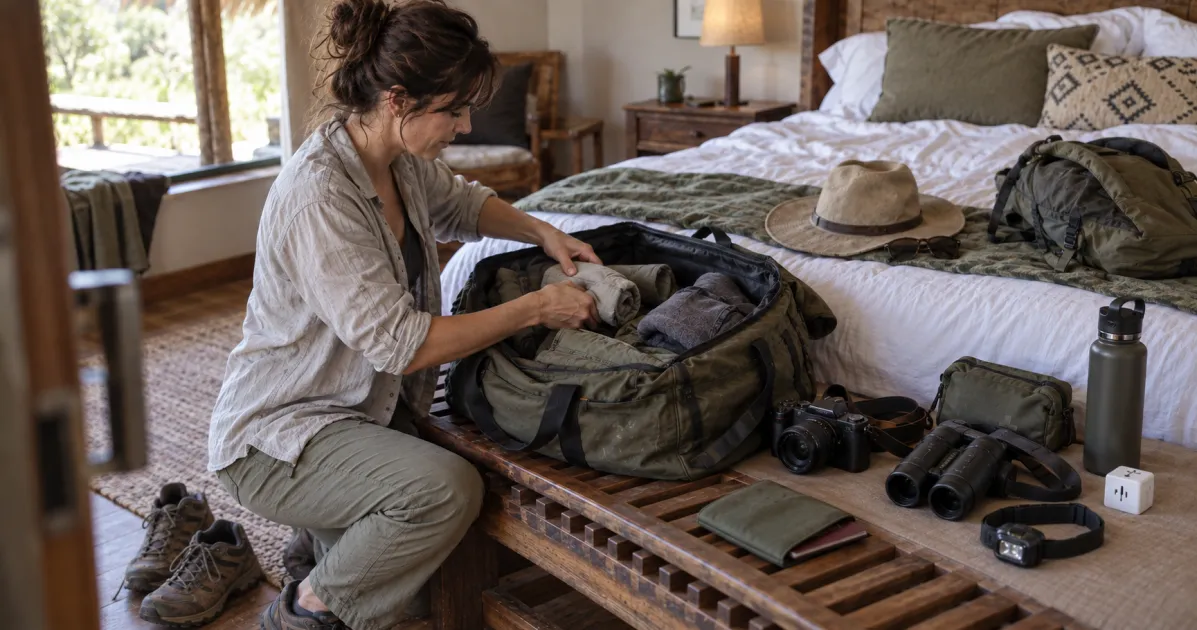
A strong African safari packing list isn't a shopping list. It's a system for putting the right item in the right place before a day of transfers, wildlife viewing, walking, and changing weather. Start by separating what must remain with you from what can travel in the main soft bag.
Your carry-on essentials should include your passport, visas, vaccination records, insurance information, prescriptions, prescription copies, essential medication, basic first aid, and any irreplaceable documents. Keep electronics, batteries, memory cards, and camera equipment protected and accessible. If your checked luggage is delayed, you should still have the supplies needed to manage the first part of the journey.
Your checked or aircraft luggage should stay compact and flexible. Many regional bush flights impose strict soft-bag limits, commonly 15 kg, or 33 lbs, in East Africa and 20 kg, or 44 lbs, in parts of Southern Africa, with some carriers counting camera equipment and carry-on items within the total, according to African Safaris' packing regulations overview. Confirm the exact allowance with every operator and airline on your route. A soft-sided duffel is usually more practical than a hard-shell suitcase because light aircraft compartments may not accept rigid luggage.
Your daily vehicle bag should hold the items you'll use without unpacking everything. Pack sunscreen, lip balm, repellent, sunglasses, a hat, a warm layer, binoculars, camera batteries, a phone, a power bank, basic medication, tissues, and water. Keep the bag small enough to sit comfortably beside you and secure enough to protect equipment from dust.
Before closing the duffel, ask your operator specific questions:
What aircraft and baggage rules apply: Confirm soft-bag requirements, total weight, and whether camera gear counts.
What activities are scheduled: Vehicle drives, walking, trekking, boating, and cultural visits need different footwear and clothing.
What health guidance applies: Check malaria advice, vaccination requirements, prescription rules, and medical support.
What the lodge provides: Confirm laundry, mosquito netting, drinking water, charging, and basic toiletries.
What the route crosses: Border rules and documentation can change between countries.
Explola can help you compare safari itineraries, activity types, accommodation, inclusions, operator guidance, and traveler reviews before you decide what belongs in your bag. Its marketplace connects travelers with verified African safari operators, supports side-by-side tour comparison, and provides a direct inquiry process for itinerary-specific questions. Use the trip details, not a generic gear advertisement, to decide whether you need hiking boots, filtration equipment, specialized camera gear, or only comfortable walking shoes.
The best-packed traveler isn't the one with the most equipment. It's the one who can reach the essentials quickly, stay comfortable through changing conditions, and avoid carrying gear that the itinerary never requires.
Use Explola to compare safari operators, day-by-day itineraries, activities, inclusions, and accommodation before you finalize your packing list. Review the route and send direct questions about baggage limits, laundry, water, health preparation, and walking conditions so your equipment matches the trip you're taking.

Daniel writes for the Explola blog, where he covers African safari destinations, wildlife, travel trends, and practical trip planning. His work is centered on making safari travel easier to understand, compare, and plan.
Get Safari Tips & Destination Guides
Join our newsletter for exclusive travel tips, wildlife insights, and safari planning advice.