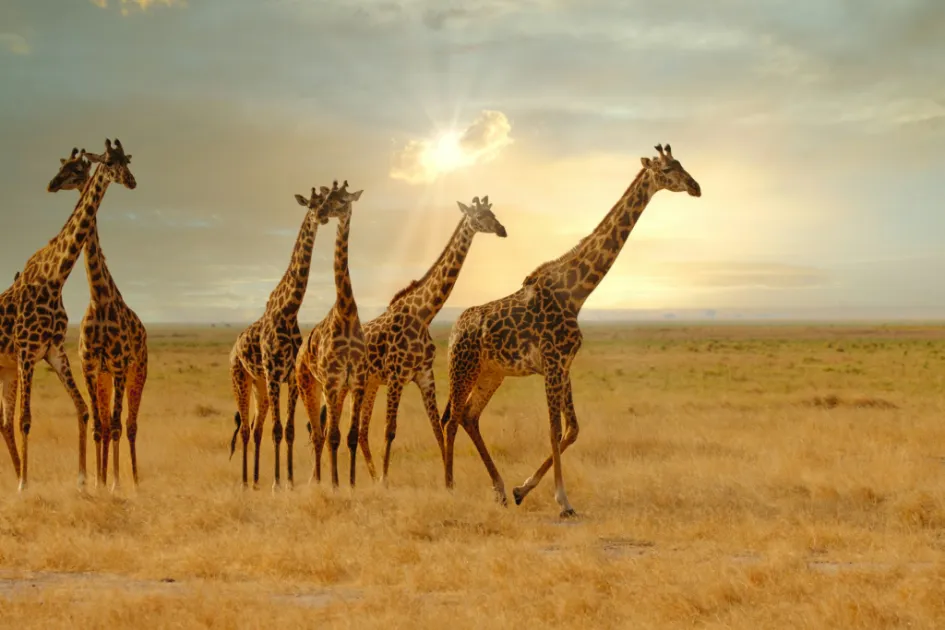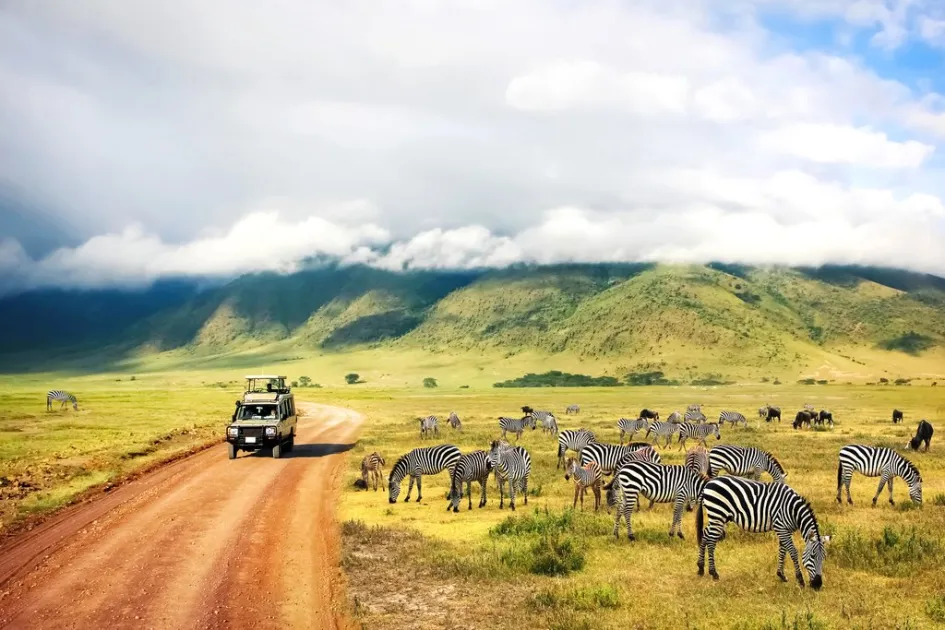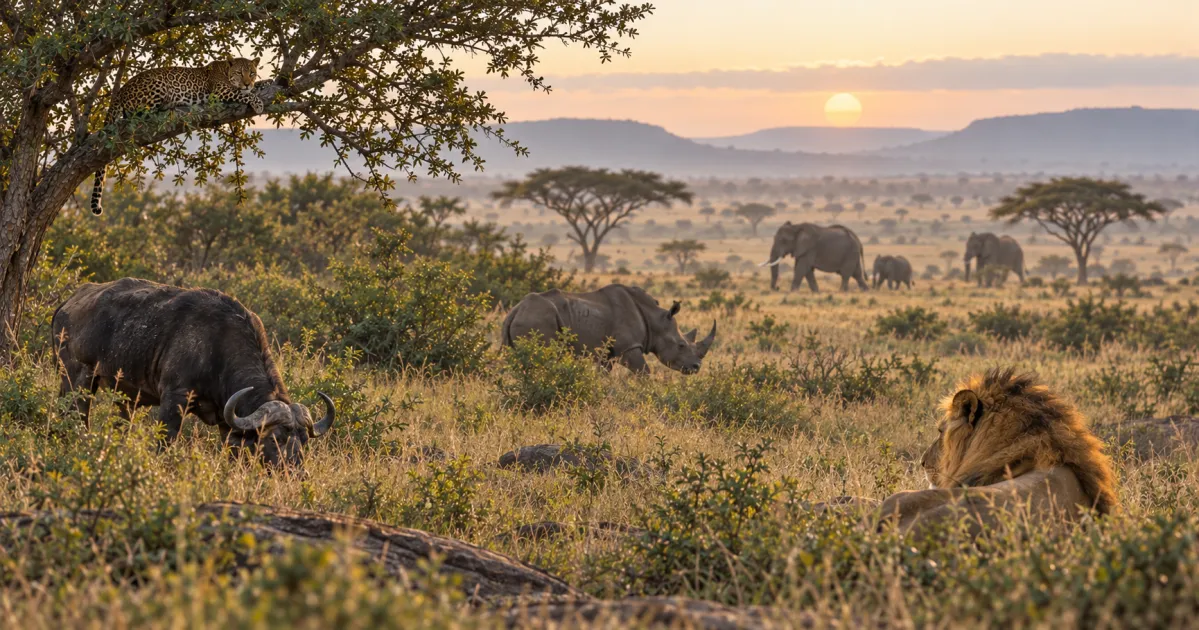
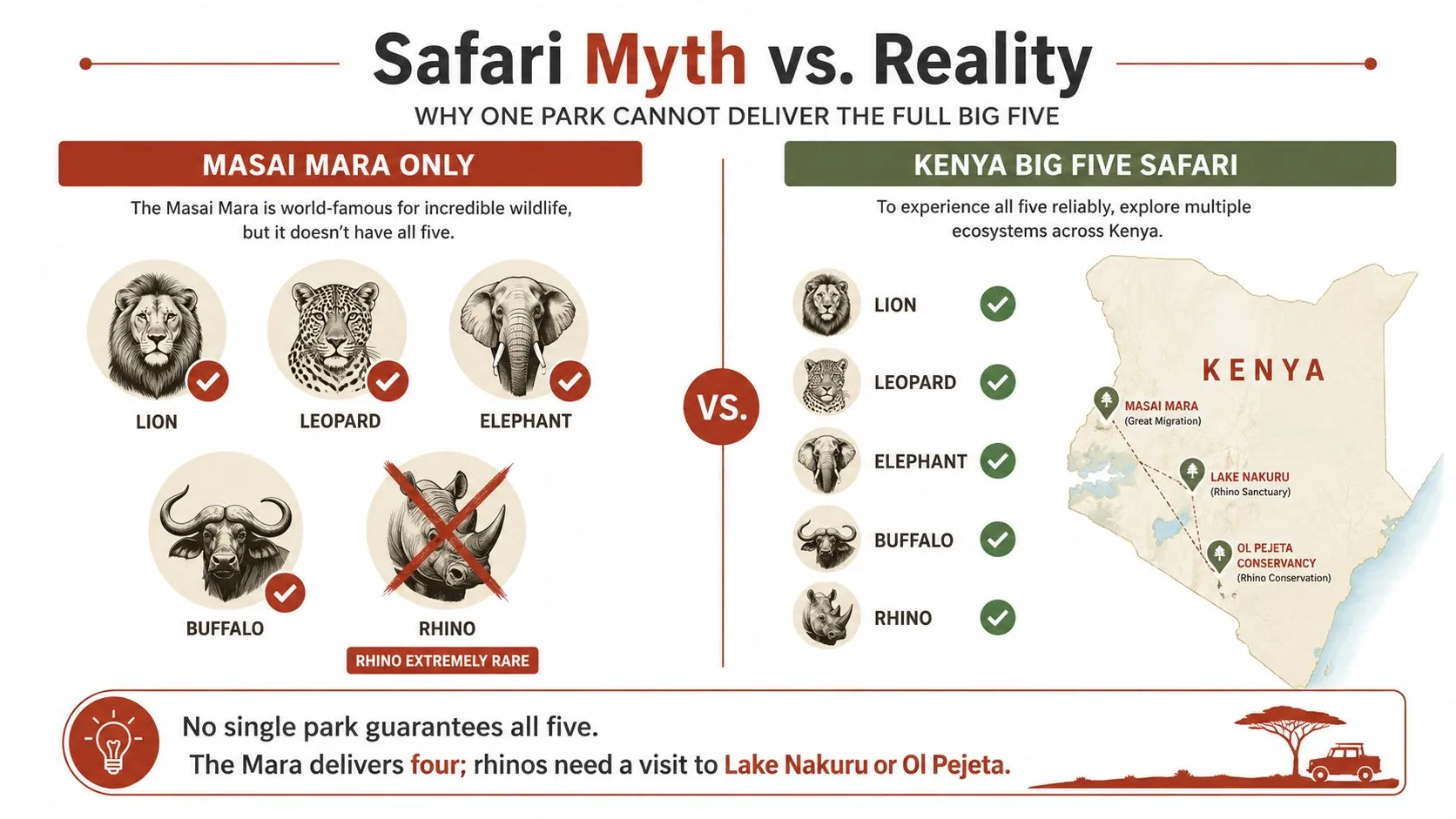
Kenya's most dependable Big Five plan combines several parks, not the Masai Mara alone. The Mara is strong for lion, leopard, elephant, and buffalo, while rhino usually requires a dedicated stop at Lake Nakuru or a sanctuary such as Ol Pejeta.
The popular advice to “book the Mara and see everything” leaves out the hardest part of the checklist. Rhino sightings aren't dependable in the Mara, even though the reserve is an exceptional predator destination. A well-designed Kenya Big Five safari works more like a puzzle: each reserve contributes the species, terrain, or viewing conditions it handles best.
Kenya remains one of Africa's most important Big Five destinations because the Maasai Mara, Amboseli, Lake Nakuru, Samburu, and Nairobi National Park create several high-probability viewing circuits for lion, elephant, buffalo, and rhino. Leopard is usually the most difficult species to find, and rhino sightings are often concentrated in protected areas rather than spread evenly across the country. (Kenya's Big Five parks and wildlife circuits)
Why One Park Cannot Deliver the Full Big Five
The Masai Mara is the logical foundation for a first Kenya safari, but it isn't a complete solution by itself. Resident lions, leopards, elephants, and buffalo make the Mara a powerful four-species base. Rhino, however, is the weak point. The animals are relatively scarce, cautious, and concentrated in specific protected areas, so no responsible operator should promise a Mara-only Big Five result.
Give each reserve a specific job
Think of the route as a division of labor rather than a competition between parks.
Masai Mara: Build your predator days here. Lion, leopard, elephant, and buffalo are the core targets, supported by open grasslands and permanent water.
Ol Pejeta Conservancy: Add a serious rhino focus, including black rhino and the northern white rhino sanctuary experience. It also offers chimpanzee viewing, which is outside the Big Five but adds conservation depth.
Lake Nakuru National Park: Use the park as a practical rhino stop, especially when your route already passes through the Rift Valley.
Solio: Consider it when white rhino viewing matters more than a broad national-park experience.
The reason this approach works is ecological, not merely logistical. Kenya's rhinos remain concentrated in particular protected areas. Recent census coverage recorded 2,102 rhinos nationally in 2025, but that total doesn't mean a traveler will find rhinos distributed evenly across every celebrated safari reserve. (2025 Kenya wildlife census context)
Practical rule: Treat a “Big Five safari” as a multi-park objective. Treat the Mara as the predator anchor, not as a guarantee of all five animals.
That distinction can save you from paying for an itinerary built around an unrealistic promise. A multi-day sequence gives guides more than one habitat to work with, spreads your viewing opportunities across different wildlife systems, and lets you choose between a wild-rhino experience and a more dependable sanctuary visit.
Understanding the Big Five and Why Kenya Stands Out
The Big Five are the African elephant, lion, leopard, Cape buffalo, and rhinoceros. The phrase began as a colonial-era hunting classification for animals considered especially difficult and dangerous to hunt on foot. Modern safari travelers use it differently, as a shorthand for five ecologically important and visually compelling species.
The label still has value, provided you understand its limits. It isn't a complete measure of biodiversity, and it shouldn't overshadow cheetahs, wild dogs, giraffes, birds, primates, or the smaller species that make a safari feel alive. Instead, it gives first-time travelers a clear starting checklist while encouraging them to visit habitats with very different conditions.
Five animals, five viewing problems
A lion may rest in open grassland, making it easier to spot than a leopard hidden in riverine vegetation. Elephants can form conspicuous groups around water, while buffalo may blend into a large dark herd. Rhino viewing depends heavily on protected habitat and local population concentration.
That variety is exactly why Kenya rewards a circuit. The country connects open Mara plains, Rift Valley lakes, central conservancies, northern drylands, and vast eastern wilderness. Each area changes the way guides search, the species they prioritize, and the pace of the game drive.
Why Kenya creates a strong circuit
Kenya's appeal also comes from accessibility. Nairobi National Park sits about 10 km from Nairobi's city center, and it's one of the few places where travelers can see wild lion, buffalo, leopard, and rhino with a city skyline in the background. (Nairobi and Kenya's Big Five geography)
Conservation history adds another layer. Historical records cited for Kenya show lions falling from more than 20,000 in 1963 to 2,749 in 2002 and 1,970 in a later count. African elephants declined from about 167,000 in 1963 to 16,000 at their low point in 1989, before recovering to around 32,000. Black rhinos fell from about 20,000 in 1970 to 391 in 1997, later rising to 603. (Historical wildlife population records in Kenya)
Those changes explain why a modern safari is based on protected areas, patient guiding, and conservation-aware travel rather than guaranteed sightings.
Kenya's Signature Reserves at a Glance
A strong route assigns each reserve a specific job. The Mara supplies predator density, Nakuru and Ol Pejeta strengthen the rhino plan, Amboseli specializes in elephants, and Samburu adds northern species with a distinctly different setting. The goal is not to make every park deliver the same sightings, but to combine habitats that compensate for one another.
The Masai Mara covers about 1,510 km², yet permanent water and productive grasslands can concentrate wildlife in accessible areas. That helps create strong predator opportunities within a relatively compact reserve, although it does not guarantee every member of the Big Five. (Masai Mara wildlife concentration and Big Five planning)
| Reserve | Big Five strength | Signature species | Best role in circuit |
|---|---|---|---|
| Masai Mara National Reserve | Strong for lion, leopard, elephant, and buffalo | Lion and leopard | Predator-heavy core |
| Ol Pejeta Conservancy | Strongest as a dedicated rhino stop | Black rhino and northern white rhino sanctuary | Conservation and rhino focus |
| Lake Nakuru National Park | Useful for rhino, with varied lake-country wildlife | White rhino and birdlife | Rift Valley connector and rhino stop |
| Solio Ranch | Specialist rhino destination | White rhino | Focused rhino viewing |
| Amboseli National Park | Elephant specialist | Elephant | Elephant-focused extension |
| Samburu and Buffalo Springs | More valuable for northern species than as a complete Big Five park | Reticulated giraffe and Beisa oryx | Northern ecosystem contrast |
| Tsavo East and West | Vast, lower-density wilderness system | Elephant and broad wilderness scenery | Large-scale eastern extension |
How the parks divide the work
Ol Pejeta and Lake Nakuru aren't interchangeable in feel. Ol Pejeta is a conservancy built around conservation work and focused rhino viewing. Nakuru is a national park that fits naturally into routes linking Nairobi, Naivasha, or the Mara, while adding lake-country habitats and birdlife.
Amboseli is the clearest elephant specialist, with over 1,200 elephants across a 392 km² footprint. Tsavo East and West cover about 22,812 km², so they offer a much broader, lower-density wilderness experience. The contrast matters: Amboseli can make elephant viewing a central purpose of the stay, while Tsavo rewards patience, distance, and interest in large-scale scenery. (Kenya Big Five park combinations)
Samburu and Buffalo Springs serve a different purpose again. They are better chosen for northern species such as reticulated giraffe and Beisa oryx than for completing a predictable Big Five list. A route that includes the Mara, a rhino-focused area, and either Amboseli or Tsavo therefore builds variety instead of relying on one reserve's strengths.
For comparing operators and regional route styles, East Africa safari tours offers useful planning context. The Masai Mara National Reserve guide can also help assess the reserve's location, activities, and place within a wider circuit.
Sample Itineraries That Build a Complete Set
The itinerary should accumulate opportunities rather than spend every day repeating the same search. Early drives help the guide understand animal movements. Later drives can target the missing species, revisit a promising area, or slow down for better photography.
A compact five-day route
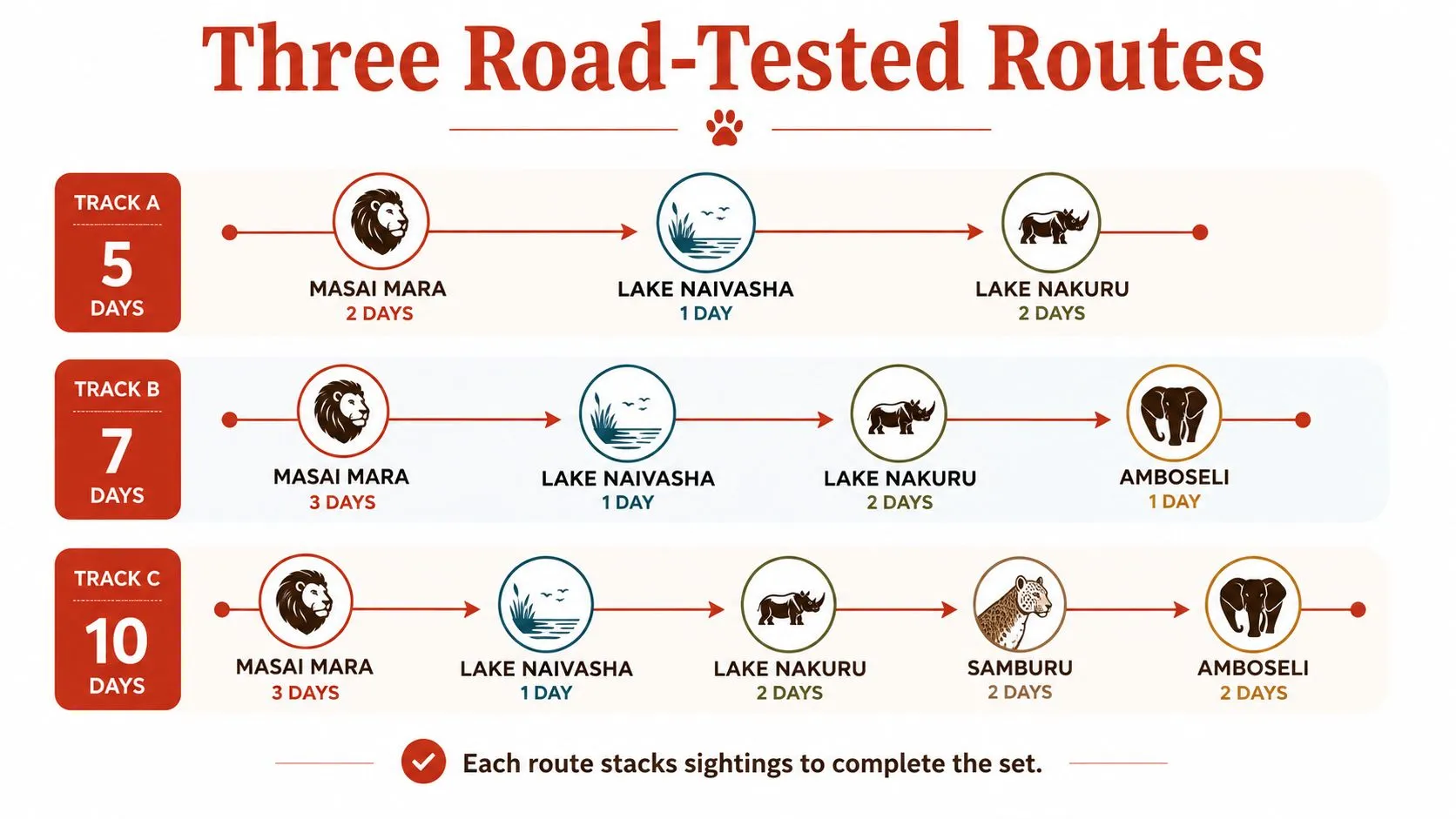
A practical short trip can combine Masai Mara, Lake Naivasha, and Lake Nakuru.
Days one and two, Masai Mara: Concentrate on lion, leopard, elephant, and buffalo. Choose a comfortable tented camp or mid-range lodge close to a productive access point, and avoid spending the first afternoon on a long cross-country transfer.
Day three, Lake Naivasha: Use the lake as a restorative stop with a lighter wildlife schedule. It breaks the journey and adds a different Rift Valley setting.
Days four and five, Lake Nakuru: Focus on rhino and complete the circuit's main gap. A road-based route keeps the parks connected without adding an unnecessary flight day.
This itinerary is efficient, but it shouldn't be sold as a guaranteed all-five trip. It's a strong short safari for four reliable Mara species plus a dedicated rhino opportunity at Nakuru.
A seven-day Mara and northern extension
For travelers who want more variety, spend three days in the Mara, one day around Naivasha, and two days in Nakuru, then use the remaining time for a northern or elephant-focused extension. Samburu adds reticulated giraffe and Beisa oryx, while Amboseli changes the emphasis toward elephants and dramatic open-country scenery.
Road transfers make sense when the route is compact and the group enjoys seeing rural Kenya between parks. Flying becomes more attractive when you're protecting game-drive time, traveling with children, or combining distant regions. A detailed seven-day Nairobi, Lake Nakuru, and Ol Pejeta safari route illustrates how a rhino-focused stop can fit into a short Kenya plan.
A ten-day grand route
A longer journey can allocate three days to the Mara, one around Naivasha, two in Nakuru, two in Samburu, and two in Amboseli or Tsavo West. This route builds a broad wildlife portfolio, but it involves more transfers, so the transport method matters.
Adding Solio or Ol Pejeta creates a deliberate sanctuary tradeoff. You gain a more dependable rhino experience, but you're choosing a managed conservation setting rather than relying only on a chance encounter in open wilderness. In drier months, Amboseli can take priority for travelers whose main goal is elephant viewing. The route should follow your species priorities, not a fixed park list.
Setting Sighting Expectations With 2025 Data
A strong guide won't promise a checklist. They'll explain which animals are common in a particular region, which require patient searching, and which need a dedicated stop. The 2025 census context makes that honesty more important because Kenya's wildlife picture is positive in some areas and fragile in others.
Recent census coverage reported elephants and black rhinos increasing by about 4% year over year, reaching roughly 41,952 elephants and 2,102 rhinos. The same coverage reported 2,512 lions, 605 cheetahs, and 310 wild dogs, a reminder that growth in one species doesn't mean every conservation story is secure. (Kenya's 2025 wildlife census findings)
What each animal demands from the traveler
Lion is usually the easiest Big Five species in the Mara. Resident prides and open habitat make repeated encounters realistic on a multi-day stay. Buffalo are also dependable there, often appearing in large herds or near water.
Elephants are strong in Amboseli and important across the Mara and other parks, but their distribution changes with water and forage. A guide may spend time checking a known corridor, river, or wetland rather than driving randomly across a reserve.
Leopard is the animal that tests patience. Its solitary behavior, camouflage, and preference for cover can turn a promising drive into a long search. You'll improve your chances with a skilled guide, early and late drives, and enough nights to allow more than one attempt. Don't accept an invented “guaranteed percentage” for leopard sightings. Conditions vary too much between habitats and seasons.
Rhino belongs in the itinerary as a planned target. Ol Pejeta, Lake Nakuru, and specialist conservancies can make the experience far more dependable than hoping one appears during a Mara drive.
| Park or area | Lion | Leopard | Elephant | Buffalo | Rhino |
|---|---|---|---|---|---|
| Masai Mara | High likelihood | Good but requires patience | Good | High likelihood | Unreliable |
| Lake Nakuru | Possible | Occasional | Possible | Possible | Stronger target |
| Ol Pejeta | Possible | Possible | Possible | Possible | Dedicated focus |
| Amboseli | Possible | Less predictable | Specialist strength | Possible | Not the main reason to visit |
| Samburu and Buffalo Springs | Possible | Useful northern search area | Possible | Possible | Not the main focus |
Use these categories as planning guidance, not promises. Season, water, recent sightings, road conditions, guide skill, and animal behavior can change the result of any drive. For timing decisions by park and wildlife goal, consult this Kenya safari best-time guide.
Practical Tips for a Better Safari Experience
The quality of your sightings depends on more than the park name. Your guide, vehicle access, departure times, and willingness to wait often matter more than the label on the lodge.
Book the right operating environment
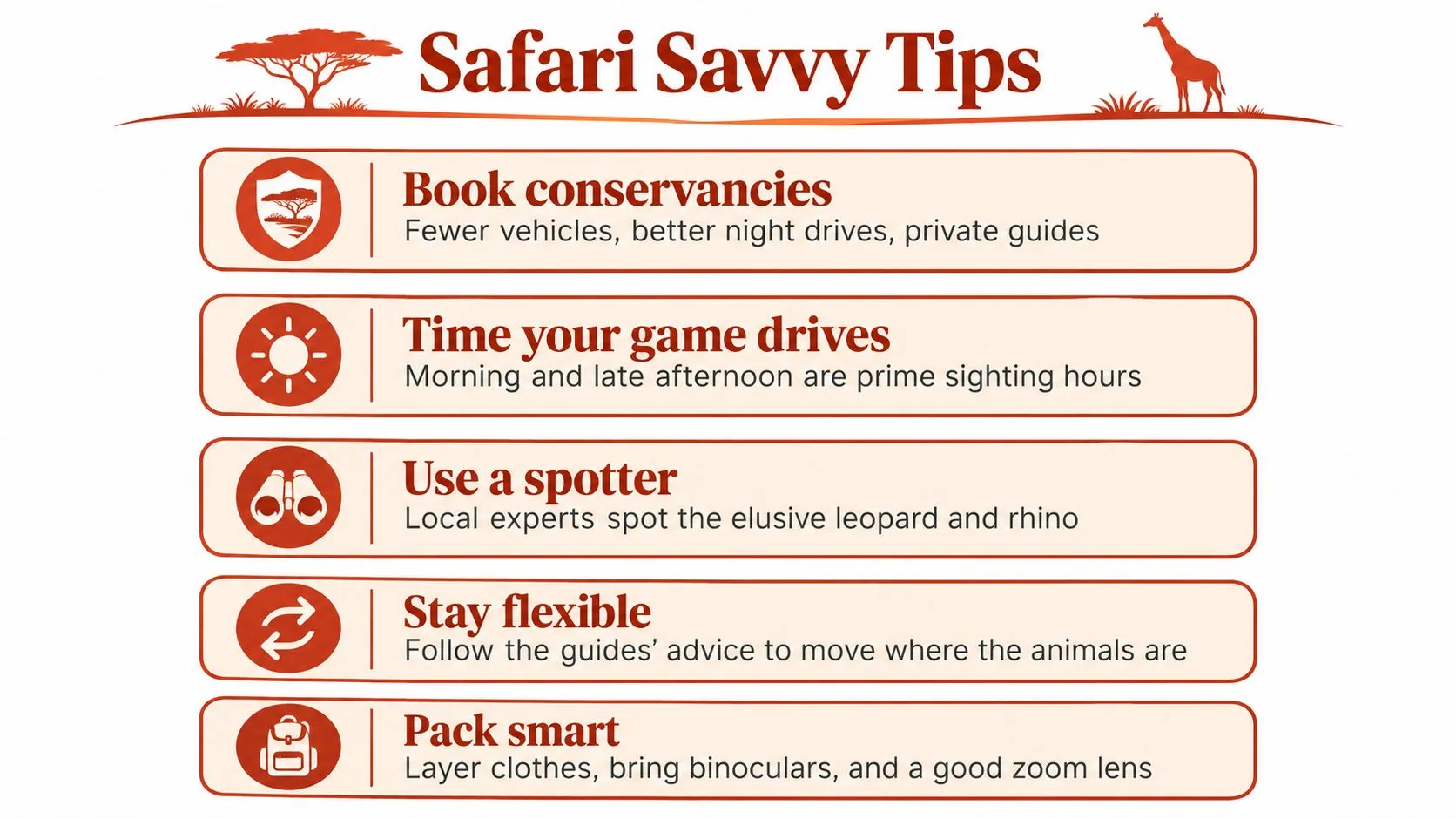
Private conservancies bordering the Mara can offer a quieter experience than the main reserve, along with activities and access rules that differ from national-park operations. Ask specifically about vehicle limits at sightings, off-road policies, walking options, and night-drive permissions before booking.
Your guide remains the central variable. A professional who reads tracks, communicates respectfully with other vehicles, and knows when to leave a crowded sighting can improve the day more than a more expensive room. Ask operators about guide credentials, radio practice, vehicle type, and whether your group gets a private vehicle.
Guide-first planning: A comfortable lodge can improve your rest, but a skilled guide shapes what you find, how long you stay, and how responsibly you view it.
Pack for observation, not a fashion shoot
Neutral clothing helps you blend into the vehicle environment, while layers handle cool mornings and warmer afternoons. Bring binoculars with at least 8x42 magnification if you have them, and consider a beanbag or gimbal mount for steadier phone photography.
A full-day drive with a bush lunch can create more search time than returning to camp for every meal. Golden-hour outings are usually more productive for active predators than a schedule centered on the middle of the day, when many animals rest.
Health preparation: Confirm current medical and vaccination guidance with a qualified travel-health professional.
Insurance: Choose cover that addresses medical care, evacuation, cancellations, and the activities in your itinerary.
Tipping: Ask your operator for current local guidance and budget for guides, drivers, camp staff, and specialist services separately.
For travelers who want to preview accommodation or communicate the feel of a property before booking, 360° tours for tourism marketing can be a useful visual planning resource. It won't replace a guide's local knowledge, but it can help you compare camp layouts and guest areas.
Choosing the Right Kenya Big Five Safari
Start with the species you care about most, then build the route around them. If predators lead, give the Mara the most time. If rhino is essential, reserve space for Nakuru, Ol Pejeta, or a specialist conservancy. If elephants are the priority, consider Amboseli or Tsavo rather than treating every park as interchangeable.
Next, decide how much transfer time your group can handle. Road travel offers changing scenery and can connect the Mara, Rift Valley, and central Kenya naturally. Flights protect time when distant parks are involved, especially for travelers who prefer shorter travel days or a higher-comfort safari.
Your accommodation tier changes the experience, not just the room. Budget camping can provide a close-to-the-ground adventure with shared logistics. Mid-range lodges and tented camps balance comfort with road-based access. Luxury fly-in safaris can simplify long transfers and support private guiding, but they still depend on animal behavior and habitat conditions.
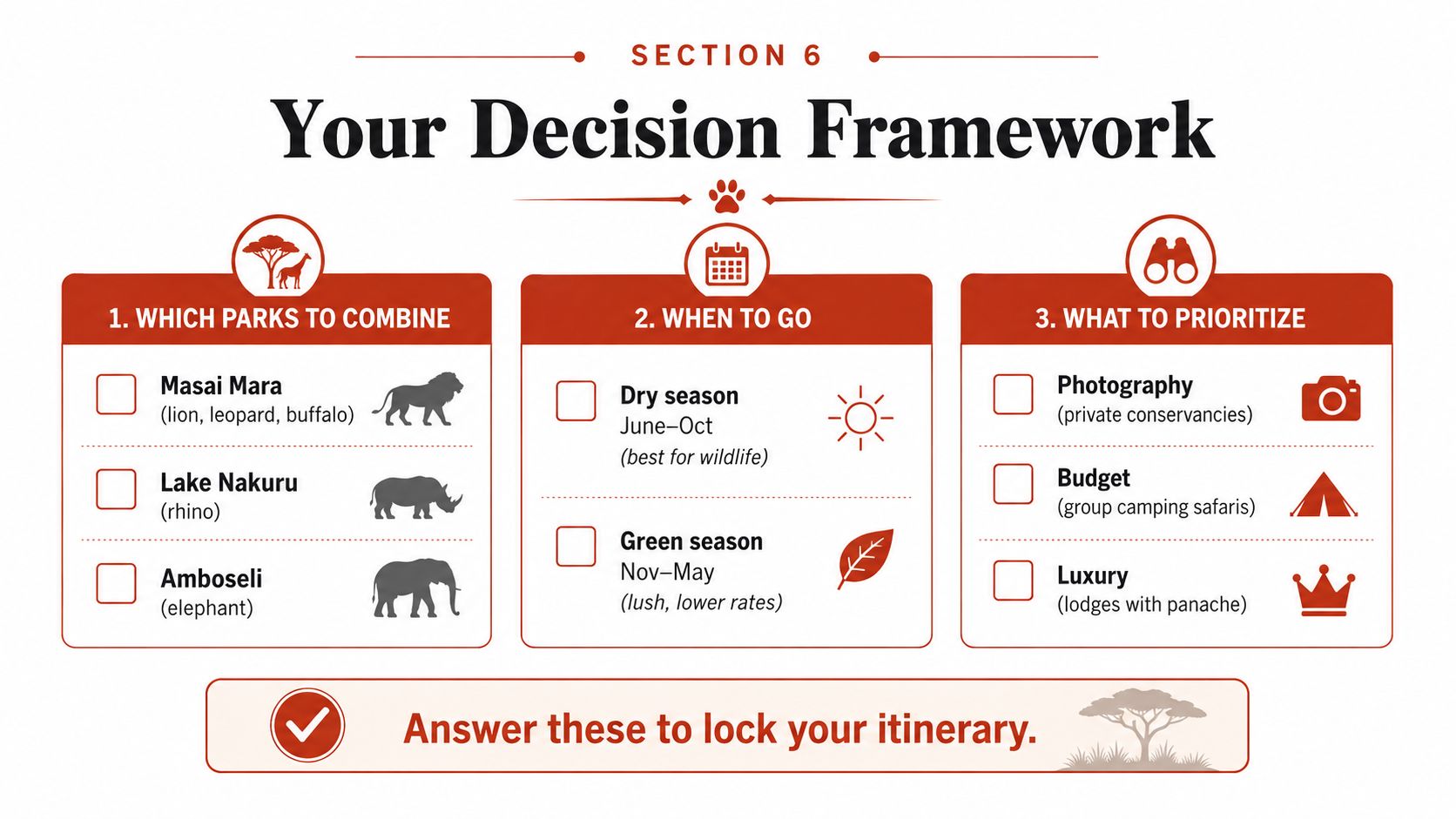
Write down three answers before requesting quotes:
Which species can't you compromise on?
Which transfers are you willing to make?
Do you prefer a private, conservancy-based experience or a shared national-park route?
Once those choices are clear, request a quote and compare the park mix, nights, transport, guide arrangement, and rhino plan, not just the headline price.
Common Questions About Kenya Big Five Safaris
What does a Kenya Big Five safari cost?
Prices vary by season, accommodation, vehicle arrangement, park fees, and whether you drive or fly. Compare itemized budget, mid-range, and luxury quotes rather than relying on a generic daily figure.
When should I travel?
Dry periods often make wildlife easier to locate, while greener periods can bring lush scenery and different photographic conditions. The Mara's migration is seasonal, so travelers interested in that event should confirm current movement patterns before fixing dates.
Can families travel with young children?
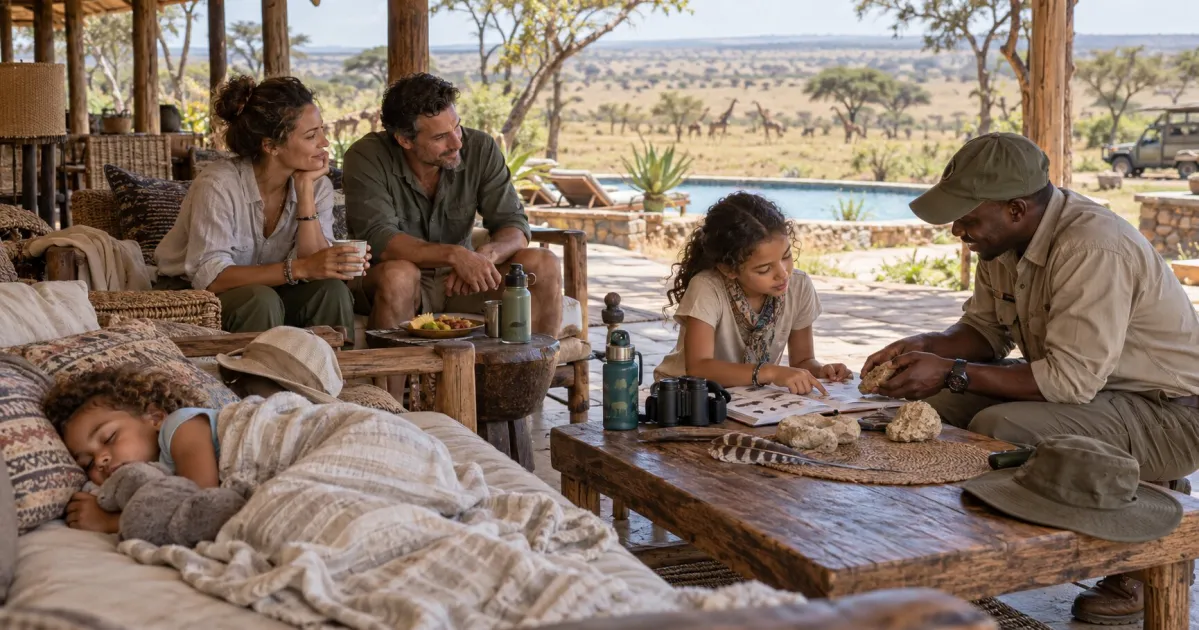
Yes, but age rules differ between lodges and camps. Ask about minimum ages, private vehicles, driving times, meal flexibility, swimming-pool safety, and whether the property offers child-friendly activities.
Can I combine Kenya with Tanzania?
You can extend a Kenya trip toward the Serengeti or Ngorongoro, but border procedures, flights, permits, and luggage rules need careful coordination. A regional itinerary works best when you allow enough time for each destination instead of adding Tanzania as a rushed extra.
What about visas, vaccinations, and tipping?
Check current entry requirements with official authorities, consult a travel-health professional about vaccinations and medication, and ask your operator for current tipping guidance before departure.
Explola lets you compare Kenya safari tours by park, duration, budget, lodging level, and group size, then send direct inquiries to verified operators. Visit Explola to compare Big Five itineraries and request a quote built around the parks and species you want to see.
Ready to experience this?
Explore Related Safaris
Destinations Mentioned

Daniel writes for the Explola blog, where he covers African safari destinations, wildlife, travel trends, and practical trip planning. His work is centered on making safari travel easier to understand, compare, and plan.
Get Safari Tips & Destination Guides
Join our newsletter for exclusive travel tips, wildlife insights, and safari planning advice.