A budget Kenya safari typically costs $150–$300 per person per day, a mid-range trip $300–$600, and a luxury safari $600–$1,500 or more. For seven days, a mid-range itinerary commonly comes to $2,100–$4,200 per person before international flights.
You may have discovered this while searching for “Kenya safari cost” and finding quotes that seem impossible to compare. One operator advertises a short safari near $250, while another presents a private lodge itinerary approaching $10,000, even though both mention the Maasai Mara. The difference usually isn't a mistake. It reflects the vehicle, accommodation, season, park access, transfers, and whether the price is shared across several travelers.
The useful question isn't only, “What's the daily rate?” It's, “What will this seven-day trip cost for our group, during our travel dates, with the comfort and flexibility we expect?” The sections below build that answer from the basic price components to realistic itinerary comparisons and practical ways to reduce the final bill.
Introduction to Kenya Safari Cost Today
Suppose two travelers choose the same broad route, Nairobi, Lake Nakuru, and the Maasai Mara. One joins a shared road safari with basic camping. The other books a private 4x4, lodge accommodation, and domestic flights between wildlife areas. Their maps match, but their seven-day trips are different products, so the final prices can differ sharply.
Daily rates help with orientation, yet they do not answer the question most travelers need to solve: what will the complete trip cost for our group, in our season, with our preferred vehicle and comfort level? Independent 2025–2026 pricing guidance places budget safaris around $150–$300 per person per day, mid-range trips around $300–$600, and luxury options at $600–$1,500 or more per person per day (Kenya safari cost guidance). A separate benchmark puts a typical seven-day mid-range Kenya safari at $2,100–$4,200 per person, while luxury itineraries often reach $5,000–$10,500 or more (seven-day Kenya safari pricing).
Why similar itineraries have different prices
Park names alone cannot explain a quotation. One package may combine a shared minivan, group camping, road transfers, meals, guiding, and park fees. Another may include a private Land Cruiser, boutique tented camps, flexible game-drive times, and flights between camps. Both can be valid choices, but they offer different control, privacy, and comfort.
Season changes the total as well. A private seven-day safari may cost around $2,600–$5,500 per person during the July–October migration season, compared with roughly $1,700–$3,750 in quieter months such as January–May, according to current pricing guidance (seasonal Kenya safari benchmarks).
Start by browsing Kenya safari tours on Explola. Compare each seven-day itinerary's lodging, vehicle, transport, season, and inclusions, not only its advertised starting price. Explola allows travelers to review operators side by side without traveler booking fees, then contact providers directly with questions.
How Kenya Safari Pricing Really Works
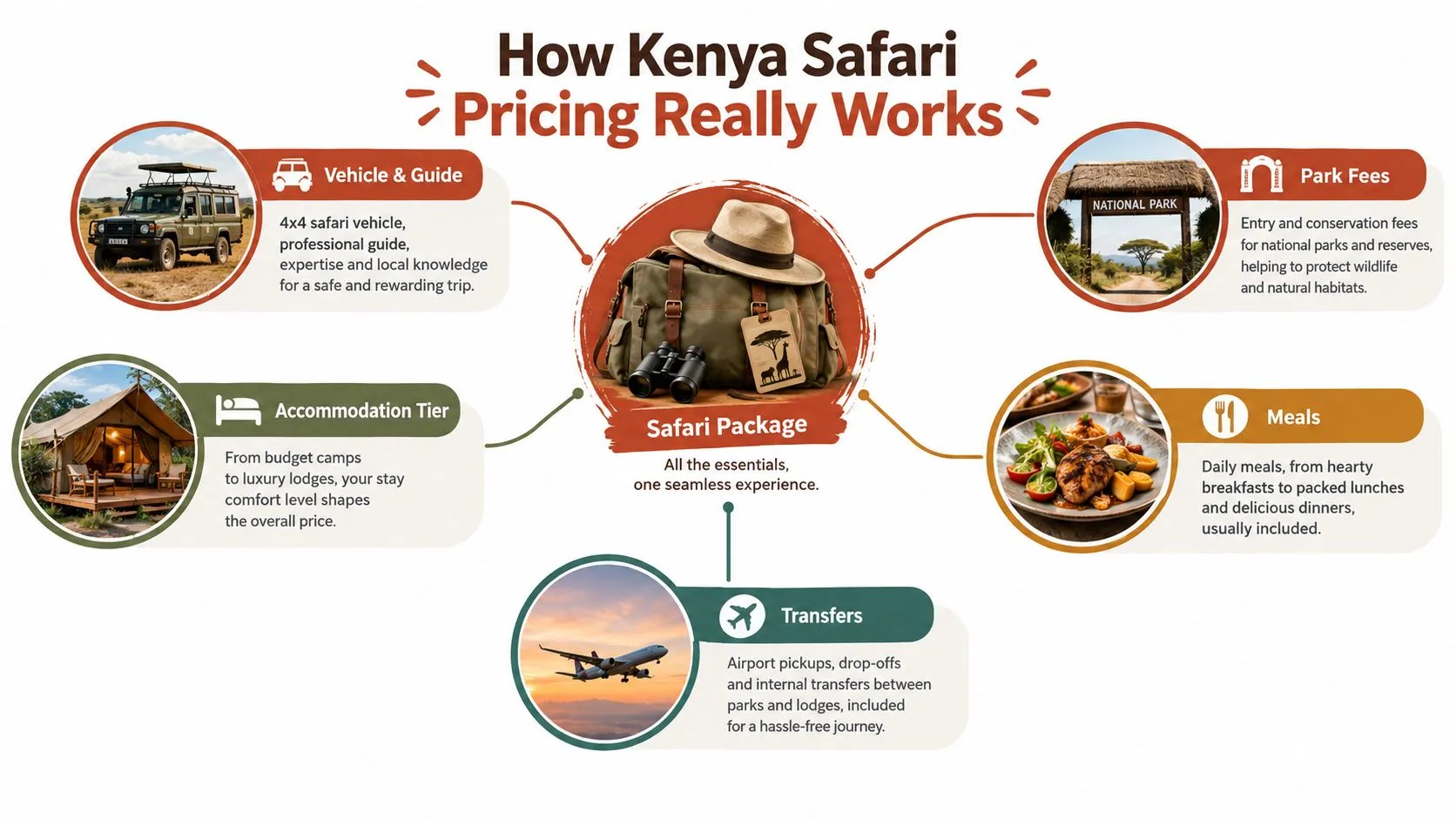
A seven-day Kenya safari quote is a bundled total, even when it is advertised as a daily rate. Picture two travelers choosing the same parks and dates. One shares a vehicle and stays in budget camps. The other books a private 4x4, dedicated guide, and higher-tier lodges. Their routes may look similar, yet the final prices can differ greatly because the daily figure combines several separate costs.
The main price layers
Vehicle and guide form the operating base. A private 4x4 and dedicated driver-guide cost more per traveler when only two people occupy the vehicle. Four travelers divide the same vehicle and guiding expense, usually lowering the individual price. A shared departure can reduce the entry cost, while giving the group less control over departure times, stops, and route changes.
Park and conservancy access add another layer. Charges vary with the areas visited and the time spent there. A quote that shows accommodation but leaves access fees unclear may not show the total cost.
Accommodation tier affects both comfort and cost. Basic camping prioritizes affordability and time in the parks. Mid-range lodges and tented camps usually provide more dependable comfort and private facilities. Luxury properties charge for their setting, service, design, privacy, and closer connection to wildlife areas.
Meals often appear in the package, but check the details. Transfer days may follow different arrangements, while drinks, special dining, airport pickup, Nairobi hotel nights, and domestic flights may sit outside the safari price.
Starting price versus final quote
A “from” price describes an entry point, not a guaranteed total. It may assume a particular season, shared occupancy, budget accommodation, road transport, or a minimum group size.
Practical rule: Ask the operator to itemize accommodation, vehicle, guide, park access, meals, transfers, and exclusions before comparing quotes.
A three-day Maasai Mara trip may be advertised near $250 all-in for a low-cost group journey, while a comparable private mid-range product can cost several times more once the 4x4, guide, lodge, meals, and park fees are included (Kenya safari pricing breakdown). The difference does not automatically indicate overcharging. It shows that the packages place money in different parts of the experience.
For a clearer comparison, convert each quote into the full cost of the same trip length. Then check who shares the vehicle, which season applies, what the lodging includes, and which charges remain outside the headline price. A lower daily rate may offer less privacy or flexibility, while a higher total may buy more time, comfort, and control.
Key Factors That Shape Your Final Price
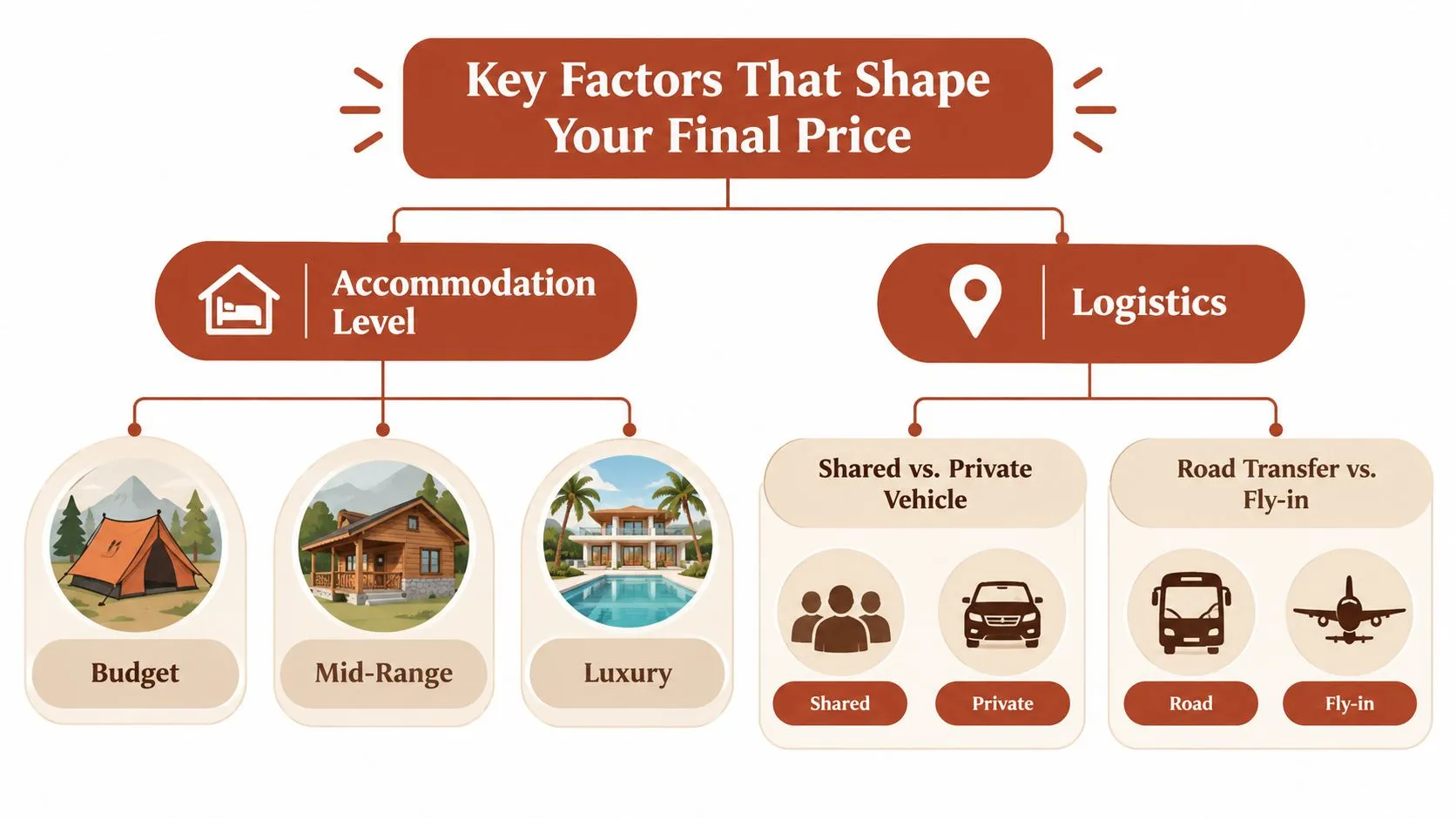
Two seven-day Kenya safaris can follow nearly the same route yet produce very different totals. The gap usually comes from choices made before booking: accommodation, group size, vehicle style, transfers, access fees, and travel dates. Compare the full trip cost, not only a daily rate. On Explola, this makes it easier to see whether a higher quote buys more usable safari time, privacy, or comfort.
Accommodation and comfort
Budget camping lowers the nightly cost and suits travelers who value park time over room amenities. Mid-range lodges and tented camps provide more dependable comfort after long game drives. Luxury properties add privacy, distinctive locations, attentive service, and higher on-site care.
The useful comparison is not just “tent versus lodge.” Check whether the property is inside a reserve, outside a park gate, or in a private conservancy. Location affects driving time and wildlife access. A cheaper room may therefore reduce the time available for game viewing if it sits far from the areas on your route.
Shared and private vehicles
A shared vehicle spreads fixed transport and guide costs across several travelers. It can suit solo guests or anyone seeking a lower total, although the group shares the schedule, sightings, and stops.
A private vehicle gives your party more control over timing and route choices. The cost is divided among your own travelers, so two guests usually pay more per person than four guests using the same vehicle. Couples should request a complete quote for two people instead of applying a group-based daily rate.
Road travel and fly-in logistics
Road transfers generally cost less and show you more of the scenery between parks, but they consume more time on longer connections. Fly-in itineraries shorten transfers and can place guests nearer to remote camps. They also add flight costs and may require soft-sided luggage or careful baggage planning.
Park access and guide quality
National parks, reserves, and private conservancies have different access conditions. A private conservancy may provide quieter viewing and more flexible activities, while a famous reserve can face stronger seasonal demand. Guide quality also changes the value of each day. Local knowledge, tracking skill, communication with other guides, and vehicle condition can determine how much productive wildlife time you receive.
Seasonality
The July–October Great Migration window often brings higher demand for Maasai Mara itineraries. A quality seven-day private safari is commonly estimated at $2,600–$5,500 per person during this period, compared with $1,700–$3,750 in quieter January–May months (seasonal safari price comparison). Travelers with flexible dates can exchange the possibility of migration crossings for lower rates and quieter conditions. The right comparison is the total seven-day itinerary by season, group size, and vehicle style, because any one of these choices can substantially change the final price.
Sample Kenya Safari Itineraries by Budget Level
A couple comparing safari quotes may see very different totals for what appears to be the same route. For a circuit covering Nairobi, Lake Nakuru, and the Maasai Mara, the main variables are trip length, season, group size, and vehicle style. Three days can focus on one wildlife area. Five or seven days allow more time for transfers, additional parks, and slower game viewing.
The table gives planning ranges rather than fixed quotations. International flights may remain outside the package, and the final total changes when a shared vehicle becomes private or road transfers become fly-in connections.
| Tier | 3-Day Total | 7-Day Total | Typical Inclusions |
|---|---|---|---|
| Budget | $450–$900 per person | $1,050–$2,100 per person | Shared road transport, basic camping or simple accommodation, scheduled game drives, bundled meals and park access where stated |
| Mid-range | $900–$1,800 per person | $2,100–$4,200 per person | Lodge or quality tented-camp accommodation, stronger vehicle comfort, more comprehensive guiding, road or selected fly-in transfers |
| Luxury | $1,800–$4,500 or more per person | $4,200–$10,500 or more per person | Private 4x4, boutique camps or luxury lodges, premium guiding, more flexible activities, and possible fly-in connections |
These totals are based on the stated daily bands, so a quote can sit anywhere within or beyond them. Season, vehicle occupancy, park choice, and included services all matter. A budget three-day plan might use group camping and a road transfer directly to the Mara. A mid-range plan may pair a lodge with a private vehicle. A luxury plan can replace long drives with air connections and smaller camps.
What the upgrade actually buys
The move from budget to mid-range usually buys more predictable comfort, a better base for early game drives, and fewer shared transport decisions. Mid-range to luxury generally adds privacy, distinctive accommodation, higher-touch service, and shorter or more convenient transfers. It does not guarantee more wildlife, because sightings still depend on location, timing, and guiding.
For lodging ideas, compare Masai Mara safari lodges by location and price. The most expensive lodge is not automatically the best fit. Distance from wildlife areas, included activities, room arrangements, and transfer logistics may matter more than its headline rate.
A seven-day budget safari can suit an adventurous traveler who accepts basic accommodation and shared decisions. A couple celebrating a special occasion may prefer the comfort and privacy of mid-range travel. Families should check room configuration, vehicle space, and transfer length before choosing the lowest total. Compare the full itinerary, not only the per-day figure, because two quotes with similar routes can deliver very different amounts of comfort and time in the reserve.
What a 7 Day Kenya Safari Costs by Season and Group Size
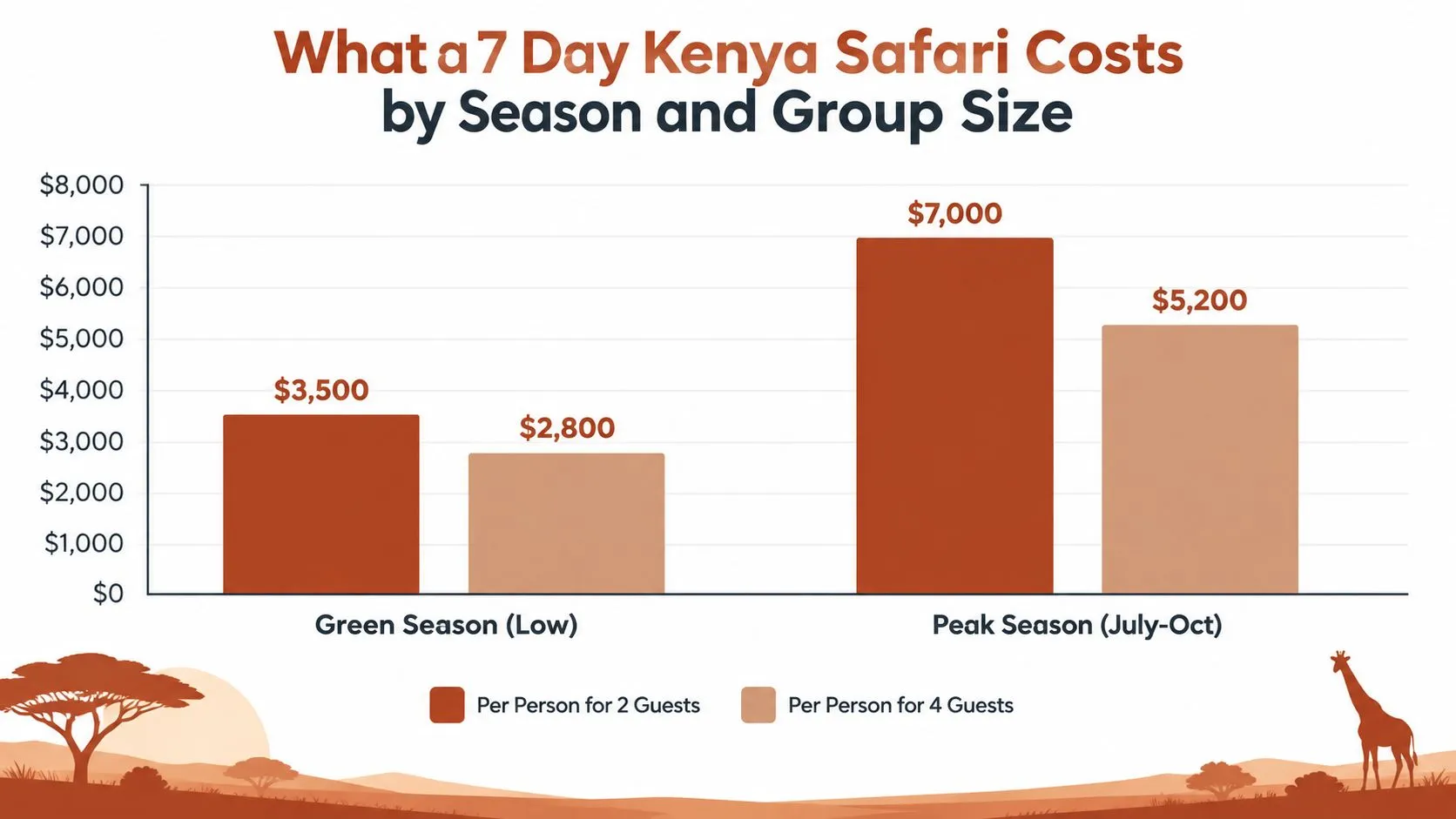
A seven-day total makes price differences easier to see. A daily rate can look manageable while transport, accommodation, and peak-season demand push the full trip much higher. Current benchmarks place a mid-range seven-day safari around $2,100–$4,200 per person, while private itineraries can range from approximately $1,700–$5,500 per person, depending on season and product level (seven-day Kenya safari cost benchmarks).
Consider a simple comparison. A seven-day private itinerary might cost $3,500 per person for two guests and $2,800 per person for four guests in the green season. The same comparison model rises to $7,000 per person for two guests and $5,200 per person for four guests during the July–October peak. These figures illustrate how season and occupancy work together. They are not a universal operator tariff.
Why party size changes the calculation
Vehicle, guide, and some transfer expenses are shared. Four travelers divide those costs more widely than two, lowering the individual amount. Accommodation may also be priced according to room occupancy, so couples should not assume that a group rate will apply to them.
Ask an operator for two figures:
The complete price for your party, including every traveler.
The per-person price, showing how shared costs are divided.
This separates the size of the bill from the way it is allocated. A family may receive a lower per-person figure because the vehicle holds more travelers, while a couple receives a higher figure for a similar route. The difference can come from cost sharing rather than a different safari product.
Road versus fly-in
Road travel can keep a seven-day itinerary within a lower range when the route is geographically efficient. Fly-in travel may save hours and improve comfort, but the quote should show flight legs, airstrip transfers, and luggage conditions clearly. A lower road price may therefore exchange money saved for more time in transit.
Peak migration demand can move the same route by more than 50% compared with quieter periods, according to the pricing guidance noted earlier. Compare dates, occupancy, and transport as one package rather than treating each as a minor adjustment. For seasonal choices, use when to visit Kenya by park and travel goal to match timing with your park priorities.
Couples handling bookings, receipts, and operator deposits can also use efficient travel expense tracking to keep safari costs connected to the wider trip budget.
Practical Ways to Control Your Kenya Safari Cost
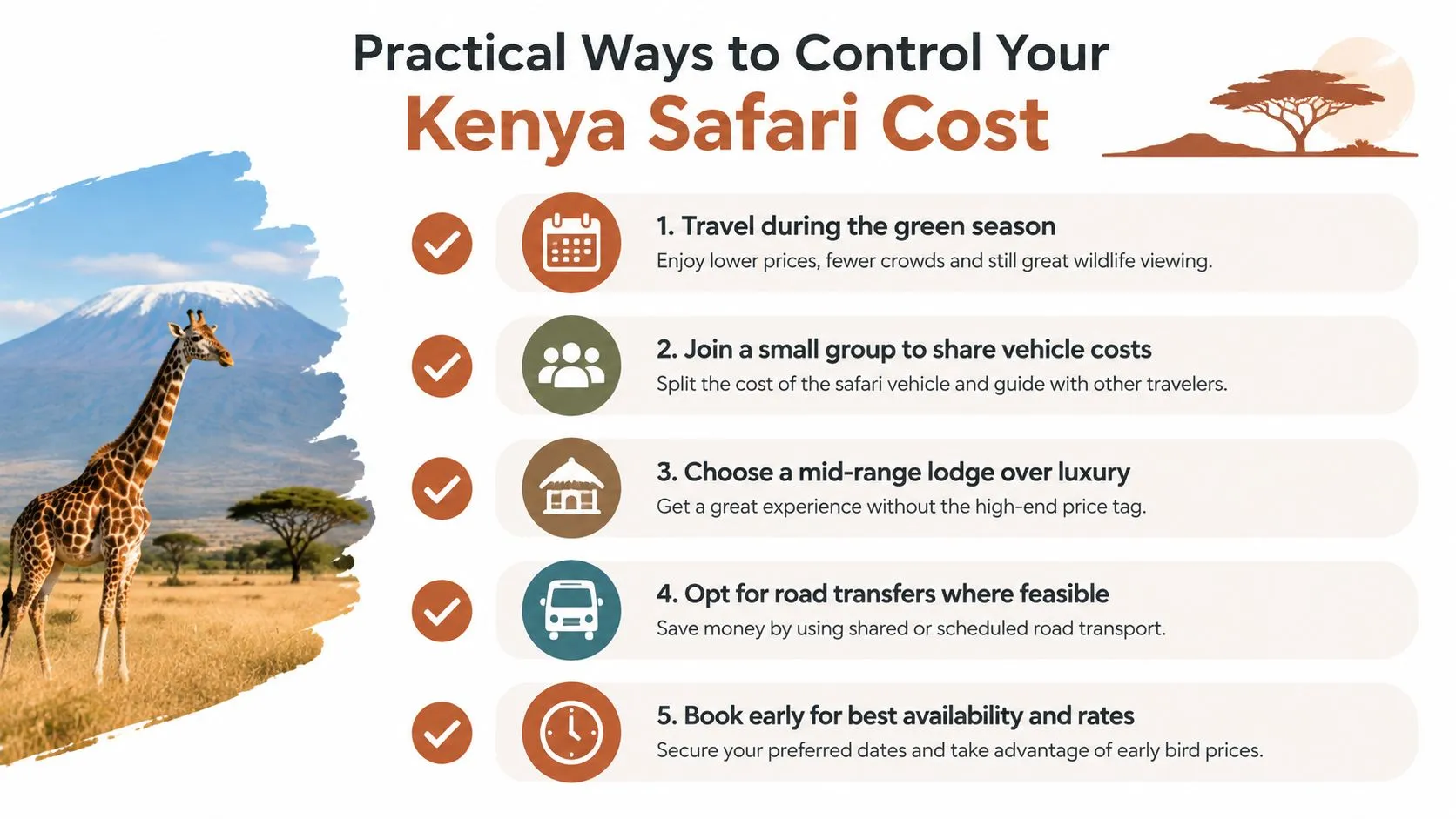
A seven-day safari can fit different budgets without removing the experiences you value most. The key is to adjust timing, group size, vehicle style, and route before cutting services at random. A cheaper quote may mean longer transfers or less time watching wildlife, while a slightly higher total may buy a more useful itinerary.
Start with timing
Quieter January–May months generally bring lower accommodation and package prices than the busier July–October period. The trade-off is that migration sightings may be less likely, and weather can make roads or wildlife viewing less predictable. Compare the full seven-day total for your party, not only the daily rate, because seasonal changes affect several services at once.
Share the fixed costs
A shared vehicle divides the guide and transport costs among more travelers. This can suit solo travelers or anyone willing to follow a set departure schedule. A private vehicle gives couples and families more control over early starts, route choices, and time at sightings, but the same fixed costs are carried by fewer people.
Ask for both the complete price for your party and the per-person price. That distinction shows whether a higher individual figure reflects a different safari or just fewer travelers sharing the vehicle.
Keep the route efficient
Road travel can cost less when parks are connected logically. Fly-in connections may save hours, but include flight legs, airstrip transfers, and luggage rules in the comparison. A shorter route with more time in a reserve may offer better value than adding another park and spending much of the trip in transit.
Compare the quote line by line
Before paying a deposit, ask:
Park access: Are all park or conservancy fees included for every safari day?
Transport: Is the vehicle private or shared, and is it a minivan or 4x4?
Accommodation: Are the named properties confirmed, or may alternatives be substituted?
Meals: Are meals included on transfer days, and are drinks separate?
Flights: Are domestic flights and airstrip transfers included?
Exclusions: Are international flights, insurance, visas, activities, and personal purchases outside the quote?
Use the Kenya season pricing guide as an earlier reference for seasonal differences, then request an itemized offer. Compare the same dates, route, occupancy, vehicle type, and comfort level. This reveals the true seven-day value more clearly than comparing headline per-day prices.
Planning Your Kenya Safari With Confidence
You have seven days, a fixed travel window, and several quotes that seem difficult to compare. Start with the complete trip cost, not the daily rate. Choose the season, then group arrangement, vehicle style, route, and accommodation level. A peak-season private 4x4 itinerary can cost far more than the same route shared in a quieter season, even when the daily schedule looks similar.
Request both the total price for your party and the per-person price. Confirm the travel dates, named properties, park or conservancy access, meals, transfers, domestic flights, and exclusions. Check whether the vehicle is private or shared, and whether it is a minivan or 4x4. A lower quote may omit fees, substitute accommodation, or leave flights and activities outside the package.
Use the Kenya season pricing guide to understand seasonal differences, then compare equivalent seven-day itineraries. Explola lets you review Kenya safari options by budget, season, group size, and travel style, while keeping operator profiles, reviews, inclusions, and inquiries together. Shortlist comparable offers and confirm the final total before booking.
Tags

Daniel writes for the Explola blog, where he covers African safari destinations, wildlife, travel trends, and practical trip planning. His work is centered on making safari travel easier to understand, compare, and plan.
Get Safari Tips & Destination Guides
Join our newsletter for exclusive travel tips, wildlife insights, and safari planning advice.