Why the Masai Mara is worth the hype
The Maasai Mara National Reserve is a protected area in Narok County, southwestern Kenya, contiguous with Tanzania’s Serengeti, together forming one of the world’s most famous wildlife ecosystems. The reserve covers 1,510 km² and was established in 1961. (UNESCO World Heritage Centre)
What makes it special isn’t just “lots of animals.” It’s the combination of:
High predator density (lions, cheetahs, leopards) supported by abundant prey
Open savannah visibility (you can often see action from far away)
The Great Migration passing through the ecosystem seasonally
A surrounding network of community-owned conservancies that offer different safari styles (Asilia Africa)
If you’re choosing one iconic safari destination in East Africa, the Masai Mara is often the benchmark.
Masai Mara basics: reserve, triangle, and conservancies
Masai Mara National Reserve (the “main reserve”)
This is the core public reserve managed by Narok County Government, with set entry fees and regulations. (Kenya Biodiversity)
Mara Triangle (a major sector inside the reserve)
The Mara Triangle is a defined sector of the reserve covering about 510 km² (roughly one-third of the reserve). It is managed under a partnership model by the Mara Conservancy, which was established in 2000 and began operations in the Triangle on 12 June 2001. (MasaiMara.com)
Why this matters for travelers: when people say “Masai Mara,” they may mean different areas with different densities, road conditions, crowding patterns, and camp styles.
Mara conservancies (outside the reserve boundary)
Around the reserve are multiple community conservancies on Maasai-owned land, generally leased to tourism partners. Conservancies often have stricter vehicle limits and can allow activities that the reserve restricts (commonly things like night drives and walking safaris, depending on the conservancy and operator rules). (Facebook)
Reserve vs conservancies: which should you choose?
Here’s the practical decision framework.
Feature | National Reserve | Conservancies |
Best for | Classic “Mara” game drives, river areas, big landscapes | Quieter sightings, guided walking, often night drives |
Crowds | Can be busy in peak months | Typically fewer vehicles (by design) |
Flexibility | Daytime game drives only (rules apply) | Often more flexible activities (varies) |
Costs | You pay official reserve entry fees | You may pay conservancy fees (varies by conservancy/camp) |
Experience style | Iconic public reserve feel | More exclusive, managed wildlife tourism |
A common “best of both” plan: stay in a conservancy (for quieter mornings and evenings) and do 1–2 full days inside the reserve for river zones and classic big scenery.
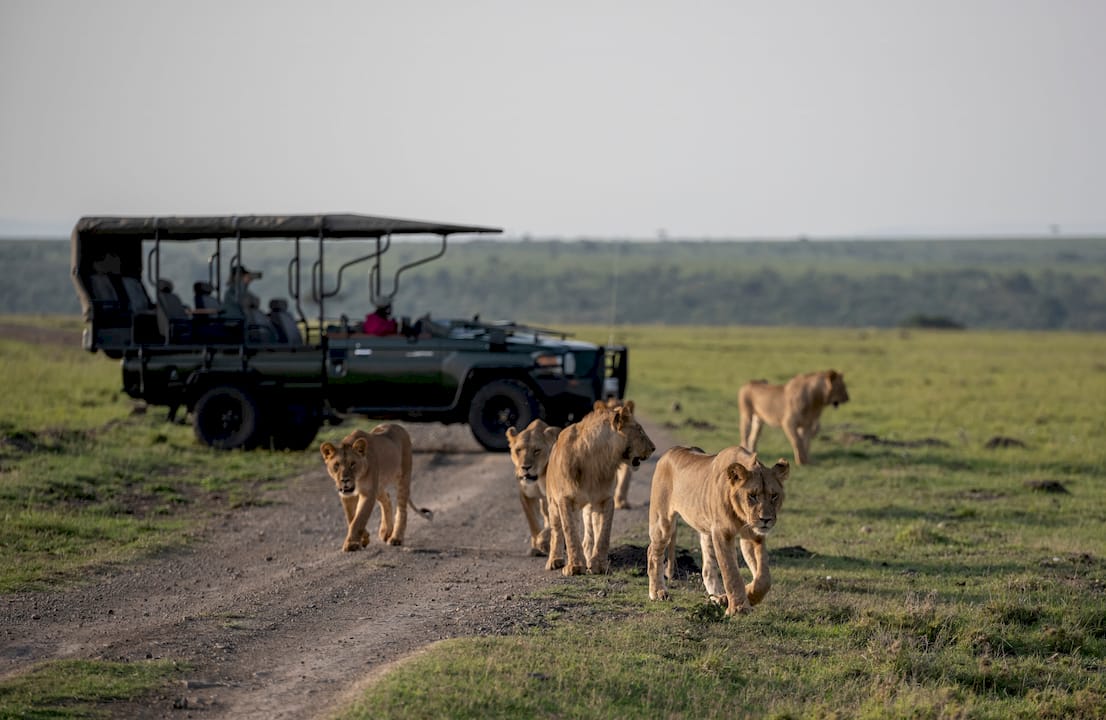
Lion Pride Maasai Mara National Reserve Kenya
Official Masai Mara park fees (fact-checked)
Fees change over time, but Narok County has published seasonal rates.
From the Narok County fee schedule (2023/24 season rates shown on the official fee poster):
Non-resident adult: USD 100 per day (Jan – Jun), USD 200 per day (Jul–Dec)
Non-resident child: USD 50 per day
Vehicle entry charges are listed separately by seating capacity (e.g., <6 seats, 6–12 seats, etc.)
Important planning note: these are per-person, per-day fees. If you’re comparing safari quotes, always confirm:
How many “fee days” are included (a 3-day safari often includes 2 nights but can be 2 or 3 fee days depending on timing)
Whether you’re staying inside the reserve or outside (some fee structures reference accommodation location)
Rules that affect your safari experience (and why they matter)
The Narok County rules poster includes practical regulations that shape what you can and can’t do inside the reserve. For example:
Speed limits on graded roads and other roads
No off-roading in certain zones (high-use/river zones)
Limits on how many vehicles at sightings (and time restrictions when too many vehicles gather)
“Leave park / be in camp by” timing guidance
These rules exist to reduce pressure on wildlife and improve safety.
If you want activities that go beyond standard daytime game drives (especially night drives or walking safaris), that’s where conservancies often become the better fit.
Best time to visit the Masai Mara (by what you want to see)
Instead of “best time” as a single answer, here’s the most accurate approach: choose your season based on your priority.
If you want the Great Migration river-crossing drama
River crossings are not scheduled events, but many experienced operators plan for the period when crossings are most commonly seen.
Many safari planners link prime crossing chances to late July through early September (not guaranteed; timing varies with rainfall and grazing conditions). (Asilia Africa)
Crossings can also extend later in some years (some sources note crossings may stretch into October). (Africa Geographic)
Reality check: you can spend days with herds near the river and see no crossing, then witness multiple crossings in a single day. The key “hack” is time: more nights in the Mara improves your odds.
If you want big cats and general game viewing
The Mara can deliver strong wildlife year-round, but visibility typically improves in drier periods (shorter grass, animals concentrate around water). Camp operators with long local experience often publish month-by-month wildlife notes that reflect on-the-ground patterns. (The Governors Camp)
If you want fewer crowds and better value
The “shoulder season” approach is simple:
Avoid the busiest migration peak weeks if you’re crowd-sensitive
Look for months adjacent to peak demand where camps discount more often (exact pricing is operator-specific)
Great Migration: what it is (and what it isn’t)
The Great Migration is a large-scale movement of wildebeest (and accompanying zebra and gazelles) through the Serengeti–Mara ecosystem, driven by rainfall and grass growth.
Two crucial facts for planning:
No two migrations are identical—rain shifts grazing patterns, and that changes timing. (Safarilink)
“River crossing season” is a probability window, not a guarantee. (Asilia Africa)
If the crossing is your dream photo, the most practical advice is:
Build time (4–6 nights if possible during your window)
Stay strategically near likely crossing areas (your operator matters)
Be ready for long waits—crossings often happen when they happen
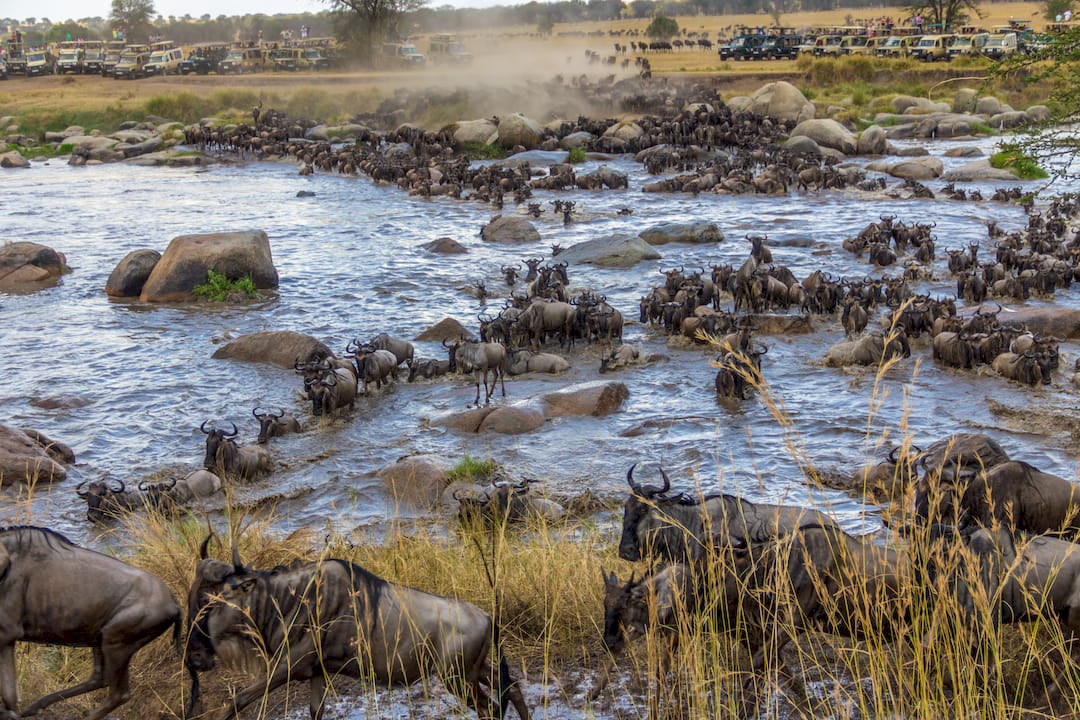
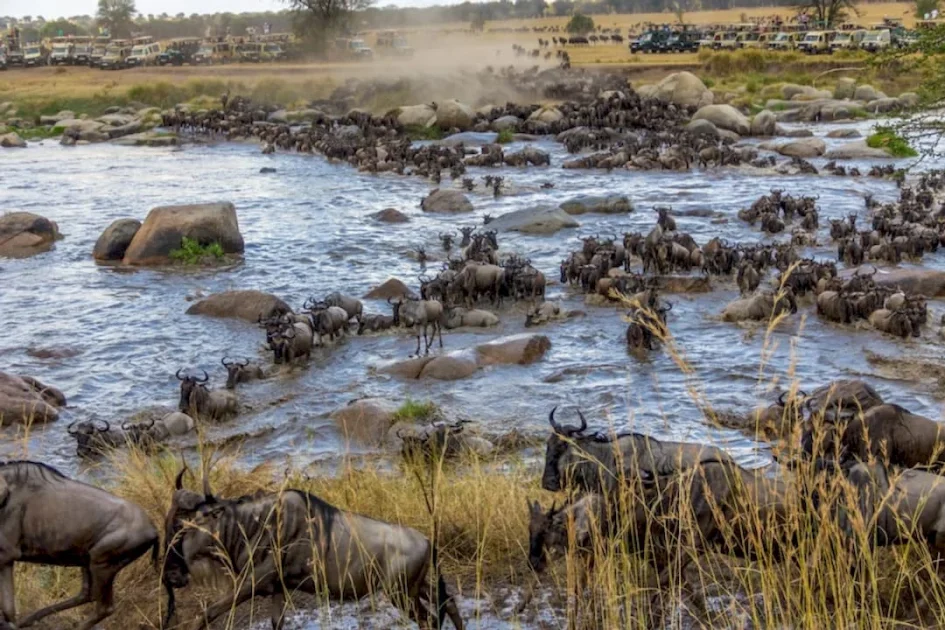
Wildebeest herd crossing the Mara River during the Great Migration, Kenya
Getting to the Masai Mara
Option 1: Fly (common for shorter trips)
Most fly-in safaris route through Nairobi’s Wilson Airport. Many travel guides and flight operators describe the flight as roughly 45–60 minutes, depending on routing and airstrip. (MasaiMara.com)
Common airstrips frequently referenced include:
Keekorok
Musiara
Ol Kiombo
Serena
Siana (Masai Mara Travel)
If you want a time-and-motion reality check (instead of brochure timing):
Flights are short, but you also need airport transfer time and check-in buffer. (Masai Mara Travel)
Option 2: Drive (good if you want scenery + flexible stops)
Road trips are often described in the 5–6 hour range in many travel-planning sources, but real-world time varies with route, weather, road conditions, and traffic. (Masai Mara Travel)
Best practice: if you’re driving, plan with margin. A “tight” arrival can cost you a game drive.
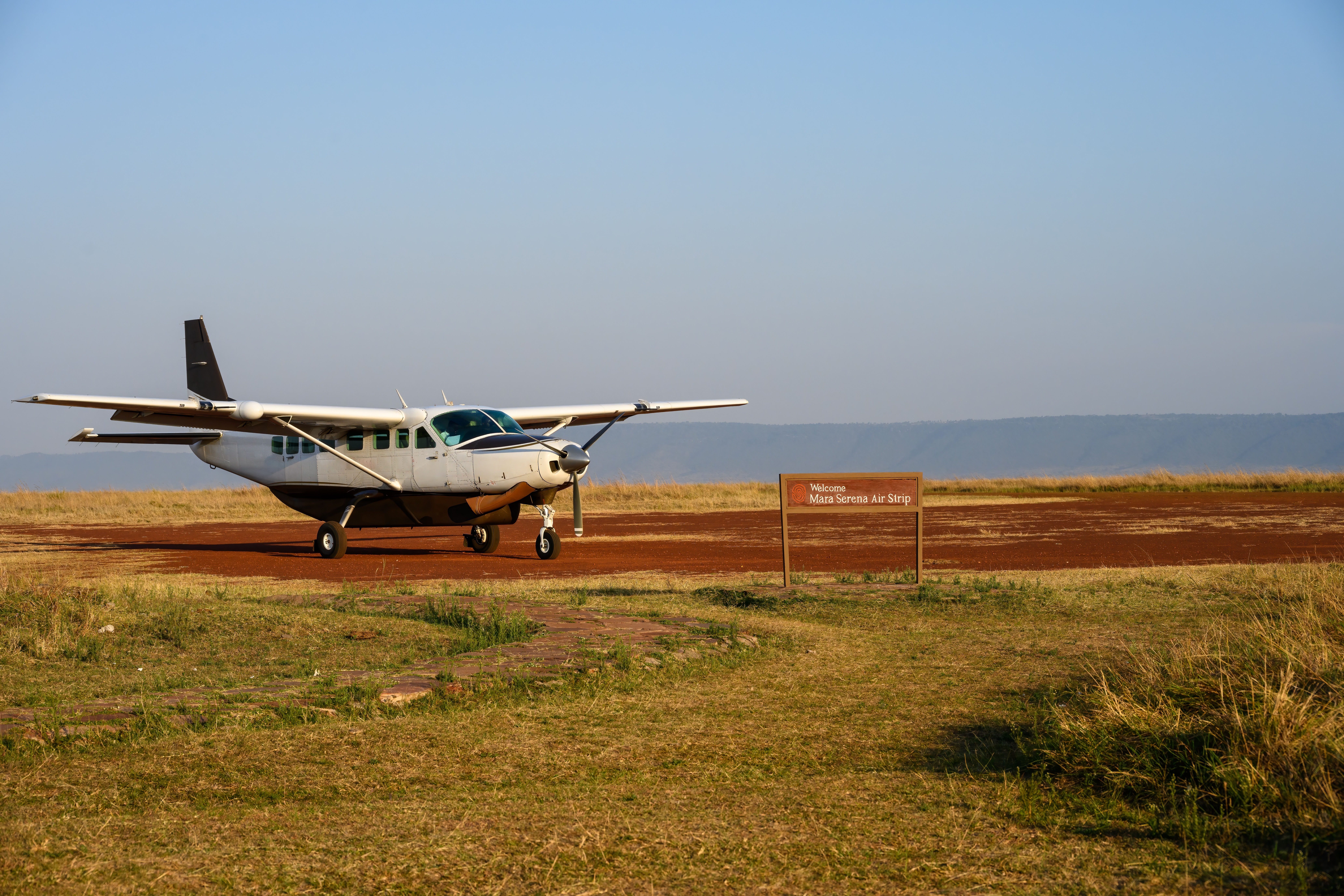
Small bush plane landing at an airstrip in the Masai Mara ecosystem, Kenya
What you can realistically see: Big Five expectations
The Masai Mara is famous for Big Five potential, but expectations should be honest:
Lion, elephant, leopard, and buffalo are commonly discussed as strong possibilities in the Mara ecosystem.
Rhinos exist, but sightings can be difficult and are not something any ethical operator should promise. (MasaiMara.com)
A better expectation to carry:
You’re very likely to see predators + abundant plains game
You might see leopard multiple days—or not at all (they’re elusive)
Rhino is a bonus, not a guarantee
How long should you stay?
This is the most underrated decision in safari planning.
2 nights / 3 days
Good for: tight schedules, first-time “taste,” fly-in convenience.
Trade-off: less time means fewer second chances if weather or sightings don’t cooperate.
3–4 nights
Good for: most travelers who want a fulfilling Mara experience without rushing.
5–7 nights
Best for: photographers, migration-focused travelers, anyone who wants to slow down and avoid “checklist safari” energy.
Rule of thumb: if the Great Migration is your #1 goal, time is your best tool.
Sample itineraries you can hand to an operator
3-day classic Masai Mara safari (balanced)
Day 1: Arrive (fly or drive), afternoon game drive
Day 2: Morning + afternoon game drives (or a full-day drive with picnic)
Day 3: Early drive (optional), depart
5-day “reserve + conservancy” (often the sweet spot)
Day 1–2: Conservancy base (quieter sightings; optional night drive if allowed)
Day 3–4: Full reserve focus (river zones + big landscapes)
Day 5: Final morning, depart
Health and entry requirements (don’t skip this)
Kenya entry requirement (eTA)
Kenya operates an Electronic Travel Authorisation (eTA) system. Kenya’s Directorate of Immigration Services states that visitors (including children) must have an approved eTA before travel, and directs applicants to the official eTA portal. (Directorate of Immigration Services)
For a traveler-facing cross-check, the U.S. Department of State also notes Kenya entry requires a Kenyan eTA. (Travel State)
Malaria and safari-related health risks
The CDC states malaria is a risk in some parts of Kenya, and travelers going to risk areas should discuss malaria prevention with a clinician. (CDC)
For safari-specific health guidance, the CDC Yellow Book notes rare but documented traveler cases of trypanosomiasis linked to visits to parks/game reserves including the Maasai Mara, and provides practical bite-avoidance guidance (like neutral-colored clothing). (CDC)
Practical takeaway: talk to a travel clinic early, especially if your trip includes multiple regions (coast + highlands + safari).
What your safari will cost (without guessing numbers)
Safari pricing varies too much to publish one “true cost,” but you can understand your quote fast if you break it into components:
Park fees (official, per-person, per-day)
Accommodation level
Budget tends to mean simple camps, shared facilities, or larger groups
Mid-range usually means en-suite tents/lodges and strong guiding
Luxury usually adds location advantage, exclusivity, and higher staff-to-guest ratios
Transport choice
Fly-in costs more but saves time (and can increase game-drive time)
Drive-in can be cheaper but eats hours
Private vs shared vehicle
Private vehicle is often a major upgrade for photographers and families
Season
Peak migration demand generally increases rates and reduces availability
How to compare quotes fairly: ask operators to confirm what’s included (fees, meals, drinks, transfers, tips guidance, conservancy fees if relevant).
Practical planning tips that improve your safari immediately
Choose your base strategically
If migration is your priority, where you stay matters because drive times add up. “Close to action” can mean more time with wildlife and less time commuting.
Don’t over-pack your itinerary
Two game drives per day is plenty for most travelers, especially if you want time to enjoy camp, review photos, or simply rest.
Build buffer days if you can
Safari is nature. Rain, heat, and animal movement are real variables. Time gives you resilience.
Destinations Mentioned

Founder of Explola and a passionate advocate for authentic African travel. He writes about safari destinations, conservation, and connecting travelers with trusted local operators across Africa.
Get Safari Tips & Destination Guides
Join our newsletter for exclusive travel tips, wildlife insights, and safari planning advice.