You've found two completely different answers to the same question. One traveler says Tanzania's rainy season is a low-cost opportunity with green scenery and fewer visitors. Another warns that flooded roads can derail a safari. Both can be right, because rain season Tanzania isn't one uniform period across the country.
The useful question isn't, “When does Tanzania get rain?” It's, “Which rains affect my park, road transfer, camp, wildlife plans, and beach extension?” Northern and eastern Tanzania usually have two rainy windows, while central, southern, and western areas often follow one longer wet season. The intensity also changes sharply between the shorter vuli rains and the heavier masika rains.
This guide turns those patterns into practical decisions. You'll learn why the country has two rain seasons, how the northern and southern circuits differ, what rain does to roads and game drives, and how to choose between lower crowds, greener scenery, and more reliable access.
Introduction to Rain Season Travel in Tanzania
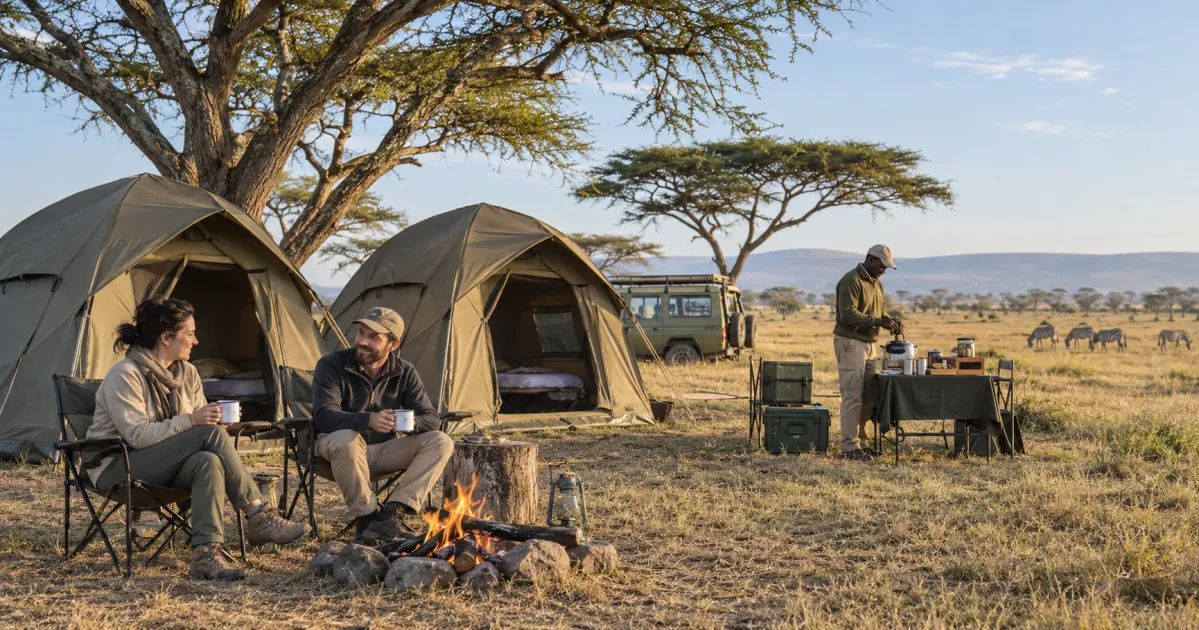
A couple planning a first safari may find themselves comparing two tempting itineraries. The first visits the Serengeti during the short rains, with flexible dates and a quieter atmosphere. The second travels during the long rains, when the terrain is lush but remote camp access may be less dependable. Neither choice is automatically wrong. The right answer depends on where the itinerary goes and how much weather flexibility the travelers have.
Tanzania's seasons don't fit neatly into a single national calendar. Northern and eastern regions typically receive short rains from October or November through December, followed by long rains from March through May. Central, southern, and western areas often receive one longer wet season from about November through April or May, as described in the Tanzania climate overview.
That distinction matters because a shower in Arusha, a muddy track in a remote southern park, and heavy rain on a coastal beach extension create different travel problems. A morning game drive might continue comfortably after an afternoon shower, while a road transfer across saturated ground may take longer or require a different route.
Practical rule: Choose your route first, then judge the rain risk for that route. A national “wet season” label is too broad for safari planning.
Rain also affects the feel of a trip. Green scenery, fresh vegetation, bird activity, and fewer vehicles can make the wetter months rewarding. On the other hand, persistent rain can reduce road reliability, make camp access harder, and complicate a tightly scheduled itinerary. The sections ahead separate those trade-offs so you can decide whether your priority is maximum logistical certainty, lower crowding, richer scenery, or regional wildlife timing.
How Tanzania Gets Two Distinct Rainy Seasons
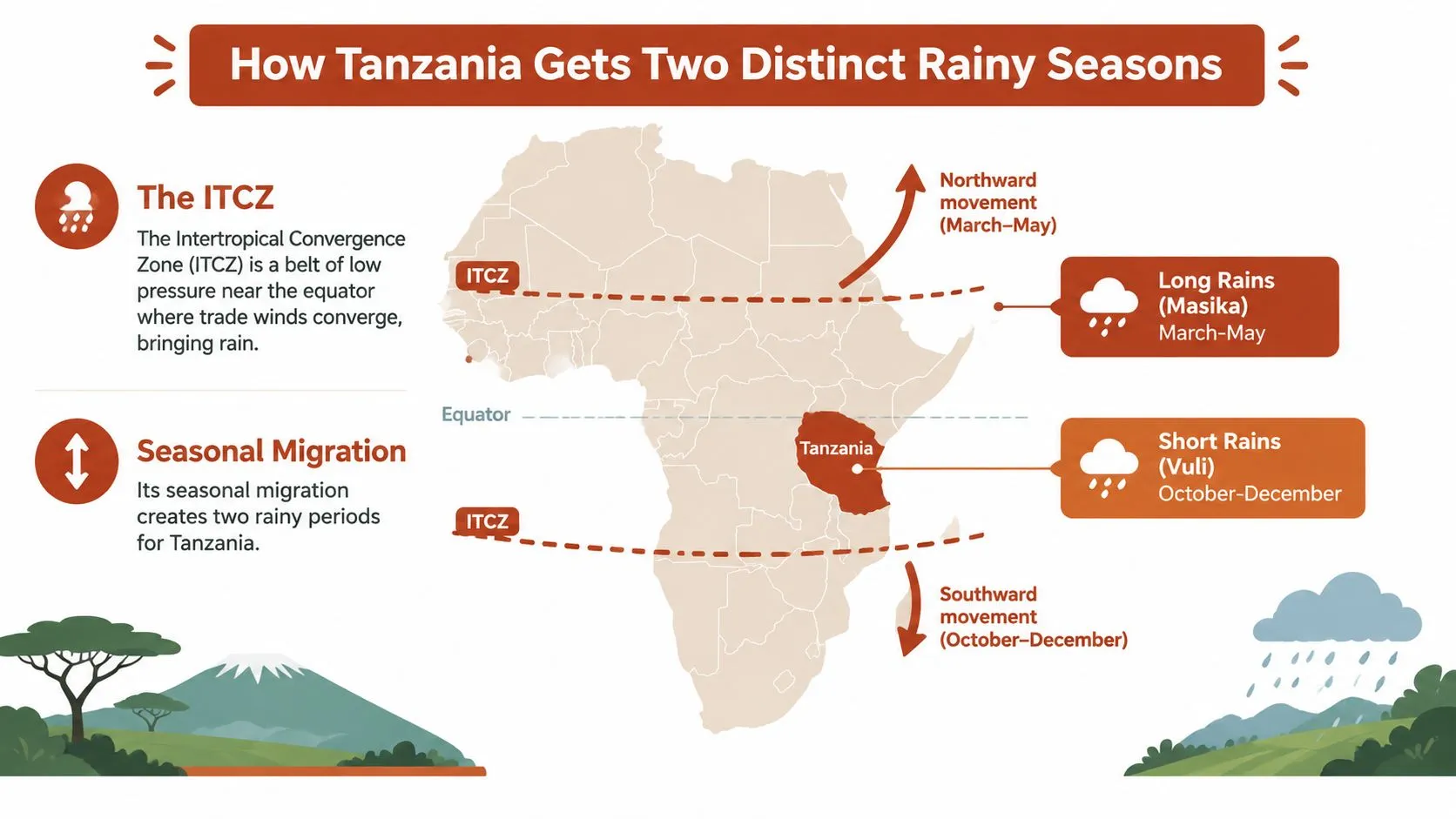
The simplest way to understand Tanzania's rain pattern is to imagine a broad rain belt moving across the country. This belt is the Intertropical Convergence Zone, or ITCZ, a zone near the equator where trade winds meet and air rises, helping produce rainfall.
The ITCZ doesn't remain fixed. It shifts southward across Tanzania during October to December, then moves northward again during March to May. Each passage can create a separate rainy period in northern and eastern Tanzania. The climate explanation of Tanzania's seasonal pattern identifies these periods as vuli, the short rains, and masika, the long rains.
Think of the ITCZ like a moving sprinkler rather than a tap that stays open. It passes over or near a region, retreats, and later returns. That movement helps explain why northern Tanzania can have two distinct rain windows rather than one continuous monsoon-like season.
The two passages across Tanzania
First passage, vuli: The short rains generally arrive from October or November through December. They're often more intermittent and can appear as showers or storms rather than uninterrupted wet weather.
Second passage, masika: The long rains generally run from March through May. They last longer, usually carry more moisture, and commonly reach their greatest intensity in April.
April's importance is practical, not just meteorological. The long rains usually peak during that month, making it the period when travelers should plan most carefully for wet tracks, saturated soil, and access changes. The seasonal climate data also shows that northern safari locations can remain functionally wet across much of October through May, even though the rainfall intensity varies from month to month.
The pattern changes as you move south and inland. The two-rain structure weakens, and central, southern, and western regions often experience one extended wet season from about November through April or May. That's why a November trip to the northern circuit shouldn't be evaluated in exactly the same way as a November route through southern parks.
Long Rains and Short Rains Compared
The names can sound more different than the experience sometimes feels. Both seasons may include sunshine between showers, but their duration, rainfall volume, and effect on transport are not the same.
The short rains, or vuli, are generally the more manageable window for travelers who want green scenery without accepting the greatest level of road disruption. Showers can still be inconvenient, and their timing varies by location, but the season is usually less persistent than masika.
The long rains, or masika, bring a higher operational risk. Rain often continues across a longer period, with April typically the wettest month. In northern safari areas, monthly rainfall during the long-rains period is reported at roughly 90 to 155 mm in the Serengeti, while Arusha can receive about 135 to 340 mm during those months, according to this Tanzania rainfall comparison. The same source reports roughly 105 to 115 mm in the Serengeti during the short-rains period.
Short Rains vs Long Rains at a Glance
| Feature | Short Rains Vuli | Long Rains Masika |
|---|---|---|
| Typical timing | October or November through December | March through May |
| General character | Shorter, more intermittent showers | Longer, heavier, more persistent rain |
| Typical peak | Rainfall varies by region and onset | April is usually the wettest month |
| Road effect | Some muddy tracks and local delays | Greater likelihood of saturated tracks and access changes |
| Safari atmosphere | Green scenery, fresh vegetation, potentially quieter parks | Lush landscapes, fewer visitors, more demanding logistics |
| Planning style | Flexible planning is helpful | Strong contingency planning is important |
These figures shouldn't be treated as a promise for a specific camp or park. Rain can fall unevenly, and one route may remain usable while another becomes difficult. Still, the contrast gives travelers a clear planning signal: vuli is usually the lower-disruption wet season, while masika demands more tolerance for change.
The national climate record also shows why averages aren't enough. The 2024 Tanzania Climate Statement describes the November 2023 to April 2024 rainy season as the wettest since 1970, with national rainfall of 1354.6 mm. It also records 531.7 mm during the March to May 2024 season and 313.9 mm during the October to December 2024 season, equal to 119% and 112% of their long-term seasonal averages. Such variation is why responsible operators discuss current road conditions rather than relying only on a historical calendar.
Regional Variability Across Tanzania Safari Circuits
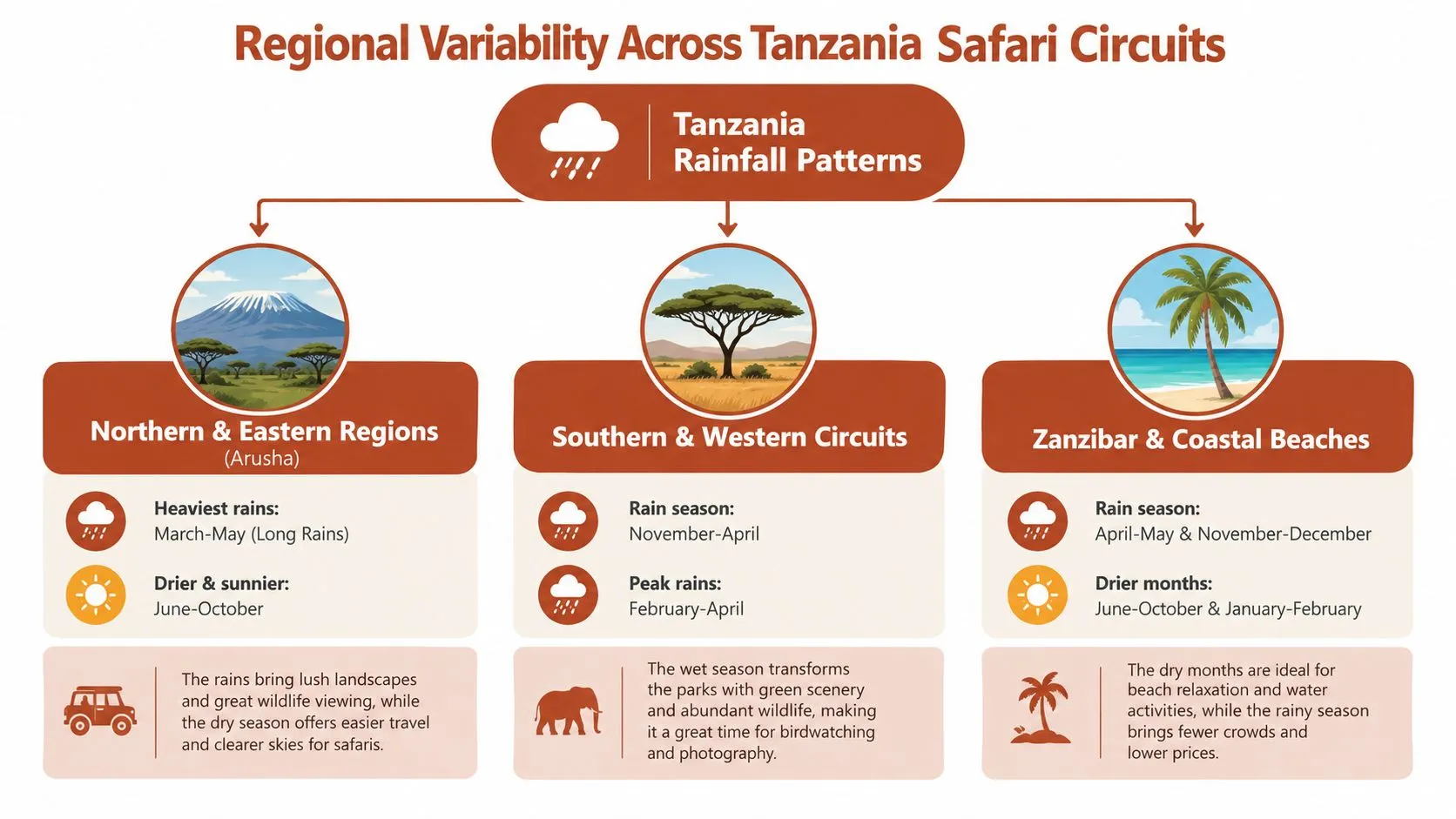
A safari route can cross several rainfall regimes within the same country. Northern and eastern Tanzania generally have the clearest bimodal pattern, with short rains and long rains separated by relatively drier periods. Central, southern, and western areas more often receive one longer wet season.
For a northern circuit itinerary, the relevant destinations may include Arusha, Serengeti access routes, Ngorongoro, Tarangire, and Lake Manyara. These areas don't all receive identical rainfall, but travelers can generally expect two rain windows rather than one uninterrupted wet season. The Serengeti National Park travel guide is useful when checking how park location fits into a wider northern route.
Northern and eastern routes
Northern and eastern areas typically experience vuli from October or November through December and masika from March through May. Arusha can be particularly wet during the long rains, while Serengeti rainfall varies across the park and its access corridors. A route that combines paved transfers, established lodges, and frequent road access may handle showers more easily than a remote mobile-camp itinerary reached by long dirt tracks.
The far northwest can remain wet for an extended stretch. Climate reporting places January and February rainfall in that area at roughly 100 to 150 mm per month, which means the northwest can function as a wet region across much of October through May, rather than having a sharply defined dry interval. That matters for travelers heading toward the western or northern Serengeti, where route choice and transfer planning can be more important than the calendar alone.
Southern and western parks
In central, southern, and western Tanzania, rainfall often follows a unimodal pattern, with one longer wet season from about November through April or May. Parks in these regions may feel the effects of wet ground for longer, even if a particular day includes clear skies.
Remote access is the main concern. A southern or western itinerary can involve long overland transfers, isolated camps, and tracks that have fewer alternatives when conditions deteriorate. Travelers visiting during the greener months should ask whether camps remain open, which access roads are currently being used, and whether the itinerary can switch to a flight if road conditions worsen.
Coast and Zanzibar
Coastal areas have their own planning logic. The main rain windows commonly fall around April to May and November to December, while June to October and January to February are generally drier periods. A safari followed by a beach stay therefore needs two separate weather checks. Conditions that are acceptable for a green-season game drive may not suit a traveler who wants dependable beach days and water activities.
What Rain Season Means for Safari Roads Wildlife and Comfort
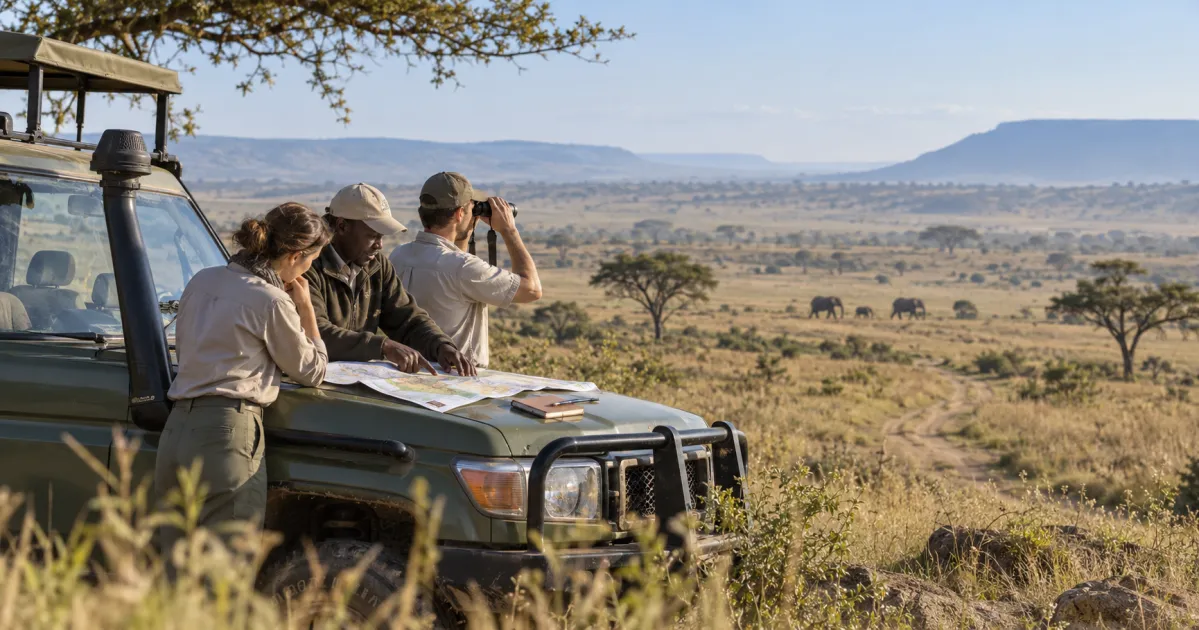
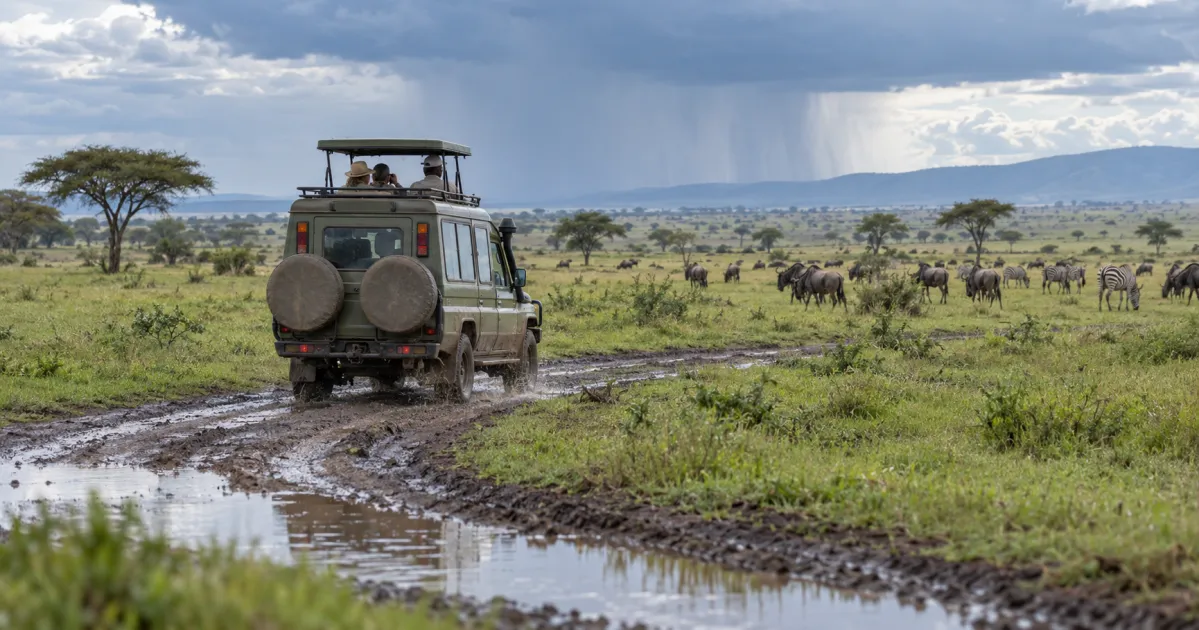
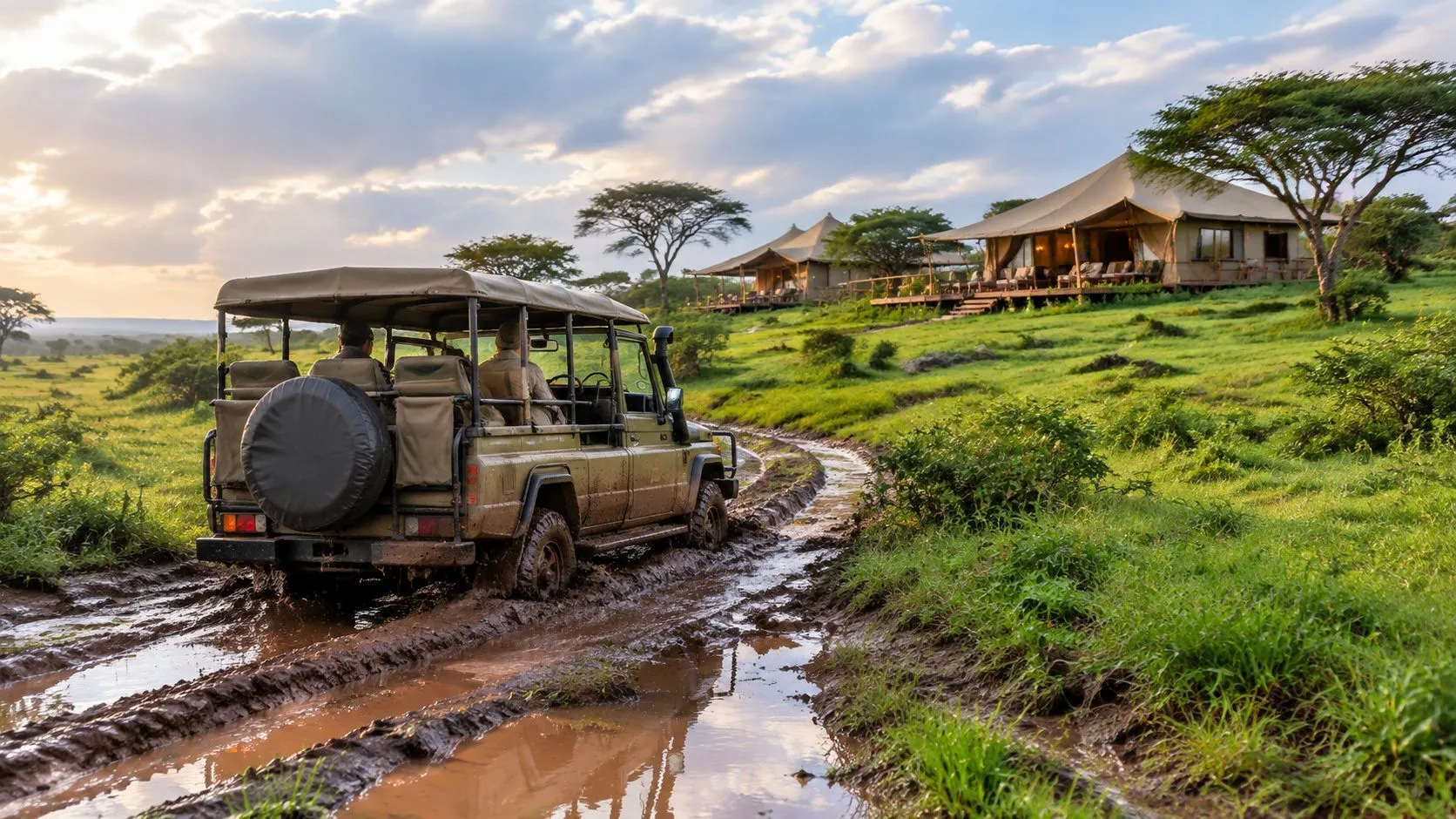
Rain changes a safari first through movement, not scenery. Suppose a vehicle leaves Arusha after a heavy storm and heads toward a remote camp. The main highway may be straightforward, but the final unpaved approach can become slower, rutted, or temporarily difficult. A capable four-wheel-drive vehicle, an experienced driver, and a flexible arrival time can matter more than the rainfall forecast alone.
A different scenario is a November shower during a game drive. The vehicle may pull beneath cover or pause while rain passes, then continue once visibility improves. Wet grass and dark clouds can create dramatic photographic conditions, and the refreshed scenery may be more visually rewarding than the dry-season view. The experience depends on the shower's duration and the park's road surface.
Roads and transfers
The greatest disruption risk usually falls on remote dirt roads and low-lying tracks. Heavy rain can saturate soil, create standing water, and make steep or uneven sections harder to cross. Government travel guidance warns that heavy rain, flooding, and landslides can make travel difficult, and that many roads may require four-wheel drive. The same guidance records recent severe impacts in Rungwe District, including 86 deaths, 157 injuries, and more than 37,000 people affected nationwide, as described in the Tanzania safety and security advice.
Those events don't mean every safari route becomes unsafe during rain. They do show why travelers should take local warnings seriously and avoid building an itinerary with no spare time between connections.
Wildlife and viewing conditions
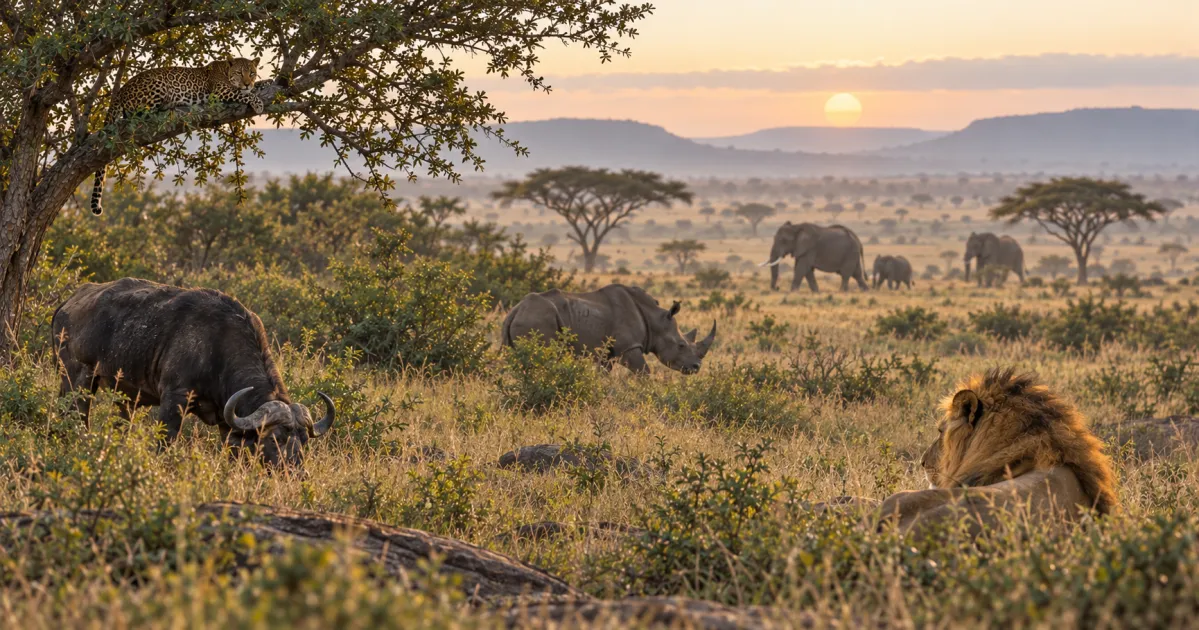
Rain can disperse animals by creating more water and stimulating fresh vegetation. In the dry season, animals may be easier to locate around remaining water sources. During wetter periods, game viewing can require more patient searching, especially where grass is tall or herds spread across newly green areas.
The rewards can include vivid vistas, migratory birds, fresh light after storms, and quieter sightings. Comfort is more variable. Damp clothing, muddy footwear, delayed departures, and cold early hours can reduce enjoyment unless the vehicle and lodge are prepared for wet conditions.
A useful question for your operator: “If heavy rain affects the planned road, what is the backup route, transfer method, or overnight plan?”
Recent climate monitoring also supports a flexible approach. Rainfall timing can vary from year to year, and monitoring has recorded rain over parts of Tanzania in months and coastal areas outside the simplest textbook pattern. A forecast can guide short-term decisions, but it can't replace a region-specific operating plan.
How to Plan Your Trip Around the Rains
Start with your route and essential experience, then match the season to your tolerance for disruption. A traveler focused on reliable road access may prefer the drier period. Someone seeking green scenery, lower visitor density, or a more flexible safari may accept showers in exchange for a different atmosphere.
Match the season to the circuit
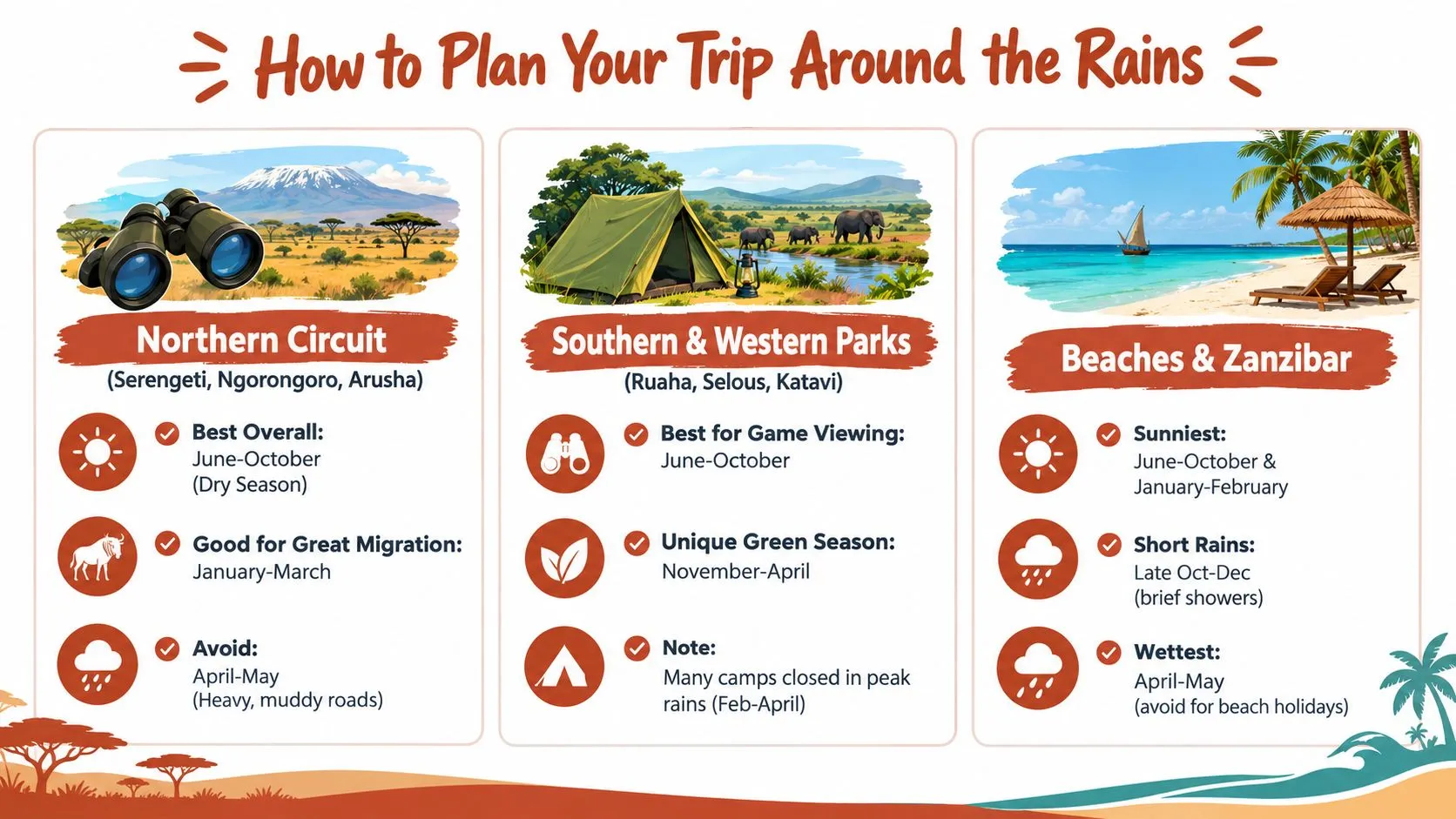
Northern circuit: For Serengeti, Ngorongoro, and Arusha, treat November and December as a potentially manageable green-season window, but ask about the exact route. April and May require stronger contingency planning because long rains can make remote tracks and camp access less reliable.
Southern and western circuits: Treat November through April or May as one extended wet-season planning period. Before paying a deposit, confirm whether every camp operates during the intended dates and whether the itinerary relies on long road transfers.
Beach extensions: Check the coast separately from the safari. April and May carry greater beach-weather risk, while the short-rains period can bring brief showers that may still leave useful time for activities.
Build practical flexibility
A rain-season itinerary works better when it has room to breathe. Ask for a buffer before an international flight, avoid scheduling a long road transfer immediately before a nonrefundable connection, and find out whether domestic flights are available for the most exposed legs.
Packing should support changing conditions rather than one fixed forecast:
Bring waterproof protection: A light rain jacket, dry bags, and footwear that can handle wet ground are more useful than a bulky winter coat.
Use layers: Highlands and early game drives can feel cool, while afternoons may turn warm between showers.
Protect equipment: Camera covers, sealed bags, and quick access to a microfiber cloth help when rain arrives suddenly.
Confirm vehicle details: Ask whether the safari uses a four-wheel-drive vehicle and whether the driver can adjust the route according to current conditions.
For a broader month-by-month comparison of safari priorities, review this guide to the best time for a Tanzania safari. Then request an itinerary that names the actual parks, roads, camp access arrangements, and transfer alternatives, rather than labeling the trip “rainy-season travel.”
Making Confident Choices for Rain Season Tanzania Travel
The best rain-season decision comes from weighing route, risk, and reward together. Northern Tanzania often gives travelers two separate opportunities to visit during wetter conditions. Southern and western regions may require a longer wet-season mindset, especially where road access depends on remote tracks. The coast and Zanzibar should be assessed separately if beach time is part of the plan.
Use this framework:
Choose vuli when: You want green scenery and a quieter feel but prefer a generally less disruptive rainy window.
Choose masika when: You're comfortable with changing routes, wetter roads, and a stronger need for contingency planning.
Choose the drier period when: Reliable transfers, straightforward road conditions, and predictable outdoor schedules matter most.
Ask before booking: Confirm camp opening dates, road access, vehicle type, flight alternatives, and the operator's policy if conditions force a change.
A lower-crowding season isn't automatically a better bargain if the itinerary leaves no room for delays. Conversely, rain doesn't automatically ruin a safari. The right operator can adjust departure times, select workable tracks, and explain which parts of the route carry the greatest exposure.
Travelers comparing Northern Circuit safaris in Tanzania should look beyond the headline travel month. Compare the specific parks, transfer distances, accommodation locations, and backup arrangements. That's how you turn an uncertain weather question into a confident route decision.
Explola helps you compare verified African safari operators, detailed itineraries, inclusions, reviews, and direct quotes in one place. Visit Explola to shortlist Tanzania trips by region and travel style, then ask operators exactly how they manage roads, camp access, and itinerary changes during the rains.

Daniel writes for the Explola blog, where he covers African safari destinations, wildlife, travel trends, and practical trip planning. His work is centered on making safari travel easier to understand, compare, and plan.
Get Safari Tips & Destination Guides
Join our newsletter for exclusive travel tips, wildlife insights, and safari planning advice.