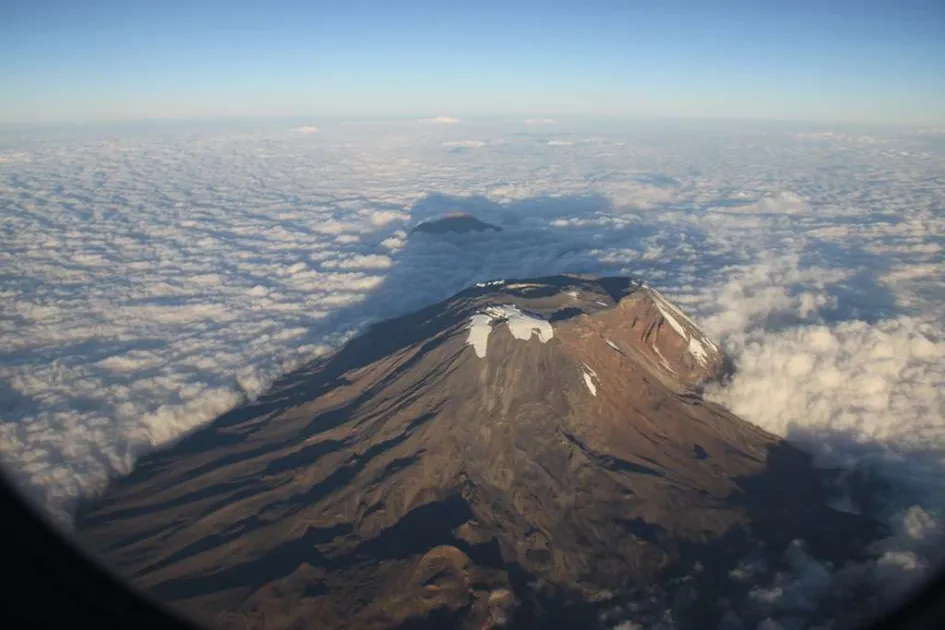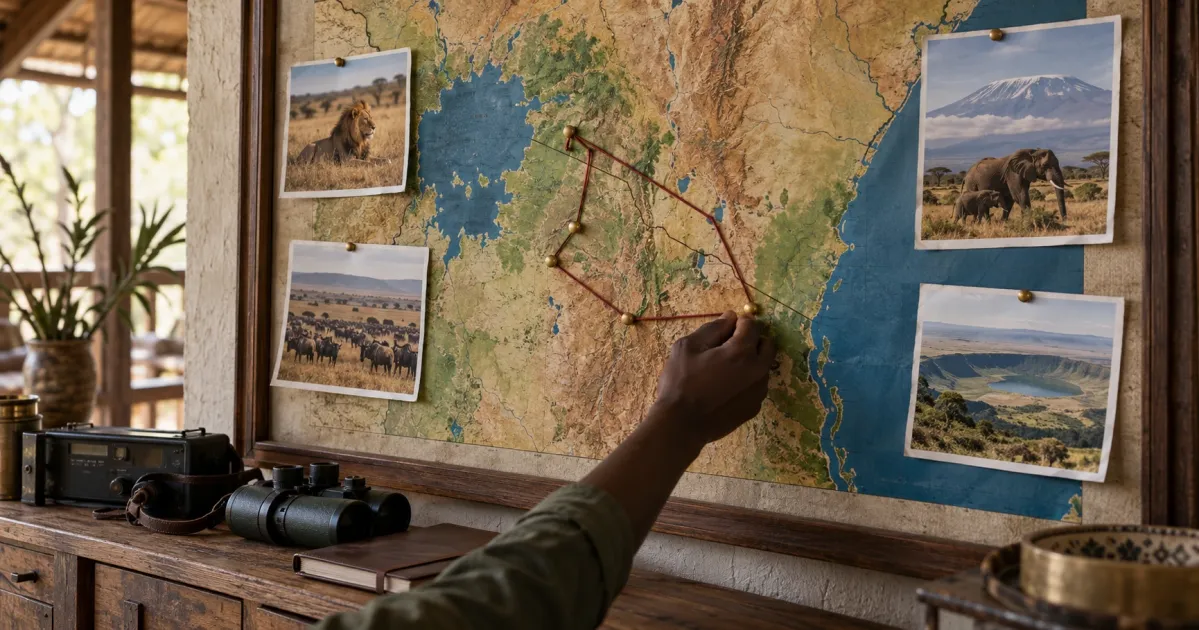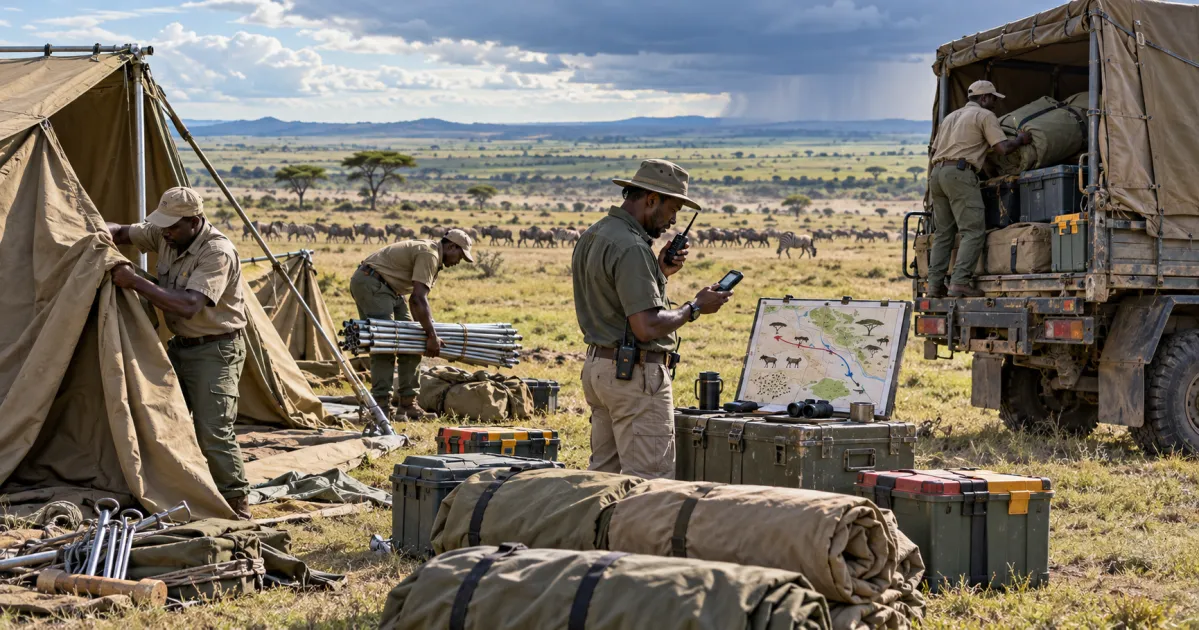
Late June to October is the most reliable starting window for a Tanzania safari. The right month after that depends on which parks you want, and whether you care more about migration drama, quieter roads, or better value.
If you're staring at an empty calendar with flights half-chosen and leave approved, you're not really choosing a date. You're choosing the version of Tanzania you'll get. A July trip and a March trip can both be excellent, but they do not feel like the same safari, even in the same country.
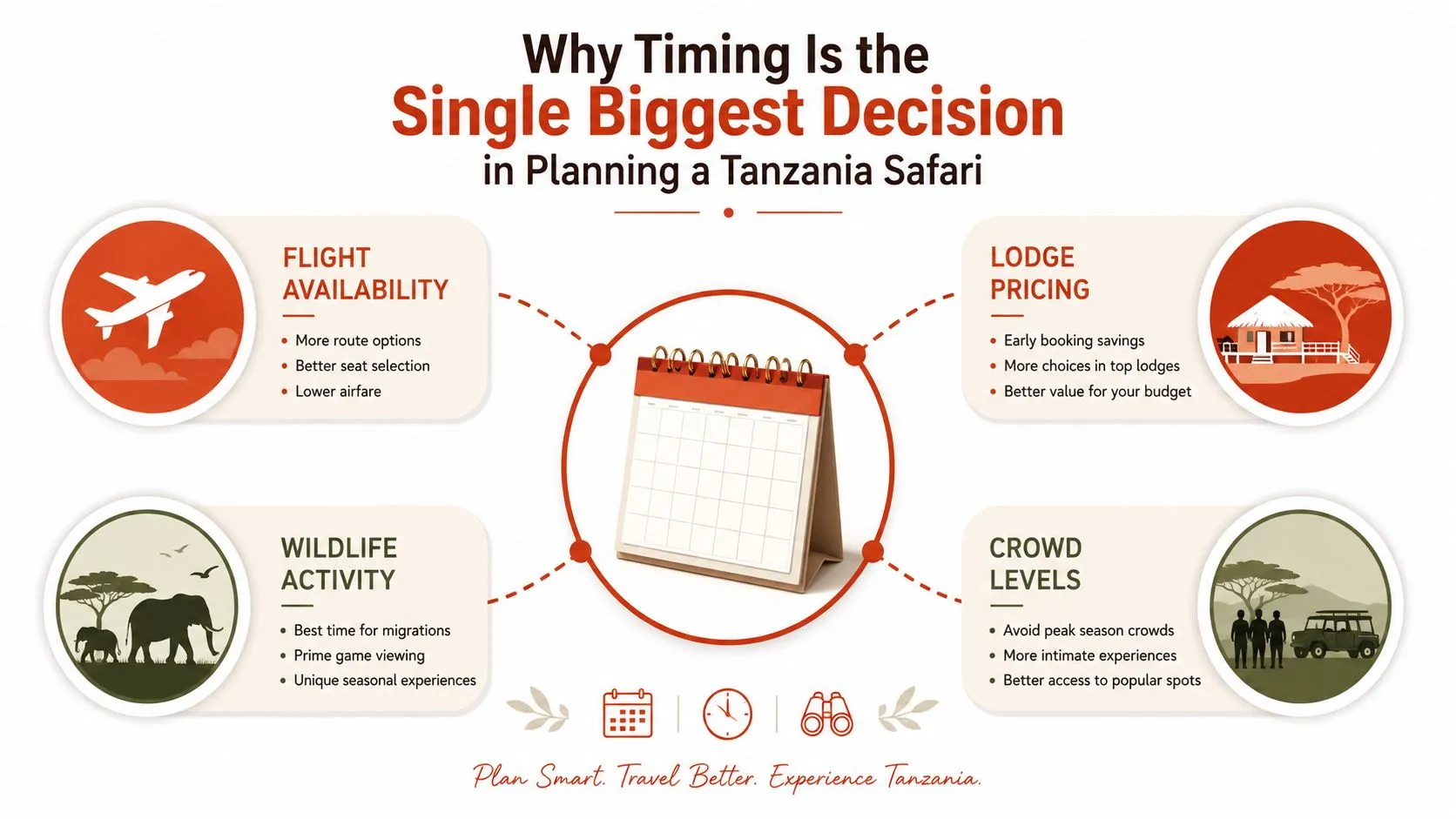
Why Timing Is the Single Biggest Decision in Planning a Tanzania Safari
You can book the right lodge, choose a strong guide, and still end up with the wrong trip if the dates don't fit the season. Timing affects what animals you see, how easy they are to spot, whether roads are usable, how crowded sightings feel, and how much you pay. That's why the question behind the best time Tanzania safari search is never just “When should I go?”, it's “Which conditions do I want to trade for which benefits?”
A July safari in the north tends to mean thinner grass, stronger animal concentration, and a more predictable game-viewing rhythm. A March safari can mean greener scenery, more privacy, and a different mood altogether, even if some drives take longer or certain roads are softer after rain. Those are not minor differences, they shape the entire trip.
Think in decisions, not dates
The calendar works like a filter. First, weather narrows the options. Then wildlife events, especially the Great Migration, narrow them again. After that, your chosen region, north, south, or west, decides what “best” means for your itinerary.
Practical rule: if you want the easiest first safari, start with the dry-season window and then fine-tune by park and wildlife event.
The useful part is that Tanzania doesn't reward a single universal answer. It rewards matching the month to the route. Once you see the decision tree clearly, the rest of the planning gets simpler.
Tanzania's Two Dry Seasons and Two Rainy Seasons Explained
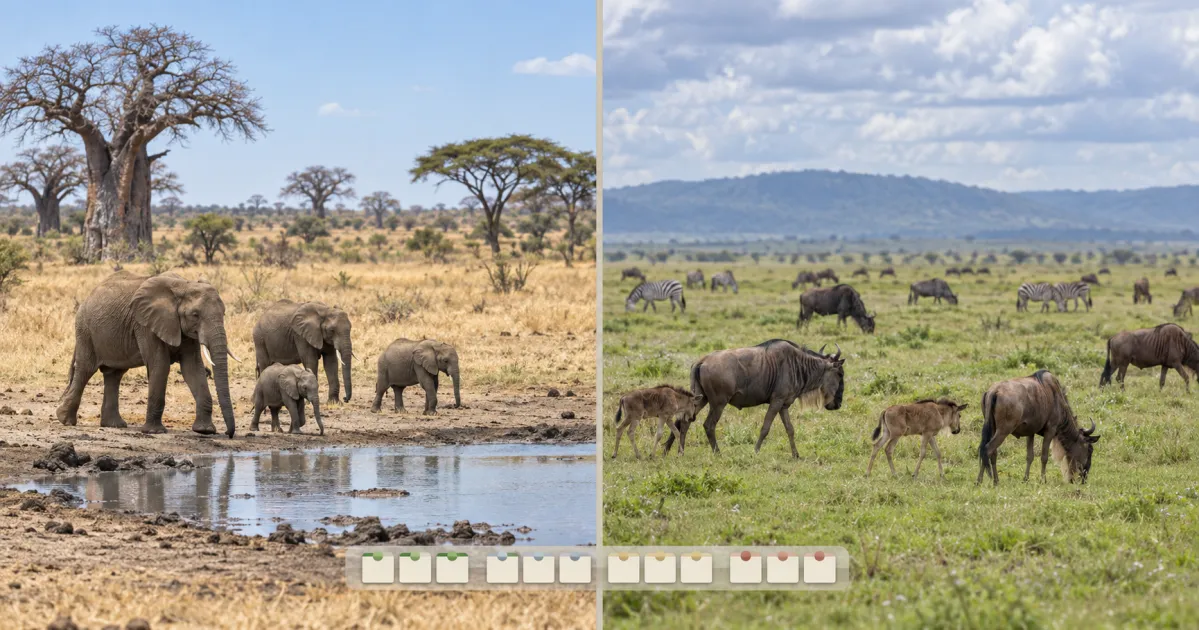
Tanzania's safari year is shaped by rain, not by a fixed tourist calendar. The most important windows are the long dry season from June to October, the short dry season from January to February, the long rains from March to May, and the short rains from November to December. In the dry months, animals cluster around permanent water sources and shorter grass improves visibility, which is why guides repeatedly point travelers toward those dates for the easiest sightings (Responsible Vacation guide).
That doesn't mean the rainy periods are bad. They just change the style of travel. Vegetation gets thicker, animals spread out more, and some roads become less predictable, but the scenery is greener and the parks usually feel quieter. The trade-off is real, especially for people who want fewer vehicles rather than the most iconic river-crossing scenes.
The four seasons at a glance
| Season | Months | Game-Viewing Impact |
|---|---|---|
| Long dry season | June to October | Best visibility, animals gather near water, grasses are low |
| Short dry season | January to February | Strong viewing, especially in the south, with greener scenery |
| Long rains | March to May | Harder spotting, softer roads, lush landscapes, fewer crowds |
| Short rains | November to December | Mixed conditions, good value, variable access, still productive game drives |
Elevation matters too. The Serengeti plateau and Ngorongoro sit higher and cool off at night, while Tarangire and Ruaha sit lower and stay warmer year-round. That matters when you pack, but it also changes how comfortable the same month feels from one region to another.
Shoulder months can be especially tricky in a good way. October and November often sit between seasons, so rain, heat, and herd movement can make conditions feel unstable. For some travelers, that unpredictability is exactly what makes the trip rewarding.
Following the Great Migration Across the Serengeti Calendar
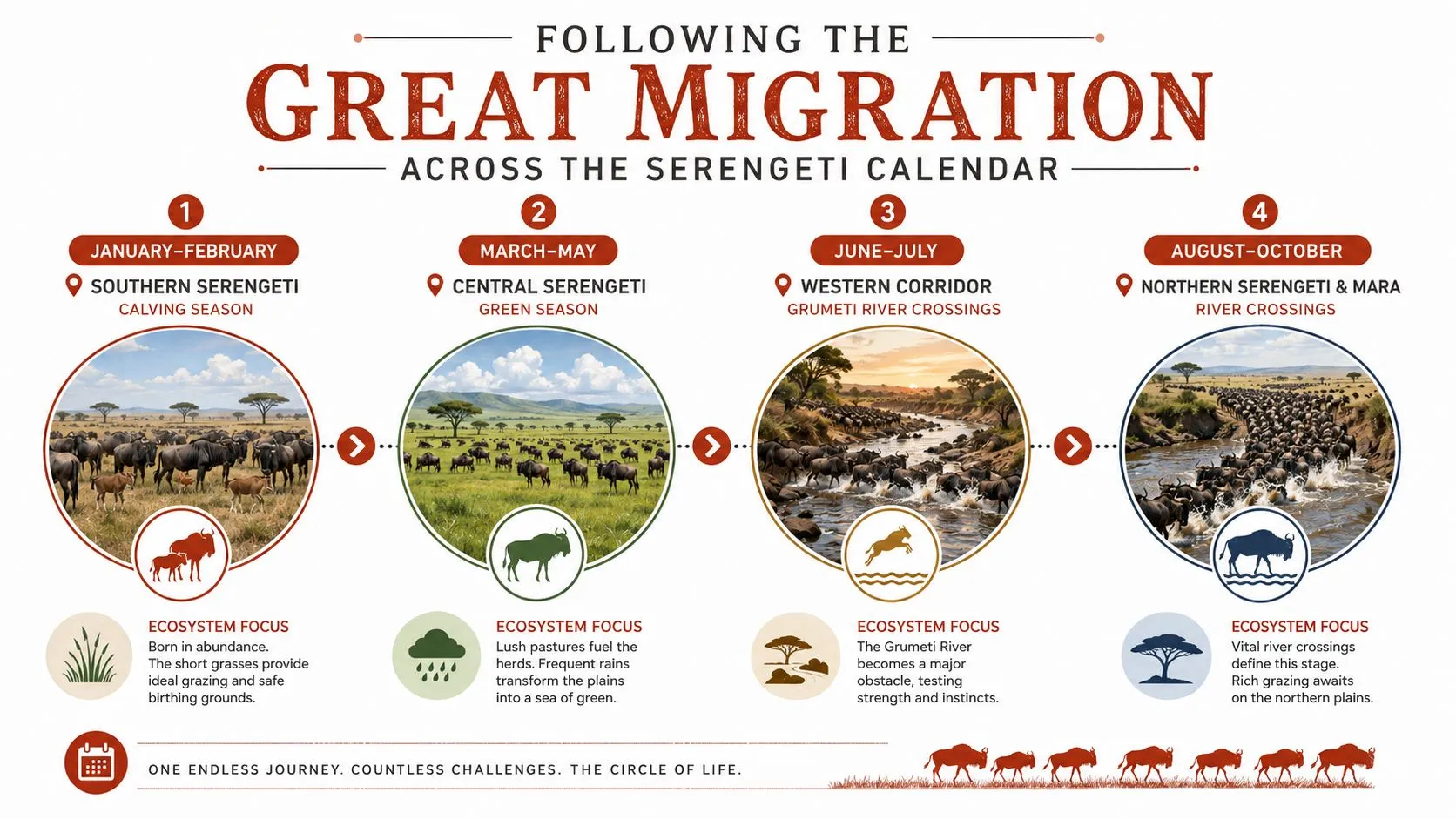
The Great Migration isn't a single event, it's a moving system. If you want to time a safari around it, the key is to match the month to where the herds are, not where a country map makes everything look convenient.
January to February in the southern plains
The year often starts in the southern Serengeti and Ndutu, where calving dominates the scene. That window brings intense predator pressure, because newborns attract lions, hyenas, and cheetahs fast. It's the most dramatic time for travelers who want life, vulnerability, and hunting behavior in the same frame.
March to May through the central and western movement
As the herds push north and west, rain can make road conditions less stable. March to May is also when the terrain turns lush and the migration becomes less neatly concentrated in one visible place. If you value green backdrops and quieter camps more than neat spectacle, this can be a strong period.
June to October in the north
This is the famous stretch. The Mara River crossings in the northern Serengeti are usually associated with June to July in neutral guides, while many safari references place the broader best migration-viewing window from June to August, with July and August often bringing the most dramatic crossings (Responsible Vacation guide, Magical Tanzania weather guide). For route-specific planning, the timing is still an estimate, not a guarantee, because river levels and herd movement shift year to year.
November to December and the reset
By the end of the year, smaller herds drift back southeast and the cycle begins again. This is a useful reminder for first-timers, because the migration is not a one-month spectacle. It's a calendar-shaped movement that keeps changing.
For a route-specific deep dive, this Great Migration safari overview is useful when you want to pair timing with itinerary length and park mix. If your transit plan includes Mwanza, it also helps to browse Mwanza lounge entry rules before you build a long travel day around a connection.
The migration rewards patience. Travelers who aim for the middle of an expected window usually have a better chance than those who chase the exact date.
Northern, Southern, and Western Circuits at a Glance
A lot of confusion about the best time Tanzania safari comes from one simple mistake, treating the whole country as if every park follows the Serengeti calendar. It doesn't. The Northern Circuit, Southern Circuit, and Western Corridor each have their own season logic, access patterns, and crowd behavior.
The northern circuit for first-timers
The Northern Circuit includes Serengeti, Ngorongoro, Tarangire, and Lake Manyara. It has the strongest lodge network and the longest reliable dry window, especially from June to October (Safari Consultants Tanzania seasons guide). That makes it the easiest region for a first safari because logistics are simpler and wildlife viewing is more consistent.
The southern circuit for space and waterhole concentration
The Southern Circuit, especially Ruaha and Nyerere, works differently. Dry-season wildlife tends to concentrate around the remaining waterholes, and the region feels much less crowded than the north. If you want a more remote feel and can accept fewer famous headline moments, this region can be a strong fit.
The western corridor for a different pace
The Western Corridor follows its own calendar. Katavi changes as floodwaters recede, and Mahale is better when forest trails are walkable for chimpanzee trekking. That region appeals to travelers who don't need a classic migration-first safari and would rather trade convenience for remoteness.
| Circuit | Best Months | Signature Parks | Wildlife Highlights | Crowd Level | Ideal Traveler |
|---|---|---|---|---|---|
| Northern Circuit | June to October, also late December to mid-March | Serengeti, Ngorongoro, Tarangire, Lake Manyara | Migration, classic Big Five viewing, strong road access | Highest | First-timers, migration chasers |
| Southern Circuit | June to November | Ruaha, Nyerere | Waterhole concentration, quieter sightings | Lower | Repeat visitors, privacy seekers |
| Western Corridor | May to October, depending on park and activity | Katavi, Mahale | Shrinking water channels, chimpanzees, remote wilderness | Lowest | Explorers, long-trip planners |
If you're planning a self-drive or need more road flexibility, a provider like World Auto Hire Arusha can be part of the research phase, especially when you're comparing how much you want to move between hubs versus staying put. For a broader route comparison, this Northern Circuit safari guide helps when you want to see how the parks fit together on one itinerary.
Peak Season Versus Shoulder Season and the Cost Trade-Off
For many travelers, the budget decision comes down to one question: are you paying for certainty, or are you comfortable with some flexibility? July to October is the premium window because dry conditions make wildlife easier to find and lodges fill quickly. Independent guidance also notes that April daily safari costs around $210 versus about $550 in July, and that accommodation can fall 30 to 50 percent in the long rains.
That does not make shoulder season a weaker safari. It changes what the trip gives back. A quieter camp, softer light, and lower rates can matter more than being in the middle of the most competitive booking period.
How the cost shift shows up in real planning
A lodge that feels out of reach in peak season can become much easier to book in a shoulder month. On a seven-night safari, that difference adds up quickly, especially if you are comparing similar tents or rooms within the same circuit. Some travelers would rather spend the same budget on a better room, while others prefer to keep the standard fixed and add another night.
A lower price does not mean a lower-quality trip. It usually means the value shifts from headline wildlife pressure toward space, privacy, and more room in the itinerary.
What you gain and what you risk
Peak season gives you the most reliable conditions for sightings and photography. Shoulder season can bring thinner crowds and better pricing, but weather becomes less predictable, especially if you are traveling through the wetter parts of the calendar. The long rains, especially in April and May, are the most disruptive period for access to remote areas, although some parks and lodges still operate.
| Factor | Peak July-October | Shoulder November or March | Low April-May |
|---|---|---|---|
| Lodge pricing | Highest | Lower, often noticeably better value | Lowest, when open |
| Wildlife conditions | Most predictable | Good, but more variable | Mixed, with access limits |
| Crowds | Highest | Thinner | Very light |
| Road conditions | Best | Can be damp or muddy | Most challenging |
Seasoned travelers often split the difference for a reason. They want enough dryness for reliable game viewing, but not the most expensive week of the year. That is often where the strongest value sits.
Matching the Best Month to Your Traveler Profile
The phrase best time Tanzania safari only becomes useful when it's matched to the traveler. A first-timer, a photographer, a solitude seeker, and a family with school dates are all asking different questions. If you force one month onto all of them, somebody loses something important.
The first-time visitor
If this is your first safari and you want the Great Migration without overcomplicating the route, September in the northern Serengeti is a strong fit. The herds are still moving through the Mara River area, and the dry-season visibility is still working in your favor (Responsible Vacation guide). The trade-off is cost, because you're still in a premium period.
The photographer
If your priority is river crossings, big cats, and dramatic action, late July or August in the northern Serengeti is the obvious target. The conditions are usually strong for contrast and concentration, but you'll share the scene with more vehicles than you would in shoulder season. That's the price of timing your trip around the most iconic behavior.
The solitude seeker
If you care more about remote wilderness than famous crowd-pleasers, June or October in the Southern or Western circuits makes more sense. Wildlife concentrates, roads are more manageable than in the wettest months, and the pace feels different from the north. The compromise is that you may not get the same headline migration moment.
The budget-conscious family
If school breaks constrain your dates, November or March can be the better compromise. You'll usually get lower pricing and still-solid game viewing, although weather and road conditions are less predictable than in the dry season. For a family, that often works better than waiting for the most expensive month and stretching the budget too far.
For a day-by-day feel of how Tanzanian safari travel unfolds, this safari day-in-the-life guide is helpful before you lock in dates.
| Traveler Profile | Best Month | Recommended Circuit | Key Trade-Off |
|---|---|---|---|
| First-time visitor | September | Northern Circuit | Higher prices, but excellent migration timing |
| Photographer | Late July or August | Northern Serengeti | More vehicles, but the most dramatic action |
| Solitude seeker | June or October | Southern or Western Circuit | Less famous spectacle, more space |
| Budget-conscious family | November or March | Northern or Southern Circuit | Wetter conditions, but better value |
A Practical Booking Timeline and Final Planning Checklist
The right month only helps if you book in the right order. For migration-specific camps such as Kogatende, Lemuta, and Ndutu, hold space 9 to 12 months ahead if you're aiming for July to October. Southern Circuit camps usually give you more breathing room, so 4 to 6 months can be enough in many cases. The reason is simple, the better the wildlife window, the faster the best beds disappear.
Watch the rain timing, not just the departure date
If you're booking for November to March, keep some flexibility in mind because the short rains can arrive earlier than expected. That doesn't automatically ruin a safari, but it can change how much time you spend on certain roads or which camp is most comfortable. Travelers who build every day around one exact weather expectation usually feel more stress than necessary.
Book transport around the calendar
Flights into Kilimanjaro or Arusha are often easier to price when fares soften in January to February and September. Internal bush flights should usually be checked about 6 to 8 weeks before departure, especially if your itinerary includes multiple parks or a migration camp. If you're linking regions, don't assume the road is the cheapest or simplest answer.
Final checklist before you pay deposits
Park fees and permits: confirm what's already included and what must be paid in advance.
Visa: use the official eVisa process early enough to avoid last-minute pressure.
Health documents: carry a yellow fever certificate if your itinerary or transit rules require it.
Insurance: choose travel insurance that includes medical evacuation, not just basic trip protection.
Packing: bring the right layers for the month, because higher-altitude parks can feel cool at night while lower parks stay warmer.
If you want the pricing and sighting quality to work together, book to the month, not the other way around. That's how you avoid paying peak rates for the wrong park mix, or arriving in the right park after the best window has moved on.
If you want help turning your dates into a real safari plan, Explola lets you compare verified operators, routes, and itinerary details in one place. Use it to match the month, the circuit, and the budget before you commit, then visit Explola to start narrowing down the Tanzania safari that fits your travel style.
Ready to experience this?
Explore Related Safaris
Destinations Mentioned

Daniel writes for the Explola blog, where he covers African safari destinations, wildlife, travel trends, and practical trip planning. His work is centered on making safari travel easier to understand, compare, and plan.
Get Safari Tips & Destination Guides
Join our newsletter for exclusive travel tips, wildlife insights, and safari planning advice.