You're comparing Botswana camps, reading about lagoons and predators, and wondering whether a remote tented camp is worth the extra planning. Sable Alley Botswana appeals to travelers who want the Okavango Delta to feel close, quiet, and untamed, but its location also means light-aircraft transfers, baggage limits, and seasonal changes deserve as much attention as the room itself.
Introduction to Sable Alley and Why It Stands Out
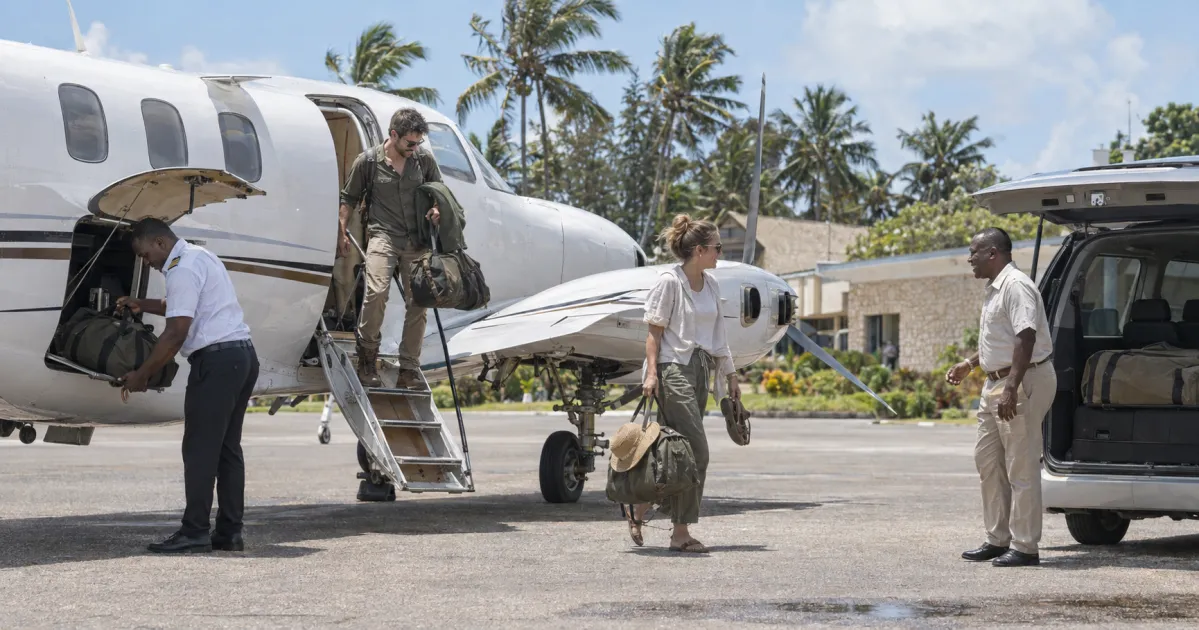
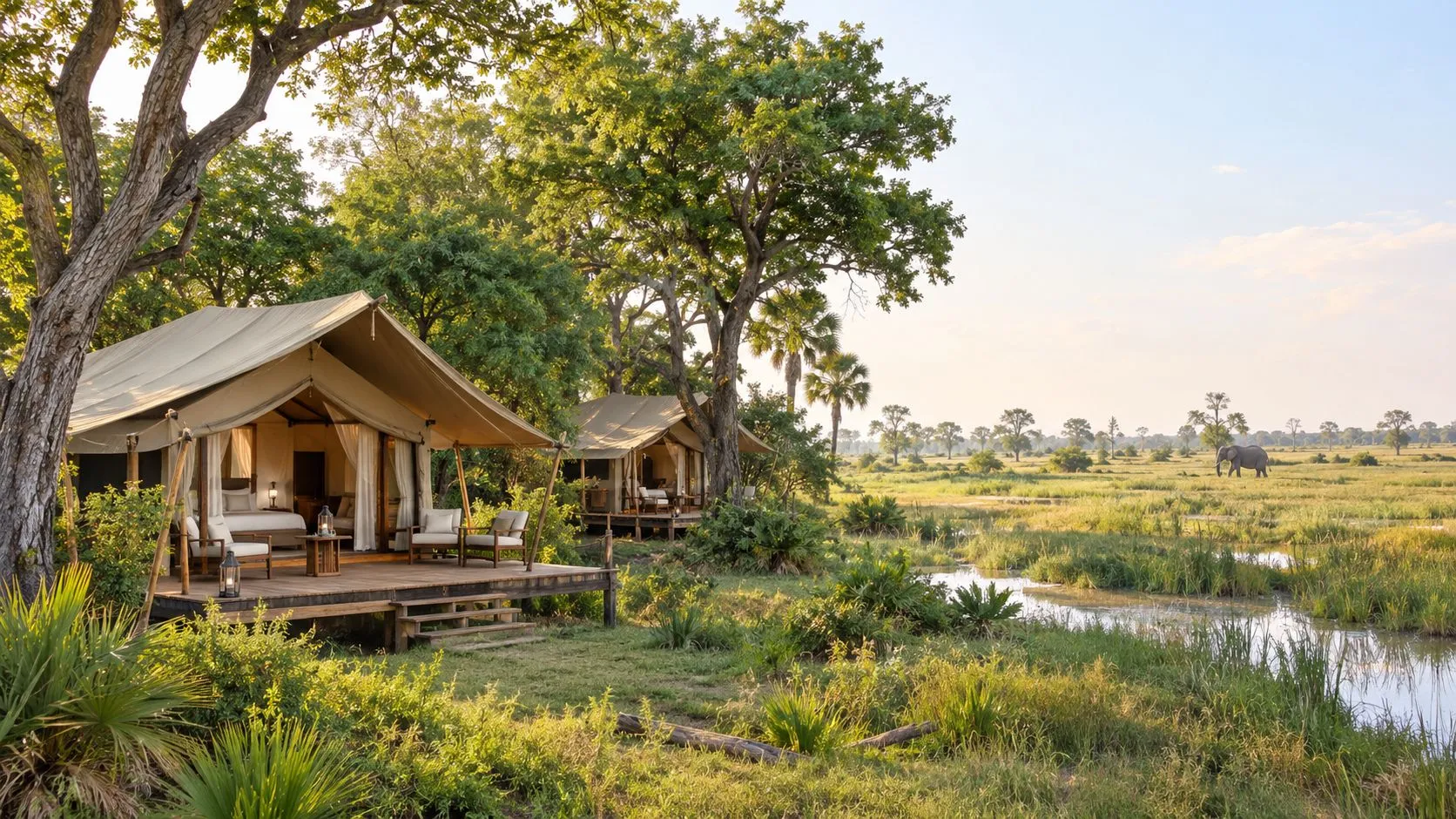
Your aircraft descends toward a simple bush airstrip. Beyond it, floodplain and woodland replace roads and buildings, and the final transfer follows a sandy track to camp. Sable Alley gives travelers that remote Khwai arrival while adding the service and comfort expected from a luxury tented camp.
Set in Botswana's Khwai Private Reserve, Sable Alley forms part of the wider Okavango Delta. The camp opened in 2017 as a reincarnation of the original Banoka Bush Camp, according to Expert Africa's Sable Alley overview. Its history helps explain the atmosphere: this is an established safari setting, shaped around wildlife and wilderness rather than a resort built apart from its surroundings.
The private-reserve setting also changes what you are paying for. The value lies in the combination of a smaller camp, access to a connected wildlife area, and the freedom to include both land and water activities. That access comes with tradeoffs: light-aircraft transfers, luggage restrictions, and a journey that takes more planning than a lodge reached by road.
The main decisions are practical:
Location: Khwai's relationship with Moremi and Chobe affects the wider safari route.
Camp scale: a small tented property feels quieter and more personal than a large lodge.
Wildlife: drives, mokoro excursions, boats, and walks offer different ways to read the same habitat.
Seasonal character: changing water levels can shift the balance between land and water activities.
Booking logic: the premium access may suit couples, honeymooners, and families who value remoteness.
Sable Alley suits travelers who want a focused safari rather than a resort atmosphere. It may not suit those seeking the easiest transfer, many room categories, or a conventional family lodge without a minimum child age. The question is less whether the camp is comfortable, and more whether its remote Khwai setting justifies the extra logistics in your Botswana itinerary.
Where Sable Alley Sits in the Okavango Delta
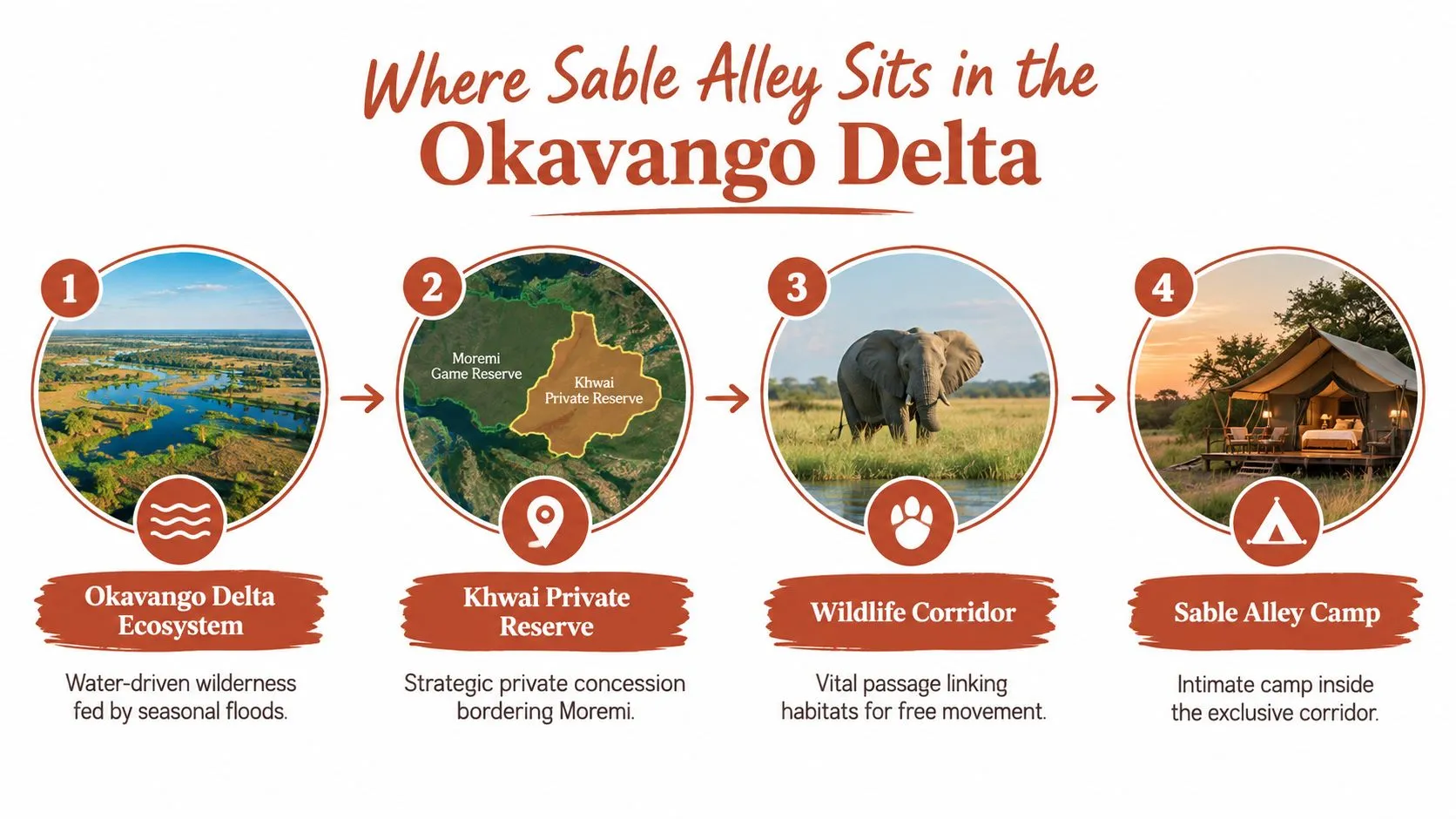
A Sable Alley stay begins with a map, then becomes a flight, a game drive, and a changing water system. The camp lies in the Khwai Private Reserve, within the wider Okavango Delta, where seasonal flooding reshapes channels, lagoons, islands, and floodplains. Water may be close in one season and retreat from a viewing area in another, so the setting affects both wildlife movements and the activities available during your visit.
Khwai covers about 2,000 km² and borders Moremi Game Reserve to the south and Chobe National Park to the east, placing Sable Alley within a broad network of habitats. The Okavango Delta's protected areas and safari setting provides useful context for understanding how these areas fit together. Wildlife does not follow the lines printed on a park map. Woodland, floodplain, and water channels connect the region, giving guides several types of terrain to work with.
Why the corridor matters
A wildlife corridor works like a network of routes rather than a viewing enclosure. Elephants can move between water and feeding grounds, predators can track prey through different habitats, and guides can change their route after reading fresh tracks or recent animal activity. The advantage is access to a living system. A particular sighting remains uncertain.
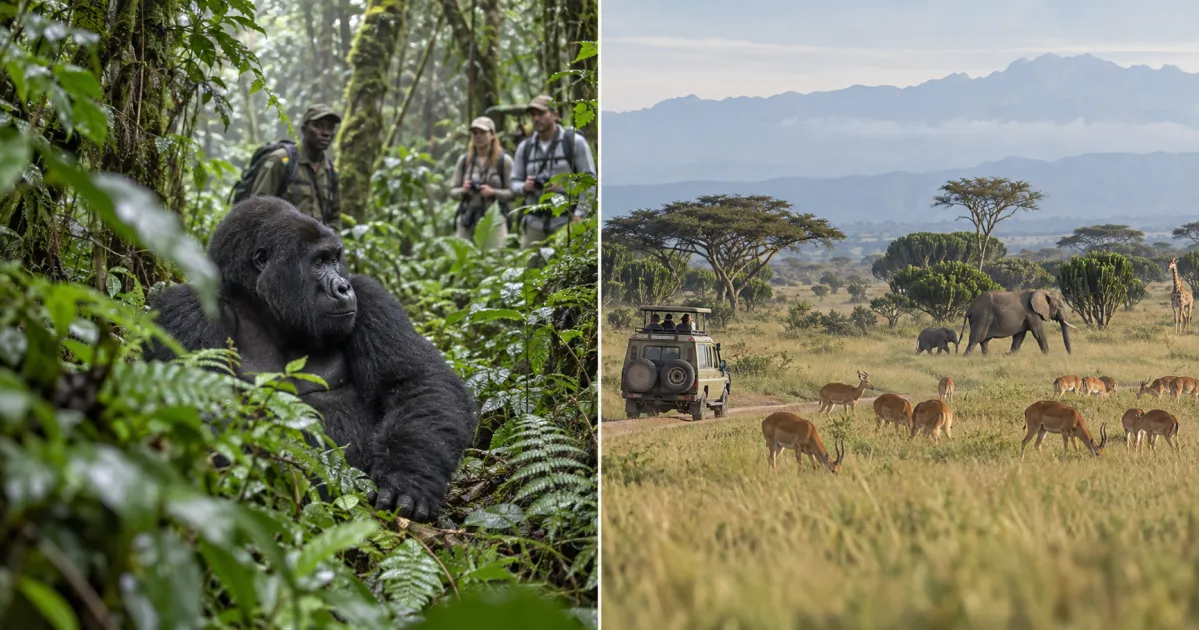
Sable Alley's lagoon setting adds water to that equation. The surrounding wildlife area contains more than 50 animal species, including lions, leopards, cheetahs, African wild dogs, elephants, buffalo, and sable antelopes (Natucate's Sable Alley travel guide). These species describe the range of possible encounters, not a guarantee for every drive. Seasonal conditions, animal movements, and the guide's decisions all shape the result.
What the transfer feels like
The remote location is part of Sable Alley's appeal, and also its main planning tradeoff. Travelers generally fly by light aircraft from Maun to Khwai Private airstrip, then continue by vehicle to camp. The airstrip is about 20 minutes from Maun, with the final drive taking roughly 15 minutes (Expert Africa's location and access details).
Once the aircraft lands, the last transfer is short. The wider journey still requires attention to flight times, luggage rules, aircraft arrangements, and connections with your regional or international arrival. This premium access buys seclusion and a position within a rich wildlife area, but travelers who prioritize easy road access may prefer a more straightforward camp. For others, the extra logistics are the price of reaching a quieter Khwai setting.
Inside the Camp and How It Feels to Stay There
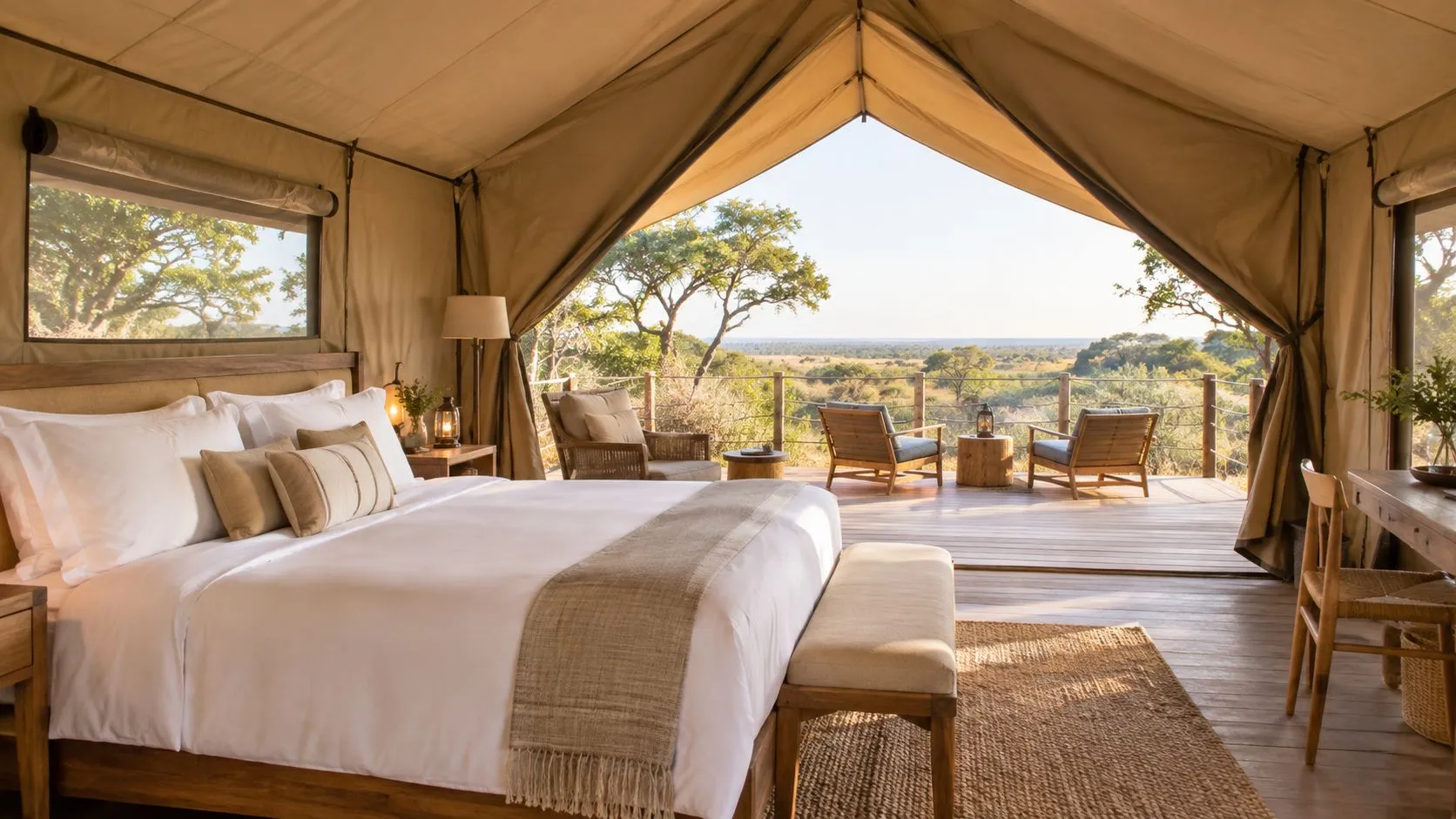
Staying at Sable Alley feels closer to joining a small field team than checking into a large resort. Accommodation descriptions list 12 canvas-sided rooms, including nine twin tents, two family tents, and one honeymoon tent, with space for roughly 28 to 30 guests (Natucate's accommodation details). Another source counts the rooms differently, so ask your safari operator how the current inventory and categories are defined before booking.
That difference in counting matters less than the camp's scale. A smaller guest group usually means quieter shared spaces, more direct conversations with guides, and a daily rhythm shaped by the people staying there rather than by a large resort schedule.
Choosing the right tent
The accommodation categories match different kinds of trips:
Twin tents work well for friends or travelers who prefer separate beds.
Family tents give parents traveling with children a practical arrangement.
The honeymoon tent suits couples looking for a more private atmosphere.
Sable Alley accepts children from a minimum age of 6, according to independent expert reporting (Botswana Specialists' Sable Alley profile). Families with school-age children may find that easier to manage than families traveling with toddlers, particularly because the camp is remote and the day is built around scheduled safari activities.
A camp built around limited infrastructure
Sable Alley is described as a solar-supported, small-footprint tented camp operating year-round. Solar power supports a low-infrastructure setup, while the tents and shared areas keep guests closely connected to the Delta's surroundings.
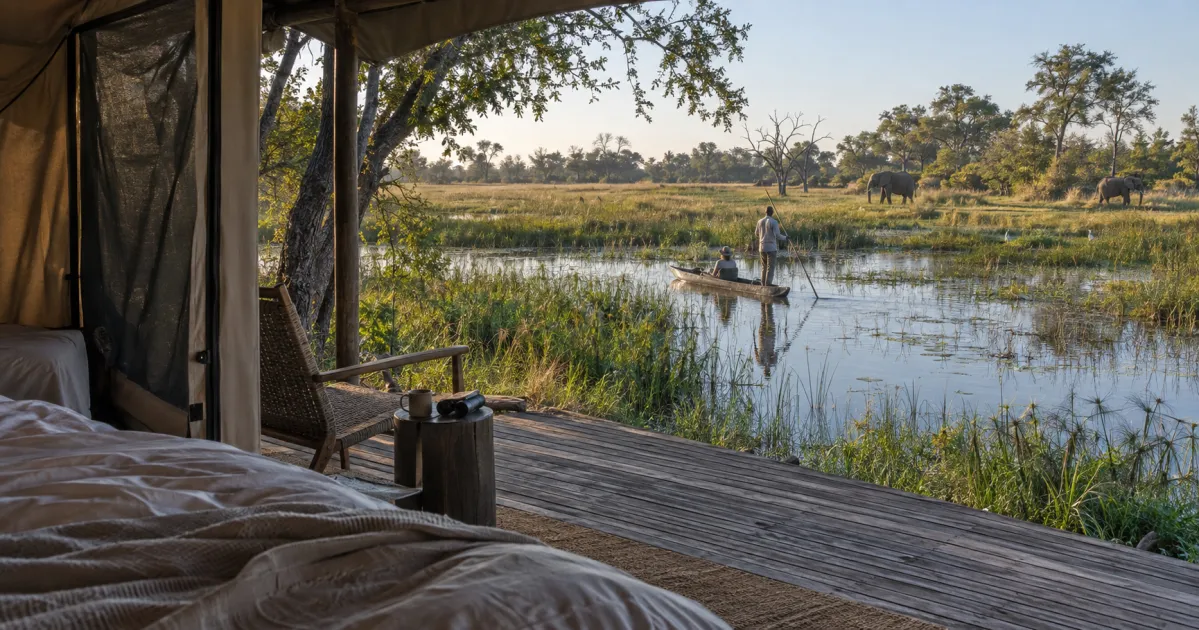
The lagoon gives the camp its visual centre. Between activities, you can sit facing the water, listen for movement, and watch the scene change with the light. Those pauses are part of the stay. A safari works better when the day includes recovery time, not only vehicle hours.
Guiding and staff service shape how that setting feels in practice. Reporting describes good guiding and staff performance, as well as improved wildlife densities and more relaxed sightings in the Khwai Private Concession (Botswana Specialists' expert review). A capable guide reads tracks, selects a useful approach, positions the vehicle carefully, and explains animal behaviour without rushing guests from one sighting to the next.
The tradeoff is clear. Sable Alley's small scale and remote setting can make the premium worthwhile for travelers who value privacy, atmosphere, and time in a quieter camp. Travelers seeking extensive facilities or simpler access may prefer a larger or more road-accessible property.
Practical rule: Choose a small camp for the quality of its daily rhythm, not for a promise of private wildlife encounters.
Wildlife and Typical Safari Experiences on Offer
A Sable Alley morning starts before the Delta fully wakes. After a light breakfast, you may head out while temperatures are cooler and nocturnal animals are still active. Your guide could follow fresh tracks toward predator territory, search open ground for wild dogs, or stop beside water where elephants and buffalo have recently passed.
Sightings are never guaranteed, yet the area supports a wide range of wildlife, including lions, leopards, cheetahs, African wild dogs, elephants, buffalo, and sable antelopes. Each species calls for a different kind of attention. A leopard may require patience in thick cover, while elephants can announce themselves through branches, footfalls, and calls before they appear at the water.
One terrain, several ways to explore it
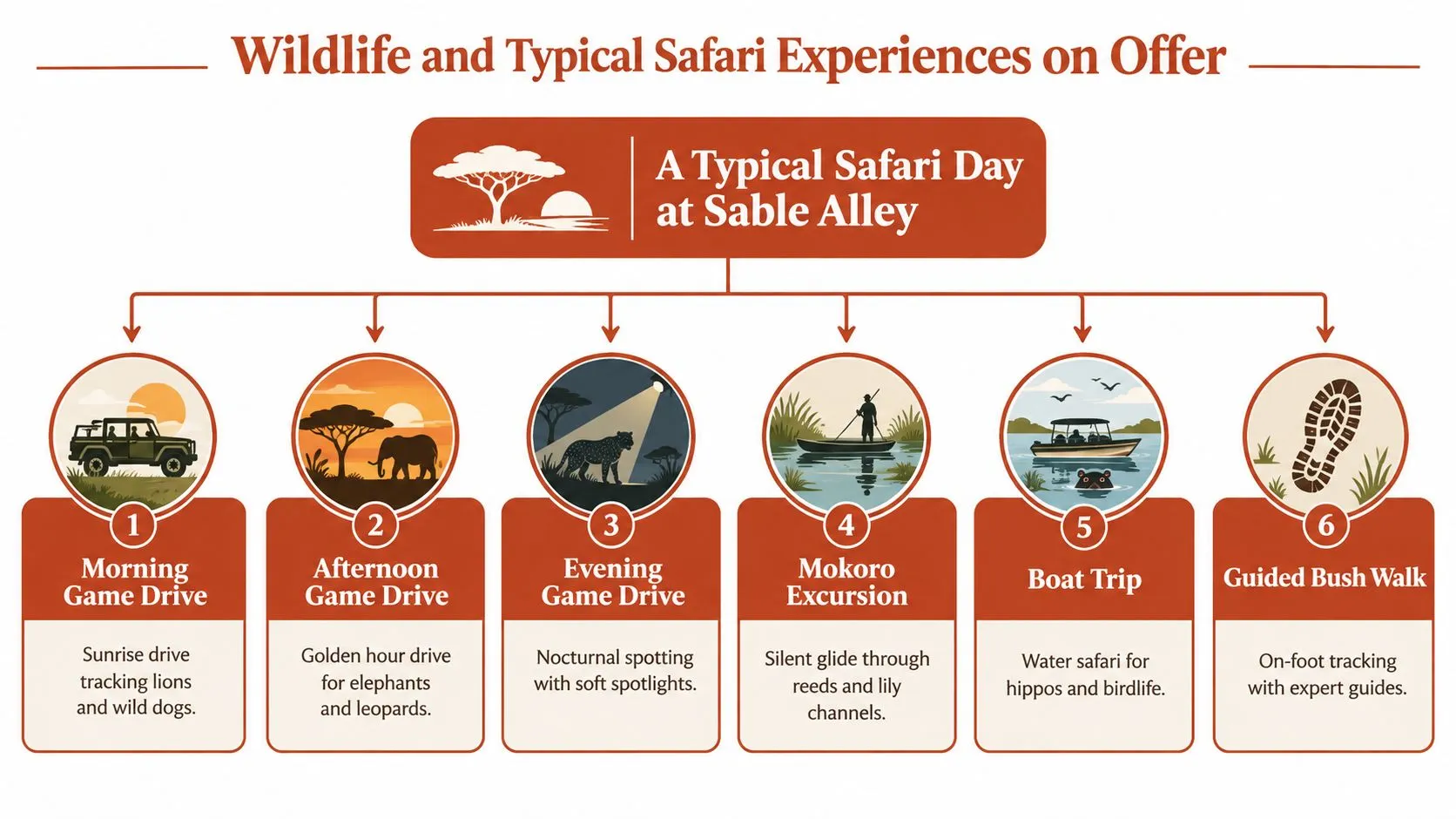
Sable Alley's remote Khwai position gives you more than a standard vehicle safari. The available activities let you examine the same ecosystem from different distances and heights:
Morning game drives use cooler hours for tracking and longer routes.
Afternoon drives follow animal activity as the heat eases.
Evening drives continue after dark, with guides using soft spotlights to look for nocturnal species.
Mokoro excursions move through channels and reeds, close to the water's surface.
Boat trips offer a wider view of waterways, hippos, and birdlife.
Guided bush walks replace distance with detail, focusing on tracks, plants, insects, and smaller signs of movement.
A vehicle covers ground efficiently. A mokoro is closer to slipping between pages of a living book, revealing reeds, ripples, and small movements. A walk shows the evidence animals leave behind. A boat helps explain how water divides and connects habitats. The Khwai Concession safari overview is useful for comparing these land and water experiences with other parts of a Botswana itinerary.
The tradeoff is access. Reaching a remote camp generally requires accepting flight logistics and a slower connection than a road-accessible property. In return, the setting can offer a stronger sense of separation and a broader activity mix. Travelers comparing Sable Alley with better-known camps should ask whether that premium access matters more than simpler transfers or larger facilities.
Photography also rewards preparation. Practice camera settings before departure, since changing light, distant subjects, and moving vehicles leave little time to learn beside a leopard. The guide to wildlife photography from SendPhoto covers practical preparation while keeping attention on the animal rather than only the viewfinder.
Why the guide matters
A skilled guide turns a sighting into an explanation. They connect behaviour with habitat, read tracks, choose a sensible approach, and allow enough time to watch rather than rushing between species. That judgment matters especially when thick vegetation, water levels, or animal movement make visibility unpredictable.
Best Time to Visit and How Seasons Change Your Safari
Sable Alley operates year-round, but the safari changes character with the seasons. Rather than choosing a single universally “best” period, match the conditions to what you want to notice most.
The drier safari personality
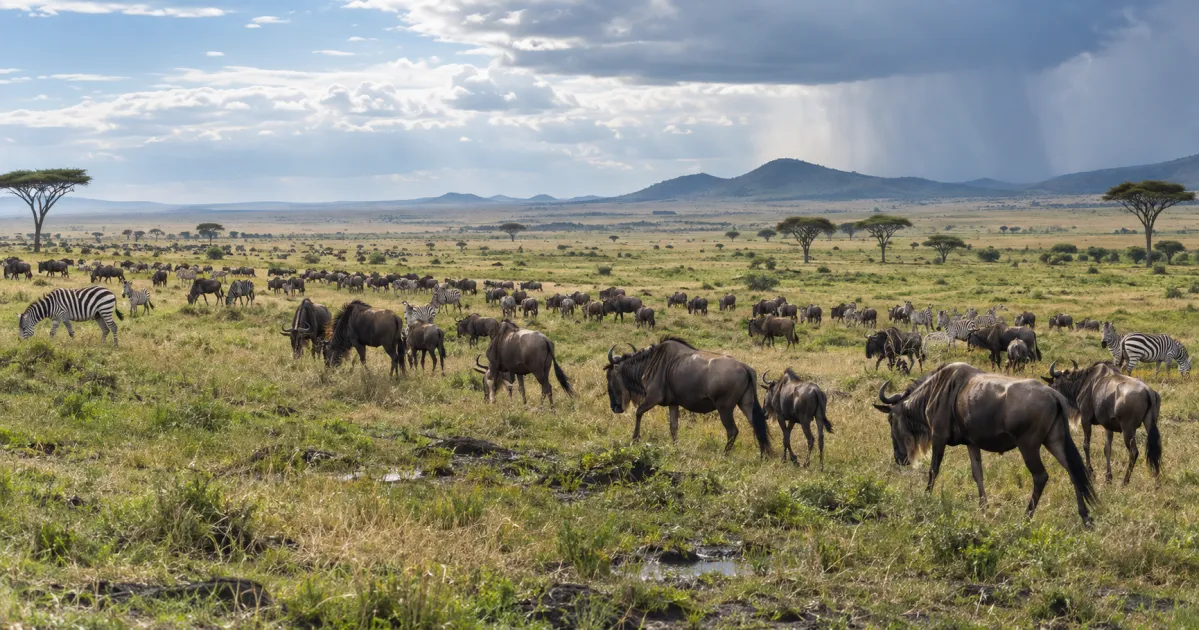
As water becomes more concentrated in reliable sources, wildlife may gather around remaining water and productive feeding areas. That can make game drives feel more focused, especially for travelers hoping to spend long periods watching elephants, buffalo, or predators.
The tradeoff is visual. Dry areas can look more open and spare, with less dense greenery in some areas. Dust, heat, and strong contrast can also affect photography. Travelers who prioritize classic predator tracking and concentrated land viewing may prefer this seasonal character, but they should still ask how the camp's current access routes are operating.
The greener safari personality
The wetter, greener period brings lush vegetation, softer views, and strong conditions for birding. Young animals, insects, changing skies, and fresh plant growth can make the Delta feel particularly vivid. Photography often benefits from layered greens and gentler light, although thick vegetation can make some mammals harder to spot.
This season rewards curiosity rather than a strict checklist. You may spend less time scanning open ground and more time listening, reading tracks, and allowing the guide to work with changing visibility.
Water levels are the practical variable
Okavango water levels don't follow the same timetable as rainfall at camp. Floodwater moves through the Delta on its own seasonal cycle, so a period that feels dry locally can still bring navigable channels, while another period may limit certain water activities.
Mokoro excursions and boat trips can therefore be seasonal or dependent on water conditions, rather than guaranteed in the same form throughout the year. Ask the operator which activities are expected to run for your dates, what happens if channels are too shallow, and whether drives become the primary focus.
The right season is the one that matches your preferred safari activity, not the one that sounds most impressive in a brochure.
Planning and Booking Your Sable Alley Safari
Remote luxury works best when you treat logistics as part of the experience, not as an administrative detail. The flight from Maun to Khwai Private airstrip is central to the route, and the final drive is short, but you still need a complete transfer plan before paying a deposit.
Start with the questions lodge pages often leave unanswered. Ask how often the light-aircraft transfers operate for your dates, what baggage allowance applies, how soft-sided luggage must be packed, and what happens if an inbound flight arrives too late for the connection. The exact operating details can vary by itinerary and operator, so request them in writing.
A practical decision sequence
Set your safari priorities. Decide whether your main goal is predator viewing, water activities, photography, quiet, or a combination.
Check the traveler mix. Couples and honeymooners may value the intimate atmosphere and dedicated tent categories. Families need to confirm the minimum child age and family-tent availability.
Compare transit against comfort. A fly-in camp reduces road travel after Maun, but the air transfer introduces baggage and scheduling constraints.
Confirm seasonal activities. Ask which waterways are usable and what the backup plan is if boating or mokoro excursions aren't available.
Request an itemized quote. Check flights, transfers, accommodation, meals, activities, park or concession costs, and any exclusions separately.
For a broader method like one one outlined in the article planning a personalized trip step-by-step, focus on the order of decisions rather than choosing a room before checking the route.
| Planning Factor | What to Check |
|---|---|
| Air transfer | Departure point, flight schedule, aircraft routing, and connection timing |
| Baggage | Weight and bag format limits for the light aircraft |
| Road transfer | Expected drive from Khwai airstrip to camp |
| Water activities | Whether mokoro and boat outings operate on your dates |
| Room category | Twin, family, or honeymoon tent availability |
| Child policy | Minimum age and supervision requirements |
| Quote inclusions | Flights, meals, drives, walks, boating, transfers, and taxes |
| Backup arrangements | What happens after delays, weather disruption, or changed water access |
Explola can help travelers compare verified safari operators, review itinerary details and inclusions, request direct quotes, and track inquiries in one place. That's useful when you're weighing Sable Alley against other Khwai or Okavango options and want the comparison to include transfer complexity, not only nightly accommodation.
Is Sable Alley Right for Your Botswana Itinerary
Sable Alley suits travelers who want a small luxury camp in a private wildlife setting, with lagoon scenery and both game drives and water-based outings. Couples and honeymooners may value its intimate scale. Families with children aged 6 and above can consider the family-tent configuration, subject to availability.
The tradeoff is access. Reaching this remote Khwai camp involves a light-aircraft transfer, baggage limits, and flight timing that can shape the day before the safari begins. Seasonal water levels also affect whether boating and mokoro outings are available, so the premium is easier to justify if those experiences matter to you.
A larger, better-known Botswana camp may offer more room categories or simpler logistics. Compare the complete route rather than the nightly rate, including flights, transfers, included activities, and the wildlife experience your dates can support.
Ask yourself:
Do I value remote access enough to accept a fly-in transfer and luggage restrictions?
Does the camp's small scale suit the way I want to travel?
Will my travel dates support the activities I care about most?
Use the Botswana safari options on Explola to compare Khwai and wider Delta itineraries. The right choice is the camp whose access, activities, accommodation, and seasonal character fit your priorities, not the most famous name.
Use Explola to compare operators, inclusions, and itinerary details, then request direct quotes. Confirm flight, baggage, and seasonal activity arrangements before booking.
Tags
Destinations Mentioned

Founder of Explola and a passionate advocate for authentic African travel. He writes about safari destinations, conservation, and connecting travelers with trusted local operators across Africa.
Get Safari Tips & Destination Guides
Join our newsletter for exclusive travel tips, wildlife insights, and safari planning advice.