TL;DR:
Building a strong online brand increases direct bookings and reduces reliance on costly OTAs.
A mobile-optimized, fast-loading website with authentic storytelling boosts booking conversions.
Investing in digital marketing, SEO, and nurturing leads creates long-term growth and loyalty.
Safari tourism across East and Southern Africa is on a serious upward trajectory. The Southern Africa market alone is projected to reach $29.84B by 2033, growing at a 9.4% CAGR. Yet despite this boom, too many operators are handing over 15 to 25% of their revenue to Online Travel Agencies (OTAs) — platforms that control the customer relationship while you do the hard work. Building a strong online brand is the most effective way to reclaim that revenue, own your customer data, and convert high-intent travelers before they ever reach an OTA listing.
Key Takeaways
| Point | Details |
|---|---|
| Direct bookings boost profits | Building your online brand reduces commissions and increases revenue retention. |
| Speed and mobile UX matter | Replying promptly and optimizing for mobile prevents booking losses and builds trust. |
| Content drives visibility | Consistent brand storytelling and SEO attract high-value travelers for safaris. |
| OTAs face long-term risks | Over-reliance on OTAs sacrifices pricing control and customer data ownership. |
| Brand loyalty sustains growth | A strong online brand nurtures recurring bookings and increases customer lifetime value. |
Why your online safari brand matters
Your online brand is not just a website. It is the first impression a traveler gets before they ever contact you, and it shapes whether they trust you enough to book directly. Most operators underestimate how much this first impression costs them when it is weak.
Here is a number worth sitting with: organic search converts at 8.5% for luxury travel. That is significantly higher than most paid advertising channels. When someone finds your safari brand through a Google search and lands on a well-built website, they are already primed to book. The challenge is making sure your brand shows up and delivers.
Why brand visibility drives direct bookings:
Travelers research for weeks or months before booking a safari. Repeated exposure to your brand builds trust.
A branded website signals credibility that a generic OTA listing simply cannot replicate.
Strong building guest loyalty strategies start at the very first touchpoint, long before a traveler contacts you.
Your own platform lets you tell your story, showcase your guides, and highlight what makes your experience unique.
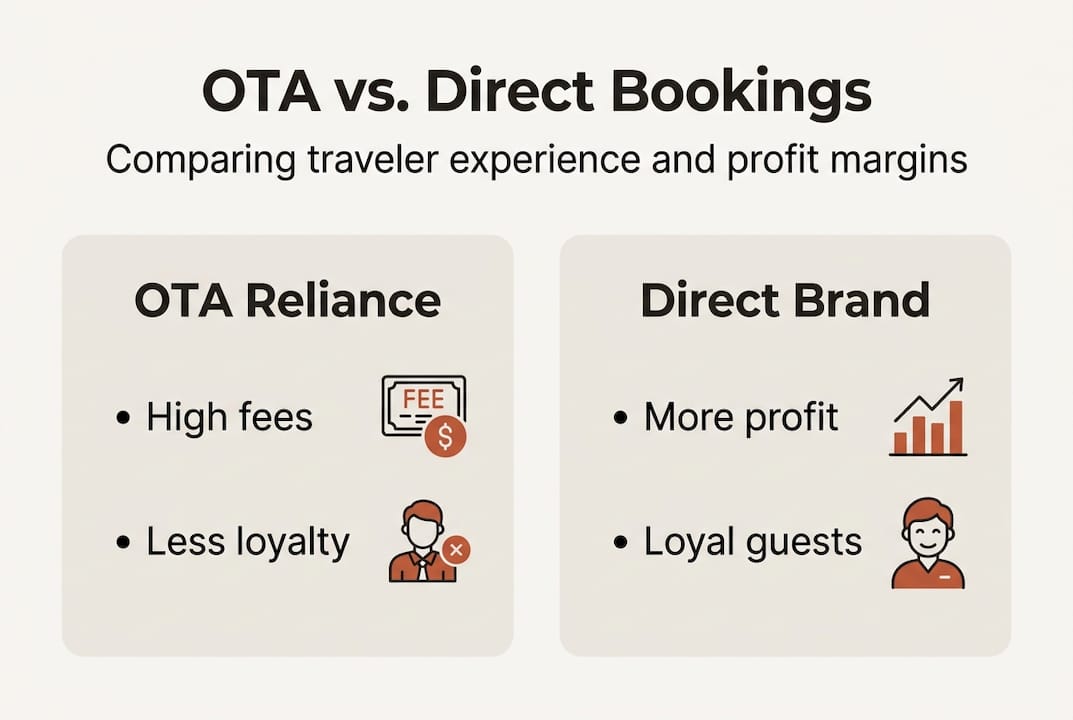
Let’s compare the two approaches side by side:
| Factor | OTA reliance | Independent online brand |
|---|---|---|
| Commission cost | 15 to 25% per booking | None |
| Customer data access | OTA owns it | You own it |
| Brand differentiation | Limited, standardized listings | Full creative control |
| Repeat booking potential | Very low | High with direct nurturing |
| Pricing flexibility | Restricted by platform rules | Fully in your hands |
The table makes it clear. OTAs offer exposure, especially when you are just starting out. But over time, that exposure comes at a steep price. Operators who invest in content ideas for boosting direct bookings consistently see better margins and stronger customer relationships than those who rely on third-party platforms.
Hidden costs of OTA reliance
OTAs are not inherently bad. For a brand-new operator with zero online presence, they provide a fast track to visibility. The problem is when reliance becomes dependency, and many operators never make the transition out.
The most obvious cost is the commission. Depending on the platform, you lose between 15 and 25 cents on every dollar earned. But the less visible costs are arguably worse. OTA commissions reduce profit margins and, critically, remove your access to customer data. You never learn who booked, where they came from, or what motivated them. That information is gold for building repeat business, and OTAs keep it entirely to themselves.
What you give up with every OTA booking:
The traveler’s email address and contact details
Insight into their travel preferences and budget
The ability to follow up after the trip
Control over how your brand is presented
The chance to upsell or cross-sell future experiences
Here is a look at the revenue impact:
| Booking value | OTA commission (20%) | What you keep |
|---|---|---|
| $3,000 | $600 | $2,400 |
| $7,500 | $1,500 | $6,000 |
| $15,000 | $3,000 | $12,000 |
“Operators who shift even 30% of their bookings to direct channels can recover tens of thousands of dollars annually, money that can be reinvested into guides, equipment, and guest experiences.”
The shift to direct engagement booking models does not happen overnight, but every percentage point you move away from OTA dependency improves your margins. The advantages of direct bookings go beyond revenue. You build relationships, gather data, and create a pipeline of returning guests who trust your brand specifically.
Brand essentials: What your safari website must deliver
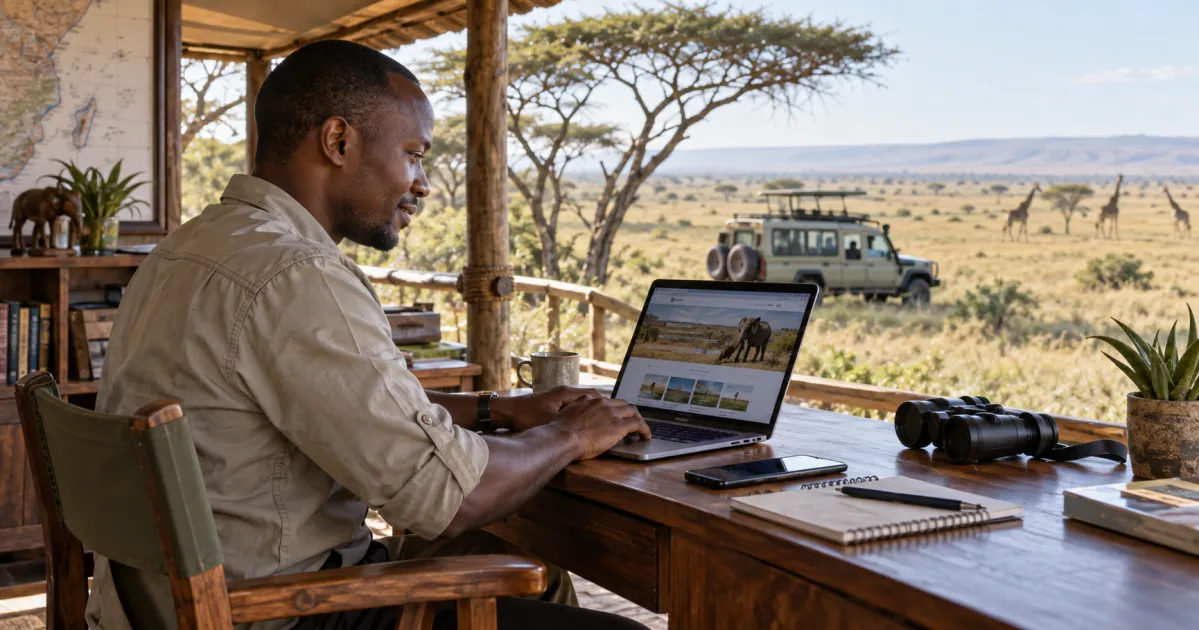
Once you understand the cost of OTA reliance, the next step is building a website that actually converts. Many safari operators have websites that look decent but quietly leak bookings every day. Speed, mobile performance, and response time are the three biggest culprits.

Research on booking flow audits shows that slow quote responses lose 70% of inquiries, and poor mobile user experience (UX) causes 8 to 15% booking loss. These are not minor issues. They are revenue walking out the door.
What your safari website must include:
Mobile-first design: Over 60% of travel research now happens on phones. If your site is slow or clunky on mobile, travelers leave.
Fast load times: Pages that take more than 3 seconds to load see dramatically higher bounce rates.
Clear inquiry forms: Make it effortless for a traveler to ask a question or request a quote.
Authentic storytelling: Real photos, guide profiles, and guest stories build the emotional connection that drives bookings.
Trust signals: Verified reviews, accreditations, and transparent pricing all reduce hesitation.
Pro Tip: Set up an automated inquiry response that acknowledges the traveler within 5 minutes of their submission. You do not need to send a full quote immediately. A warm, personal acknowledgment keeps them engaged while you prepare a detailed response. This single step can dramatically improve your conversion rate.
For operators serious about winning more direct bookings, the website is not a brochure. It is a sales engine. Treat it like one. Invest in mobile optimization for safari brands and audit your booking flow regularly to catch the leaks before they cost you another season.
Practical steps to build and promote your safari brand online
Knowing what your website needs is one thing. Building a consistent online brand that attracts travelers month after month requires a structured approach. Here is how to do it.
Define your brand story. What makes your safaris different? Is it your guides, your conservation ethos, your access to remote areas? Get specific. Generic safari descriptions do not stand out.
Invest in SEO-optimized content. Blog posts, destination guides, and itinerary pages targeting specific search terms bring high-intent visitors to your site without paid advertising. Explore content ideas for safari companies to build a content calendar that works year-round.
Build an email list from day one. Every inquiry, every past guest, every website visitor is a potential direct booking. Capture emails and nurture them with valuable content, not just promotions.
Review your pricing strategy. A clear, transparent pricing strategy for safaris on your website builds trust and reduces the back-and-forth that delays bookings.
Nurture leads during low season. Seasonal dips require nurturing via content and direct engagement to keep your pipeline warm. Send destination updates, wildlife news, or early-bird offers to past guests.
Collect and display testimonials. Real reviews from real guests are your most powerful sales tool. Feature them prominently and respond to them publicly.
Pro Tip: Create a dedicated page for each key safari destination you operate in. A page targeting “gorilla trekking in Uganda” or “Okavango Delta safari” will rank far better than a generic homepage. Pair it with strong safari planning strategies content and you become a trusted resource, not just a vendor.
Consistency is the key word here. Operators who publish regularly, respond quickly, and show up in search results over time build a compounding advantage that OTAs simply cannot replicate.
Why most safari operators underestimate online branding
Here is the uncomfortable truth: most safari operators think of their website as a digital business card. Something to point people to after they have already found you elsewhere. That mindset is costing the industry millions.
The luxury safari segment is $8B and growing at 18% annually. Luxury travelers do not buy trips. They buy brands. They buy trust, story, and identity. When a high-value traveler is choosing between two operators, the one with a richer, more credible online presence wins almost every time.
OTAs mostly deliver one-time, price-sensitive clients who have no loyalty to your brand. They booked through a platform, not because of you. Direct bookings, by contrast, come from travelers who found you, researched you, and chose you. Those clients return. They refer friends. They write reviews that bring in more clients just like them. Investing in direct booking models is not just a financial decision. It is a long-term brand strategy that compounds over years.
Take your safari brand online with Explola
Building a strong safari brand online takes the right tools and the right platform to amplify your reach. Explola is a digital marketplace launching Q2 2026, built specifically for African safari operators who want to eliminate OTA commissions and connect directly with high-intent travelers.
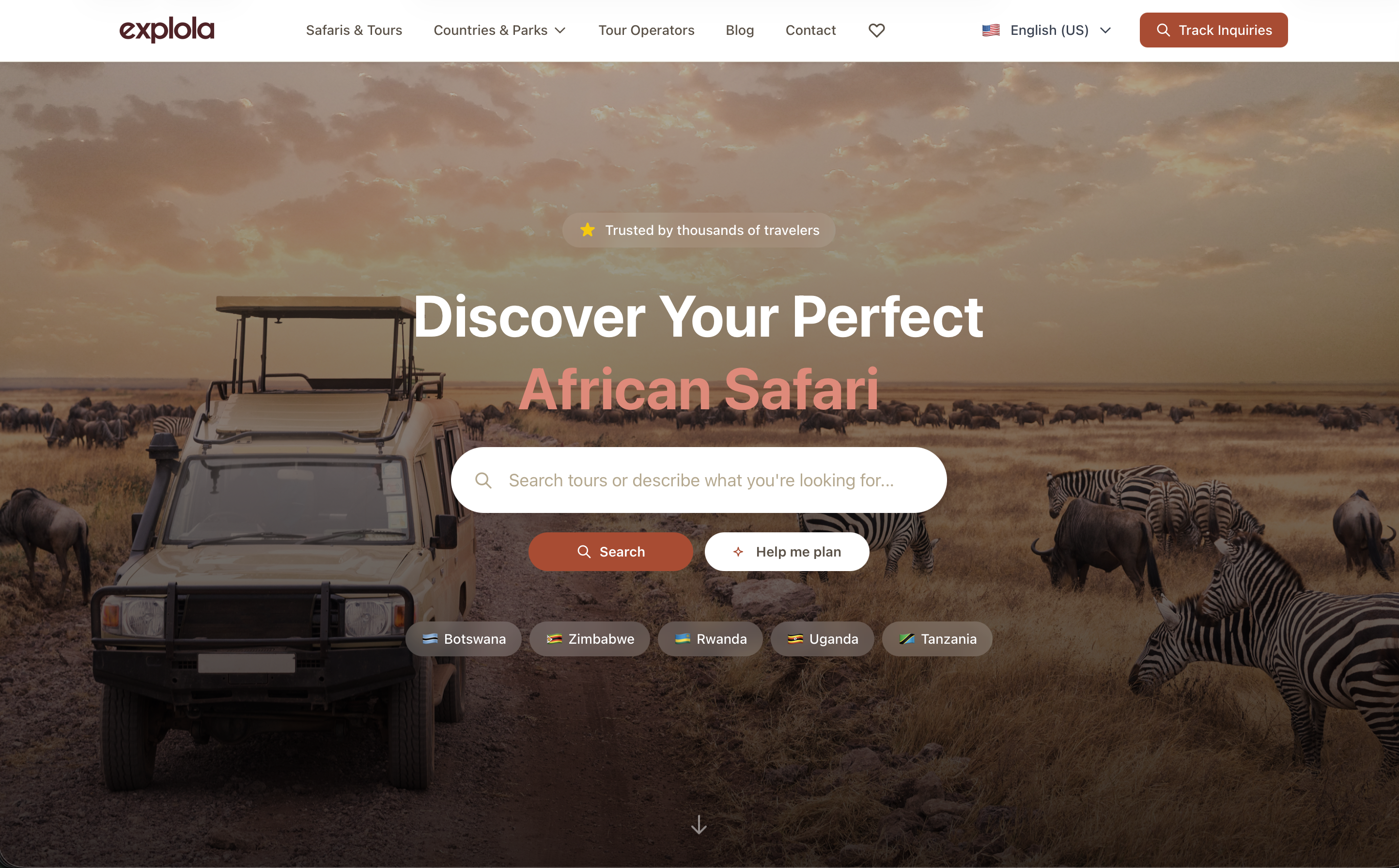
With Explola, you get a curated operator profile, AI-powered inquiry response tools, lead scoring, and SEO-driven discovery, all without needing a technical background. You retain 100% of your revenue and full ownership of your customer data. Whether you operate in Kenya, Tanzania, Uganda, Rwanda, South Africa, or Botswana, Explola gives you the visibility and tools to build your safari brand and grow your direct bookings consistently. Join the waitlist today and be ready when the platform launches.
Frequently asked questions
What’s the biggest reason to build a safari brand online?
You gain full control over customer relationships, grow direct bookings, and eliminate costly OTA commissions that erode your margins with every transaction.
How does slow inquiry response impact bookings?
Slow quote responses lose up to 70% of inquiries, making fast, personalized replies one of the highest-return improvements any operator can make.
Can smaller operators compete with big brands online?
Absolutely. Strong storytelling, fast mobile UX, and targeted SEO let smaller operators attract high-value travelers, especially since organic search converts at 8.5% for luxury travel.
What’s the safest way to reduce OTA reliance?
Start by improving your website’s mobile performance and response speed, then build an email list and nurture direct leads consistently to reduce dependency without sacrificing booking volume.
Recommended
Tags

Founder of Explola and a passionate advocate for authentic African travel. He writes about safari destinations, conservation, and connecting travelers with trusted local operators across Africa.
Get Safari Tips & Destination Guides
Join our newsletter for exclusive travel tips, wildlife insights, and safari planning advice.