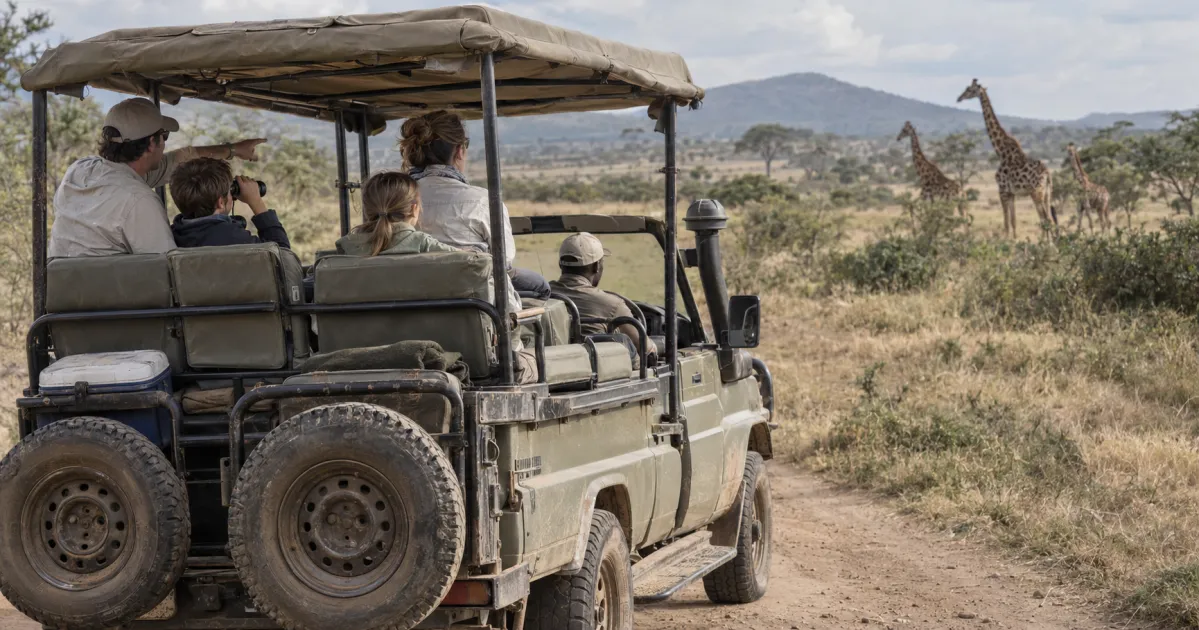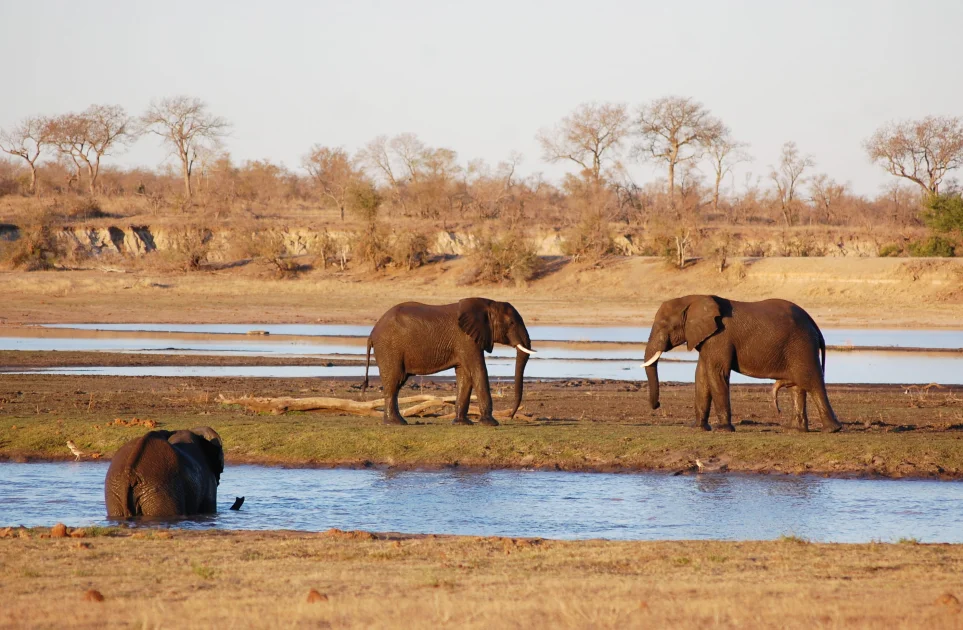
You've chosen the dates, saved a few lodge photos, and started comparing family African safari vacation packages. Then the practical questions arrive. Can your youngest child join a game drive? Will you need a private vehicle? Why does one quote look affordable until park fees and transfers appear? A family safari can be extraordinary, but the right experience depends on solving those details before you pay a deposit.
The Magic of a Family Safari Adventure
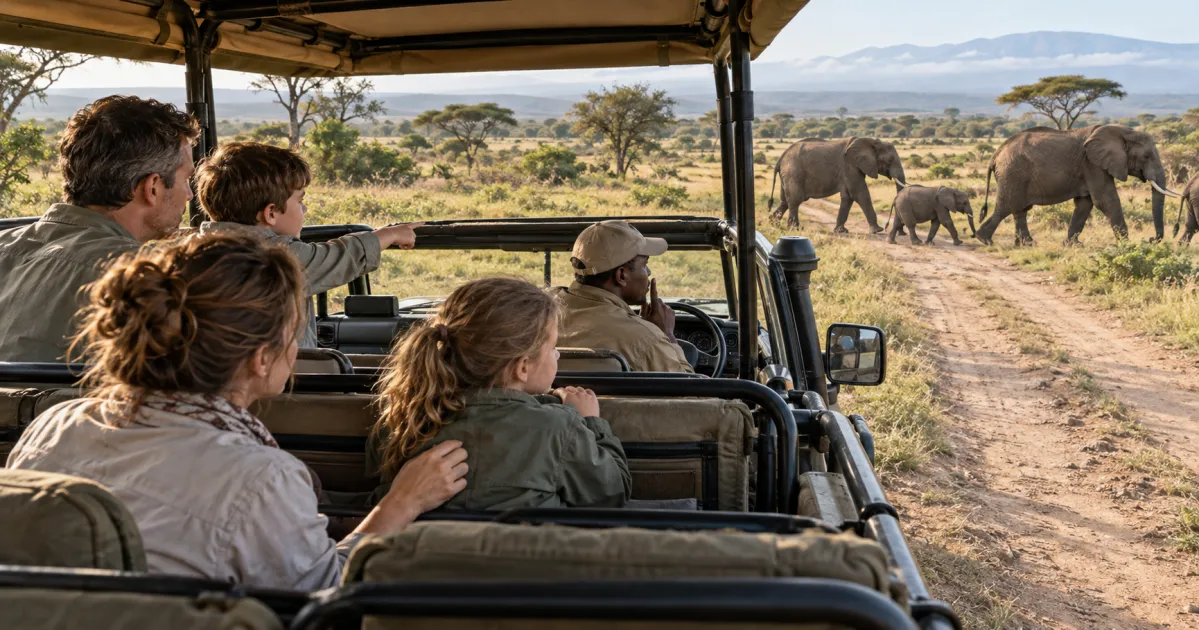
The vehicle falls silent when elephants cross the track. One child presses a face to the window, another starts asking about trunks and footprints, and the adults stop thinking about schedules for a moment. No screen can compete with that kind of scene.
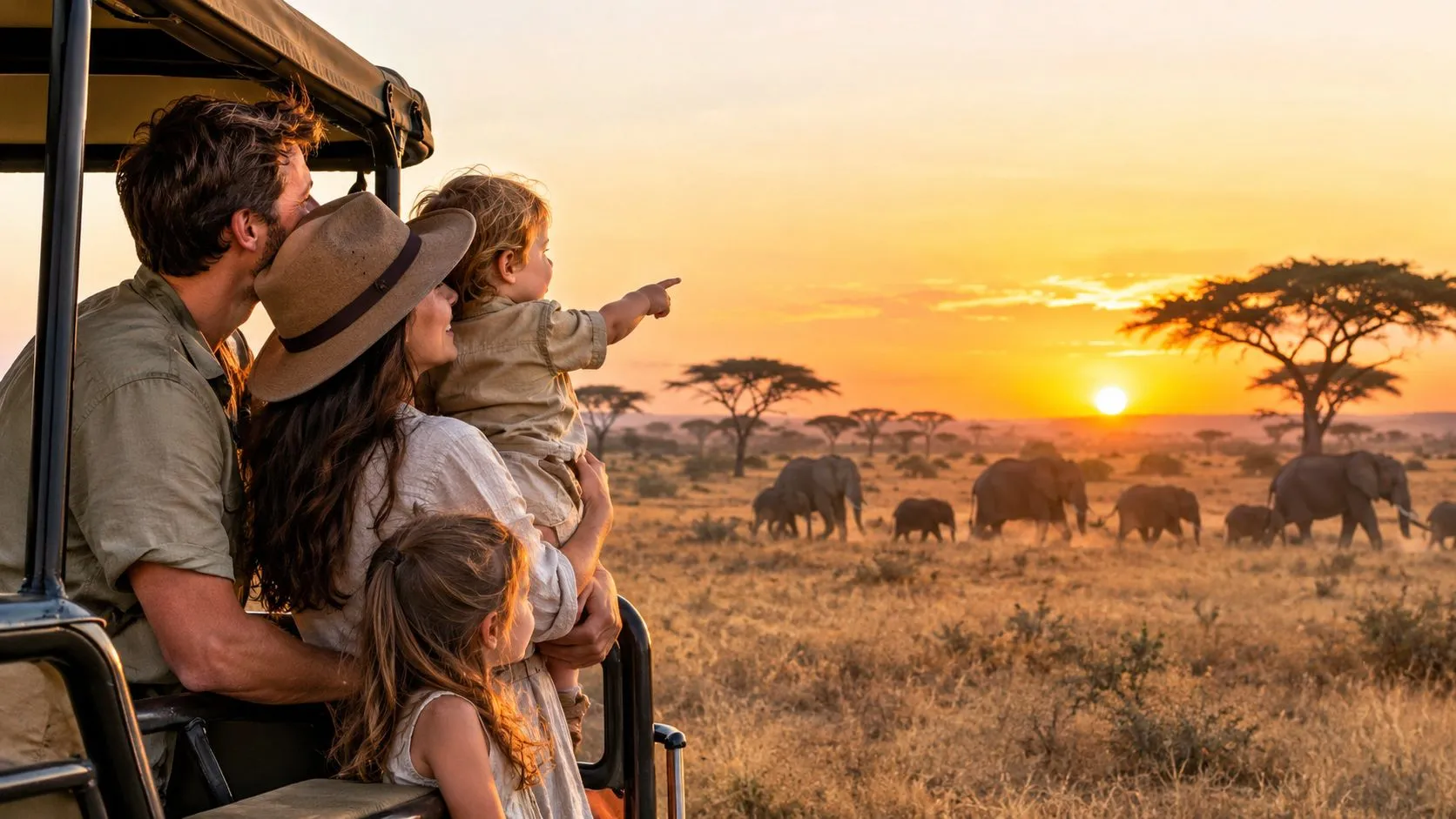
That shared reaction is why a safari works so well for families. Children see wildlife as part of a living ecosystem, not a textbook example, and parents get one experience that holds different ages at once.
The booking logic matters just as much as the scenery. A lodge may look similar on paper, yet one may allow younger children only at certain ages, another may require a private vehicle for family game drives, and another may change conservation fees by season. These details can shape both the budget and the rhythm of each day, so they should be checked before a deposit is paid.
Why the itinerary matters
A family safari is not just an adult trip with extra beds. The day has to leave room for meals, bathroom breaks, naps, and short stretches of downtime between drives. A lodge with a pool, a private guide, or a shorter transfer can be more useful than adding one more distant stop.
That is why pace matters. A family that books a lodge with strict age gates may need a private vehicle to keep game drives flexible, while a family with older children may have more options. Seasonality also changes the bill. Conservation fees, park access, and similar charges can shift by time of year, so a quote can look straightforward until those line items are added.
For a clear example of how downtime and wildlife viewing can sit together in one plan, review this seven-day luxury family safari and relaxation itinerary.
Families often remember the quiet moments most. A herd crossing at sunset, a child spotting movement in the grass, and the first time everyone waits together for the next animal to appear. Those moments are easier to enjoy when the logistics were set up with care from the start.
Choosing the Right Family Safari Package Style
Start with the accommodation model, because it shapes almost every part of the day. A stationary lodge gives your family one base, predictable meal times, and the chance to unpack properly. A mobile camp or moving circuit offers a stronger sense of expedition, but each transfer asks children to reset their energy and attention.
Match the style to your family
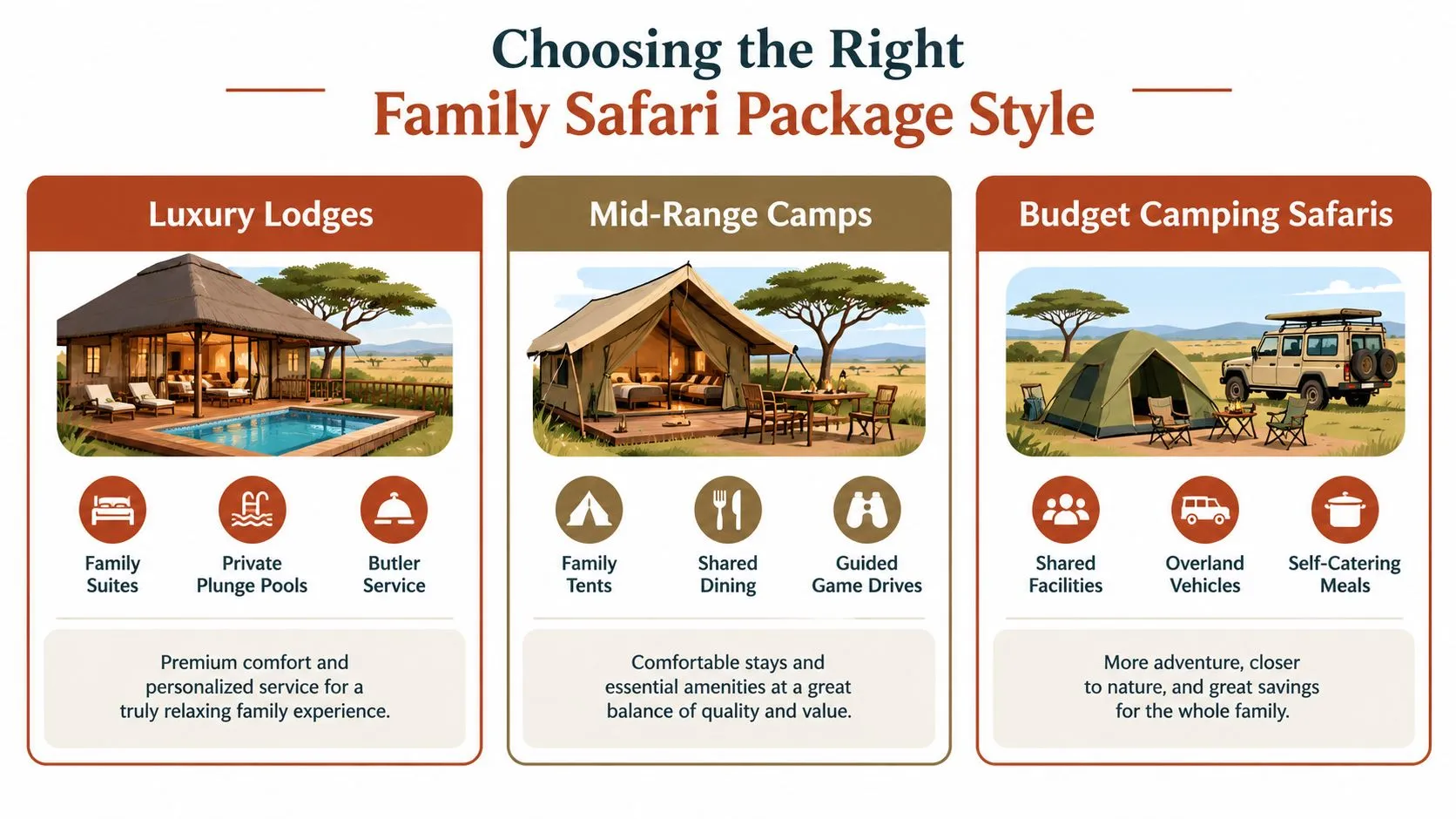
Luxury lodges usually suit families who value privacy, easy service, and recovery time between drives. Family suites, flexible dining arrangements, pools, and child-focused activities can make the day more forgiving. The trade-off is a higher total price and, in some destinations, a more formal lodge environment.
Mid-range camps often provide the practical middle ground. Families may have dedicated tents or adjoining rooms, shared dining, and guided drives without the full range of private services. This style can work well when parents want comfort but don't need every part of the holiday customized.
Budget camping safaris place more emphasis on participation and outdoor immersion. Shared facilities, overland vehicles, and self-catering meals can lower the accommodation burden, but parents take on more responsibility for packing, meal timing, and adapting to group schedules. The experience can be rewarding for older children who enjoy a hands-on adventure, but it may test families with toddlers.
A private vehicle changes the equation in any tier. It lets the guide shorten a drive, return to camp for a nap, stop for a snack, or linger when older children are absorbed in a sighting. A shared vehicle may cost less, but the group follows a common timetable and parents must consider whether their children can manage that constraint.
Compare the daily rhythm, not just the room
Ask operators to describe a typical day. Does the vehicle leave before breakfast? Can the lodge prepare an early meal? Is there a safe place for children to swim? Are walking activities available for the adults while younger travellers rest? These questions reveal more than a room category does.
Mobile camps can be excellent for families who want changing scenery and a stronger wilderness feeling. A lodge-based package may be better for a first safari, a mixed-age group, or grandparents who need less movement. The best choice is the one that protects energy for the moments your family has travelled to see.
Navigating Age Requirements and Safety Guidelines
A family can love a lodge's photos and still run into trouble at the gate if the age rules do not fit the children. In safari planning, age is not a small detail to confirm later. It decides which drives, walks, and boat trips are open to you. Many properties set a minimum age of about six for game drives, while children around eight and older are often a better match, according to Responsible Travel's family safari guidance.
That rule exists for practical reasons. A game drive asks children to stay seated, keep quiet near wildlife, and wait through stretches of time when nothing is happening. The road may be rough, the vehicle may stop suddenly, and the guide has to keep everyone safe while reading the animals and the group at the same time.
Use an age-first decision process
Start with each child's age. List the age of every traveller on the trip date, not on the booking date. Then ask each lodge about game drives, walking activities, boat trips, and babysitting options.
Check the shared-vehicle rule. Shared drives often require children to be at least six, and some properties set a higher limit, such as ten or twelve. A child who handles a private drive well may still be turned away from a shared departure.
Price the private-vehicle option. Africa Travel's family safari guidance notes that some trips require a private vehicle for children under twelve and that younger children may need a family-specific property. Treat this as part of access, not just comfort. It can decide whether your child joins the activity at all.
Separate supervision from participation. If one child stays at camp, ask who watches them while the rest of the family goes out. A trusted adult, childminder, or parent may need to stay behind. Do not assume a general family-friendly label covers unsupervised time.
Ask for the written policy: “Can our children join every listed activity, and what changes if we book a shared vehicle?”
Health planning belongs in the same conversation. Malaria exposure changes by route and season, and a lodge's age rules do not tell you whether a destination suits your children medically. Speak with a qualified travel-health professional about vaccinations, malaria prevention, current destination advice, and how to handle prescribed medicines.
Safety rules also need to be specific. Children should stay with an adult, follow the guide's instructions, avoid approaching animals, and never leave a vehicle unless the guide says it is safe. Ask how the camp manages wildlife near walkways, meal areas, and tents, rather than relying on a broad “family-friendly” label.
Best Destinations for Families in Africa
A family safari often comes down to three countries first, South Africa, Kenya, and Tanzania. Each can work well, but for different reasons, and the right choice depends on how your family handles travel time, health planning, and the need for flexibility.
South Africa
South Africa is often the easiest first safari for families because it can be combined with cities, coast, scenery, and other child-friendly activities. Some reserves are easier to reach by road, and accommodation ranges from self-drive stays to private reserves with guided game drives. That mix helps families who want to keep the trip varied without changing lodges too often.
Health planning still needs to be checked route by route. A malaria-free area, where appropriate and medically confirmed, can simplify the trip for parents with younger children, but that label should never be assumed from the country alone. Ask the operator to identify the health profile of every overnight stop, the same way you would check each stop on a road trip rather than trusting the final destination name.
Kenya
Kenya works well for families who want the Masai Mara and also want time for culture or the coast. A private vehicle can matter here because children often need shorter drives, a faster return to camp, or a day that bends around naps and energy levels.
The practical questions are transfer length, camp location, and conservation charges. A remote property may offer excellent wildlife viewing, but the journey can be tiring for children or grandparents. Compare the time in the vehicle with the time you get for watching animals and resting.
Tanzania
Tanzania suits families drawn to the Serengeti, Ngorongoro, and a broader northern-circuit route. It offers varied terrain and major wildlife areas, but families should look closely at how many camp changes a package includes.
One base can feel calmer, like using one comfortable home rather than unpacking every night. A multi-park circuit gives more variety, but it also adds transfers, loading bags, and more time on the road. For toddlers, older relatives, or children who do not do well with long drives, fewer moves and a private vehicle can matter more than adding another park.
| Family priority | Questions to ask |
|---|---|
| Health planning | What is the medical profile of each route and overnight stop? |
| Wildlife time | How much of each day is spent driving between locations? |
| Comfort | Are rooms, tents, and paths suitable for every traveller? |
| Flexibility | Can the guide shorten drives or return to camp? |
| Added activities | Are cultural visits, walking, beaches, or city stays available? |
Family structure also changes the best destination choice. A trip with grandparents needs different planning from a trip with teenagers, even if both are called “family safaris.” Safari.com's analysis of Hilton's 2026 trends research says grandparents often join children's holidays, and multi-generation travel is showing up more often in bookings that include older guests. Treat that as a planning signal. Check room layouts, walk distances, vehicle access, and recovery time with the same care you would give to the wildlife schedule.
Understanding the True Cost of a Family Safari
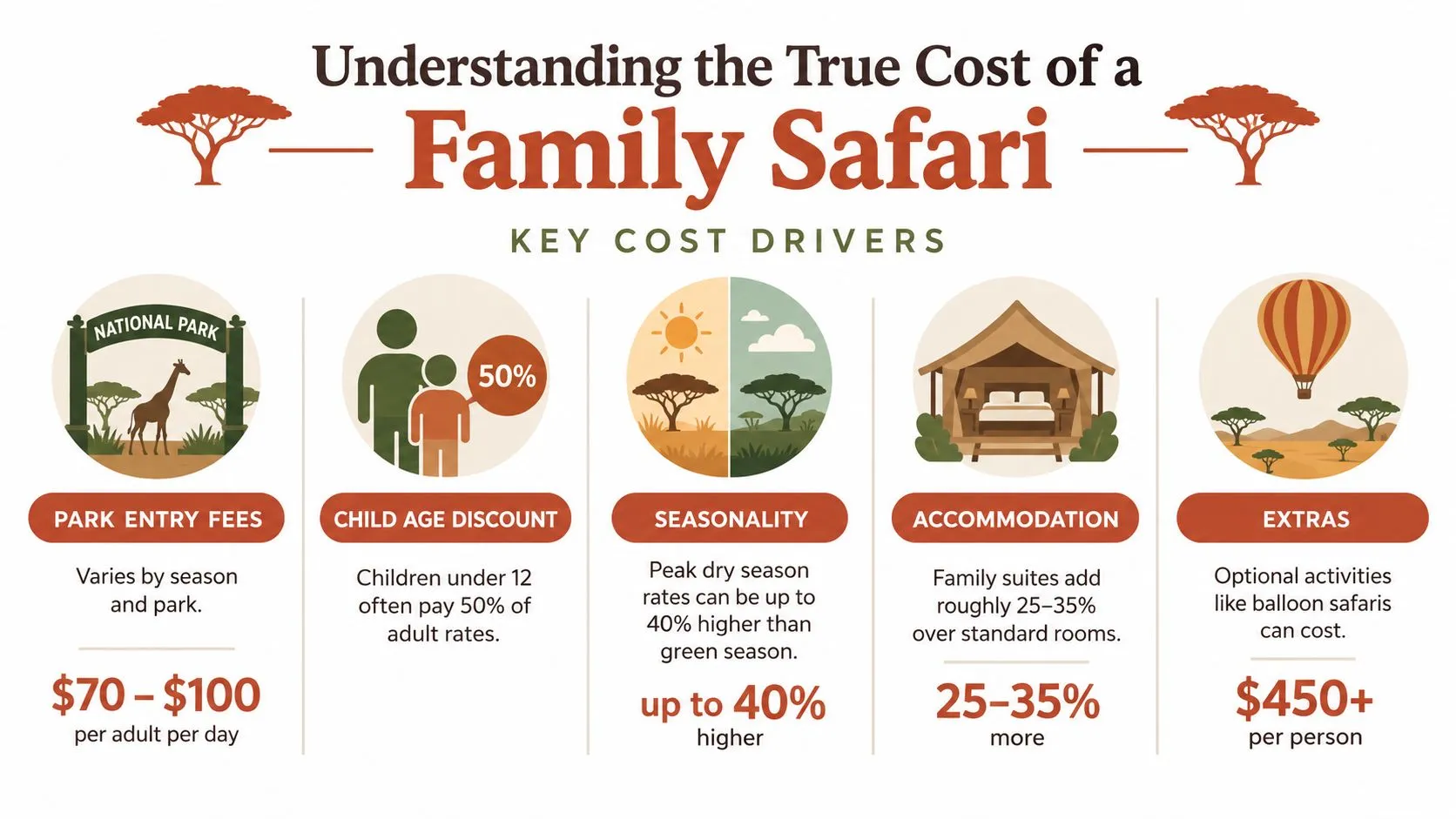
A family may choose a lodge that appears affordable, then receive a much higher quote after the operator adds a private vehicle, different room configuration, conservation fees, and transfers. The advertised per-person rate is only an entry point. Compare each cost line before deciding whether two family African safari vacation packages offer similar value.
The range of advertised options makes comparison difficult. One marketplace lists 8,373 African family safaris from 697 operators, including 230 South African family safaris from 30 operators, according to National Geographic's family safari package overview. The same source set describes options from about $1,595 per person to above $29,000 per person, depending on itinerary length and luxury level. Those figures cannot be compared until you check the inclusions.
Model the quote by traveller and day
Conservation fees can change the total sharply in some East African itineraries. For the Masai Mara, reported non-resident adult entry is US$100 per person per day from January through June 2026 and US$200 per person per day from July through December 2026. Children aged 9 to 17 pay US$50 per day year-round.
A family traveling in one tariff period can therefore pay a different park-fee total from the same family travelling later in the year. Ask the operator to show the number of adults, each child's age band, the number of park days, and the applicable tariff period. “Park fees included” is not enough if the calculation remains hidden.
Private vehicles add another layer. The charge may be higher than a shared departure, but a private vehicle can make the schedule workable for younger children and lets the guide adjust the day around meals, rest, or an early return. Confirm whether the vehicle is priced per family, per day, or within a private-departure rate.
Use a comparison sheet
Request these lines separately:
Accommodation: Room type, occupancy, child supplement, and whether adjoining rooms are guaranteed.
Transport: Airport transfers, road transfers, domestic flights, and private-vehicle charges.
Activities: Game drives, walks, cultural visits, boat trips, and age restrictions.
Conservation fees: Adult and child rates, park days, and season or tariff changes.
Meals and extras: Meals, drinks, laundry, gratuities, insurance, visas, and optional activities.
For a budgeting framework, compare your quote with this guide to African safari costs for a family of four. The useful question is whether the package includes the vehicle, fees, room arrangement, and daily pace your family requires.
How to Search and Book Using Explola
Start with requirements, not destination names. Write down the children's ages, preferred travel dates, comfort level, maximum transfer tolerance, and whether a private vehicle is essential. This prevents attractive but unsuitable itineraries from dominating your shortlist.
Build a useful shortlist
Use the platform's filters for country, park, duration, budget, lodging level, group size, departure dates, and special interests. Then narrow the results by family-relevant details, such as private game drives, family accommodation, and included park fees.
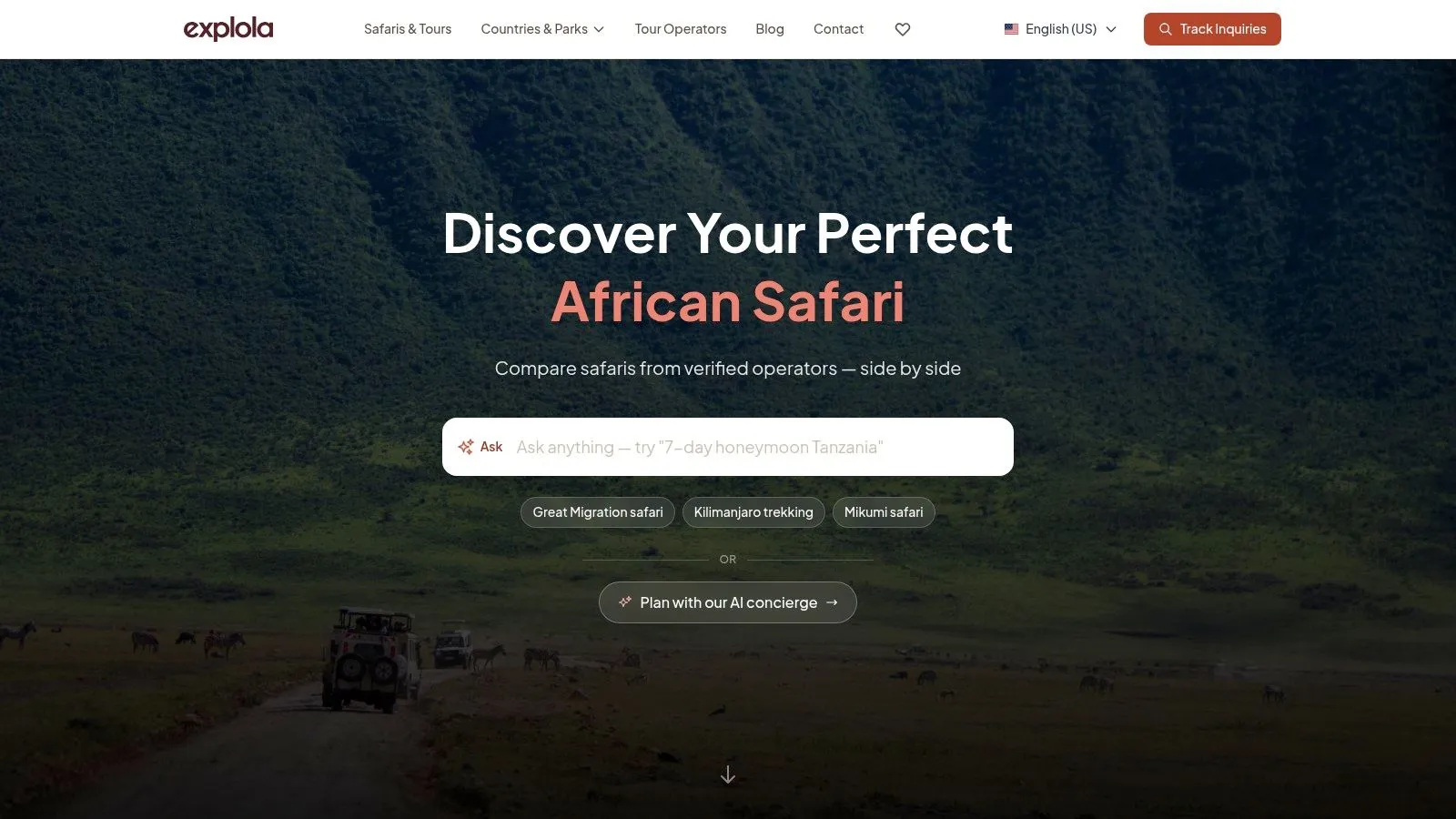
A tour page should help you inspect the itinerary day by day. Look for the number of camp changes, the length of road transfers, the stated vehicle arrangement, accommodation type, inclusions, exclusions, and starting-from price. Treat “family-friendly” as an invitation to ask questions, not as proof that every child can join every activity.
For more detail on the search process, use this guide to finding the right safari. The strongest shortlist usually contains a few distinct structures, such as a lodge-based route, a private family circuit, and a lower-cost shared departure.
Compare like with like
Place the itineraries beside each other and mark differences that affect the family experience:
| Comparison point | Why it matters |
|---|---|
| Private or shared vehicle | Determines flexibility and may affect age eligibility |
| Child policy | Shows which activities each traveller can join |
| Park-fee treatment | Reveals whether seasonal charges are already modeled |
| Room arrangement | Prevents surprises about occupancy or separate rooms |
| Transfer design | Indicates how much time children spend on the road |
| Operator verification and reviews | Helps assess who will deliver the itinerary |
Send a direct inquiry with the same questions to each operator. Ask for an itemized family quote rather than a revised headline price, and request confirmation of child rates, vehicle type, accommodation layout, cancellation terms, and health-related route considerations.
Keep every response together while you compare. A clear decision usually emerges when one operator answers the operational questions precisely and another only repeats general package language.
Essential Packing and Health Preparation Tips
Good preparation starts with medical advice, not luggage. Arrange a consultation with a travel-health professional who can review the full route, current vaccination requirements, malaria prevention, prescriptions, allergies, and each child's age and medical history. Guidance can differ between destinations and can change, so don't rely on an old family travel checklist.
Prepare for heat, dust, and downtime
Pack lightweight clothing that can be layered, comfortable closed shoes, sun protection, insect repellent, reusable water bottles, and a small personal medical kit. Neutral outdoor colours are practical, but the family doesn't need matching safari outfits. Include one warm layer for early drives and evenings, because temperatures can change during the day.
Children need entertainment for the quiet stretches between sightings. Bring binoculars that fit small hands, notebooks for drawing tracks, audio stories, snacks approved by the operator, and any comfort item that helps with unfamiliar rooms. A wildlife book can turn waiting into observation. Families looking for a tactile keepsake may also shop with NINI and LOLI for a safari-themed photicular book.
Ask the operator what the vehicle already carries. This may prevent you from packing bulky items unnecessarily, but don't assume child seats, booster seats, charging points, or refrigeration are available. Confirm each item before departure.
Pack around the itinerary
A family safari needs practical organization more than a large wardrobe. Divide essentials into a day bag, a vehicle bag, and main luggage so that sunscreen, medication, water, and warm layers remain reachable during transfers.
Medical items: Keep prescriptions in original packaging, bring copies of important documents, and carry medication in hand luggage.
Vehicle supplies: Pack wipes, tissues, snacks, water, sick bags, and a small activity kit where children can reach them.
Clothing: Use layers rather than one heavy outfit, and include clothes that can handle dust, spills, and repeated wear.
Sleep essentials: Bring familiar comfort items and ask whether the property supplies mosquito nets or other room protections.
Documents: Save booking confirmations, insurance details, emergency contacts, and operator messages offline.
Make the daily plan child-sized
Parents often overestimate how much wildlife their children need and underestimate the value of a quiet afternoon. Ask the guide to identify realistic drive lengths, bathroom opportunities, rest options, and safe places to stop. A private vehicle is especially valuable when one child is ready to return and another wants to continue.
Food deserves advance planning. Share allergies, intolerances, cultural requirements, and preferred mealtimes before arrival. Ask whether the lodge can provide familiar foods without making every meal separate from the adult menu.
Safety briefings should happen on the first day and be repeated in simple language. Children need to know why they stay inside the vehicle, why they shouldn't call animals, and why an adult must accompany them around camp. Parents should follow the guide's instructions even when an animal appears calm.
Before final payment, request a written confirmation of the following:
Every child's age eligibility for each activity.
The vehicle arrangement and whether it is private.
Accommodation configuration and supervision expectations.
Park and conservation fees by age and travel period.
Medical and emergency procedures for the route.
What happens if weather, illness, or a child's fatigue changes the plan.
A well-designed family safari doesn't eliminate every surprise. It gives your guide and your family enough flexibility to handle surprises without losing the experience. When the practical details are settled, children can concentrate on tracks, birds, elephants, and the questions that make the journey memorable.
Explola connects families with verified African safari operators, detailed itineraries, comparison tools, and direct inquiry workflows, so you can check age rules, vehicle arrangements, inclusions, and pricing before booking. Visit Explola to compare family safari options and request a trip shaped around your children's ages, pace, and budget.
Ready to experience this?
Explore Related Safaris

Daniel writes for the Explola blog, where he covers African safari destinations, wildlife, travel trends, and practical trip planning. His work is centered on making safari travel easier to understand, compare, and plan.
Get Safari Tips & Destination Guides
Join our newsletter for exclusive travel tips, wildlife insights, and safari planning advice.