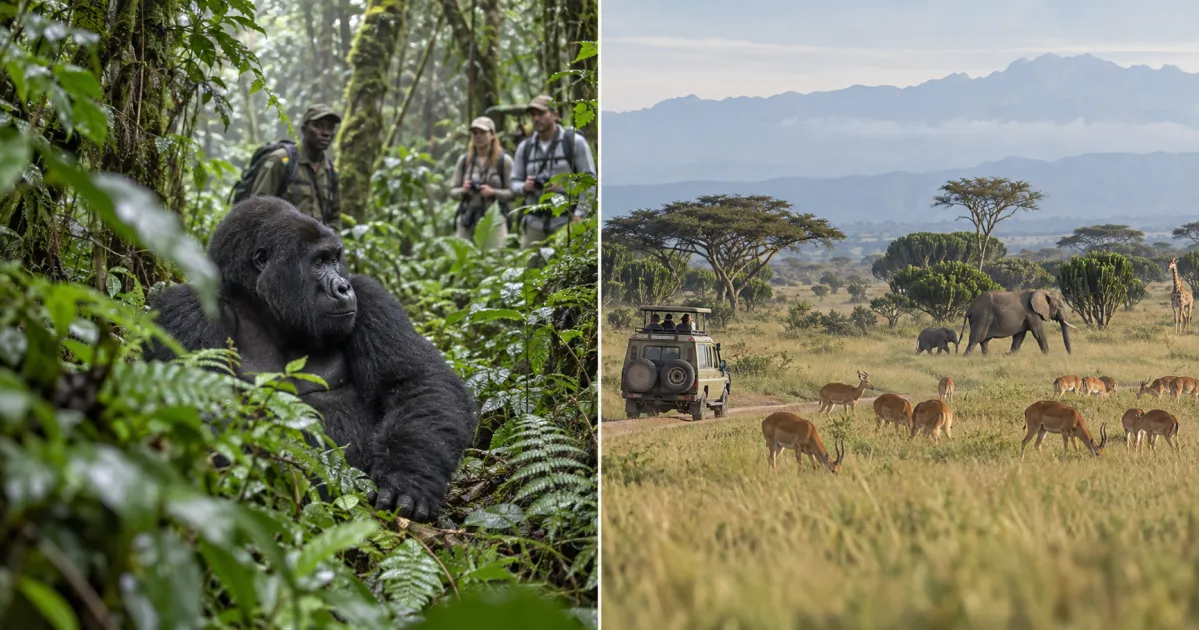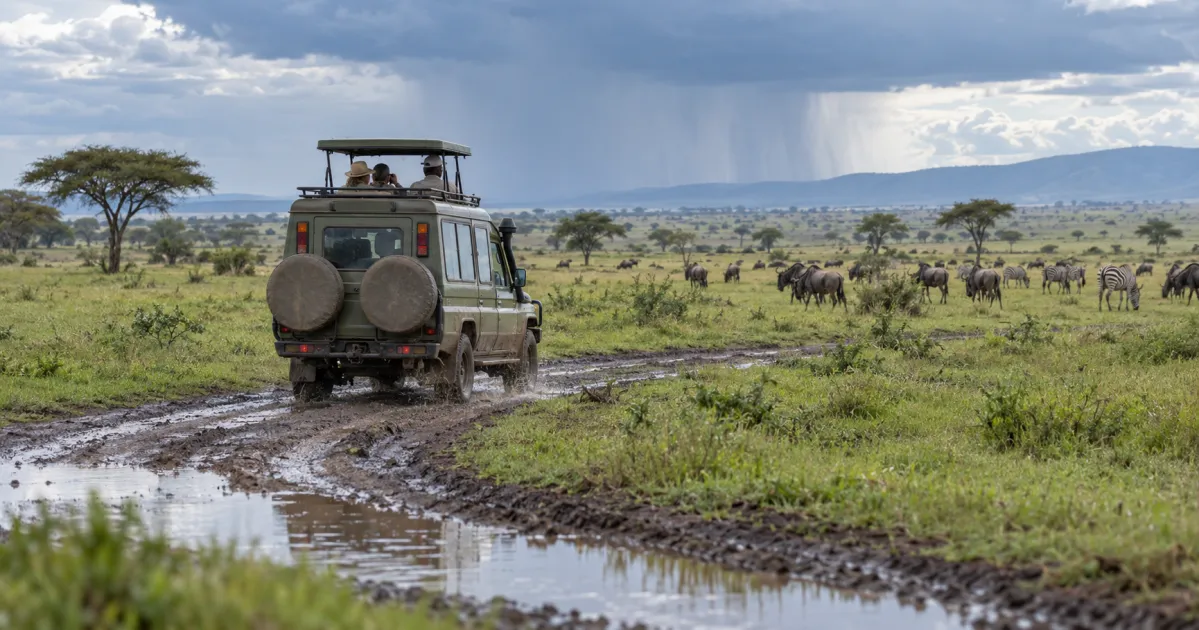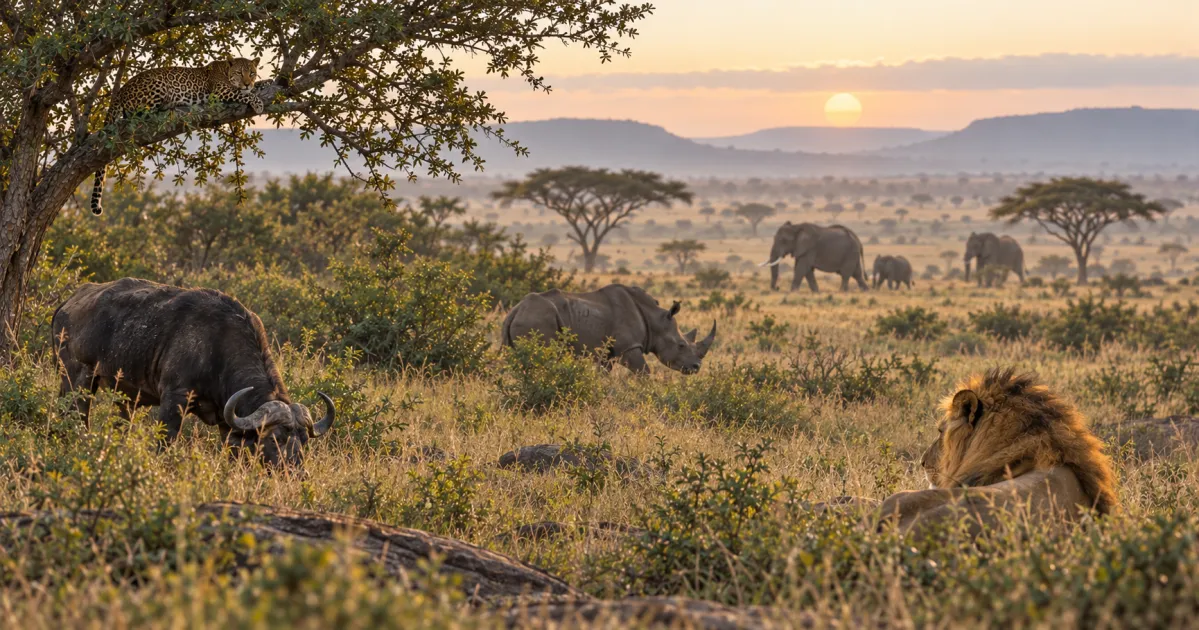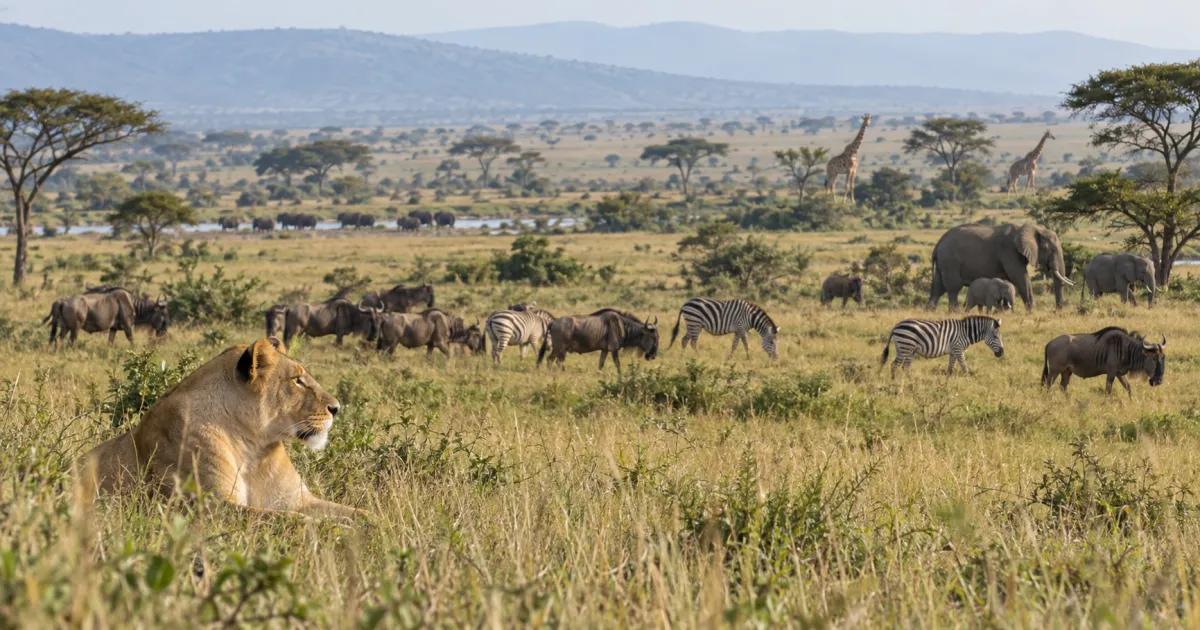
Tanzania's wildlife experience is larger and more varied than a simple Big Five checklist suggests. Its protected-area network includes 840 protected areas covering 361,594 km² of land and 7,330 km² of ocean, with national parks, game reserves, wildlife management areas, and Ramsar sites supporting species from elephants and lions to migratory herds. The country's national biodiversity planning also places wildlife and forest protected areas across 731,806.24 km², or 33.56% of Tanzania's total area (IUCN's Tanzania country profile).
That scale means there isn't one single safari experience. Some animals create dependable family sightings, some appear in spectacular migration-driven gatherings, and others turn a game drive into a rare conservation encounter. Choosing the species you most want to see first can help you select the right park, season, route, guide, and lodging style rather than trying to cover everything at once.
The guide below organizes wild animals in Tanzania by the experience they create, while keeping expectations realistic. A lion sighting may be relatively predictable in a strong predator area, but a leopard, rhino, or wild dog encounter can remain uncertain even with an excellent guide. Explola helps travelers compare verified operators, itineraries, pricing tiers, reviews, park coverage, and direct inquiries without booking or service fees, so you can shape a safari around the wildlife experience that matters most.
1. African Lion
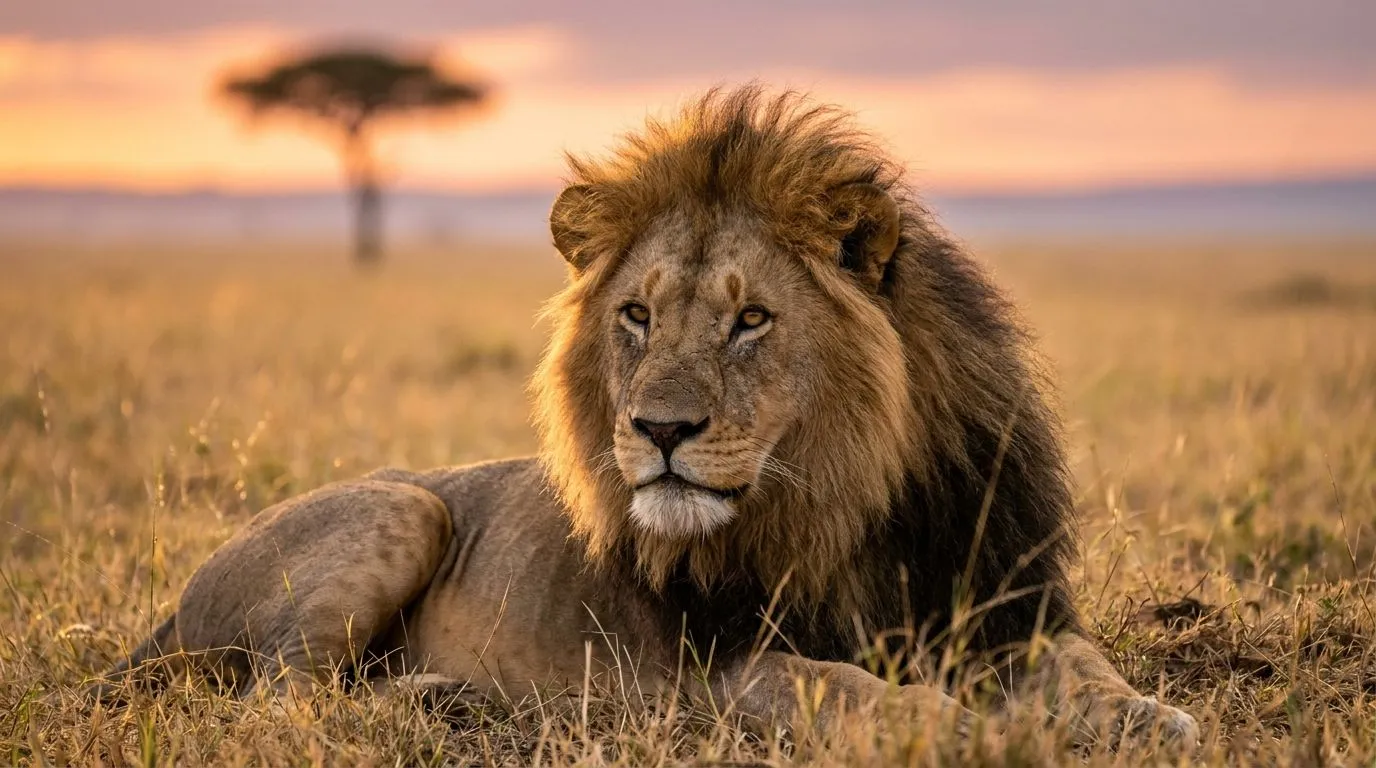
The African lion is Tanzania's defining predator experience. Lions live in social prides, and their group behavior gives travelers more to observe than a dramatic portrait. A resting male, a watchful lioness, cubs at play, or a pride coordinating movement can each tell a different story about territory, family structure, and hunting.
Tanzania remains one of Africa's strongest lion destinations. The country's lion population is estimated at about 17,000, while the Serengeti ecosystem supports roughly 3,000 to 4,000 lions, according to recent reporting from The Citizen on Tanzania's national wildlife census. UNESCO's description of Serengeti National Park also records about 4,000 lions in the park's wildlife inventory (UNESCO's Serengeti listing).
Where and when to plan
The Serengeti and Ngorongoro Conservation Area are the strongest choices for travelers who want lions integrated into a broader predator itinerary. Serengeti's Seronera area is especially known for regular big-cat viewing, while Ngorongoro's enclosed geography can create concentrated sightings. Dry-season game drives often make wildlife easier to locate around remaining water and open grassland, but lions can be encountered throughout the year.
Early morning drives are useful because lions may still be active after a night of hunting. Ask for a guide who can interpret behavior rather than point out an animal. A longer stay in the Serengeti also gives you more time to see different prides and avoid treating one sighting as representative of the entire ecosystem.
Practical rule: A lion sighting is never a reason to pressure a guide to approach too closely. Keep the vehicle still, follow park rules, and let the animals decide how the encounter unfolds.
2. African Elephant
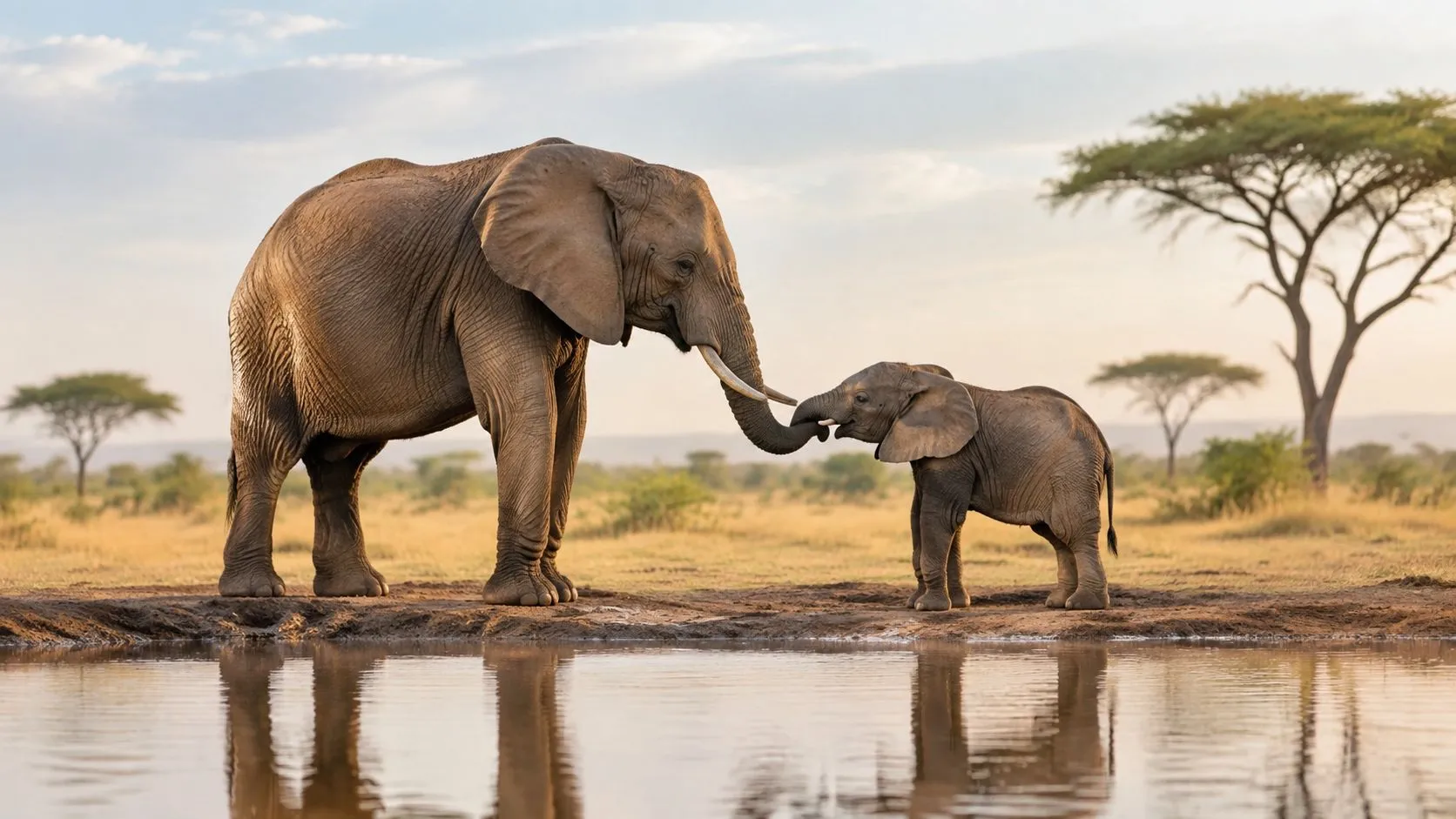
African elephants turn a safari into a family observation. From a respectful distance, visitors can follow a group's social decisions: adults may move between feeding areas, pause near a vehicle, or guide a calf toward water. Their size draws attention, while their relationships provide the clearest reason to watch patiently.
Tanzania's latest national census offers a conservation benchmark. It covered 340,748 km² and estimated 66,714 elephants, alongside other major wildlife populations (WWF Tanzania's census update). Earlier reporting recorded an increase from 50,433 elephants in 2015 to 56,425 in surveys conducted between 2018 and 2022. A Serengeti survey counted 7,061 elephants, compared with 3,068 in 2009 (the Serengeti wildlife account).
The best elephant-focused route
Tarangire suits travelers who want elephants to shape the itinerary. During the dry season, dependable water and remaining vegetation can concentrate wildlife, making family groups easier to locate. Nyerere and Ruaha offer a more remote setting, while Serengeti and Ngorongoro fit elephants into a broader northern-circuit journey.
Plan time near water sources, but leave room for quiet observation. Elephant sightings are often reliable in suitable habitat, while close approaches on foot are never guaranteed and depend on an authorized guide's assessment. Walking activities should use an authorized guide familiar with elephant behavior and local safety rules.
Keep the vehicle from blocking a family's route. Do not ask a driver to separate a calf from adults or move closer for a photograph. A calm vehicle and patient distance protect the animals and produce a more natural encounter.
3. African Cape Buffalo
Cape buffalo turn a routine herbivore sighting into a lesson in group behavior and caution. Dense herds often rest or graze together, with adults facing outward and their horns rising above the grass. That formation helps explain why a buffalo encounter can feel more intense than watching giraffes or zebras, especially when the herd is near a track.
Tanzania supports large buffalo populations across its major safari regions. The country's latest census estimated the population qualitatively as substantial across the surveyed area. UNESCO's Serengeti inventory also records a large buffalo population in the park, showing that buffalo are established across both northern and southern ecosystems.
A sighting that requires discipline
Serengeti, Ngorongoro, Nyerere, and Ruaha can all produce buffalo sightings. Their distribution changes with grazing conditions and access to water, so the experience depends partly on timing and location. A skilled guide reads the herd's posture, direction, and spacing, much as a traffic observer reads movement before choosing a safe route.
Buffalo viewing rewards patience rather than proximity. Keep the vehicle clear of the herd's path, avoid sudden engine noise, and never ask a driver to surround the animals. Walking near buffalo requires a formally guided activity and a route that the guide has judged safe. A long lens gives visitors more room, while quiet observation can reveal grooming, communication, and adults protecting calves.
The most useful interpretation connects behavior with distance. A guide who explains a herd's mood can make a predictable sighting memorable without manufacturing danger.
4. African Leopard
The leopard is the safari animal that rewards patience. Unlike lions, leopards are solitary and often blend into woodland, rock, or tall grass. They may rest on a branch, hide a meal, or cross a track so quickly that a guide's warning comes just before the animal disappears.
Seronera in the Serengeti is a strong place to focus on leopard viewing because its habitat supports regular sightings. Ngorongoro can also produce memorable encounters, although no responsible operator should guarantee a leopard. The animal's camouflage, solitary habits, and preference for cover make every sighting more uncertain than a large herbivore gathering.
How to plan for a rare big-cat encounter
Build flexibility into the itinerary. Several drives in a leopard-rich area are more useful than a rushed visit that gives the guide little time to search. Early starts can help because a leopard may still be moving after nocturnal activity, while an experienced tracker can identify indirect clues such as alarm calls, tracks, or a carcass in a tree.
Night drives may be available in selected conservation areas, but travelers should confirm the rules and vehicle arrangements before booking. Some parks don't permit them, and a premium lodge doesn't automatically mean better wildlife access. Compare the actual itinerary, guide qualifications, drive timing, and location of the camp.
For a focused big-cat route, review the 8-Day Serengeti Adventure Big Cats Safari and use it as a reference point when comparing similar itineraries.
5. African Cheetah
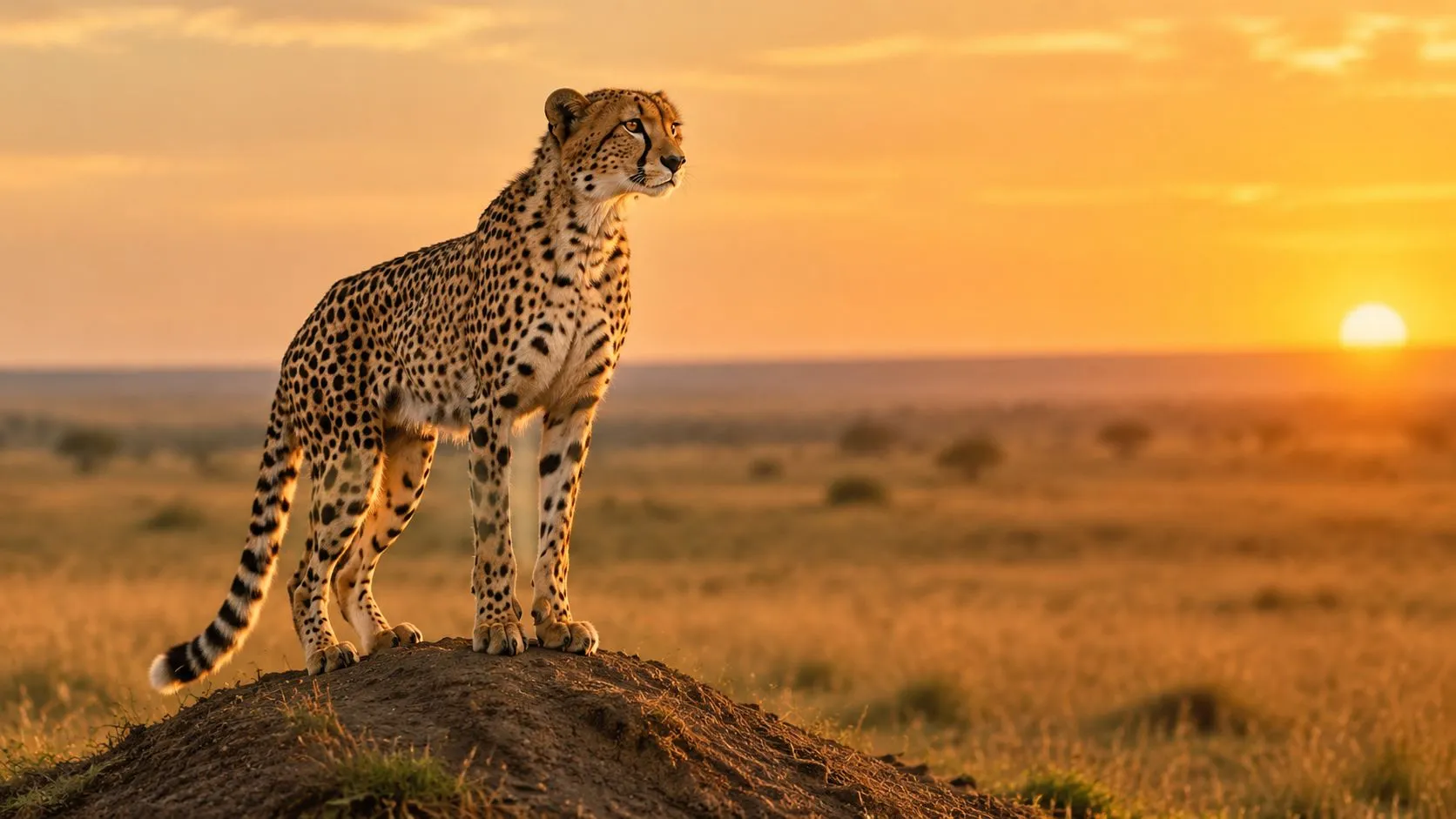
Cheetahs offer a different predator experience from lions and leopards. They hunt in daylight, favor open plains, and rely on speed and visibility rather than stealth in dense cover. Even when a hunt doesn't occur, a cheetah standing on a low mound, scanning for prey, can create an excellent photographic moment.
The Serengeti's open grasslands are the clearest choice for travelers who want to focus on cheetahs. Ngorongoro may also offer sightings, while a northern-circuit itinerary can combine cheetah searches with lions, leopards, hyenas, and large herbivore herds. The species' daytime activity makes morning drives particularly useful, although sightings remain wildlife encounters, not scheduled performances.
Give the guide room to read the scene
A good guide will watch the cheetah's posture, direction, and relationship to nearby prey before moving the vehicle. Cheetahs may abandon a hunt if vehicles crowd them, and a group of travelers can miss the most interesting behavior by focusing only on the final chase.
Morning drives are often a sound planning choice because temperatures are cooler and predators may be active. Travelers should also ask whether the operator supports responsible predator viewing, including limits on vehicle positioning and noise. Cheetah-focused trips work well for photographers, families, and anyone who wants to understand how different predators use the same grassland in different ways.
6. African Giraffe
Giraffes are among the most dependable large-animal sightings in Tanzania, but their familiarity shouldn't make them feel ordinary. Their slow movement through acacia woodland, careful browsing, and unusual body shape give guides plenty to explain, from feeding choices to the demands of moving such a tall body across uneven ground.
The species appears across several safari areas. Serengeti's wildlife inventory includes about 4,000 giraffes, while Tarangire, Lake Manyara, and other northern parks provide different habitat settings (UNESCO's Serengeti listing). A giraffe sighting is often particularly accessible for families because animals can be visible in daylight without requiring a specialized predator search.
Use giraffes to understand habitat
Tarangire's woodland makes a useful setting for learning how browsers interact with trees. In Serengeti, giraffes can add variety between predator encounters and migration-focused drives. Lake Manyara may suit travelers who want a compact park experience with a different setting from the open plains.
Morning drives can provide attractive light and active feeding behavior, but giraffes remain visible at other times as well. Ask the guide to explain why the animals choose particular trees, how adults position themselves around young, and how the surrounding vegetation changes with season. Keep a respectful distance, especially when a mother and calf are together, and don't pressure the driver to leave the track for a closer photograph.
7. African Wildebeest
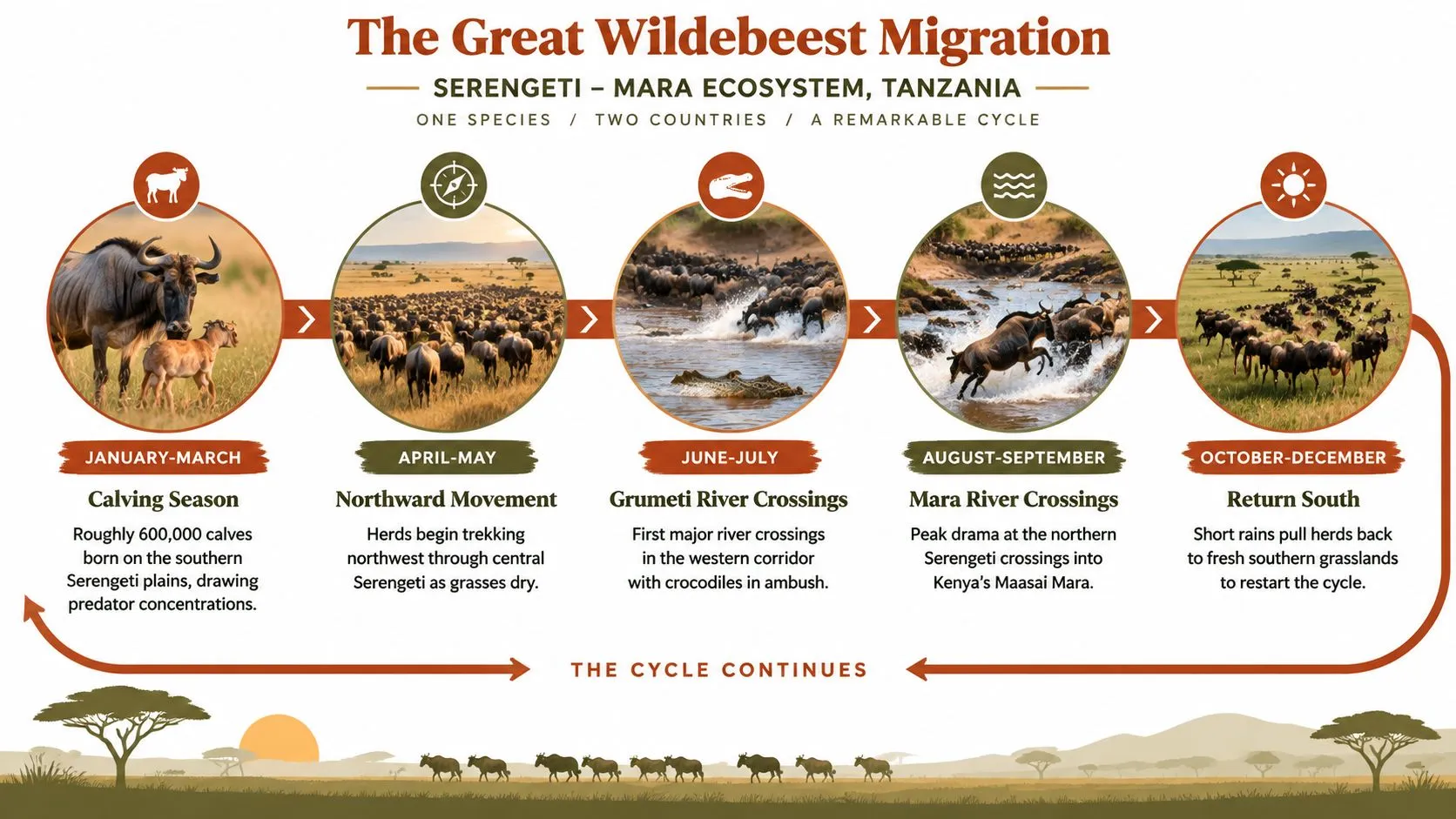
Wildebeest offer Tanzania's defining migration experience, a moving spectacle shaped by rainfall, fresh grass, and herd behavior. The animals do not follow a fixed route on a tourism timetable. Their location changes through the Serengeti ecosystem, so season and base area matter as much as the species itself.
The migration also works like a traveling classroom. Wildebeest graze alongside zebra, while predators and scavengers follow the herds. A drive can therefore reveal competition for food, the protection of calves, and the risks that come with moving across open plains. Recent national census reporting indicates a very large wildebeest population, though the exact total depends on the survey area and method.
Choose the experience, not just the headline
Southern Serengeti is associated with calving-season viewing, when young animals add interest but also attract concentrated predator activity. Western and northern areas may provide opportunities to see herds moving through different grassland and river habitats later in the cycle. River crossings are the least predictable option. Herds can gather for hours, retreat, or cross when visibility is limited.
Plan around a region and season, then leave time for nature's changes. Ask operators where the vehicle will be based, how much time it can spend in the relevant zone, and whether the route includes predator viewing. Treat any promise of a guaranteed crossing as a warning, and avoid vehicles that crowd riverbanks or pressure animals.
The Serengeti National Park guide can help compare a migration-focused safari with other Tanzanian destinations.
8. African Zebra
Zebras make the migration easier to understand because they show how different grazers can travel through the same ecosystem together. Their stripes, family groups, and alert behavior create strong viewing opportunities even when no dramatic predator action is taking place. When zebra and wildebeest gather, the scene becomes a moving community rather than a collection of separate species.
Zebra are also a major part of Tanzania's Serengeti wildlife story. UNESCO's park inventory records about 200,000 zebra in the Serengeti (UNESCO's Serengeti listing). Their presence helps sustain predators, while their grazing patterns influence how other herbivores use the plains.
A useful species for family interpretation
Serengeti is the best choice for travelers who want to connect zebra viewing with migration. Ngorongoro offers resident herds in a concentrated setting, and Tarangire can add zebra to a dry-season itinerary focused on water and grazing animals.
Ask the guide to point out the difference between family groups and bachelor groups, and to explain how zebra respond when predators approach. Photographing the animals from the vehicle is usually straightforward, but the best images often come from waiting for social behavior rather than asking to reposition repeatedly. Stay on authorized tracks and avoid separating a group by driving between adults and young animals.
9. African Rhinoceros
Rhino viewing is one of Tanzania's rarest safari experiences, and its value comes partly from the uncertainty. The black rhinoceros is the species most associated with the country's remaining high-value sightings, especially in Serengeti and the Ngorongoro Conservation Area. A distant animal, a brief appearance, or only field signs may be the realistic outcome. That makes a rhino encounter different from a predictable family sighting of elephants or giraffes.
UNESCO's Serengeti inventory records about 200 black rhinoceroses in the park (UNESCO's Serengeti listing). More recent national census reporting estimated 302 black rhinos across the 2024/2025 survey area, as noted in the earlier census reference. The figures help explain why no responsible operator should guarantee a sighting.
Responsible planning matters most here
Ngorongoro suits travelers seeking concentrated wildlife viewing and clear conservation context. Serengeti provides a larger, more open setting, where rhinos can stay distant or hidden. Ask the operator how often the route produces sightings, which areas are permitted, and how guides respond when an animal is found. A lower chance of seeing a rhino is preferable to pressure on the animal or habitat.
Tracks, dung, browsing marks, and other habitat signs can turn a missed sighting into a useful lesson. Keep voices low, remain in the vehicle unless an authorized guide instructs otherwise, and never request an off-road approach. Before booking, read how responsible tourism helps protect wildlife in East Africa to connect the encounter with the wider responsibilities of safari travel.
10. African Wild Dog
African wild dogs produce one of Tanzania's most specialized predator encounters. They live and hunt cooperatively, with pack members communicating through movement, calls, and close social contact. A sighting may involve a resting pack, a fast-moving hunt, or a group caring for young, but even locating the animals can require patience and expert tracking.
Southern Tanzania is particularly important for travelers seeking a remote predator experience. Nyerere and Ruaha offer a more wilderness-oriented setting than the busiest northern-circuit routes, although access, sightings, and tourism infrastructure vary by area. Serengeti may produce occasional encounters, but travelers should treat wild dogs as a bonus rather than a dependable feature of a standard itinerary.
Build the safari around time and flexibility
A wild-dog-focused route needs more than a quick stop. Ask whether the operator has guides with local pack knowledge, whether the camp can support early drives, and how the itinerary handles sightings that develop far from the planned route. Morning activity can be productive, but the animals' movements remain unpredictable.
Walking safaris may be available in some southern areas, subject to local rules, guide judgment, and safety conditions. Travelers should never request a walking approach to obtain a closer photograph. The most responsible encounter keeps the pack in control of the distance and allows the animals to move, rest, and hunt without vehicle pressure.
Tanzania's wildlife story also includes difficult conservation questions. Government reporting says 13.28bn/- was paid in compensation to 56,331 people affected by dangerous wildlife between 2020 and 2025, while the 2025/2026 budget allocated 48.3bn/- for mitigation measures, including fencing, ranger posts, water infrastructure, and protective cages (Daily News reporting on human-wildlife conflict mitigation). A responsible wild-dog encounter should sit within that wider understanding of how conservation areas and neighboring communities share the terrain.
Comparison of 10 Tanzanian Wildlife Species
Species | Viewing Complexity 🔄 | Resource Requirements ⚡ | Expected Experience ⭐ | Ideal Use Cases 💡 | Key Advantages 📊 |
|---|---|---|---|---|---|
African Lion (Panthera leo) | Moderate, seasonal peaks; dawn/dusk drives | Experienced guides, 3–4 nights, early/late drives | High, dramatic predator displays (⭐⭐⭐) | Classic safari, predator-focused photography | Iconic apex predator; social behavior; strong guest satisfaction |
African Elephant (Loxodonta africana) | Low–Moderate, widespread, daylight active | Standard game drives, waterhole stops, family logistics | High, engaging family groups (⭐⭐⭐) | Family tours, conservation messaging, waterhole viewing | Flagship species; ecosystem engineers; reliable sightings |
African Cape Buffalo (Syncerus caffer) | Moderate, herd dynamics, can be unpredictable | Strict safety protocols, skilled guides, maintain distance | Medium, dramatic herd scenes (⭐⭐) | Adventure/safety-aware packages, Big Five completion | Spectacular herd displays; indicates ecosystem health |
African Leopard (Panthera pardus pardus) | High, elusive, nocturnal, low encounter rate | Specialized trackers, night drives, premium lodges | Very high when seen, rare & prized (⭐⭐⭐) | Luxury/photography safaris, Big Five specialists | Elusive big cat; premium pricing; strong conservation appeal |
African Cheetah (Acinonyx jubatus jubatus) | Moderate, diurnal, good Serengeti encounter rates | Daytime drives, frequent attempts, expert narration | High, dramatic hunts & imagery (⭐⭐⭐) | Photography-focused, daytime predator viewing | Fast, photogenic hunts; high sighting probability |
African Giraffe (Giraffa camelopardalis) | Low, highly visible, daytime | Minimal; standard drives suffice | Good, iconic visuals & education (⭐⭐) | Family/honeymoon packages, ecosystem education | Highly visible; safe for families; strong marketing symbol |
African Wildebeest/Gnu (Connochaetes taurinus) | Variable, migration timing sensitive | Seasonal planning, flexible itineraries, peak logistics | Spectacular at peaks, mega-events (⭐⭐⭐) | Migration packages, premium bucket-list tours | Mega-aggregations; dramatic predator-prey interactions |
African Zebra (Equus quagga boehmi) | Low, common, diurnal, often with migration | Standard drives; pairs well with wildebeest itineraries | Good, photographic & educational (⭐⭐) | Educational/family tours, migration context | Consistent sightings; migration partner; behavioral interest |
African Rhinoceros (Diceros/Ceratotherium) | Very high, extremely rare, unpredictable | Specialized trackers, research-grade guides, high cost | Exceptional but unlikely, emotional impact (⭐⭐⭐) | Premium conservation/donor itineraries, research visits | Ultra-rare; powerful conservation narrative; premium value |
African Wild Dog (Lycaon pictus) | Very high, rare, large ranges, unpredictable | Dedicated nights, expert trackers, travel to remote parks | High when encountered, cooperative hunts (⭐⭐⭐) | Conservation-focused, pack-behavior observation | Exceptional pack hunting behavior; conservation flagship |
Match the Species to the Safari You Want
The best Tanzania safari isn't the one that lists the most animals. It's the one that gives you a realistic chance to experience the species and behavior you care about, while leaving enough time for the surroundings to set the pace. Start with your priority experience, then build the route around habitat, season, access, and the amount of flexibility you can afford.
Choose the Serengeti if predators and migration are your main goals. The park's plains support lions, cheetahs, leopards, wildebeest, zebra, giraffes, elephants, and many other species. It's the clearest choice for travelers who want to combine a major predator search with the movement of grazing herds. For migration travel, ask exactly where the camp will be located and what region the itinerary targets. A safari based in the wrong part of the ecosystem can miss the experience you had in mind, even when the overall route is excellent.
Choose Tarangire when elephants, woodland scenery, and dry-season water concentration matter most. The park adds a different texture to a northern itinerary and works well for families, photographers, and travelers who want time observing large herbivores rather than chasing only big cats. Pairing it with Serengeti or Ngorongoro can create stronger species variety, but every additional transfer affects the amount of time available for game drives.
Choose Ngorongoro for concentrated viewing and a chance to place rare rhino encounters within a broader conservation setting. Its enclosed terrain can make it efficient for a short safari, but the crater is still a living ecosystem, not a wildlife enclosure. Visit with a guide who respects traffic rules, keeps distance from animals, and explains why some sightings cannot be approached.
Choose Selous, now part of the Nyerere National Park, or Ruaha for a more remote predator experience. These southern destinations suit travelers who value fewer vehicles, specialist guiding, walking activities where permitted, and a deeper wilderness atmosphere. They may require more careful planning than a classic northern-circuit route, so compare transport arrangements, camp location, activity rules, and backup plans before committing.
Park selection also has a commercial logic. Between 2017 and 2023, TANAPA parks captured 50% to 63% of annual protected-area tourism revenue, Ngorongoro accounted for 25% to 32%, and game reserves plus Wildlife Management Areas under TAWA contributed 5% to 24% (World Bank analysis of Tanzania's protected-area tourism). That distribution suggests that Serengeti, Ngorongoro, and other TANAPA assets deserve close attention when you're comparing wildlife-focused itineraries, while southern parks may offer a different experience for travelers willing to prioritize remoteness.
Use Explola to compare park coverage, travel dates, lodging level, group size, inclusions, reviews, and verified operators side by side. Check whether the itinerary gives your target species enough time, whether pricing clearly states what's included, and whether the operator explains rare sightings as possibilities rather than guarantees. Then send direct inquiries for quotes, ask specific questions about guides and conservation practices, and choose the route that matches your wildlife priorities instead of chasing every headline animal.
Use Explola to compare verified Tanzania safari operators, wildlife-focused itineraries, lodging levels, group sizes, reviews, and direct quote options without booking or service fees. Start with the species you most want to see, shortlist routes through Serengeti, Tarangire, Ngorongoro, Nyerere, or Ruaha, and send inquiries that turn your priorities into a practical safari plan.
Destinations Mentioned

Daniel writes for the Explola blog, where he covers African safari destinations, wildlife, travel trends, and practical trip planning. His work is centered on making safari travel easier to understand, compare, and plan.
Get Safari Tips & Destination Guides
Join our newsletter for exclusive travel tips, wildlife insights, and safari planning advice.