The United States is the leading source of African safari enquiries globally, with average spend per person reaching $8,625 in 2025. Trips are also getting longer, with average stays reaching 8.2 nights in 2026, compared with 6.1 nights in 2023.
That combination changes how American travelers should evaluate safari packages. A low headline price can become poor value if it compresses long transfers, places a game drive immediately after an overnight flight, or forces you to cross several borders without enough time in the parks. The right question isn't just, “How much does an African safari cost?” It's, “Which itinerary gives me the most worthwhile time in Africa for the money and energy I have available?”
U.S. travelers also have more ways to compare operators directly than they once did. You can assess lodge tiers, routing, group size, inclusions, and operator credentials before committing, rather than accepting a packaged itinerary with unclear margins and poorly explained transfers.
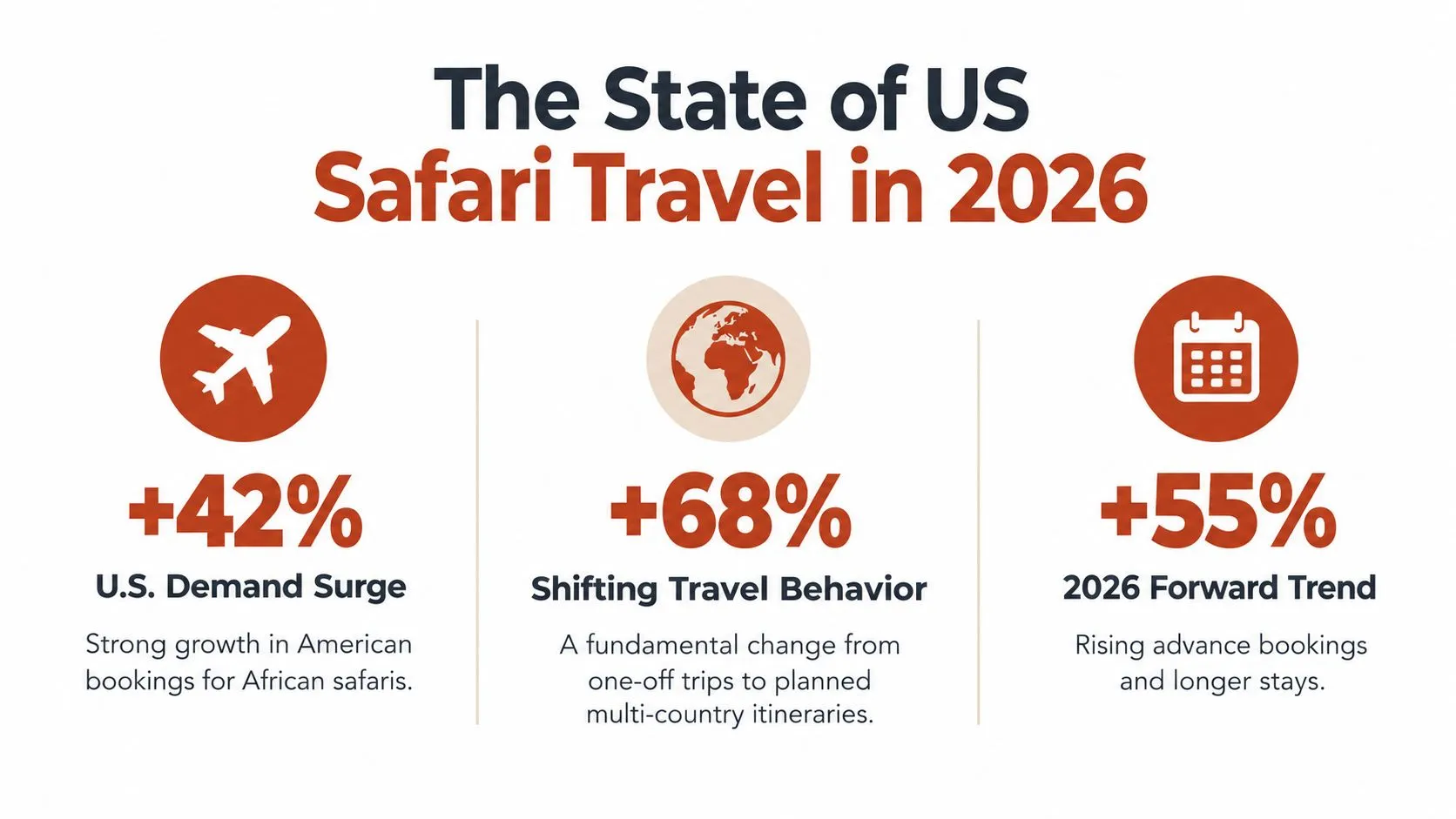
The State of US Safari Travel in 2026
American demand now shapes the way African safari operators design and price their itineraries. The 2025 State of Safari report identifies the United States as the leading source of safari enquiries, with California alone producing 13% of all U.S. enquiries. The United States, Australia, the United Kingdom, and Canada ranked as the leading source markets overall.
The same report records steady growth in safari popularity, rising 14% in 2023, 12% in 2024, and another 7% in 2025. Average spend per person sharing increased from about $6,500 in 2023 to $7,500 in 2024 and $8,625 in 2025. Those figures don't mean every American should choose a luxury lodge. They do show that the market has room for longer routes, better-positioned properties, and experiences that justify a higher total price.
What rising spend changes
A higher average budget gives operators more flexibility, but it can also hide weak planning. A package may spend more on a premium lodge while leaving the traveler with long road transfers, inconvenient internal flights, or too little time in the destination's strongest wildlife areas.
The 2026 Africa safari tourism market report estimates that U.S. citizen departures to Africa grew from about 882,064 in 2024 to 907,408 in 2025. It also places the U.S. safari tourism market at roughly USD 4.86 billion in 2025, with a forecast of USD 7.55 billion by 2031, representing a projected 7.6% CAGR. These are market estimates and projections, not a guarantee that any individual operator or itinerary will deliver a particular result.
A practical effect is that American buyers increasingly compare packages by experience design rather than by accommodation alone. Two lodges with similar room categories can produce very different trips if one sits close to a productive area and the other requires lengthy drives to reach it.
Practical rule: Treat the daily route, transfer timing, and amount of usable safari time as part of the product. The room is only one line in the value calculation.
The report also estimates that trip volume rose from approximately 140,000 in 2020 to 490,000 in 2025, with the sharpest annual market expansion occurring in 2022, when value increased 63.1% as long-haul capacity reopened and deferred travel converted into bookings. For travelers searching for African safari packages from the USA, the implication is clear. There are more options, but more options make itinerary comparison more important, not less.
Choosing Your Safari Destination Style
The best destination depends on the kind of safari you want to experience, not just the animals you hope to see. East Africa, Southern Africa, and specialized adventure destinations offer different rhythms, transfer patterns, accommodation styles, and levels of exclusivity.
East Africa for wildlife density and classic circuits
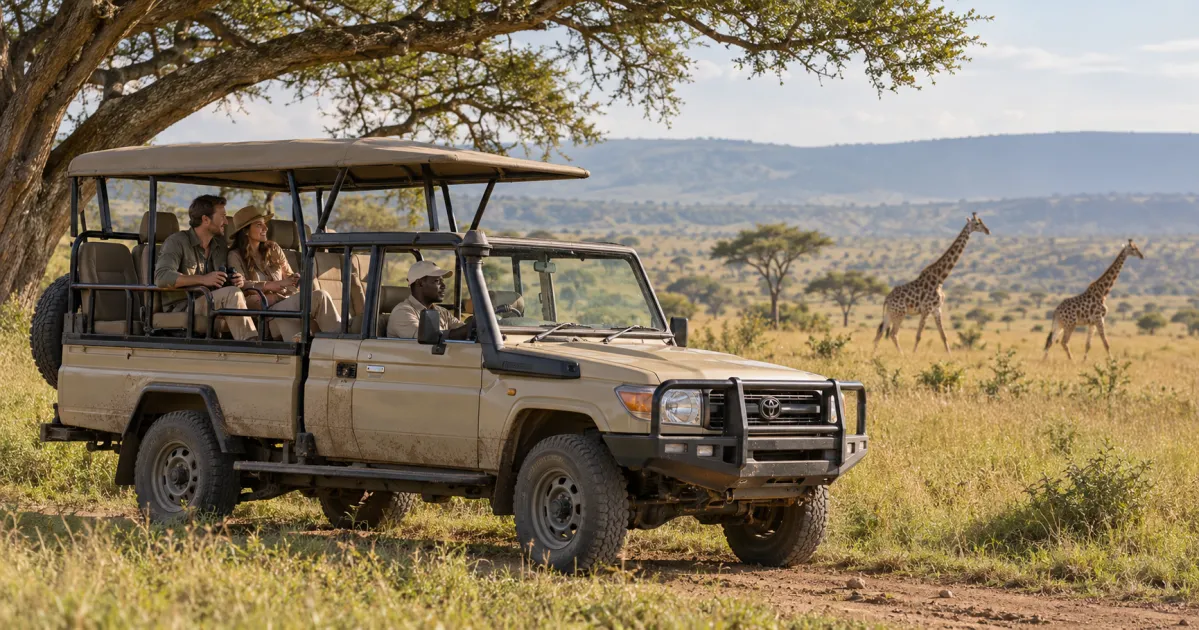
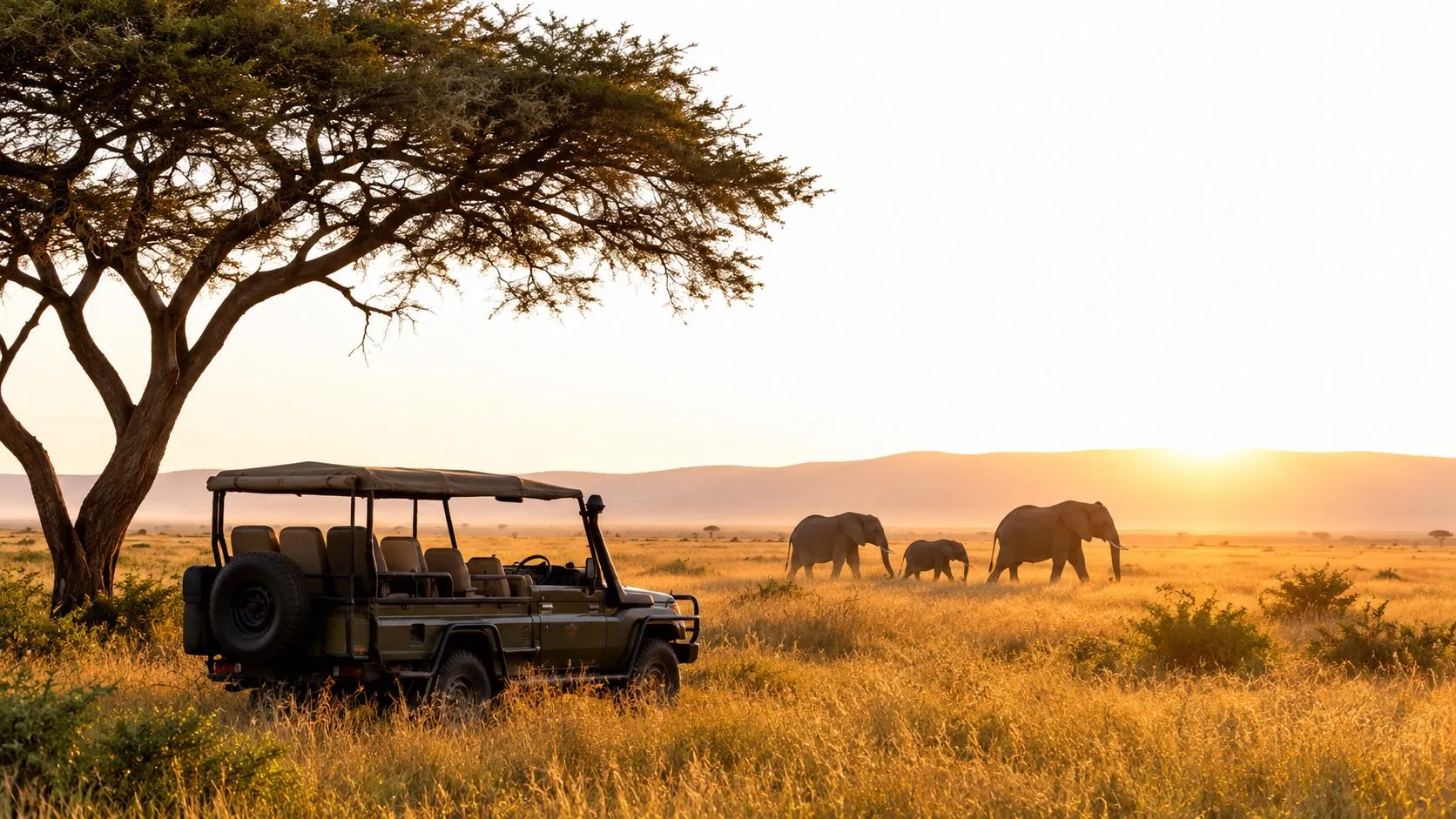
Kenya and Tanzania suit travelers who want a concentrated large-mammal experience built around famous ecosystems. The Mara, Serengeti, and Ngorongoro create a strong foundation for a first safari, while a carefully timed route can add migration viewing, cultural visits, or a beach extension.
The trade-off is movement. A Kenya and Tanzania itinerary may involve border procedures, internal flights, road transfers, and changes between lodge areas. That complexity can be worthwhile when the route adds genuinely different habitats, but it becomes wasteful when the itinerary collects famous names without allowing enough time in each place.
Travelers who want to compare more destination profiles can use this guide to top African safari destinations for 2026 trips before narrowing down a country combination.
Southern Africa for flexibility and lodge quality
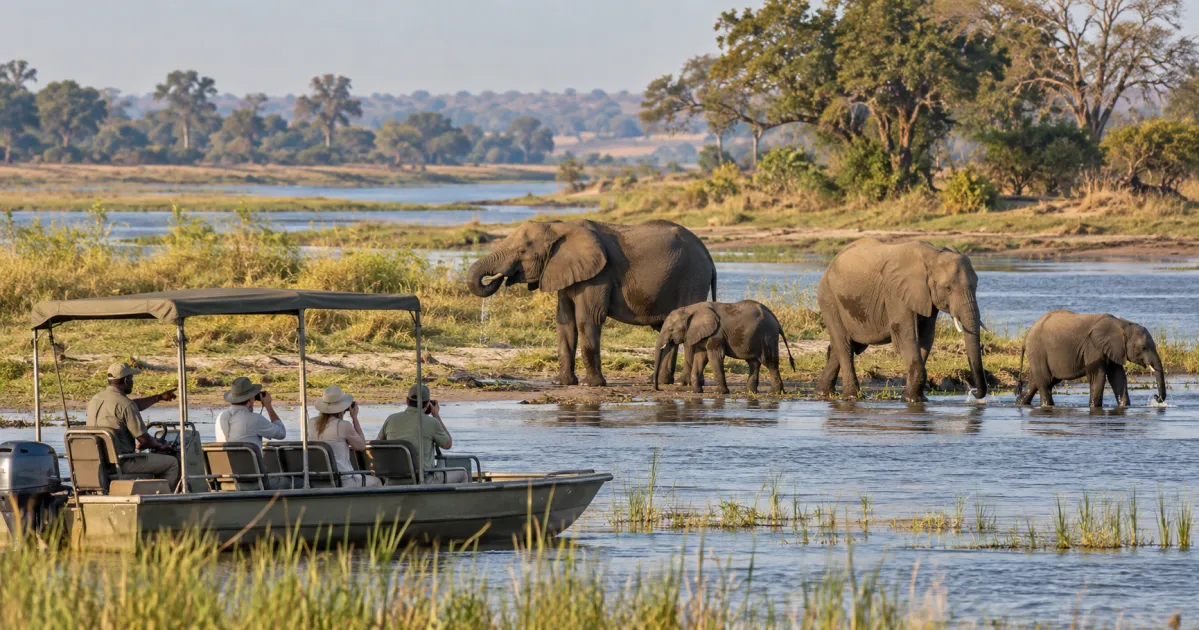
South Africa and Botswana appeal to travelers who value comfortable lodges, private concessions, and a smoother combination of safari with city or regional travel. South Africa can offer a relatively accessible bush experience alongside Cape Town or other urban stops. Botswana generally suits travelers seeking a quieter, more exclusive setting, including water-based activities in suitable areas.
South Africa also gives independent-minded visitors more flexibility around road travel. If you're considering a self-drive or a vehicle for a wider Kruger route, review practical rental options near Kruger alongside the park access, road conditions, and lodge transfer plan. A rental vehicle can provide independence, but it doesn't automatically provide the local tracking knowledge, route interpretation, or night-drive access associated with a guided private reserve.
Adventure-led trips for a specific goal
Uganda is a different proposition from a classic plains-game circuit because primate trekking becomes the central purpose. Kilimanjaro is different again, with physical preparation, acclimatization, and weather planning taking priority over lodge-to-lodge wildlife viewing.
Don't combine these styles casually. A traveler who wants primate trekking may be disappointed by an itinerary that treats Uganda as a short wildlife add-on. Someone climbing Kilimanjaro needs recovery time and sensible logistics, not an overpacked schedule that turns a demanding expedition into one segment of a rushed multi-country tour.
| If your priority is | Start by comparing |
|---|---|
| Iconic wildlife corridors | Kenya and Tanzania |
| Private reserves and lodge comfort | South Africa and Botswana |
| Primate trekking | Uganda |
| A major physical challenge | Kilimanjaro |
The right package has a clear center of gravity. Choose that first, then add extensions only when they improve the trip rather than fill empty space on a map.
Navigating Flights and Logistics from the USA
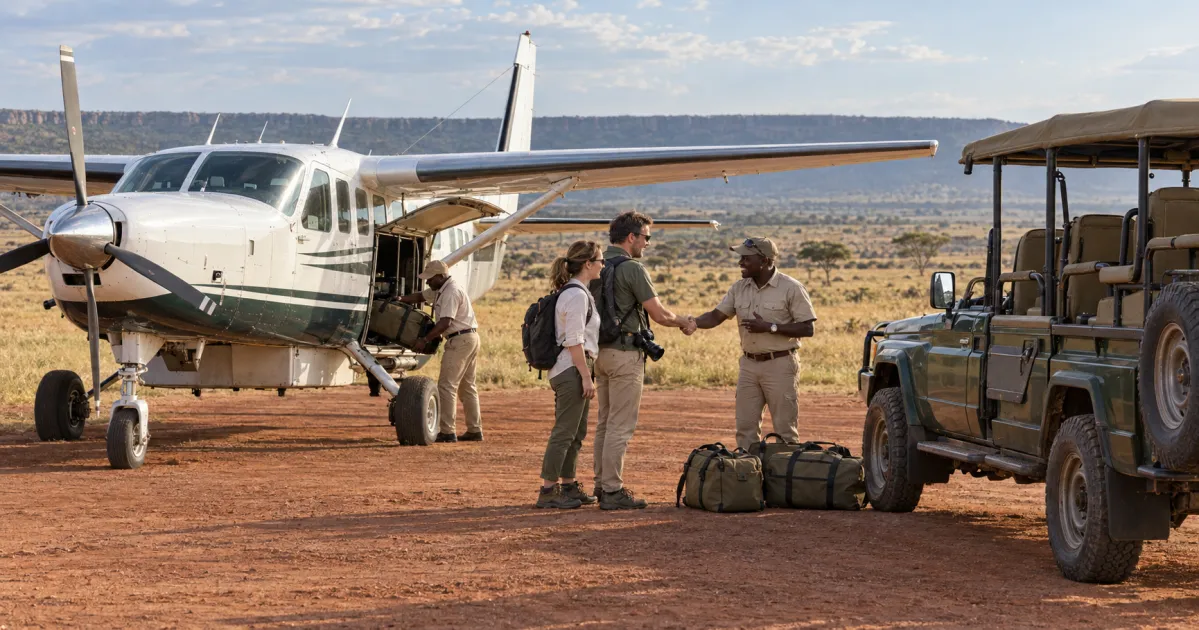
The first safari decision often happens before you reach Africa. U.S. departures to East or Southern Africa usually require one international connection through Europe or the Middle East, and total air time commonly falls between 18 and 24 hours, according to this U.S. safari planning guide. That journey creates a hidden cost: the first day on the ground may not be a full operating day.
Protect the first morning
A weak itinerary lands in the morning, schedules a long transfer, and promises an afternoon or same-day game drive before the traveler has recovered from the overnight flight. Even if the timing works on paper, fatigue can reduce attention, patience, and enjoyment. A missed connection or delayed baggage can also disrupt the entire chain.
A stronger design gives the arrival day a limited job. Reach the lodge, complete the transfer, eat, hydrate, and sleep properly. If the schedule allows a gentle activity, treat it as optional rather than as the moment that determines whether the trip feels successful.
The first morning should protect your safari, not test your endurance.
Build the route around connection risk
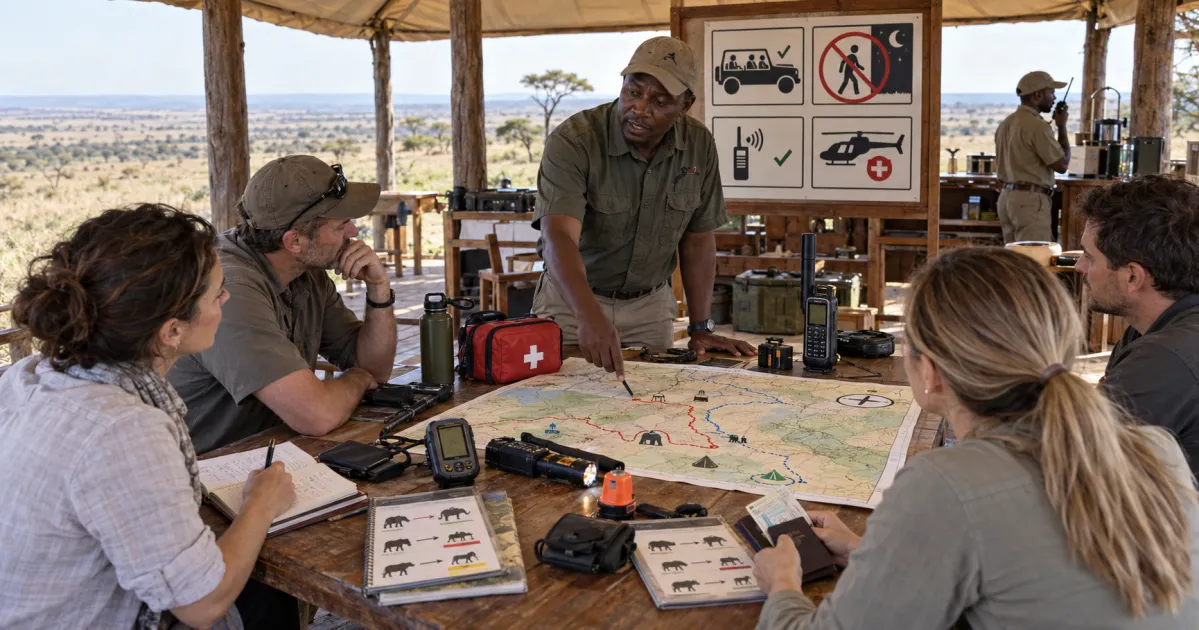
Ask the operator to show every movement between the U.S. airport, international hub, African gateway, regional airport, lodge, and park. You don't need a complicated spreadsheet, but you do need to know where a delay could strand you or remove a game drive.
Use these checks before paying a deposit:
Arrival buffer: Confirm what happens if the international flight arrives late or checked luggage doesn't appear.
Airport changes: Check whether the connection uses the same airport and whether you need to collect and recheck baggage.
Internal flight limits: Ask about baggage restrictions before choosing soft-sided luggage or packing camera equipment.
Road transfer length: Find out whether a short-looking park connection consumes most of a day.
Final-night protection: Avoid placing a remote lodge transfer too close to your international departure.
Flight pricing deserves the same scrutiny as the safari quote, but a cheaper ticket isn't useful if it creates an exhausting or fragile connection. Travelers can review guidance on how to find the cheapest day for flights while still prioritizing reasonable connection windows and arrival timing.
Pay for usable time, not calendar days
A package described as several days may include an arrival day, a departure day, and multiple transfer periods. Compare the number of scheduled game activities, not just the duration printed in the title. A slightly longer itinerary with fewer exhausting transfers can deliver more wildlife time than a shorter route that tries to cover too much ground.
For American travelers, direct questions create value. Ask, “How many mornings and afternoons are realistically available for game viewing?” The operator's answer reveals more than a lodge photograph.
Understanding Safari Package Costs and Budget Tiers
Safari pricing is a structure, not a single number. The visible package rate reflects accommodation, park access, vehicles, guides, meals, domestic transport, transfers, administration, and the season in which you travel. A lower quote may remove comfort, but it may also remove convenient routing or place more of your time in vehicles between destinations.
For Kenya and Tanzania, verified itinerary examples show that 7-day single-country safaris often start in the range of $2,800 to $5,950 per person, depending on country and tier. The range is documented in this Kenya safari and Zanzibar itinerary guide by AJ Safaris It isn't a universal tariff. Lodge category, travel dates, park choices, vehicle model, group size, and internal transport can all change the quote.
What each tier is really buying
A budget package usually prioritizes access and basic functionality. You may accept simpler accommodation, shared vehicles, longer overland sections, or a less flexible departure pattern. That can work well for travelers who care more about being in the park than about private space, but it becomes poor value if the saving creates exhausting transfers.
Mid-range packages often provide the most balanced design for couples and families. They can combine comfortable lodges or tented camps with shared or limited-size vehicles, sensible transfers, and a route that doesn't sacrifice every afternoon to transport. The right comparison is the full list of inclusions, not the label alone.
Luxury pricing can buy a stronger position, greater privacy, more attentive service, and a quieter setting. It doesn't remove travel fatigue or guarantee wildlife sightings. A luxury lodge placed badly within the route can still produce an awkward trip.
Why cross-border routes cost more
Ten-day Kenya and Tanzania combinations frequently land around $4,700 per person in economy-tier lodges and can exceed $13,000 in luxury, according to the cited itinerary examples. Combining both countries usually requires separate entry authorizations, and operators generally recommend 9 to 12 days for a well-paced cross-border safari. That length gives the route room for border administration and transfer-heavy sections while preserving time in the Mara, Serengeti, and Ngorongoro.
A cross-border itinerary adds value when the countries contribute different experiences. It adds cost without enough benefit when the traveler crosses a border only to check another destination off a list. The decision should account for:
Seasonality: Rates can change substantially between travel periods, and wildlife priorities may favor different regions at different times.
Park density: A busy wildlife corridor can justify a longer stay, while a weaker area may not deserve an extra transfer.
Entry administration: Confirm each country's documentation requirements and whether the itinerary requires separate authorizations.
Lodge mix: Use a stronger property for the most important wildlife location and simplify accommodation elsewhere if the budget is tight.
Transport design: Compare a domestic flight with a long road transfer by considering both price and the safari activity you lose.
Budgeting insight: Cutting one premium night can be sensible. Cutting the recovery night after a long-haul arrival often costs more in enjoyment than it saves in cash.
For a more detailed way to assess single-country and multi-country budgets, use this Kenya safari cost guide for every budget in 2026. Then request itemized quotes that identify park fees, transport, accommodation, meals, activities, and exclusions separately.
Visa Requirements, Vaccines, and Health Preparations
Administrative preparation should begin when the route is chosen, not when the suitcase comes out. Visa systems, passport rules, entry authorizations, transit conditions, and health recommendations can differ between Kenya, Tanzania, South Africa, Uganda, and any country added as an extension.
Start with official government and public-health sources for your nationality and exact itinerary. An operator can explain the normal process, but the traveler remains responsible for checking current requirements, passport validity, permitted blank pages, and any changes that affect a connection or border crossing.
Build a country-by-country document file
Keep one digital and one offline record of the documents your route requires. The exact format may be electronic authorization, an online application, a visa issued before departure, or another entry process. Don't assume that a visa for one East African country covers every country on a combined itinerary.
Your file should include:
Passport details: Confirm validity and keep a secure copy separate from the original.
Entry approvals: Save application receipts, approval notices, and any instructions about presenting them.
Accommodation and transport records: Retain lodge confirmations, onward tickets, and operator contact details.
Travel insurance: Check that the policy addresses medical care, evacuation, cancellations, baggage, and planned activities.
Border itinerary: Ask which crossings are used and who handles the documentation during the transfer.
Make a medical appointment early
A travel-health consultation is more useful than a generic packing list because recommendations depend on the route, season, activities, medical history, and current public-health guidance. Discuss yellow fever requirements, malaria prevention, routine immunizations, prescription medicines, food and water precautions, and what to do in a remote area.
Malaria prevention deserves particular attention because a safari can combine urban arrivals, rural lodges, national parks, and different elevations. A clinician or travel-health professional can advise on suitable prophylaxis and how to use it. Don't wait until the final week, especially if you need a prescription, a vaccine, or advice about existing medication.
Match health planning to the itinerary
The route affects practical preparation. A walking-focused experience requires different footwear and fitness planning from a vehicle-based lodge safari. A remote camp may need more careful medication packing than a city hotel. A high-altitude mountain extension requires separate preparation from a lowland game-drive route.
Preparation rule: Ask the operator for the final country sequence and activity list before your medical appointment. Health advice is most useful when it matches the trip you will actually take.
Review the plan again shortly before departure through official sources, because entry and health rules can change. Carry essential medicines in original packaging, keep them accessible during transit, and tell the operator about dietary, mobility, or medical needs before the itinerary is finalized.
How Explola Simplifies Safari Booking for Americans
Direct booking works best when “direct” means transparent comparison and a clear communication path, not just finding a local company through a search engine and sending money without context. An online marketplace can reduce the research burden by bringing verified operators, day-by-day itineraries, pricing, reviews, and inclusions into one place.
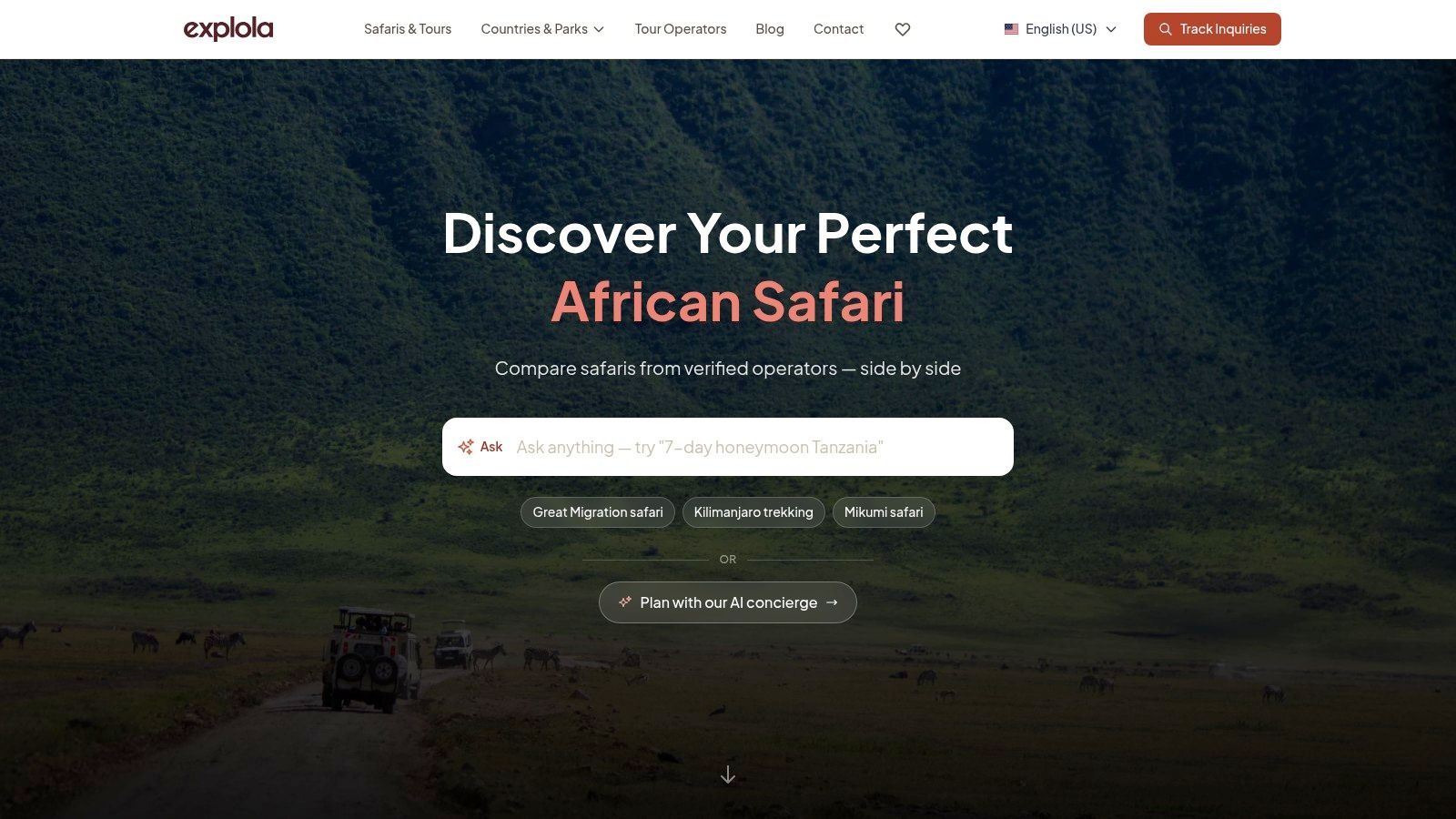
Explola connects travelers with verified African safari tour operators and supports search, comparison, direct inquiries, and booking workflows. Its catalog can be filtered by country, park, activity, duration, budget, lodging level, group size, departure dates, and special interests. That matters for U.S. travelers because a package that looks inexpensive may not match the desired lodge standard, route pace, or private-versus-shared vehicle preference.
Compare the parts that affect value
The platform's side-by-side comparison tools allow travelers to examine itineraries and amenities across operators without rebuilding the same research in separate browser tabs. Look beyond the starting price. Compare the number of nights in each destination, transport between parks, accommodation categories, meals, park fees, activities, airport transfers, and stated exclusions.
Direct payment to the operator removes booking or service fees charged to travelers through the marketplace, while the operator remains responsible for the quoted safari arrangements. That doesn't mean every direct quote will be cheaper than every intermediary quote. It means the pricing relationship is easier to inspect, and you can ask the company delivering the trip to explain each cost.
Use the traveler guide to searching for and finding a safari to narrow the catalog before sending inquiries. Start with firm constraints, such as travel window, country, maximum budget, desired lodge tier, and tolerance for road transfers. Then keep a shortlist rather than requesting a large number of indistinguishable quotes.
Ask operators questions that expose weak design
A useful inquiry should include more than “What does this cost?” Ask who operates the vehicle, whether it is private or shared, how long each transfer takes, what happens after a flight delay, and which costs remain outside the quote. Request the day-by-day schedule in writing and check whether arrival and departure days contain meaningful safari activity.
Verification badges and post-trip reviews can help with initial screening, but they don't replace reading the itinerary. A verified operator may still offer multiple styles of trip, and the cheapest option may not suit your priorities. Direct messaging gives you a chance to test response quality before you commit.
The strongest booking decision combines three checks: a route that respects your energy, a quote that explains inclusions, and an operator that answers operational questions clearly. That approach saves money more reliably than chasing the lowest displayed price.
Explola lets you search African safari packages by destination, budget, lodging level, duration, and group size, then compare itineraries and contact verified operators directly. Visit Explola to shortlist routes that fit your U.S. departure, protect your arrival day, and give you a clearer view of what your safari budget includes.
Tags

Daniel writes for the Explola blog, where he covers African safari destinations, wildlife, travel trends, and practical trip planning. His work is centered on making safari travel easier to understand, compare, and plan.
Get Safari Tips & Destination Guides
Join our newsletter for exclusive travel tips, wildlife insights, and safari planning advice.