You're probably sitting on a safari tab right now, trying to decide whether an Africa elephant safari is worth the money, whether the animals will be there, and whether the operator you're looking at is truly ethical or just polished on the surface. That's the right starting point. Elephant travel today isn't about chasing a postcard moment, it's about choosing the right park, the right vehicle rules, and the right booking channel so you don't pay extra for a bad experience.
The hard truth is that the old fantasy of endless herds roaming everywhere across Africa no longer exists. Africa's elephant population has fallen from an estimated 26 million at the end of the 18th century to about 415,000 today, and the continent-wide count was already down to roughly 600,000 by 1989 before the later estimate of 415,000 in 2016 showed how fast the asset behind safari tourism can change (U.S. Fish & Wildlife Service). That's why the modern elephant safari is a managed, protected experience, not a casual drive past abundant wildlife. If you want it done properly, you need to plan like a buyer, not a dreamer.
The Modern Africa Elephant Safari Experience
An elephant safari used to mean almost any large park with a vehicle and a guide. That's not the core offering anymore. Today, the best sightings happen in protected habitats where wildlife is actively managed, vehicle movement is controlled, and operators understand that the viewing experience is inseparable from the animals' welfare.
The scale of the decline explains the market. A major benchmark, the Great Elephant Census, estimated 352,271 savannah elephants across 18 countries and found that populations in surveyed areas with historical data had dropped by 144,213 elephants between 2007 and 2014. The same study reported an ongoing continent-wide decline of about 8% per year during that period (Great Elephant Census study). That's why premium elephant viewing is concentrated in fewer places now, and why a safari buyer has to think about access, seasonality, and operator standards before thinking about photos.
What the modern product actually looks like
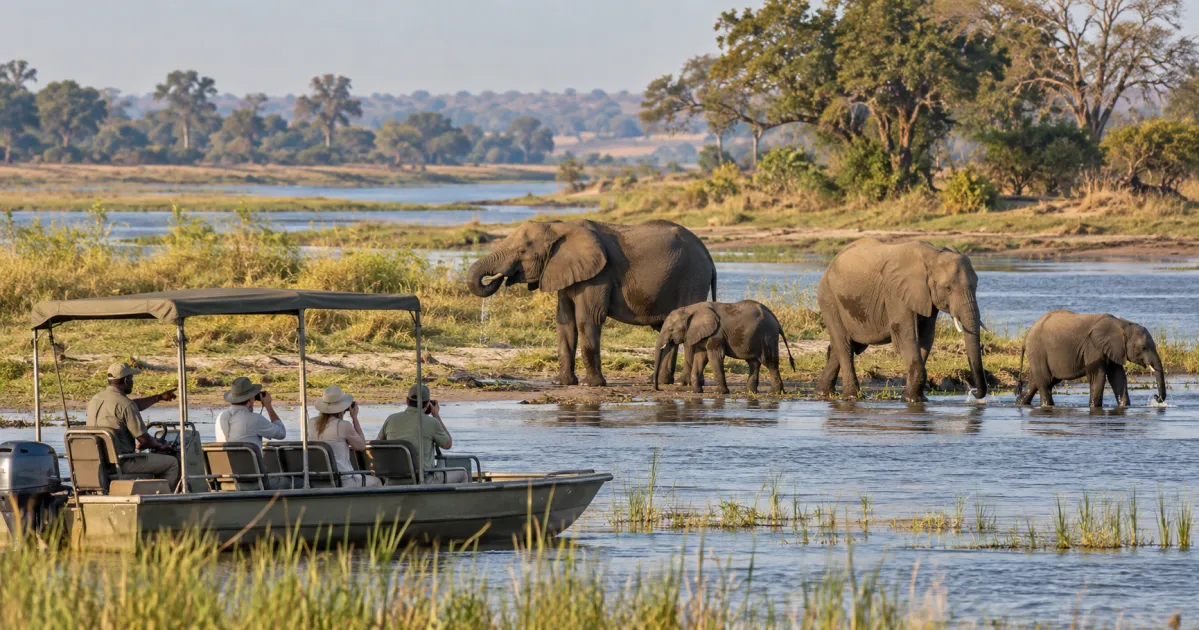
A strong elephant safari usually gives you one of three things. It gives you a stable viewing area with predictable elephant movement, a low-disturbance vehicle system that doesn't rush the sighting, or a walking or river-based format where the observation feels intimate without forcing the animals into stress.
Practical rule: If a tour sells the promise of “close-up” elephant encounters as its main selling point, treat that as a warning sign, not a feature.
The better operators talk about behavior, distance, timing, and patience. They don't sell the illusion that getting closer automatically means getting better. On a well-run safari, the guide knows when to stop, where to angle the vehicle, and when to let the herd settle. That's the difference between a memorable wildlife encounter and a noisy, intrusive one.
Premium experiences are now defined by discipline, not bravado. If you want elephants in the wild, accept that the best safari is usually the one that respects space and still gets you the sighting. That's the standard worth paying for.
Top African Destinations for Elephant Encounters
The right destination depends on what kind of elephant encounter you want. Some travelers want density, some want solitude, and some want a mix of vehicles, water, and walking. Don't pick a country just because it's famous. Pick it because the viewing style matches how you want to travel.
| Country | Primary Viewing Style | Best For |
|---|---|---|
| Kenya | Open savanna viewing with classic big-game drives | First-time safari travelers, photogenic landscapes |
| Tanzania | Large park circuits with strong elephant zones | Longer itineraries, mixed wildlife trips |
| Botswana | Riverfront and low-density wilderness viewing | Travelers who want space and exclusivity |
| South Africa | Managed reserves and accessible safari logistics | Families, self-drive travelers, easier planning |
| Zambia | Walking-focused and more immersive bush experiences | Active travelers who want a closer field feel |
| Namibia | Waterhole-based and dry-country wildlife viewing | Self-drive planning, quieter camps, stark scenery |
Kenya and Tanzania are the obvious names because they're built for broad safari itineraries, but Botswana is the place for travelers who hate crowding. Chobe is the obvious elephant country there, and it's the one destination on this list where elephant viewing is the headline, not a side note. South Africa is the easiest entry point for many travelers because the logistics are simpler and the lodge system is mature. If you want a structured first safari, look at Addo Elephant National Park as a model of what a managed elephant destination can feel like.
Matching the country to the trip style
If you're traveling with children, look hard at South Africa and other lower-friction routes where the ground logistics are easier to manage. If you care most about fewer vehicles and a more remote atmosphere, Botswana and parts of Namibia are stronger fits. If your priority is an iconic East African safari with multiple wildlife layers, Kenya and Tanzania still deliver the most recognizable trip format.
South Luangwa in Zambia suits travelers who want a more active field experience, while Namibia works well for people who prefer a drier, more stripped-back bush atmosphere. The mistake people make is trying to force every destination into the same template. Don't do that. A family in a lodge-heavy itinerary, a photographer chasing clean sightings, and a couple wanting a quiet honeymoon should not be booking the same country for the same reasons.
Matching Your Budget to the Right Safari Style
Safari pricing only looks opaque if you treat every quote like it's selling the same thing. It isn't. You're paying for vehicle exclusivity, guide quality, lodge location, and how much friction the operator removes from the trip. That's the actual budget equation.
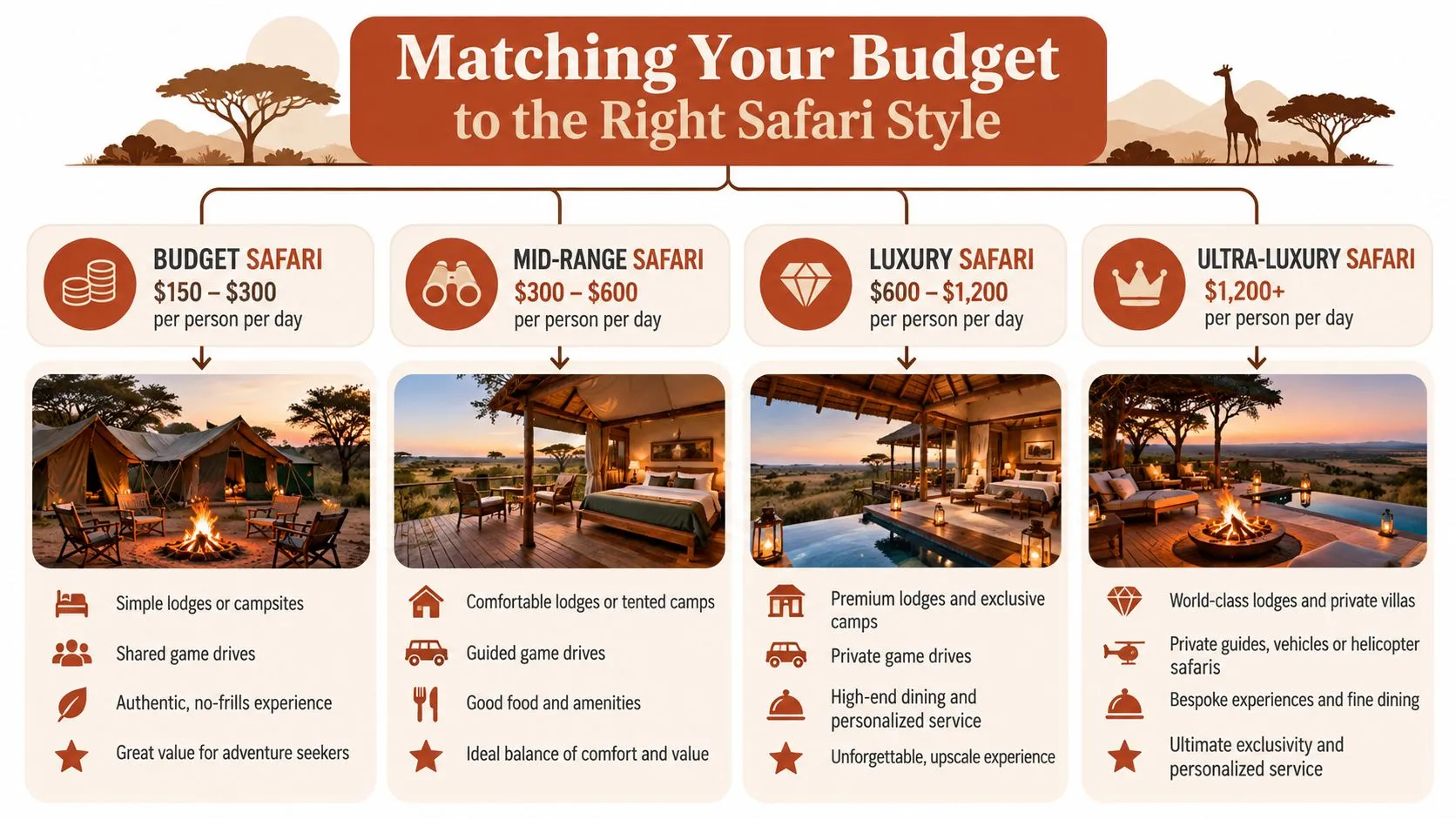
Budget, mid-range, luxury, what changes
Budget safaris usually mean shared vehicles, simpler camps, and less control over how many people you're sharing sightings with. They can still be good if the operator is disciplined, but you should expect compromises in comfort and flexibility. This tier works best if your priority is getting into the bush without overspending.
Mid-range safaris are often the sweet spot. You usually get better camps, better food, more consistent guiding, and a smaller chance that your day is shaped by other people's timing. For couples and families, this tier usually makes the most sense because it balances comfort and reliability without forcing you into full luxury pricing.
Luxury safaris buy you privacy, positioning, and convenience. That often means better locations, more personalized guiding, and less time wasted on logistics. It doesn't automatically mean better wildlife, but it often means fewer distractions and fewer compromises once you're in the field.
Good value isn't the cheapest quote, it's the quote that puts you closest to the wildlife with the least nonsense.
What to check before you pay
Look at the inclusions line by line. Check whether park fees, transfers, drinks, laundry, and private guiding are included or excluded. A low headline rate can become expensive fast if the operator has buried the actual costs in the fine print.
Also pay attention to lodge proximity. A cheaper room that sits far from the prime viewing area can cost you sightings in time and energy. A slightly higher nightly rate near the right habitat often gives you better returns than a bargain bed with a long daily transfer. That's why mid-range often wins on value. You're not just buying comfort, you're buying access.
Ethical Viewing Rules and Conservation Realities
Getting closer is not the same as getting better. In elephant tourism, that assumption causes most of the bad behavior, from rushed vehicles to crowded sight lines to operators who treat the herd like a photo prop. The best elephant viewing is calm, patient, and intentionally restrained.
A wildlife analysis reported that elephants changed behavior most when safari vehicles approached within 20 metres, while vigilance responses were not significantly different at 80 to 100 metres. The same research also noted that different guides triggered different reactions from the same elephants (Africa Geographic coverage of the 2026 wildlife analysis). That means guide skill and vehicle placement are not soft skills, they are welfare controls. If a guide pushes for the tightest possible angle, that's not professionalism.
Tourist density matters too. A long-term field study in Madikwe found elephants were more likely to be aggressive toward other elephants in months with higher tourist numbers, and herds were more likely to move away from vehicles when vehicle density increased (Liverpool John Moores University coverage of the Madikwe study). The effect was small, but it was real. That should change how you book sightings. Crowd control matters, convoy size matters, and arrival timing matters.
What ethical operators actually do
They don't bunch vehicles around a herd. They stagger arrivals. They avoid blocking escape routes. They keep viewing distance sensible and let the elephants decide how long they want to stay visible.
Ask about vehicle limits: A serious operator can tell you how they manage convoy size at sightings.
Check third-party certifications: Independent, on-site audits matter more than vague sustainability language.
Watch for behavior language: Good operators describe welfare rules, not just “close-up” opportunities.
Prefer observational travel: Elephant rides and shows are falling out of favor while no-contact observation keeps growing, which is the right direction for the market (Euronews travel coverage).
If a lodge or agent can't explain its distance rules, skip it. Greenwashing thrives on pretty photos and empty sustainability claims. Real ethical safari planning is blunt: fewer vehicles, more space, and less performance.
Designing Your Itinerary Around Seasons and Migration
Timing changes everything. Elephants move with water, forage, and pressure from vehicles, so the same park can feel generous one month and frustrating the next. Plan around the rhythm of the environment, not just the school holidays on your calendar.
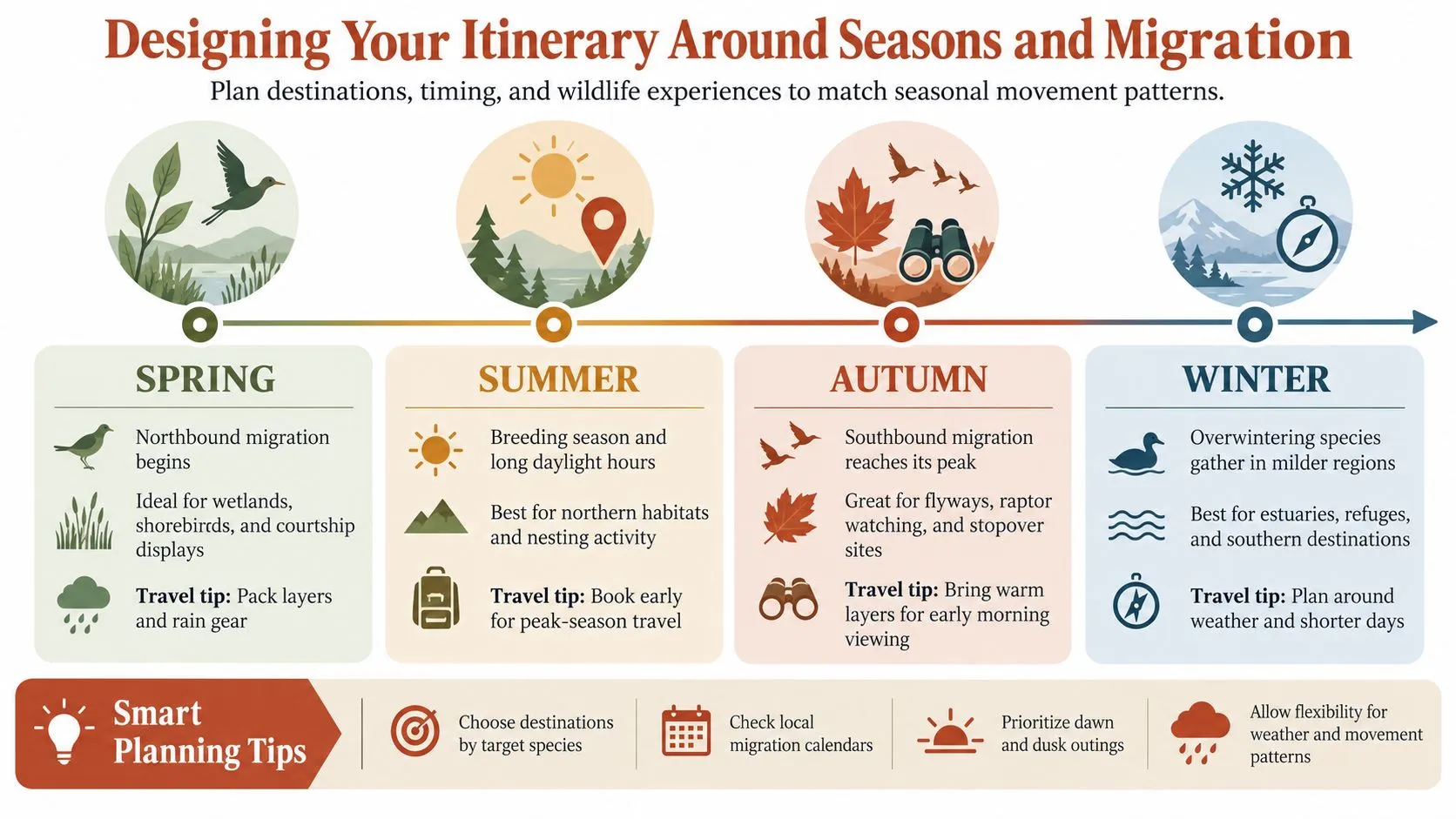
Build the trip around viewing conditions
Dry periods usually make elephants easier to find because water becomes more concentrated and the vegetation opens up. That doesn't mean wet-season travel is a bad idea. Wet seasons can deliver greener scenery, fewer vehicles, and softer light for photography. They're just different products.
Use the season to decide your itinerary shape. A park that's strong in dry months may be a poor fit if you're only there when the bush is dense. If you want a cleaner window into Tanzania planning, use this Tanzania safari timing guide as a starting point, then layer that timing against the exact parks you're considering.
Think in trip structure, not single stops
A good elephant itinerary doesn't waste days shuttling between disconnected experiences. Pair a main wildlife block with one complementary activity, then keep the rest simple. That can mean a classic game-drive circuit, a cultural stop, or a trekking extension if you want to mix elephants with a mountain or village experience.
Don't overpack the route. The more you move, the less time you spend in the right habitat at the right hour. Travelers often try to stack too many countries into one trip and end up spending more time in transit than in the field. Keep the core destination strong, and let the rest support it.
The best safari dates are the ones that match wildlife movement, not your impulse to do everything at once.
How to Find and Book Verified Tours on Explola
Once you've settled on a region, use a marketplace that shows you real differences between operators instead of forcing you to email ten strangers. Explola centralizes safari discovery, comparison, and direct booking workflows, with verified operators, detailed itineraries, and side-by-side trip evaluation. That matters because the booking problem is usually not finding a safari, it's sorting the good ones from the noisy ones.
Use the filters before you contact anyone
Start with the filters for country, park, duration, price, lodging level, group size, departure dates, and special interests. That cuts down the junk fast. If you're serious about elephant travel, filter for the actual safari type you want, not just the destination name.
Then compare the day-by-day itineraries. Look for how many game drives are included, where the lodge sits relative to the park, and whether transfers are stitched into the package or treated as an extra later. Verified traveler reviews help too, because they show how the operator performs after the trip, not just how the listing reads before it.
If you want a practical walkthrough of the search flow, use Explola's safari search guide. It's more efficient than starting with open-ended email threads, and it keeps your shortlist organized.
Book like someone who knows what hidden costs look like
Ask for a quote that breaks out inclusions clearly. A good operator can tell you what's covered without turning it into a negotiation game. If the direct inquiry flow gives you a cleaner answer than a generic web form, use it.
If you're planning content around your trip too, keep a record of your route, vehicle type, and camp style. That makes later storytelling cleaner, and if you need inspiration for travel content formats, a resource like veo3ai.io travel video guide can help you think about what you'll document once you're in the field. The same rule applies either way, book where the information is structured, not hidden.
Essential Packing and Health Preparation for the Bush
Pack for heat, dust, chill, and long hours in a vehicle. That means neutral clothing, layers for early mornings, and shoes that can handle rough ground without making your feet miserable. Bring good binoculars, a camera you can operate quickly, and a soft bag that won't fight you every time you move lodges.
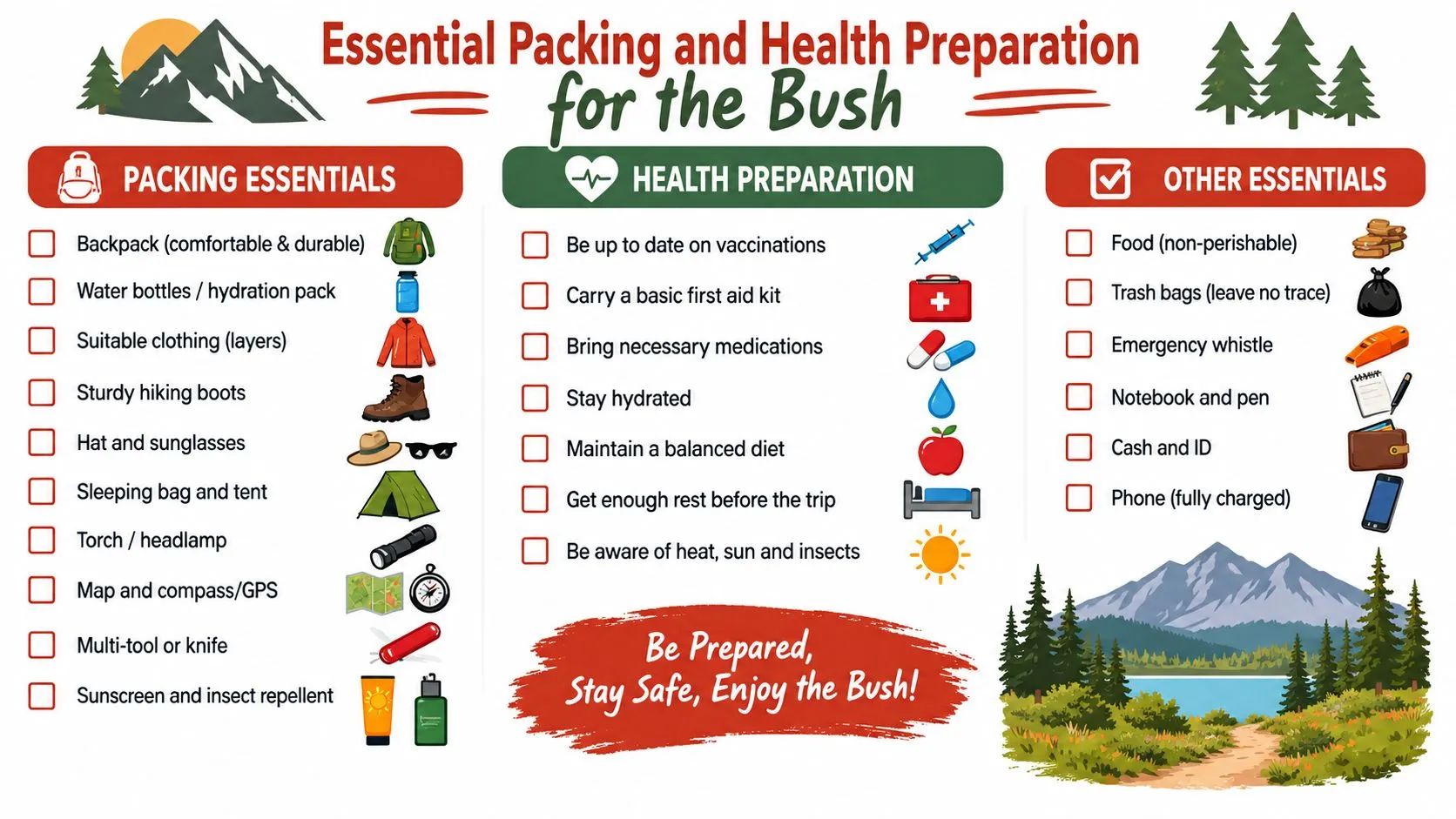
Treat health prep as part of the trip, not an afterthought
Talk to a travel clinician before you go about malaria precautions, vaccines, and any medications you need to carry. Health requirements vary by destination and by your own medical profile, so don't copy someone else's checklist from the internet and assume it fits you. Get travel insurance that covers safari activities and medical evacuation.
Bring the basics that people forget until they're already uncomfortable. Sunscreen, insect repellent, a refillable water bottle, a small flashlight, and a power bank all matter more than an extra outfit you probably won't wear. If you're on a lodge-based trip, keep one clean layer for dinner and keep the rest practical.
Keep your luggage simple and bush-proof
Wear neutral colors: Khaki, olive, and muted browns work better than bright shades.
Pack layers: Mornings can feel cold, afternoons can feel hot, and nights can swing back again.
Choose soft luggage: It's easier to load and usually better for small aircraft transfers.
Protect electronics: Dust is relentless, so use pouches and lens cloths.
Leave flashy gear at home: You don't need to dress like you're heading to a city hotel.
If you prepare properly, the trip feels easier from the moment you land. You'll spend less time solving avoidable problems and more time watching elephants move through their natural environment the way they've always moved, on their own terms.
Use Explola when you want to compare verified safari operators without the usual guesswork. It helps you narrow down elephant safaris by destination, budget, and travel style, then contact operators directly with clearer expectations. For this kind of trip, that's the cleanest way to avoid greenwashing and book with confidence.
Destinations Mentioned

Daniel writes for the Explola blog, where he covers African safari destinations, wildlife, travel trends, and practical trip planning. His work is centered on making safari travel easier to understand, compare, and plan.
Get Safari Tips & Destination Guides
Join our newsletter for exclusive travel tips, wildlife insights, and safari planning advice.