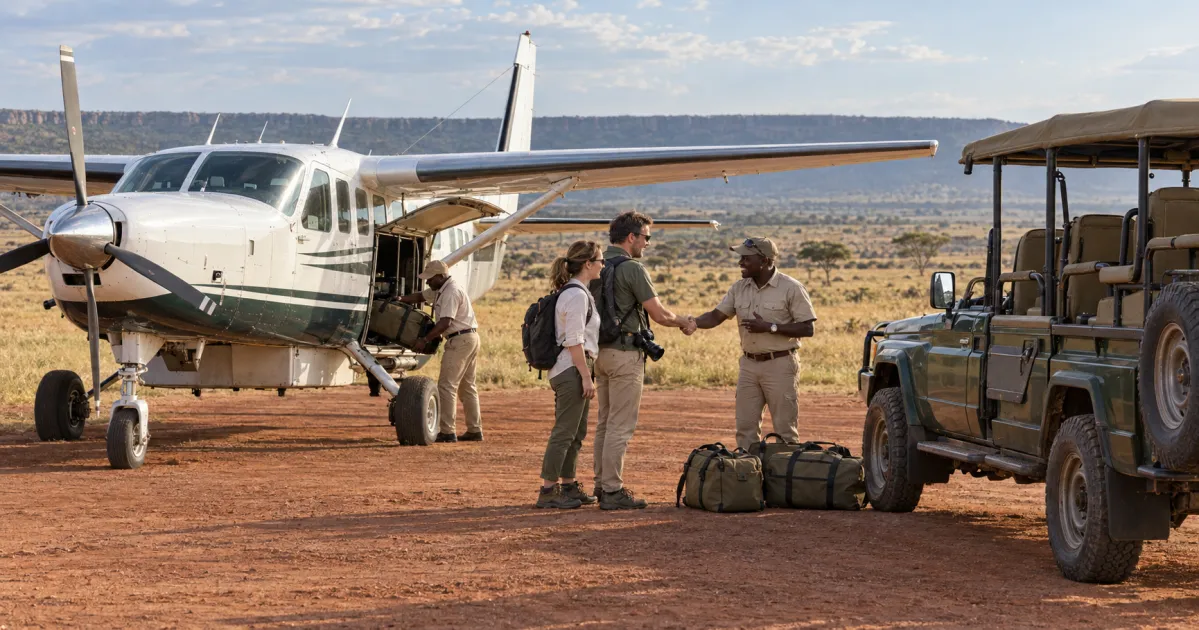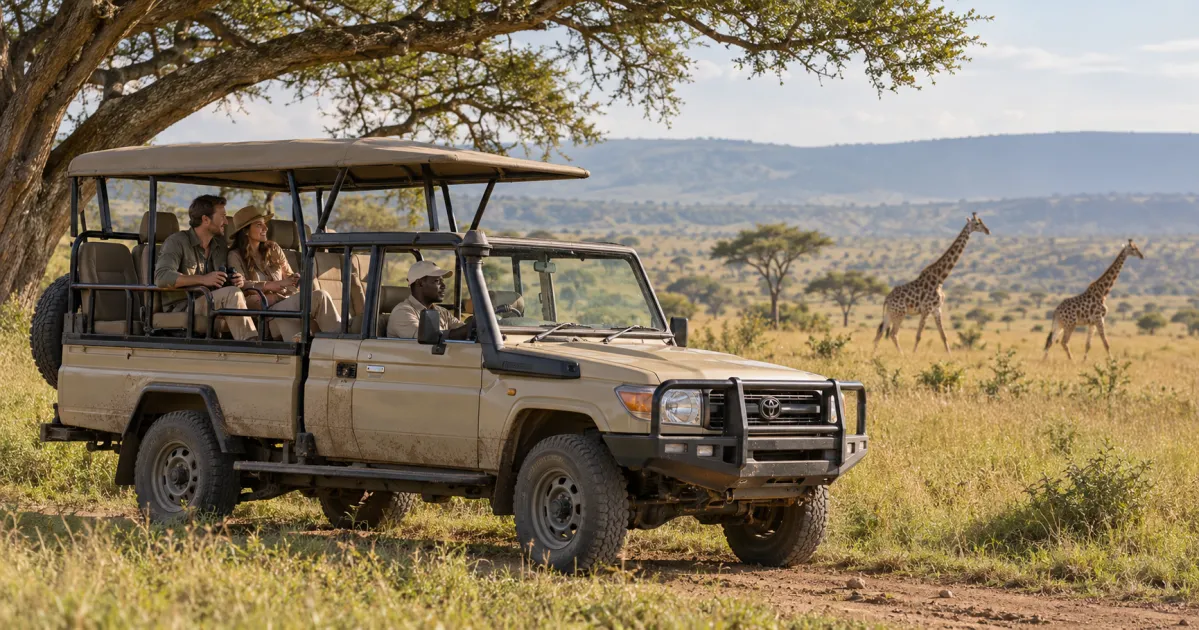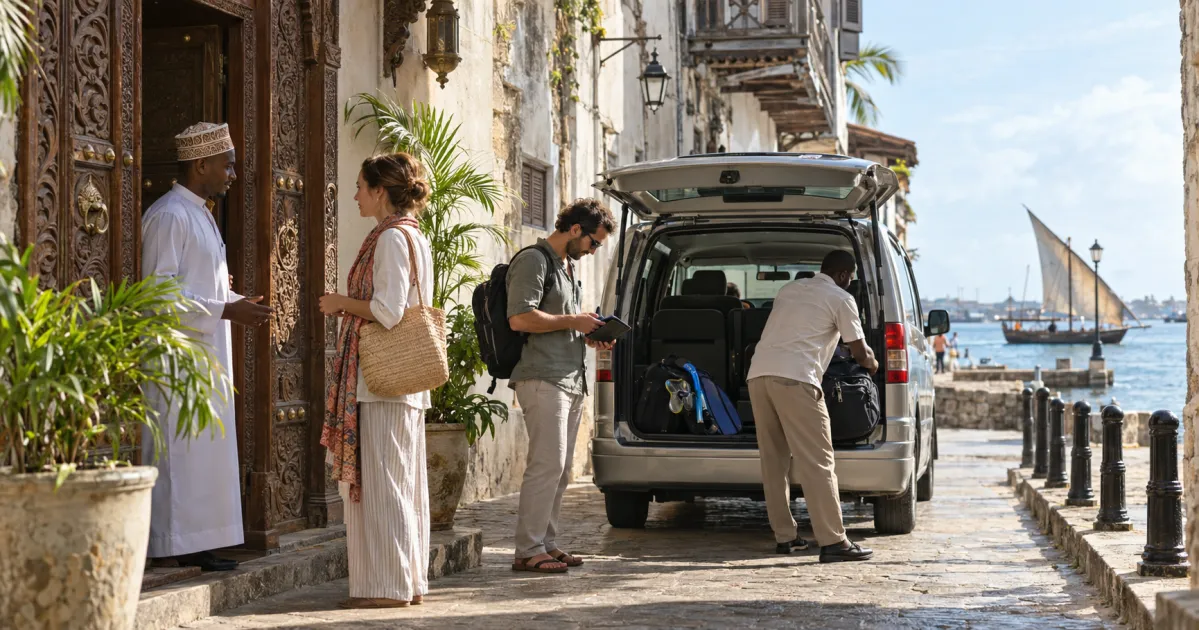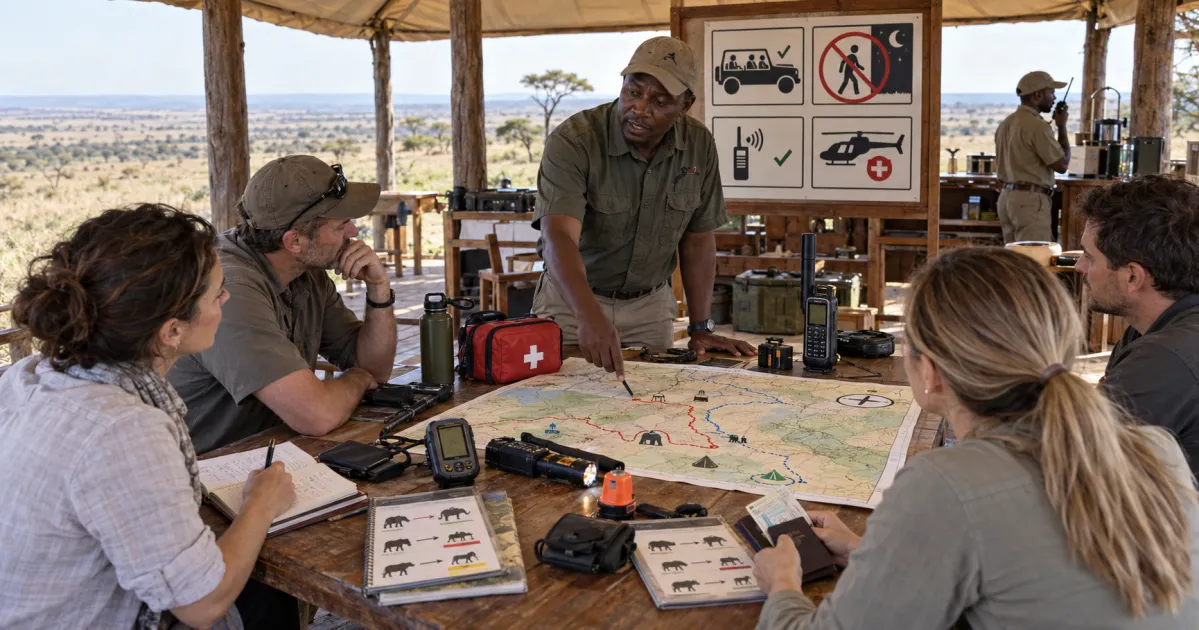
The safest safari is often decided before you ever see a lion. The CDC's African Safaris guidance distinguishes between crime inside game parks, where it says crime is unusual, and robberies or carjackings in urban areas. It also notes that fatal motor-vehicle crash rates in sub-Saharan African countries are among the highest in the world. In other words, your operator, transfer plan, and route may matter more than the destination's marketing slogan.
That's the uncomfortable part of booking. Travelers face hundreds of companies, inconsistent descriptions, vague claims about “experienced guides,” and quotes that hide what's included. Confusion makes it harder to identify weak vehicles, rushed transfers, poor medical planning, and operators without a credible emergency process.
The practical answer is to treat safety as a booking decision, not a last-minute briefing. The guide below shows how to assess the actual safety systems, compare parks and transfer routes, question operators, prepare for malaria and other health risks, and use a marketplace workflow to keep verification organized. A separate travel safety app can also help you keep travel information and safety resources accessible while you're moving between airports, cities, and remote camps.
Why the Safest African Safari Tours Are Chosen Before You Fly
A first-time traveler may spend hours comparing lodge photos while overlooking the details that control risk. One operator might offer a polished itinerary with long road transfers and vague arrival arrangements. Another might cost more but use a dedicated vehicle, daylight transfers, established camps, and a clear evacuation process. The second itinerary can be the safer purchase even if the wildlife viewing looks similar on paper.
The itinerary is part of the safety equipment
Safety begins with the route. A well-designed plan limits unnecessary city exposure, avoids poorly timed road movements, and leaves enough flexibility for professional drivers and guides to operate without rushing. It also identifies where guests sleep, who handles airport transfers, how vehicles are maintained, and what happens if weather, illness, or a road closure disrupts the schedule.
That level of detail matters because safari safety isn't one thing. It includes wildlife procedures, transport discipline, health preparation, communication, and the quality of decisions made when plans change.
Booking rule: If an operator can't explain how your itinerary manages transfers, vehicles, medical support, and wildlife access, don't let attractive lodge photography make the decision for you.
Replace reassurance with verification
“Safety is our priority” tells you almost nothing. Ask for the vehicle setup, seat-belt availability, guide credentials, group size, emergency contacts, insurance requirements, and the exact inclusions in the quote. Strong operators answer directly and document the details. Weak operators redirect you to generic promises or pressure you to pay before you've received a usable itinerary.
This process also helps you match the experience to your tolerance for remoteness. A family may prefer lodge-based game drives and simple transfers. A solo traveler may value a shared departure with clear accountability. A couple may choose a private vehicle to avoid being dependent on strangers during long days in the bush.
The safest African safari tours aren't defined by one country or price tier. They're defined by deliberate choices made before departure, then reinforced by competent people on the ground.
What Actually Makes a Safari Safe
A safari resembles a commercial flight in one important respect. The exciting part gets attention, but the safety comes from systems that passengers rarely see. Vehicles, guide training, park controls, communications, health procedures, and evacuation arrangements do more to reduce risk than a reassuring brochure ever will.
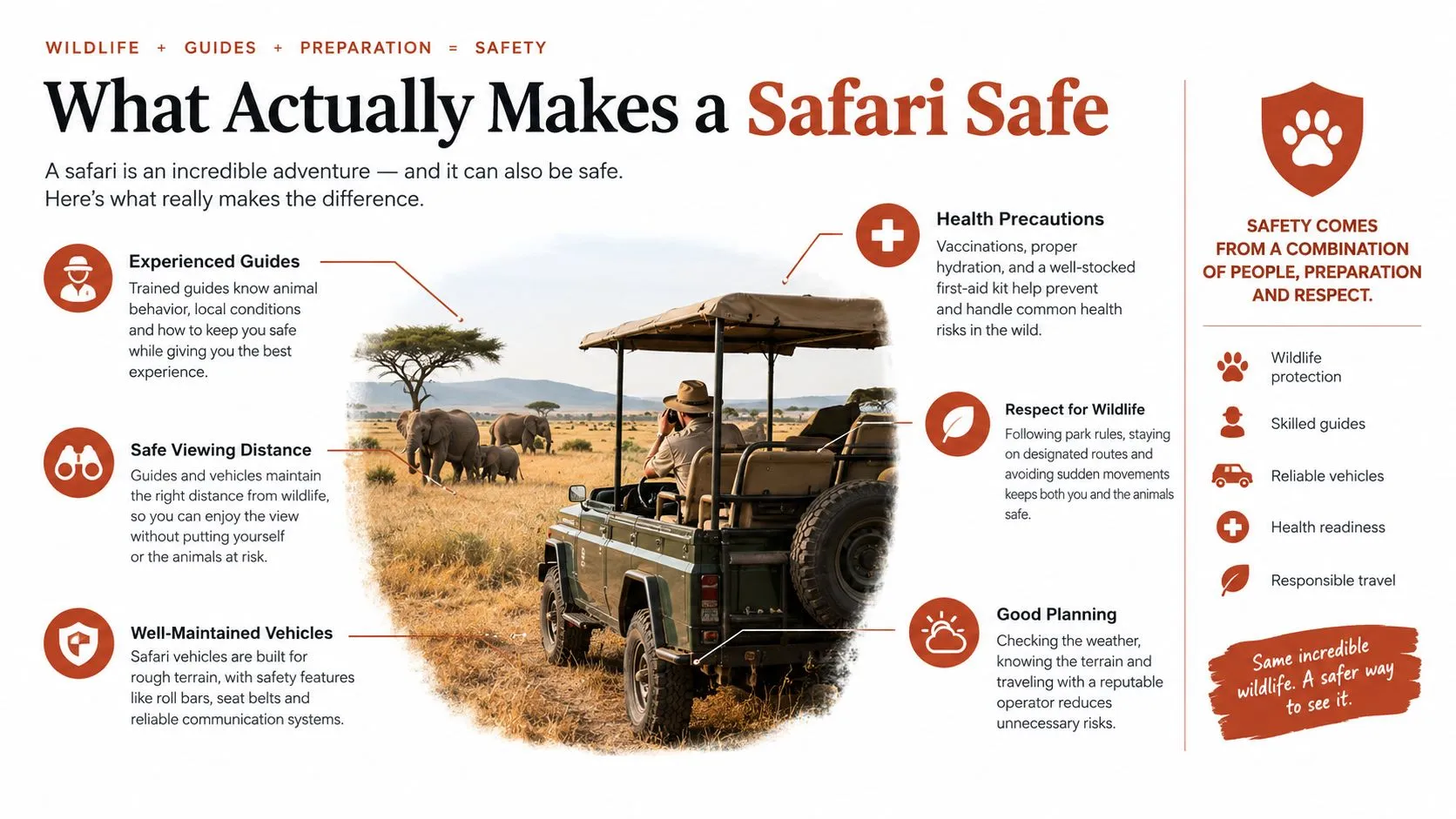
Four controls deserve close attention
Vehicle-based viewing is the strongest baseline for most first-time visitors. Guests remain inside a purpose-built vehicle while the guide manages distance, positioning, and movement around wildlife. The vehicle also creates a clear physical boundary that doesn't exist on foot.
Enforced no-exit rules matter just as much. A guide who allows casual exits near animals is showing poor judgment, regardless of how confidently that person describes their experience. Guests should leave the vehicle only in designated, controlled situations and after explicit instructions.
Guide competence includes animal behavior, park regulations, driving judgment, first aid, and the ability to give instructions that guests will understand immediately. “Experienced” should lead to specific answers about training, years in the field, and how the guide handles a vehicle breakdown or medical concern.
Emergency planning should cover communication, first response, evacuation providers, and the nearest appropriate medical support. Ask who makes the call, who coordinates transport, and whether the operator expects travelers to arrange assistance independently.
A 2025 independent analysis estimated 3 to 5 million safari tourists visit Africa annually, while wildlife encounters account for 1 to 2 deaths per year, or roughly 0.5 to 1.0 deaths per million participants. The same analysis says vehicle-based safaris have lower incident rates, while many fatalities occur after tourists leave vehicles against guidance. It identifies elephants as responsible for about 50% of wildlife-related fatalities, with hippos and lions each contributing roughly 12%. These figures come from the analysis of African safari safety.
The lesson isn't that wildlife is harmless. It's that product design changes exposure. A controlled game drive with a disciplined guide is a different risk proposition from an unmanaged walk or an impulsive exit beside an animal.
How Countries Parks and Transfers Shape Your Risk
A country label is too broad to guide a safety decision. The relevant questions are where you'll land, how you'll reach the park, how much time you'll spend in urban areas, and whether the operator controls the transfer from airport to lodge.
Crime is unusual inside game parks, according to the CDC, while robberies and carjackings are more common in urban areas. That distinction makes route design essential. A remote reserve may offer a controlled environment, yet the journey through a crowded city or a long road transfer can introduce a different set of hazards.
Compare the route, not just the park
Tanzania can work well for travelers who want a classic northern circuit around the Serengeti and Ngorongoro. Ask whether the plan uses sensible transfer timing, reputable drivers, and a realistic sequence rather than packing too many distant areas into one itinerary.
Kenya offers established safari regions and a wide choice of private conservancies and national parks. The practical question is how your operator handles Nairobi arrival, onward transport, and any time spent crossing busy corridors. A strong plan uses trusted transfers and avoids treating city logistics as an afterthought.
Uganda combines savanna safaris with primate experiences and can involve more varied terrain and road conditions. Travelers should ask about vehicle suitability, driving times, permits, and the experience of the team handling forest or rural access. The right operator makes the transitions explicit instead of burying them in a broad itinerary summary.
The UK government advises visitors to use reputable operators, arrive at game reserves in daylight, follow warden instructions, and avoid tout-sold tours. Its Kenya safety and security guidance also reinforces the importance of choosing a legitimate provider rather than accepting the cheapest offer at the point of arrival.

Build in controlled movement
Choose airport pickups arranged in advance. Prefer daylight arrivals when the schedule allows, and ask whether a driver will meet you directly or whether you'll need to negotiate transport independently. Inside the park, confirm that the itinerary uses licensed access points, recognized camps, and guides familiar with local rules.
Don't rank Tanzania, Kenya, or Uganda as universally “safest.” Choose the country and park combination that gives your operator the clearest control over transfers, driving conditions, accommodation, and activities.
How to Verify a Safari Operator Before You Book
The best vetting conversation feels slightly boring. That's a good sign. You want precise answers about equipment and procedures, not a dramatic sales pitch about getting closer to wildlife.
Start by asking for the full name of the operating company, the legal entity issuing the quote, the person responsible for your trip, and the local emergency contact. Then ask questions that force the operator to describe how the trip works in practice.
Ask questions that expose the operating model
Request the vehicle's age, maintenance process, seat-belt availability, passenger capacity, and backup plan if it breaks down. Ask whether the guide is employed directly or contracted for the trip, what relevant training they hold, and how many guests will share the vehicle.
The emergency discussion should be concrete. Ask which evacuation provider the operator uses, whether evacuation costs are paid by insurance or by the traveler first, and what assistance the company provides during a medical incident. Confirm whether the operator requires travel insurance and whether park fees, transfers, meals, activities, and accommodation are itemized.
A useful explanation of the trust information operators should publish appears in this guide to safari operator trust signals. Use it as a prompt for checking whether a profile gives you enough information to make an informed comparison.
| Question to Ask | Strong Answer | Red Flag |
|---|---|---|
| What vehicle will we use? | The operator explains the vehicle type, maintenance process, seating, and seat belts. | The answer is only “a good safari vehicle,” with no specifications. |
| Who is our guide? | The company provides the guide's role, relevant training, and local experience. | The guide is assigned only after payment, with no useful background. |
| What happens during a breakdown? | The operator explains communications, backup transport, and guest support. | There's no documented contingency plan. |
| How is an evacuation handled? | The company identifies its assistance process and the traveler's insurance responsibility. | Staff tell you to “sort it out with your insurer.” |
| What does the price include? | The quote itemizes lodging, transfers, park fees, meals, activities, and exclusions. | The company refuses to itemize or adds unexplained charges later. |
| Is the company established locally? | It provides verifiable registration, memberships, offices, and contact details. | The seller uses pressure, a temporary number, or tout-style sales tactics. |
Walk away from pressure to pay immediately, suspiciously low pricing, unclear ownership, and any operator that won't answer basic safety questions in writing. Government guidance specifically favors reputable operators because legitimacy and adherence to park controls directly affect how the trip is run.
Health Preparation and Insurance That Actually Covers Safaris
Health preparation should start with a travel-medicine appointment six to eight weeks before departure. That gives a clinician time to review your route, medical history, vaccinations, malaria exposure, prescriptions, and the activities you've selected.
The CDC recommends malaria chemoprophylaxis combined with layered bite prevention for African safaris. That means long sleeves and trousers, insect repellent, and permethrin-treated mosquito nets, with accommodation and scheduling chosen to reduce unnecessary dusk-to-dawn mosquito exposure. The same CDC safari and climbing guidance notes that yellow fever vaccination is recommended for much of sub-Saharan Africa.
Use a doctor visit checklist
Bring your exact countries, parks, border crossings, lodge types, walking activities, and departure dates. Ask about malaria medication, yellow fever requirements, routine vaccinations, food and water precautions, altitude if you're adding a mountain trek, and what to do after an animal bite or scratch.
Rabies deserves a specific conversation for remote itineraries and rural transit. The CDC estimates the global rate of rabies exposures in travelers at 16 to 200 per 100,000 travelers, so ask whether your route or activities change the value of pre-exposure vaccination and learn where urgent treatment would be available.
Read insurance exclusions line by line
A safari policy should address emergency medical treatment, medical evacuation, repatriation, wildlife activities, and cancellations caused by covered events. If you're adding Kilimanjaro, confirm that trekking at your planned altitude is covered rather than assuming a standard travel policy includes it.
Check whether the policy excludes remote areas, walking safaris, adventure activities, alcohol-related incidents, pre-existing conditions, or evacuation arranged without prior approval. For travelers who take several international trips, it can be useful to compare plans for frequent travel, but still read the safari-specific terms before purchasing.
Carry prescriptions in original packaging, keep policy and emergency numbers offline, and give a trusted companion copies of your itinerary and insurance details.
Safety Advice for Families Couples and Solo Travelers
"Safe" means something different to a family with young children than it does to a solo traveler looking for independence. The right itinerary reduces the risks that matter most to your group instead of adding activities just because they appear adventurous.
Families need control and recovery time
Choose lodge-based, vehicle-focused safaris with manageable transfer days. Ask about minimum ages for game drives, walking activities, boat trips, and family suites. A guide who regularly works with children will know when to shorten a drive, explain wildlife behavior clearly, and prevent tired guests from making careless decisions.
Families should also ask how the lodge handles movement after dark, whether staff escort guests between rooms and common areas, and whether the itinerary keeps children in controlled settings. A private vehicle can provide more schedule control, but a well-run shared vehicle may work when the operator sets clear group expectations.
Couples should buy simplicity, not just luxury
For honeymooners, a private vehicle removes many social and scheduling complications. Mid-range and luxury lodges may also provide more structured transfers, stronger on-site support, and easier access to staff when plans change, but don't assume a higher nightly rate proves better safety. Verify the actual vehicle, guide, emergency plan, and transfer arrangements.
Keep the route compact enough that you aren't spending the romantic trip rushing between distant parks. One well-designed combination of wildlife areas and straightforward logistics is safer and more enjoyable than an overloaded itinerary.
Solo travelers need accountability
Solo travelers should consider a reputable group departure with a clear meeting process, named operator, and transparent room arrangements. A group gives you practical accountability during transfers and activities, while verified post-trip reviews help reveal whether the company communicates reliably.
Before committing, message the operator directly. Ask who will meet you at each transition, how changes are communicated, whether a single supplement applies, and what happens if you become ill. Travel stories such as the Adventure Medical Kits crossing story can offer useful context about preparation in remote African travel, but your own itinerary still requires direct operator verification.
Using Explola to Find and Book Safer Safari Tours
A marketplace can't replace your judgment, but it can make the judgment process less fragmented. Start with the verified badge as a first-pass filter, then inspect what that verification means, including operator document checks and the information displayed on the profile.
Next, read post-trip reviews attached to both the operator and the individual tour. Look for comments about airport pickups, vehicle condition, guide communication, schedule changes, and how the company handled problems. A review that only praises scenery tells you less than one that describes the operating experience in detail.
Use filters to match the risk profile
Filter by country, park, group size, budget tier, lodging level, activity, and departure requirements. A family can prioritize lodge-based game drives and a smaller group. A solo traveler can look for a shared departure. A couple can compare private-vehicle options without mixing them with unrelated group itineraries.
Save credible options to a shortlist, then use side-by-side comparison to inspect inclusions, accommodation, transport, activities, and starting prices. Don't compare the headline price alone. An apparently cheaper tour may exclude park fees, transfers, meals, or activities that another operator has already included.
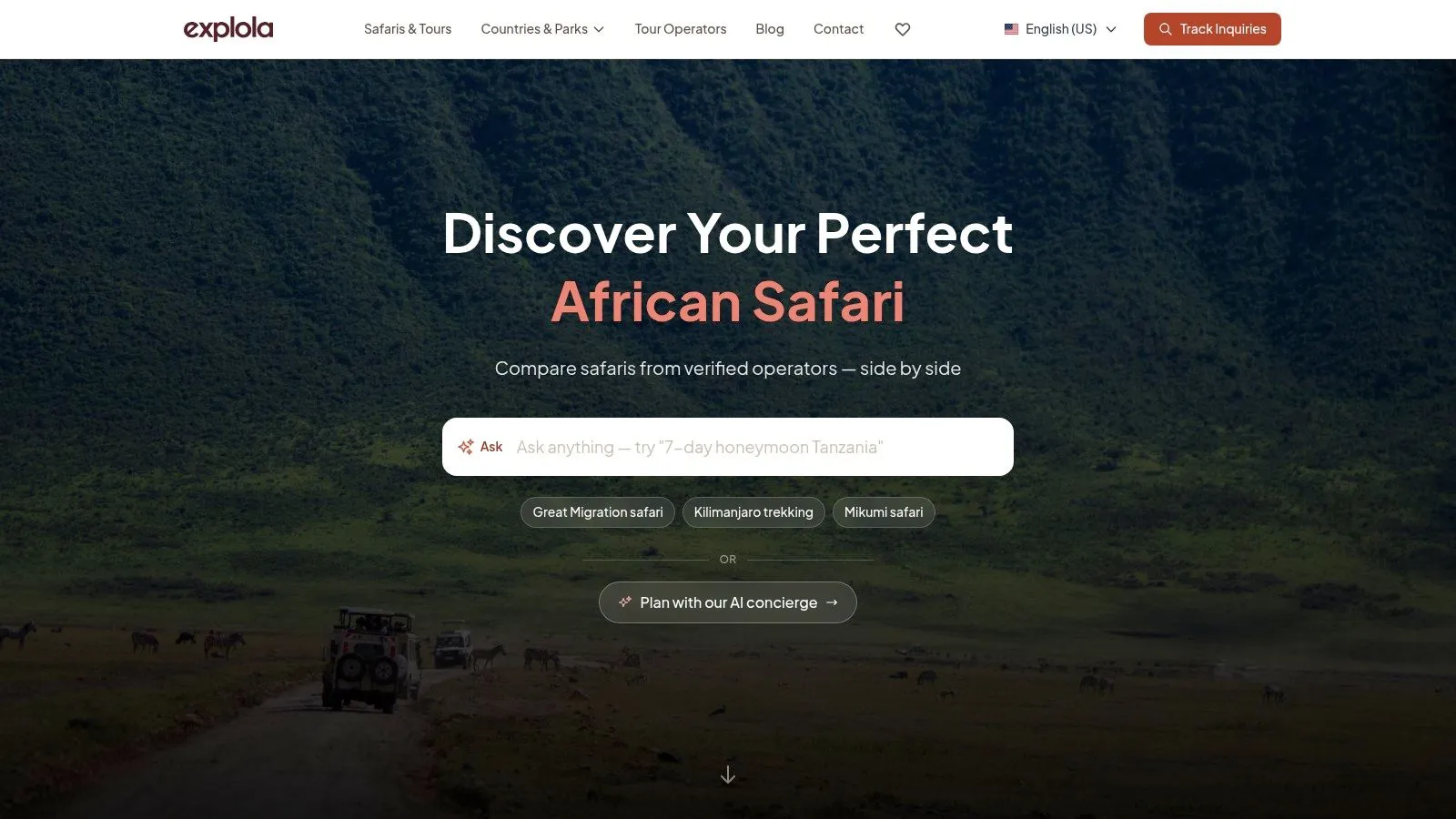
Use direct inquiries to request an itemized quote and ask the safety questions in writing. The inquiry dashboard keeps operator replies, quotes, and timelines together instead of scattering them across email threads. Favorites and shortlists let you preserve the evidence behind your decision.
The platform's guide to searching for a safari explains the basic discovery workflow. Treat that workflow as a verification sequence: filter, inspect, compare, question, document, then book.
Your Printable Safari Safety Checklist
Save or print this list before you pay a deposit. It turns a vague feeling of trust into decisions you can verify.
Before booking
Verify the operator: Confirm the company identity, operating credentials, visible verification information, and direct contact details.
Read relevant reviews: Look for post-trip comments about guides, vehicles, transfers, communication, and problem handling.
Inspect the route: Identify every airport, city corridor, park, transfer, lodge, and activity.
Question the vehicle: Ask about maintenance, seat belts, passenger capacity, replacement transport, and guide assignment.
Confirm wildlife controls: Make sure the operator enforces no-exit rules and explains when guests may leave the vehicle.
Request an itemized quote: Check park fees, lodging, meals, transfers, activities, taxes, exclusions, and payment terms.
Document emergency support: Record the operator's emergency number, evacuation process, and insurance requirements.
Reject pressure: Don't book a tout-sold tour, an unexplained bargain, or a company that avoids written answers.
Before departure
Book medical advice: Take your route and activities to a travel-medicine professional six to eight weeks ahead.
Plan malaria prevention: Arrange prescribed chemoprophylaxis and pack repellent, long clothing, and suitable net protection.
Check vaccinations: Confirm yellow fever requirements and other recommendations for every country on the itinerary.
Review insurance: Confirm medical evacuation, repatriation, wildlife activities, trekking, and remote-area coverage.
Prepare documents: Store passport copies, prescriptions, policy details, emergency contacts, and itinerary information offline.
Pack deliberately: Use the African safari packing list to check practical essentials without overpacking.
During the safari
Stay seated: Remain inside the vehicle unless your guide gives clear permission to exit in a controlled location.
Use seat belts: Wear them whenever available, especially while the vehicle is moving.
Follow instructions: Treat guide and warden directions as operational safety rules, not suggestions.
Respect the camp: Don't walk outside after dark without an escort, and follow lodge procedures.
Manage transfers: Favor reputable transport and daylight arrivals whenever the itinerary permits.
Report concerns early: Tell the guide or lodge manager about illness, unsafe driving, equipment problems, or unclear instructions immediately.
Wildlife risk exists, but the evidence points to a clear conclusion: controlled vehicles, disciplined guides, sensible routes, and proper medical preparation make the experience remarkably manageable. Book with the same care you'll use on the ground, and you'll remove many avoidable problems before they can reach your itinerary.
Explola brings verified African safari operators, tour comparisons, direct inquiries, reviews, and organized booking communication into one marketplace. Use Explola to shortlist tours, ask precise safety questions, compare the full inclusions, and choose an itinerary you can book with confidence.

Daniel writes for the Explola blog, where he covers African safari destinations, wildlife, travel trends, and practical trip planning. His work is centered on making safari travel easier to understand, compare, and plan.
Get Safari Tips & Destination Guides
Join our newsletter for exclusive travel tips, wildlife insights, and safari planning advice.