You're probably doing what most first-time Tanzania travelers do. You open five tabs, see one safari priced “from” a low daily rate, another with a bigger total that somehow looks more honest, and a third that says budget but still costs more than the rest of your trip combined.
That confusion is normal. Tanzania is not a cheap safari destination, even at the low end. If you want to plan a real budget safari in Tanzania without getting burned by hidden fees, stop chasing the lowest daily rate and start checking the full trip cost, line by line.
That's the mistake I see most often. Travelers compare operator quotes as if they're buying the same product. They usually aren't. One quote includes park fees, crater fees, meals, and Arusha transfers. Another leaves out enough essentials to make the “cheap” option more expensive by the time you're in the vehicle.
A smart budget safari in Tanzania is about cost control, not bargain hunting. If you get that right, you can keep the trip affordable without sacrificing the reason you came, which is wildlife time in the right parks.
What a Budget Safari in Tanzania Really Means
You are buying access, not a bargain
You find a 7-day safari that looks cheap, then the quote leaves out park fees, crater fees, airport pickup, or the first night in Arusha. By the time those extras are added, the “budget” tour is no longer the budget option.
That is what budget means in Tanzania. It means controlling the full trip cost on a simple, shared setup, not chasing the lowest headline rate.
A budget safari here still sits on expensive foundations. Park entry, conservation charges, vehicle permits, fuel, guide wages, and long road transfers do not disappear because the trip is labeled budget. Current pricing guidance from one operator breakdown puts many budget group departures in the rough range of US$180 to US$350 per person per day, with many starting around US$200 to US$250, according to this Tanzania budget safari cost breakdown.
What you should expect at the budget level
The right baseline is simple and functional. You are paying for wildlife time, safe transport, legal park access, and a workable place to sleep.
Usually that means:
A shared vehicle and guide: You split fixed safari costs with other travelers.
Camping or basic accommodation: Public campsites, dome tents, or plain rooms keep the price down.
Road-based logistics: Budget itineraries usually skip internal flights.
A fixed route: You follow the operator's schedule, not your own.
Simple meals: Enough food, little choice, no polish.
Standard transfers only if listed: Never assume airport pickup, Arusha hotel nights, or sleeping bags are included unless the quote says so.
That last point matters more than travelers expect.
The definition that actually helps you compare tours
A real budget safari in Tanzania is a shared, low-frills trip that gets you into the right parks with legitimate inclusions checked line by line. For a 7-day Northern Circuit camping departure, the honest all-in figure usually needs to account for the safari itself, park and crater fees, transport from and back to Arusha, accommodation style, meals, and the basic gear or transfers that operators often push into the exclusions.
Use that standard every time you compare tours on Explola or anywhere else. Check the route first. Then check whether the quote includes park fees, Ngorongoro crater fees, camping equipment, drinking water, airport or Arusha transfers, and the pre-safari or post-safari hotel nights many “from” prices leave out.
Cheap-looking quotes fail on those checks all the time.
How Much a Budget Safari Costs and Where Your Money Goes
A traveler gets a quote for a 7 day safari at a low daily rate, books fast, then finds out park fees, crater fees, Arusha transfers, and the first hotel night sit outside the price. The safari was never cheap. The quote was incomplete.
Use total trip cost from pickup to drop off. That is the only number worth comparing.
For budget Tanzania safaris, published pricing often starts around $200 to $400 per person per day, and a 7-day trip can reach roughly $1,750 to $3,500 before international flights, visas, and tips, according to this total-cost analysis of Tanzania safari pricing. That range is normal. What matters is whether the quote already includes the big fixed costs or leaves you to discover them later.
Fixed costs decide whether a quote is honest
The expensive part is not the lunch box or the mattress. It is access.
On the classic Northern Circuit, park entry and Ngorongoro charges take a large share of the budget. You can cut comfort. You can share a vehicle. You can camp instead of using lodges. You usually cannot strip out the main access costs without changing the route itself.
That is why low advertised rates mislead so often. A tour can look cheaper than the next one and still cost more after excluded fees, hotel nights, and transfers are added back in.
Use a normalized checklist for every quote
Do not compare operators line by line from memory. Put every offer into the same format. That is the fastest way to spot fake savings, and it is exactly how I would compare departures on Explola before shortlisting anything.
| Cost Component | Typical Range | What to verify |
|---|---|---|
| Safari daily rate | About US$200 to US$400 per person per day | Check whether this is based on camping, shared transport, and a full vehicle |
| Standard 7-day budget total | About US$1,750 to US$3,500 per person | Confirm whether this total already includes park fees, crater fees, and transfers |
| Park and conservation fees | Varies by route | Ask for the exact parks listed and whether every mandatory fee is already included |
| Arusha or airport transfers | Often excluded | Get pickup and drop off confirmed in writing |
| Pre or post safari hotel night | Often excluded | Many low "from" prices leave this out |
| Camping gear and bedding | Sometimes excluded | Ask about tent, mattress, sleeping bag, and pillow |
| Water, soft drinks, and meals | Varies | "Full board" does not always mean the same thing |
| Tips, visa, flights | Excluded | Budget for these separately from the safari quote |
The definition that matters for comparison
A cheap daily rate tells you almost nothing by itself. A usable comparison shows the full payable amount for the same route, same trip length, and same inclusion standard.
Ask these questions before you treat any quote as comparable:
Are all park and crater fees included in the total?
If the answer is vague, stop there.Are transfers included from where I start and finish?
"Arusha to Arusha" is not the same as airport pickup.What accommodation is priced in?
Public camping, basic lodge, and tented camp are different budgets.Is the price based on a guaranteed departure or a full vehicle?
Some rates only work if enough seats sell.What do I need to pay locally after arrival?
This question exposes hidden extras fast.
One more rule. Compare like with like. If one operator includes park fees, crater descent, water, tents, and transfers, and another leaves half of that out, the lower rate is not a bargain. It is just incomplete.
My recommendation
Build a simple side by side sheet and standardize every quote before you book. Use one column for route, one for nights, one for accommodation style, one for included fees, and one for all extra payments due before departure and on arrival. That is how you control a safari budget properly.
The cheapest quote rarely wins once you price the whole trip.
Best Budget Parks Seasons and Circuits for Value
A quote looks cheap until you notice it skips airport pickup, park fees, or the crater charge. Then the “budget safari” costs more than the higher quote you rejected. Park choice and route design decide that outcome long before you compare day rates.
For most travelers trying to control total trip cost, northern Tanzania is the clear answer. Shared departures are easier to find, road transfers are simpler, and the classic parks fit together without wasting money on long repositioning days. Recent pricing guidance also puts the north below the south for budget trips, while the west usually falls out of contention once distance and transport are priced in, according to this 2026 Tanzania safari pricing guidance.
If you want a fast reality check, compare actual Northern Circuit safari itineraries in Tanzania. Look at route length, start and end points, and what is included before you focus on the headline price.
The parks that usually earn their cost
For a first budget safari, keep the route tight and choose parks that justify every transfer.
Tarangire is often the smartest value add. It works well on short northern routes, adds strong wildlife viewing, and does not force the itinerary into awkward logistics.
Ngorongoro is expensive, but many travelers still get good value from it because the crater gives you a very different safari day in a compact format. If it is included, check that the crater fee is already in the total. That is one of the easiest places for a low quote to hide real cost.
Serengeti is the big decision. It adds mileage, time, and usually money, but it is also the park many travelers care about most. If Serengeti is your priority, cut elsewhere instead of cramming in extra parks you will barely experience.
Skip the urge to collect park names. More gates do not mean more value.
Best-value circuit by trip length
Trip length should control the map, not the other way around.
3 to 4 days: Tarangire plus Ngorongoro makes the strongest short budget circuit for many first-timers.
5 to 6 days: Add Serengeti if it is your main wildlife goal. Keep the rest simple.
7 days: A northern circuit can feel well-paced instead of rushed, but only if the operator is not padding the plan with unnecessary transfer time.
A route can look impressive online and still waste a full day on the road. That is bad value even if the quote looks low.
Season changes the value equation
Dry-season departures are easier to sell, so cheap seats disappear faster and shared departures fill early. Shoulder season often gives better budget value because you still get the core northern parks without paying peak demand pricing on every date. Rainy periods can cut prices, but the trade-off is practical, not just scenic. Roads can be slower, camps feel rougher, and long drives get more tiring.
My recommendation is simple. Build around the north, choose fewer parks, and check every inclusion line before you book. The best budget circuit is the one with the lowest full trip cost after park fees, crater charges, and transfers are standardized side by side.
Key Trade Offs That Make or Break Your Budget
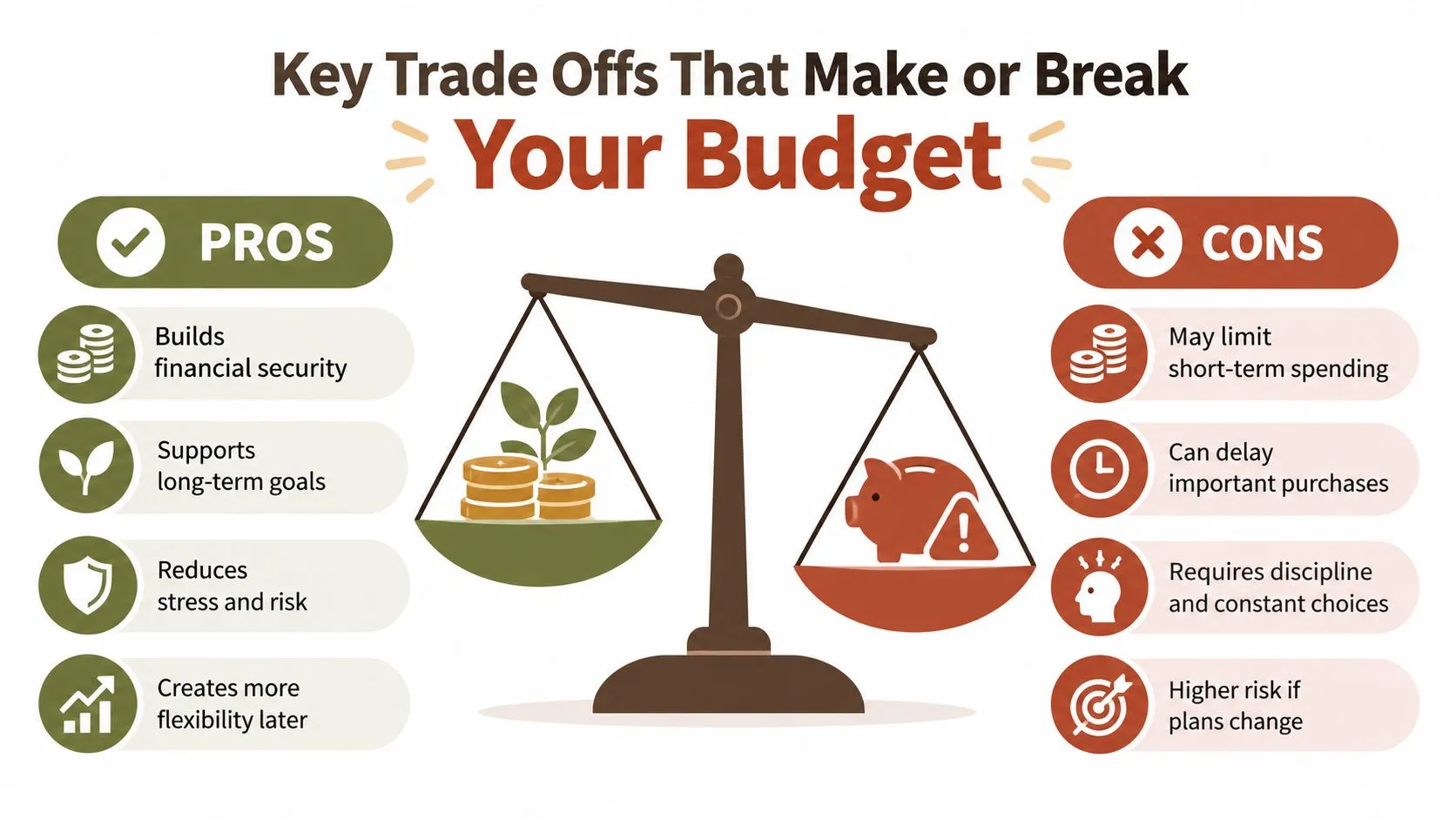
Two travelers book a “cheap” Tanzania safari. One pays a low daily rate, then gets hit with park fees, crater fees, and transfers outside the quote. The other pays a higher headline price but has the major costs bundled. The second traveler often spends less overall.
That is the trade-off that matters.
A budget safari is not the trip with the cheapest sticker price. It is the trip with the lowest full cost once the inclusions are standardized and checked line by line. If you compare tours later on Explola, use that rule on every shortlist.
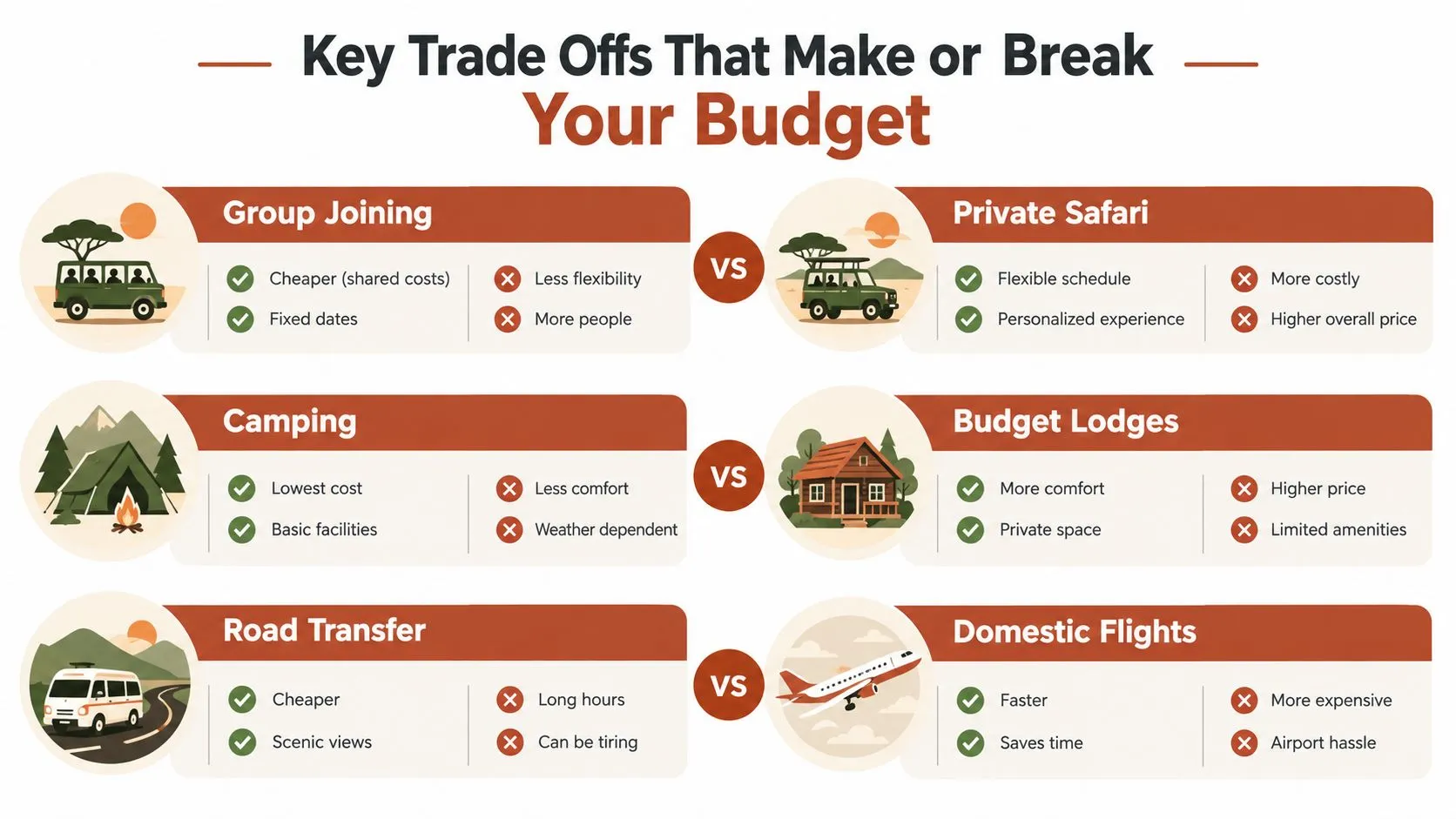
Group joining or private safari
For strict budget control, shared group departures win.
You split the vehicle, guide, cook, and operating costs across more people. That keeps the total trip cost in range without stripping out major parks. It also reduces the risk of paying “budget private” rates that look reasonable at first and then climb once you confirm inclusions.
Private safaris still have a place. Book private if you already have enough people to spread the cost, or if flexibility matters enough that you are willing to pay for it. For a solo traveler or a couple trying to keep costs down, private is usually the fastest way to leave the budget category.
The mistake is simple. Travelers compare a group quote with one private quote and focus on comfort or exclusivity before they standardize what is included. Compare park fees, transfers, accommodation level, and whether the trip runs with confirmed shared occupancy assumptions. Then compare price.
Camping or budget lodges
This choice affects both cost and trip quality.
Camping usually saves real money. It works best for travelers who care more about time in the parks than about showers, mattresses, or quiet nights. If your priority is wildlife and you can handle basic facilities, take the savings and put the money toward better routing or an extra park day.
Budget lodges cost more, but they solve a problem cheap camping sometimes creates. Bad sleep makes early starts, rough roads, and long game drives feel harder than they should. If poor rest wrecks your mood, do not pretend you are a camping traveler just to shave down the quote.
My rule is blunt. Cut comfort where it does not damage the trip. Protect comfort where it affects your energy every day.
Road transfers or domestic flights
Most budget safaris are overland for a reason. Flights push the total too high.
That does not mean every road-heavy itinerary is good value. Some are cheap because they replace safari time with transit time. A six-day trip that burns two long days getting in and out of parks can be worse value than a shorter itinerary with tighter logistics and cleaner routing.
Check the structure, not just the rate. How many real game-drive windows are you getting? How many hours are spent in the vehicle for transport rather than wildlife viewing? A low quote with weak time use is still expensive.
Where cheap quotes usually hide extra cost
Budget trips go wrong.
Some operators exclude park fees from the main price. Some include accommodation but leave out airport transfers. Others use the word “shared” loosely, then price from a base that depends on filling seats later. You need one standardized inclusion check before you call any quote cheap.
Review these items every time:
Park and conservation fees
Ngorongoro crater fees if applicable
Airport or Arusha transfers
Accommodation type and room-sharing basis
Meals and drinking water
Shared versus private vehicle
Sleeping bag or camping gear charges
Last-day hotel stay, if your flight timing requires it
A quote that is $100 cheaper on paper can lose that advantage immediately if two or three of those items sit outside the package.
Who should choose what
Use the trip format that fits your budget reality, not your ideal version of safari.
Solo traveler: Join a shared group departure.
Couple on a tight budget: Shared camping or a simple shared lodge trip usually gives the best full-trip value.
Small group of friends: Private can make sense if the per-person split stays close to group pricing after all fees are included.
Comfort-first traveler: Book fewer days and sleep better. Do not stretch to a longer trip you will be too tired to enjoy.
Good budget planning is disciplined, not romantic. Check the total cost, standardize the inclusions, and pay for the parts of the trip that change the experience in a real way. Ignore the cheap headline rate if the numbers behind it are messy.
How to Find Compare and Book Verified Budget Tours on Explola
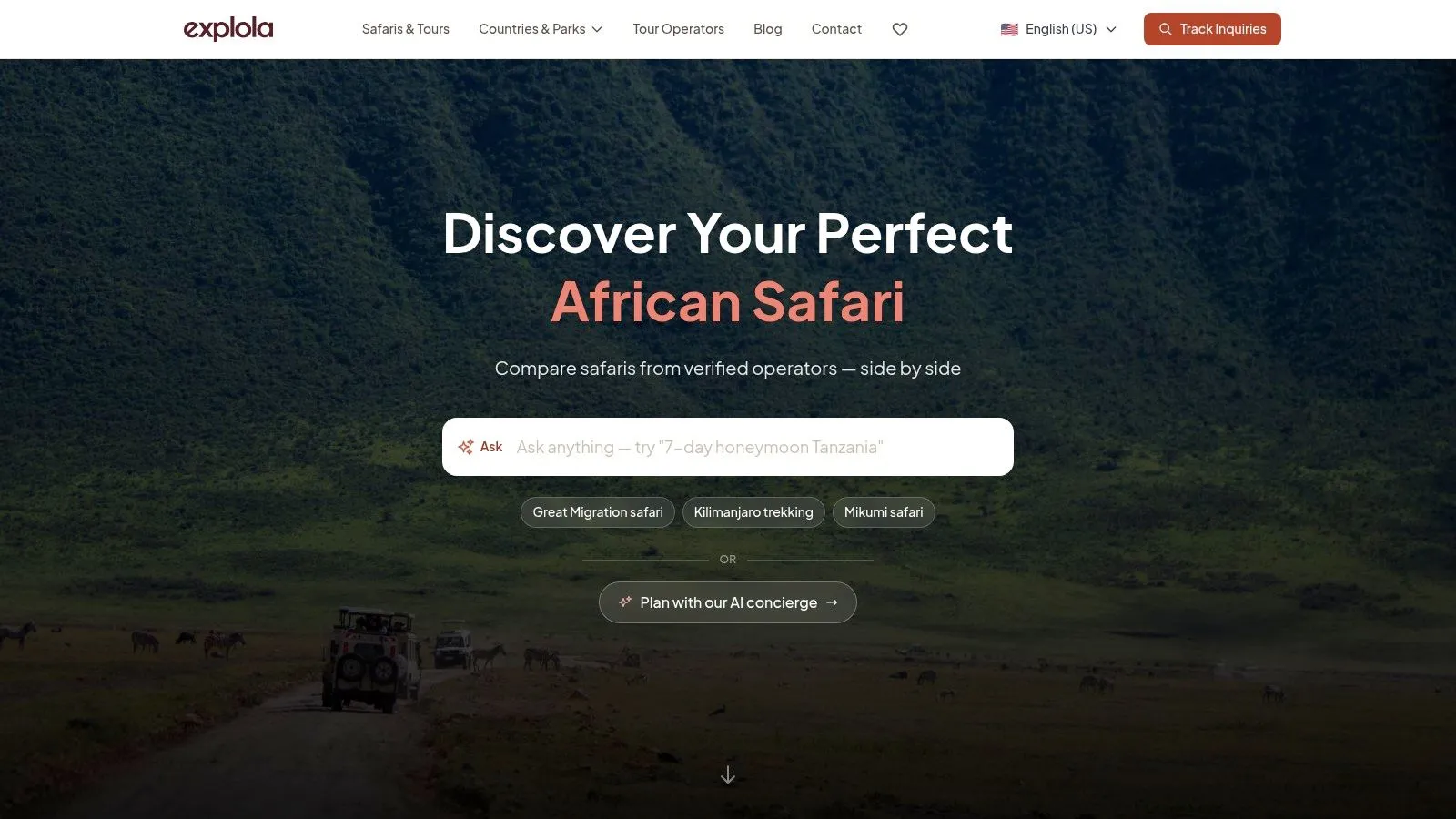
The fastest way to cut through safari pricing noise is to compare tours in a standardized marketplace instead of collecting random WhatsApp quotes with different assumptions baked in. That's where a catalog with filters, side-by-side comparison, and direct operator inquiry is useful.
If you want to start broad, browse Tanzania safari tours on Explola and narrow from there.
Filter for the format that is actually affordable
Don't begin with parks. Begin with trip structure.
Use filters to narrow by country, duration, budget tier, lodging level, group size, and departure style. For a true budget safari in Tanzania, I'd start with shared departures, camping or basic accommodation, and the Northern Circuit. That gets you much closer to apples-to-apples options.
Broad search results can be misleading. A “budget” label attached to a private trip can still behave like a low mid-range product once the quote is finalized.
Compare inclusions before you compare prices
Once you've got a shortlist, open the detailed tour pages and check the parts that operators package differently:
Park fees
Meals
Airport or Arusha transfers
Accommodation type
Shared or private vehicle
Any extra transfer days built into the route
Side-by-side comparison helps. The point isn't to find the cheapest listed rate. The point is to normalize what each operator includes so you can spot the quote that only looks cheap because it leaves out common essentials.
Ask for itemized quotes
Direct inquiry is where most travelers either save money or lose it.
Send a short message asking for the full quote with inclusions broken out clearly. Ask whether the published pricing already includes park fees, campsite or lodging costs, and town transfers. Ask whether the price assumes a minimum group size. Ask what changes if the departure doesn't fill.
That last question matters more than people think.
Ask operators to confirm the total payable amount, not just the safari rate. Those are not always the same thing.
Use the workflow to stay organized
A good planning workflow should reduce confusion, not add more tabs. Save strong options to a shortlist, compare them side by side, and track operator replies in one place. That's far better than trying to remember which quote included Ngorongoro and which one excluded transfer costs.
Explola's practical value for this topic is straightforward. It gives travelers a searchable safari catalog, detailed tour pages, side-by-side comparison, direct inquiry to verified operators, visible verification badges, favorites, and an inquiry tracker, while payments happen directly with operators and the platform doesn't charge booking or service fees to travelers.
The booking standard I recommend
Before you commit, make sure you can answer yes to all of these:
Do I know the full route?
Do I know the accommodation level every night?
Do I know whether park fees are included?
Do I know how pickup and drop-off work?
Do I know what would change the final payable amount?
If one of those is unclear, you're not ready to book.
Money Saving Tips Packing and Safety Checklist Before You Go
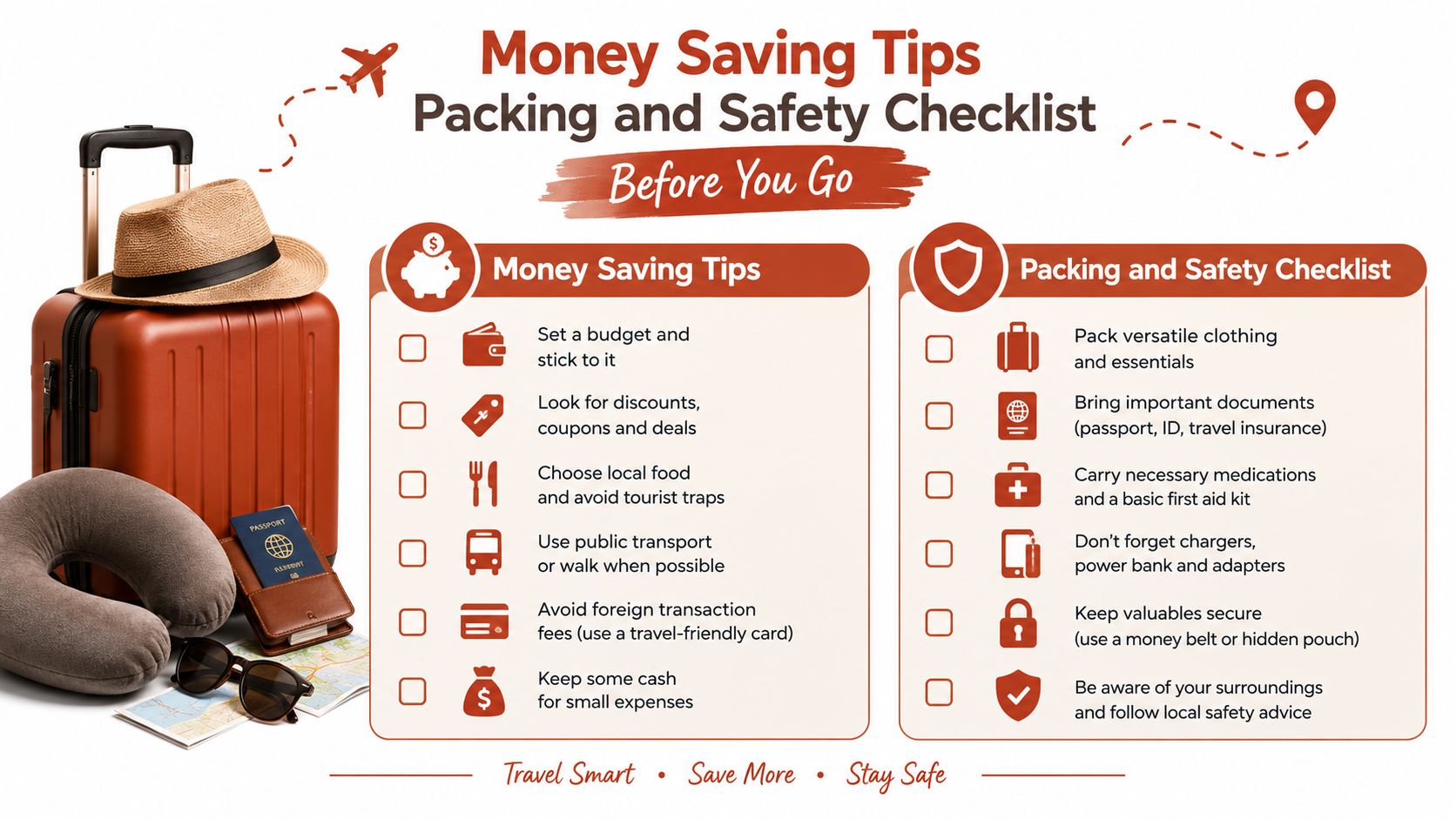
Save money in the right places
The best savings usually come from trip design, not from haggling over a small difference in quoted rate.
Travel in shoulder season: You'll often get a better balance of price and practicality than at peak demand times.
Join a group: Shared departures keep fixed vehicle costs under control.
Compare total cost early: Don't lock in the first decent-looking quote.
Keep the route tight: Extra distance can weaken value fast.
Ask what is excluded: “Budget” trips can get expensive without these costs upfront.
One more practical point. Budget for the non-safari pieces separately. Flights, visas, and tips don't disappear just because the safari quote looks manageable.
Pack for function, not for safari fashion
You don't need a costume. You need a setup that works.
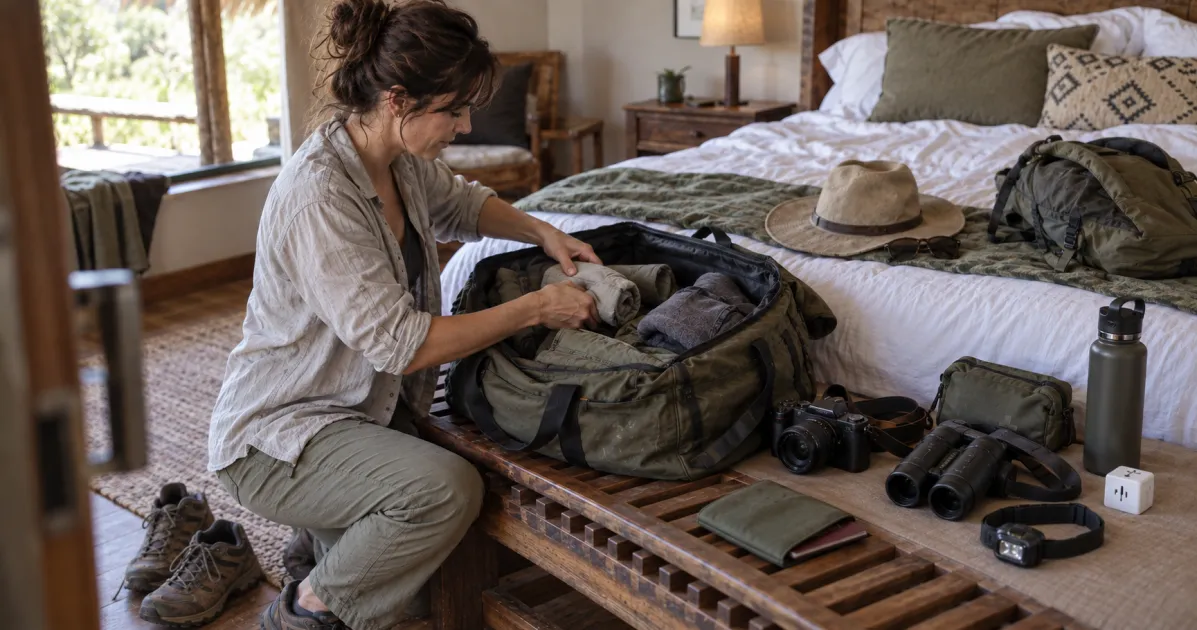
Use a soft bag, not a hard suitcase, if you're joining a vehicle-based group trip. Pack layers for early starts, sun protection for long game drives, closed shoes for camp, basic personal medication, copies of key documents, and a power solution that doesn't assume every camp setup will be ideal.
If you want a more complete gear rundown, this African safari packing list with essential categories is a useful place to cross-check your bag before departure.
Safety and logistics checklist
Keep this simple and disciplined:
Documents ready: Passport, visa paperwork, insurance details, and operator contacts.
Money split sensibly: Don't rely on one payment method.
Health prep done: Bring what you need before you enter the circuit.
Camp etiquette understood: Listen to your guide, especially at night.
Expect basic conditions: Budget travel is still safari travel. Dust, early starts, and long road stretches come with the territory.
If you're leaving pets at home while you travel, it's worth sorting that care with the same caution you use for safari operators. This guide on how to find trusted pet care while traveling is a practical resource if you're arranging home-based or sitter support before a longer trip.
My final advice
Don't wait until the last minute and then panic-book the lowest number you can find. Build a shortlist, standardize the inclusions, ask direct questions, and choose the trip that gives you the cleanest value.
A budget safari in Tanzania can be done well. It just won't reward lazy comparison.
If you want to cut through messy quotes and compare trips properly, Explola gives you one place to browse Tanzania safaris, filter for budget-friendly formats, and send direct inquiries to verified operators. Use it to build a shortlist, compare inclusions side by side, and book with a clearer view of what your safari will cost.
Ready to experience this?
Explore Related Safaris

Daniel writes for the Explola blog, where he covers African safari destinations, wildlife, travel trends, and practical trip planning. His work is centered on making safari travel easier to understand, compare, and plan.
Get Safari Tips & Destination Guides
Join our newsletter for exclusive travel tips, wildlife insights, and safari planning advice.