You're probably staring at a calendar, a list of dream parks, and one deceptively simple question: what's the best time of year for an African safari? The honest answer isn't one month. It's a match between your priority and the region's seasonal rhythm.
Want river crossings, thin vegetation, and concentrated wildlife? Choose the dry months. Want green surroundings, fewer visitors, and lower rates? Look at the rainy season. Want a specific experience, such as calving in the Serengeti or water-based exploring in the Okavango Delta? The park matters just as much as the date.
Why There Is No Single Best Month for an African Safari
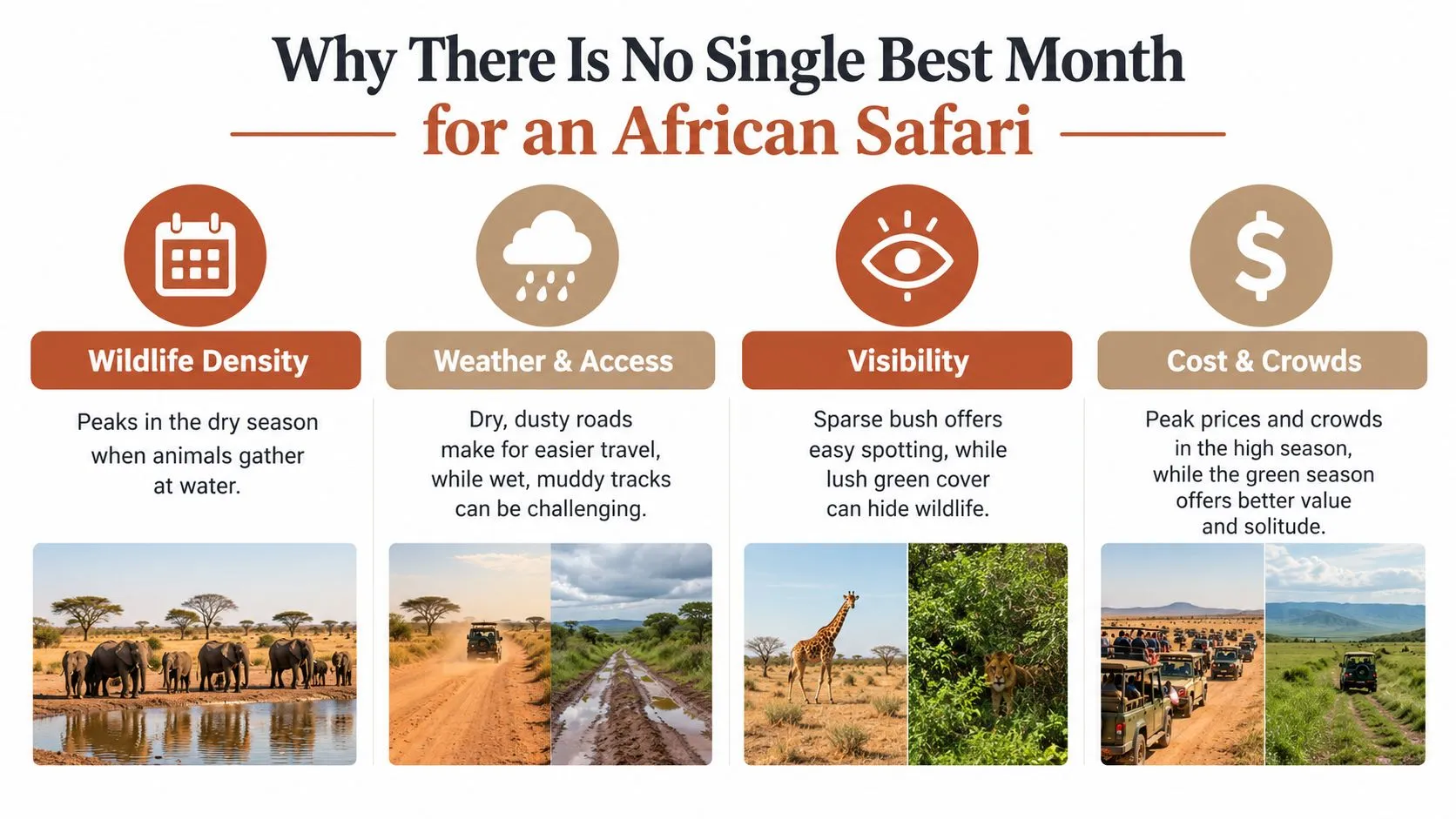
There's no universal winner in the African safari best time of year debate. Every itinerary balances four competing goals: wildlife visibility, migration drama, crowd levels, and cost. Improve one, and you may compromise another.
A traveler chasing Mara River crossings should focus on July through October in Kenya or the northern Serengeti. Someone prioritizing dry-season predator sightings in Southern Africa will usually prefer June through September. A photographer who values luminous views, dramatic skies, and quieter parks may get more from February or March, when green-season conditions reshape the experience.
Start with the experience, not the calendar
Use this order when planning:
Choose the priority. Decide whether you care most about crossings, big cats, photography, solitude, or value.
Choose the region. East Africa means Kenya and Tanzania, while Southern Africa includes Botswana, Zambia, Zimbabwe, South Africa, and Namibia.
Choose the park. A country's seasonal pattern can vary sharply from one ecosystem to another.
Choose the month. Only now should you compare availability, rates, and weather.
That approach is more useful than asking for a single “best” month. A safari in the Maasai Mara is solving a different travel problem from a safari in the Kalahari, even if both involve wildlife viewing.
For broader trip inspiration, a carefully curated luxury travel planning blog can help you compare safari timing with accommodation style, regional combinations, and other high-value travel decisions. Keep the central rule in mind, though: pick your goal first, then let the destination calendar make the decision.
How Dry Season Shapes Safari Planning
The dry season is the dependable starting point for safari planning across East and much of Southern Africa. Travel guides consistently place the main dry window around June to October in East Africa, while Southern African destinations commonly perform best from May to October. The reason is practical rather than romantic.
As rain decreases, smaller water sources shrink or disappear. Wildlife gathers around the remaining rivers, pools, and waterholes, making animal movement easier to anticipate. Grass and leaves thin out, so guides can scan farther across open plains and woodland. Roads also tend to become more reliable in remote areas, although dust and rough surfaces remain part of the experience.
The regional baseline
| Region | Dry season window | Peak months | Why it works |
|---|---|---|---|
| East Africa | June to October | July and August | Wildlife concentrates near water, vegetation becomes easier to see through, and migration activity intensifies |
| Southern Africa | May to October | July and August | Dry bush, predictable waterhole activity, and clearer game-viewing conditions |
| Kenya and major Tanzania parks | January to March, then June to October | June to October for classic dry-season viewing | Strong visibility across different seasonal windows |
| Botswana and nearby Southern African destinations | May to October | June to August | Dry conditions support concentrated wildlife and, in the Okavango, strong water-based experiences |
The dry season isn't equally dry everywhere. The Okavango Delta depends on floodwaters arriving from distant rainfall, so its best water activities follow a different rhythm from rainfall in the delta itself. That's why a regional planner shouldn't treat “dry season” as a complete answer.
Practical rule: Use the dry season as your benchmark, then adjust for the park's particular ecosystem.
Expect trade-offs. Dry months can bring cooler early mornings, hotter afternoons, dust, and stronger demand. If you want reliable visibility and efficient game drives, start here. If you want green scenery, solitude, or lower rates, compare the rainy and shoulder seasons rather than dismissing them.
Following the Great Migration Through the Year
The Great Migration doesn't happen in one place during one month. The herds follow rainfall and fresh grazing through a continuous circuit between Tanzania's Serengeti and Kenya's Maasai Mara. That makes the right date dependent on whether you want newborn animals, moving columns, or river-crossing drama.
From January to March, wildebeest gather on the southern Serengeti plains for calving. The open terrain makes this a powerful period for watching newborns and the predators that track vulnerable young animals. February is the clearest choice for travelers who want a calving-focused safari rather than a river-crossing itinerary.
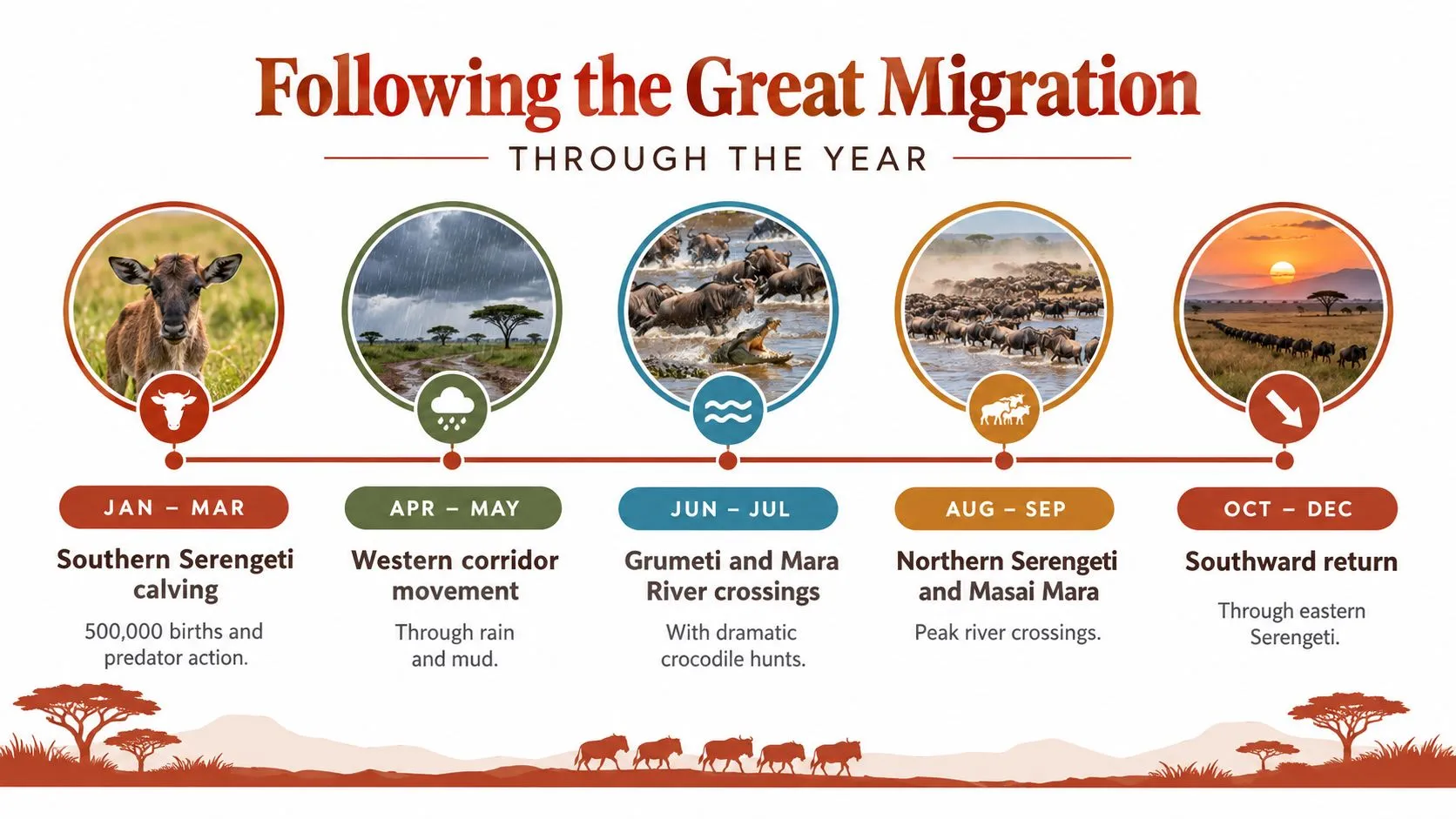
A month-by-month migration map
January to March: Southern Serengeti calving, newborns, and intense predator activity.
April to May: Herds move northwest through the central and western Serengeti as rain and fresh growth influence their route.
June: Movement accelerates north, with the Grumeti region becoming relevant for travelers following the western corridor.
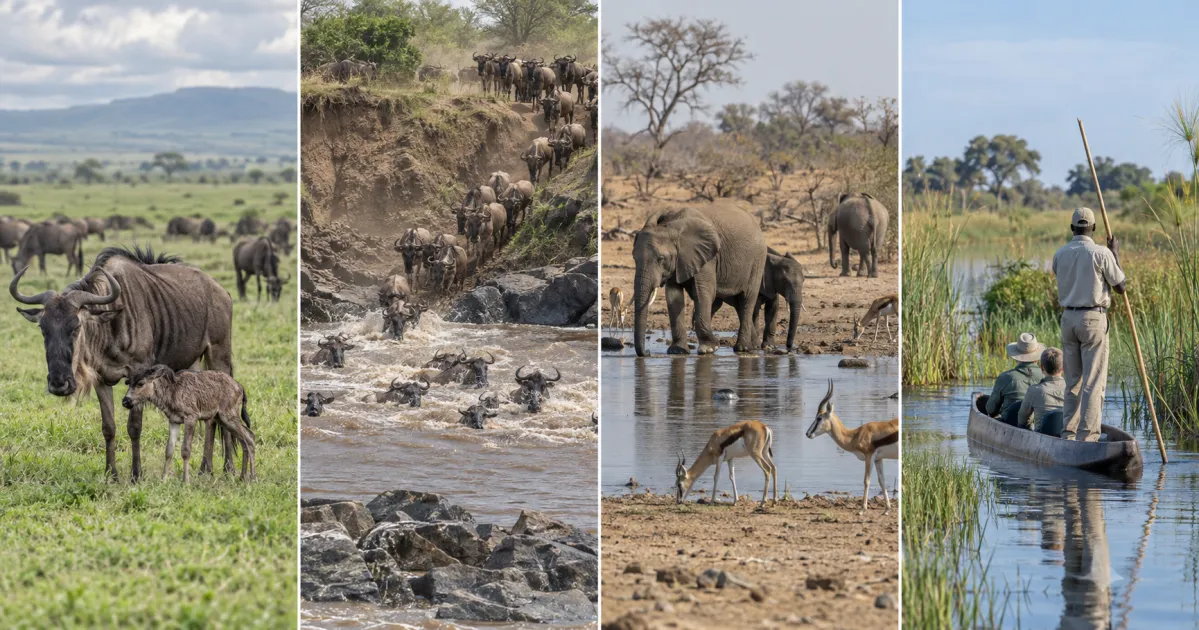
July to August: The northern Serengeti and Mara region offer the strongest chance of witnessing headline river-crossing scenes.
September to October: Many herds remain in Kenya's Maasai Mara, where open grassland and resident predators create strong viewing.
November: The herds begin moving back toward the eastern Serengeti.
December: The cycle turns south again, preparing for another calving season.
River crossings are dramatic, but they're also unpredictable. Rainfall determines when the herds move, and the animals may gather at a riverbank without crossing immediately. Even during the main crossing window, a guide can't promise that a specific vehicle will witness the event.
For a more detailed Tanzania-focused planning reference, use this Serengeti month-by-month guide before choosing between the southern, central, western, and northern areas.
The best migration itinerary follows the herd's seasonal location, not a generic East Africa travel date.
If river crossings are essential, prioritize late July through September and build flexibility into the itinerary. If you want a more intimate wildlife story, choose February in the southern Serengeti, where calving and predator behavior matter more than crossing crowds. Migration timing shifts with rainfall each year, so treat the calendar as a strong planning guide, not a guarantee.
East Africa Versus Southern Africa by Season
East Africa and Southern Africa deliver different kinds of safari satisfaction. Kenya and Tanzania are the obvious choice for migration drama, huge open plains, and dense predator viewing around the major ecosystems. Botswana, Zambia, Zimbabwe, and South Africa are stronger choices when you want varied safari activities, easier combination travel, or a more flexible approach to cost.
East Africa's wildlife spectacle is often larger in scale. The Serengeti and Maasai Mara can feel almost limitless, and the migration adds a moving seasonal storyline. The drawback is demand during the dry months, especially around famous crossing areas. Southern Africa generally offers a more varied product, including walking safaris, mokoro excursions, specialist camps, and combinations with Cape Town or Victoria Falls.
| Criterion | East Africa, Kenya and Tanzania | Southern Africa, Botswana, Zambia, South Africa, Zimbabwe |
|---|---|---|
| Wildlife emphasis | Vast herds, migration, and strong big-cat viewing | Diverse habitats, resident wildlife, elephants, predators, and specialist activities |
| Strong seasonal window | June to October for dry-season viewing, with January to March also important in Kenya and Tanzania | May to October for the clearest dry-season conditions |
| Crowds | More pressure around migration hotspots and famous river crossings | Varies widely, with some parks and private concessions offering a quieter feel |
| Cost profile | Migration-focused trips can command strong demand | Often more flexible, although Botswana's premium camps can sit at the high end |
| Signature activities | River-crossing viewing, classic game drives, calving, and open-plains photography | Walking safaris, mokoro trips, water-based exploration, and combinations with cities or waterfalls |
| Best match | Travelers chasing migration drama and big-cat action | Travelers seeking value, family flexibility, and variety beyond standard game drives |
Choose East Africa when the migration is the reason you're going. Choose Southern Africa when you want a broader trip with more activity styles and easier regional combinations. Kenya's park-by-park differences matter, so compare the best time to visit Kenya by park and goal rather than treating the country as one seasonal unit.
What Green Season and Shoulder Months Actually Offer
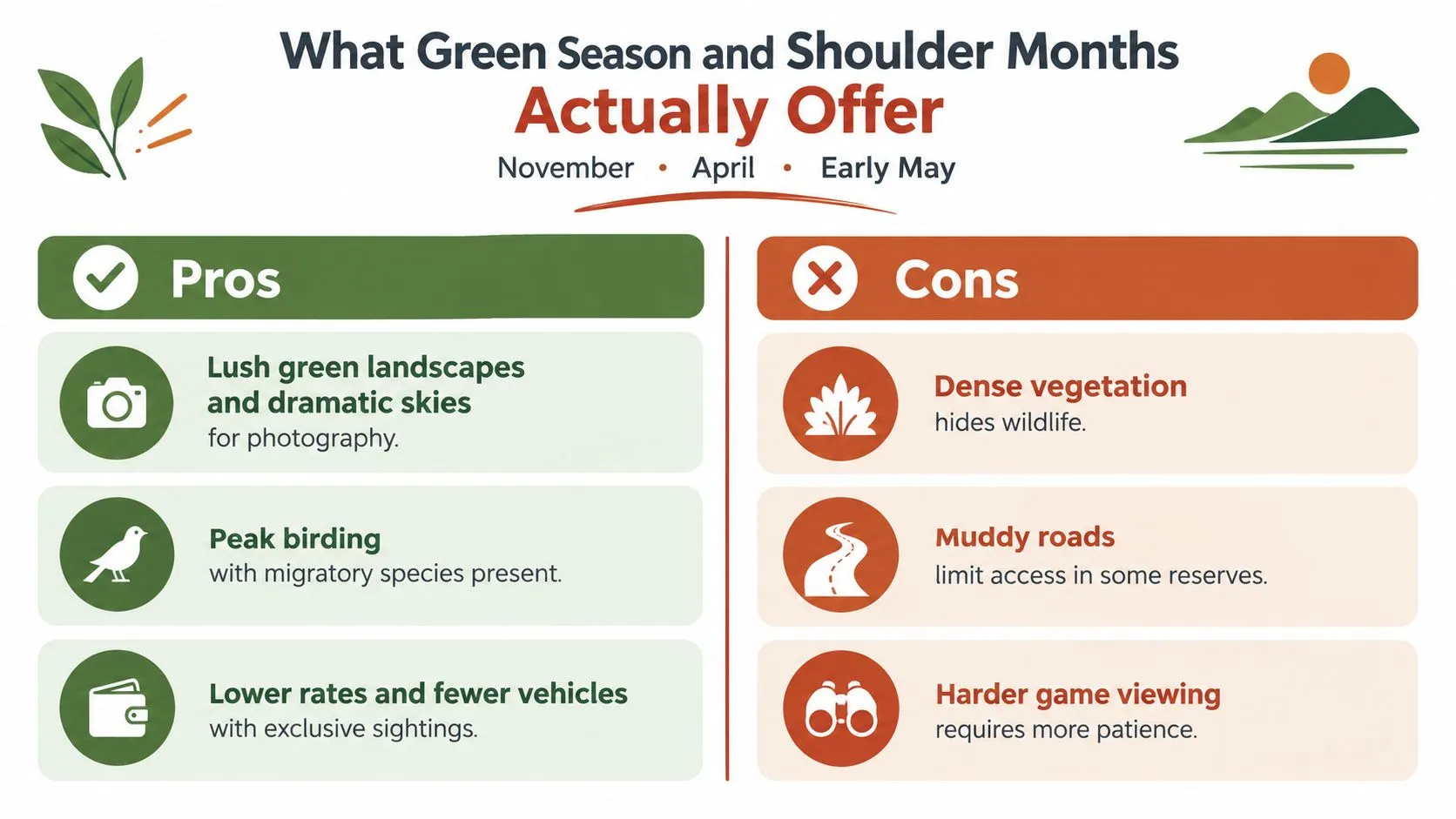
Choose the green season when photography, birding, solitude, or lower rates matter more than maximum wildlife visibility on every drive. It rewards travelers who want vivid scenery and a quieter park, not those chasing the most concentrated game.
Rain thickens vegetation, makes animals harder to locate, and can turn some roads muddy. With water spread across the area, wildlife also disperses. In Tanzania, the migration shifts toward southern Serengeti grazing and calving, so February suits newborns and predators better than famous river-crossing drama.
The payoff is strong. Green vistas, layered clouds, and migratory birds give photographers more variety, while lighter visitor numbers create a calmer rhythm. A seasonal safari analysis from The Wild Source's seasonal safari analysis describes green-season viewing as retaining much of the dry-season experience at lower cost and reports 75% to 85% of peak wildlife viewing. Use that as a broad planning reference, not a promise for every park or day.
Match the green season to the right park
Southern Serengeti: Pick February for calving, open plains, and predator activity around newborns.
South Luangwa: Choose the emerald bush and walking-safari atmosphere when access conditions allow.
Okavango Delta: Go as floodwaters arrive for water-focused experiences, after checking each concession's operating calendar.
Lower Zambezi: Favor the quieter atmosphere and changing river when solitude is the priority.
The strongest shoulder dates are often November, April, and early May, but conditions differ sharply by destination. Travelers with flexible dates can use this guide to planning a shoulder season trip to balance weather, availability, and safari style.
For Tanzania, review the rainfall trade-offs in this rain-season Tanzania safari planning guide. Book green season for richer scenery and a quieter pace. Do not choose it expecting a cheaper copy of peak season. Choose it when those differences are the point.
Park-by-Park Timing for the Big Destinations
The country is only the first decision. The park and the activity determine the date that makes sense. A migration-focused Serengeti itinerary needs a different calendar from a crater safari, while the Okavango's flood rhythm can override the usual rain-versus-dry-season rule.
| Park | Peak month | Shoulder window | Signature activity |
|---|---|---|---|
| Northern Serengeti | August | July to October | Mara River crossing viewing and northern migration scenes |
| Southern Serengeti | February | January to March | Calving, newborns, and predator encounters |
| Maasai Mara | September | August to October, with January to February as a quieter alternative | River-crossing possibilities, resident predators, and open-plains game drives |
| Ngorongoro Crater | July | June to October | Predator viewing on the crater floor and concentrated wildlife |
| Okavango Delta | July | May to October | Mokoro excursions, boating, and water-based wildlife viewing |
| Kruger National Park | September | June to September | Dry-season waterhole viewing and predator-prey interactions |
| South Luangwa | October | October to November | Walking safaris and leopard viewing as bush cover thins |
How to use the table
For the Serengeti, separate the northern crossing season from the southern calving season. Booking “the Serengeti” without specifying the area can produce the wrong location at the wrong time.
The Maasai Mara is a strong choice for travelers who want resident wildlife even if the herds don't cross during their stay. August through October is the headline window, while January and February can suit visitors who prefer quieter predator viewing and a less migration-centered itinerary.
Ngorongoro Crater is the easiest destination on this list to recommend across a broad calendar. Its enclosed geography helps concentrate wildlife, and the dry months make the crater floor easier to scan. The Okavango is different. Its best water experiences depend on flood arrival, so ask an operator which channels and concessions are active for your dates.
Kruger and South Luangwa reward travelers who care about more than herd movement. Kruger's dry season creates predictable waterhole activity, while South Luangwa is the specialist choice for walking safaris and leopard-focused viewing. Your activity should dictate the month, not the other way around.
Timing Myths Worth Leaving Behind
Myth one, July and August are always best
July and August deliver dry-season visibility and strong migration activity, but they also bring peak demand. River crossings can attract many vehicles, while dry areas may look dusty rather than lush. Choose these months when crossing drama matters most. Choose a shoulder month or a less concentrated park when space matters more.
Myth two, rainy season is a waste
Rain changes the safari experience without removing its wildlife value. February in the southern Serengeti can combine calving, dramatic skies, fresh green scenery, and active predators, making it a stronger fit than August for travelers who prioritize those scenes. Green-season rates are often lower than peak-season rates in some safari markets. Confirm the actual offer and inclusions with the operator before booking.
Myth three, Africa has one weather calendar
Each ecosystem follows its own seasonal pattern. The Okavango Delta may be receiving floodwaters while the Maasai Mara sits in a dry viewing phase. Kruger's summer conditions also differ from Namibia's winter pattern. Plan by ecosystem, activity, and month, not by continent.
Myth four, you must follow the migration
Resident wildlife can deliver excellent viewing without a migration itinerary. The Ngorongoro Crater and private reserves around South Africa's Sabi Sands offer strong predator encounters beyond the migration route. That choice can also reduce the pressure and cost associated with peak movement periods.
Choose the seasonal event you want to see. Do not pay peak-season prices for a spectacle that is not your priority.
Choosing Your Ideal Safari Window
Start with one priority. Don't list six equal priorities, because that produces a vague itinerary and an inconvenient month. Choose the experience you'd regret missing most.
Migration drama: Choose the northern Serengeti or Maasai Mara from August to October for the strongest crossing-focused plan.
Calving and predator action: Choose the southern Serengeti in February, when newborns and predators shape the experience.
Peak dry-season visibility: Choose East Africa from June to October, or Southern Africa from May to October, when water dependence and thinner vegetation support efficient viewing.
Photography and green backdrops: Consider November or April to May, when fresh color and dramatic skies matter more than sparse bush.
Fewer crowds: Look at shoulder or green-season dates, then select a park with strong resident wildlife rather than relying on a single moving event.
Family flexibility: Favor a dry or shoulder-season itinerary with shorter transfers, reliable roads, and a park that offers more than one type of activity.

A practical booking checklist
Name the priority. Write down migration, wildlife density, solitude, cost, photography, or family convenience.
Pick the region. Choose East Africa for migration-led planning, or Southern Africa for broader activity variety and combination travel.
Lock two possible months. A two-month window gives your operator room to match park access and availability.
Confirm logistics early. Check seasonal road access, camp operating dates, internal transfers, and booking demand before paying a deposit.
For peak-season itineraries, start inquiries 9 to 12 months ahead, as recommended in the supplied planning brief. That's especially important when you need a specific camp, a private vehicle, or a location close to a migration hotspot.
The best month isn't the one that appears most often in a generic safari article. It's the month that matches your goal, region, park, and tolerance for crowds and cost.
Use Explola to compare safari operators, filter trips by country, park, dates, budget, and lodging level, and request direct quotes that fit your chosen season. Build a shortlist around your priority, then contact operators early so they can match the right itinerary to the wildlife calendar.

Daniel writes for the Explola blog, where he covers African safari destinations, wildlife, travel trends, and practical trip planning. His work is centered on making safari travel easier to understand, compare, and plan.
Get Safari Tips & Destination Guides
Join our newsletter for exclusive travel tips, wildlife insights, and safari planning advice.