A quoted USD 2,500 to 4,000 Masai Mara package often ends up at USD 4,850 to 7,550 once park fees, tipping, transfers, fuel surcharges, drinks, and extras are added. If you're comparing safari quotes by headline price alone, you're already comparing the wrong number.
| Package type | Typical advertised price | Real landed cost to expect | What changes the bill |
|---|---|---|---|
| Budget shared safari | Lower headline rate | Still rises once fees and extras are added | Park entry, tips, drinks, transfers |
| Mid-range safari | Moderate headline rate | Can move sharply with lodge and vehicle choices | Stay length, vehicle type, surcharges |
| Luxury fly-in or conservancy stay | Higher headline rate | Can climb fast, but usually includes more | Exclusive access, premiums, bundled activities |
The Hidden True Cost of Masai Mara Packages
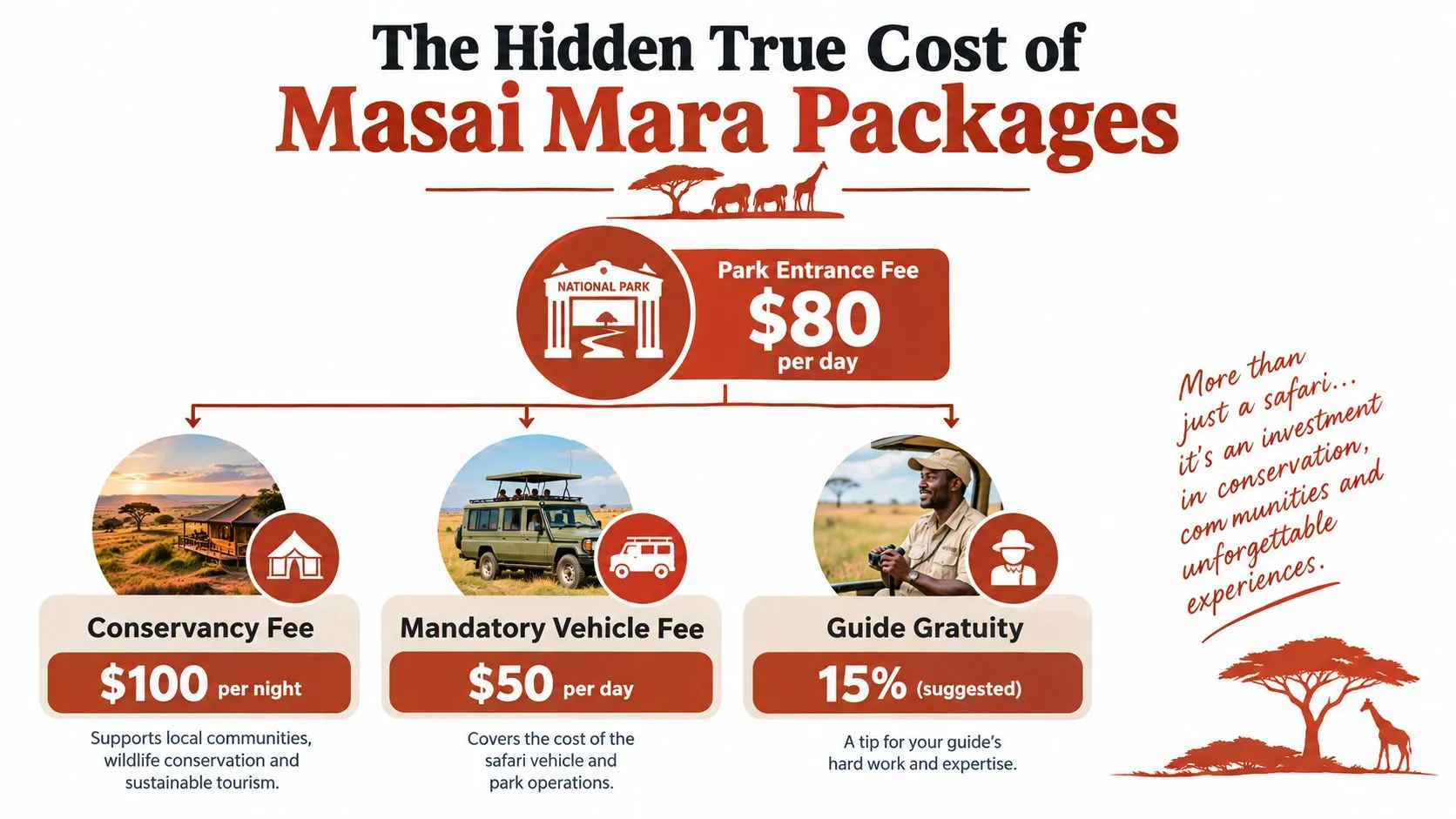
The first mistake travelers make is treating the quoted package price as the final price. In the Masai Mara, that is rarely true. A quote that looks like USD 2,500 to 4,000 can land at USD 4,850 to 7,550 once you add the costs operators often leave outside the headline figure, including park fees, conservancy fees, tipping, airport transfers, fuel surcharges, drinks, and optional activities. That gap is the difference between a controlled trip and a budget blowout.
What operators often leave out
The cleanest quotes are the ones that spell out what is included and what is not. Many do not. One independent breakdown points to USD 90 per day per person for park fees in an example model, plus USD 10 to 20 per person per day in tipping, and shows how a quoted safari can jump when you add the on-the-ground expenses tied to entry, transport, and extras.
Treat that as the baseline for comparison. If one operator includes transfers, drinks, and fees while another leaves them out, the second quote is not cheaper. It is incomplete.
Practical rule: if an operator will not itemize park fees, transfers, and gratuities, assume the quote is unfinished.
Why landed cost matters more than sticker price
The Masai Mara has a long commercial history, and that history explains the pricing mess. Its protected-area story began in 1948, expanded in 1961 to 520 km², and became the Maasai Mara National Reserve in 1974 Maasai Mara history. The market now mixes many camps and package styles inside a relatively concentrated wildlife area, so headline pricing tells only part of the story.
Visitor infrastructure grew along the same path. Sources note fewer than 10 lodges in the late 1970s, around 140 facilities by 2008, and nearly 200 by 2016 Maasai Mara history. More supply brings more choice, but it also creates more room for confusion. The smart traveler compares complete landed cost, not the first number on the quote.
Explola's direct-booking model makes that comparison easier because it forces the full cost question up front. That is the standard buyers should demand from every operator.
Comparing Budget, Mid-Range, and Luxury Options
Budget, mid-range, and luxury Masai Mara packages are different products, not just different price tags. A shared budget safari can start around USD 380 in current pricing pages; see Masai Mara hidden costs and 2026 pricing, while premium fly-in luxury options can exceed USD 4,850 per person on the same pricing source. The question is simple, which package gives you the right mix of privacy, comfort, access, and cost.
Budget packages
Budget safaris win on simplicity. You share a vehicle, accept fixed departure dates, and stay in basic but functional camps. That keeps money focused on game viewing instead of polish.
They suit travelers who care more about sightings than style. If you are fine with a set route, shared meals, and a social camp atmosphere, the budget tier makes sense.
Mid-range packages
Mid-range packages are where many travelers should begin. You get better tents or rooms, a more comfortable vehicle setup, and more control over timing.
The main advantage is balance. You avoid luxury-level pricing, but you also avoid the stripped-down feel of the lowest tier. This option works well for couples and small groups who want a smoother ride, a better bed, and less noise from other guests.
Luxury fly-ins and conservancy stays
Luxury fly-ins buy time, privacy, and convenience. You skip long road transfers, arrive fresher, and usually stay in a more exclusive lodge setting. Some conservancy-based itineraries also include off-road access and night drives, which standard park entry does not allow park fees and conservancy guidance.
A luxury package should earn its price through access and comfort, not just a fancier tent.
Pay for better logistics and better wildlife positioning, not for room photos alone. If a higher quote removes friction and improves the safari experience, the premium is justified. If it does neither, it is just markup.
Sample Day-by-Day Safari Itineraries
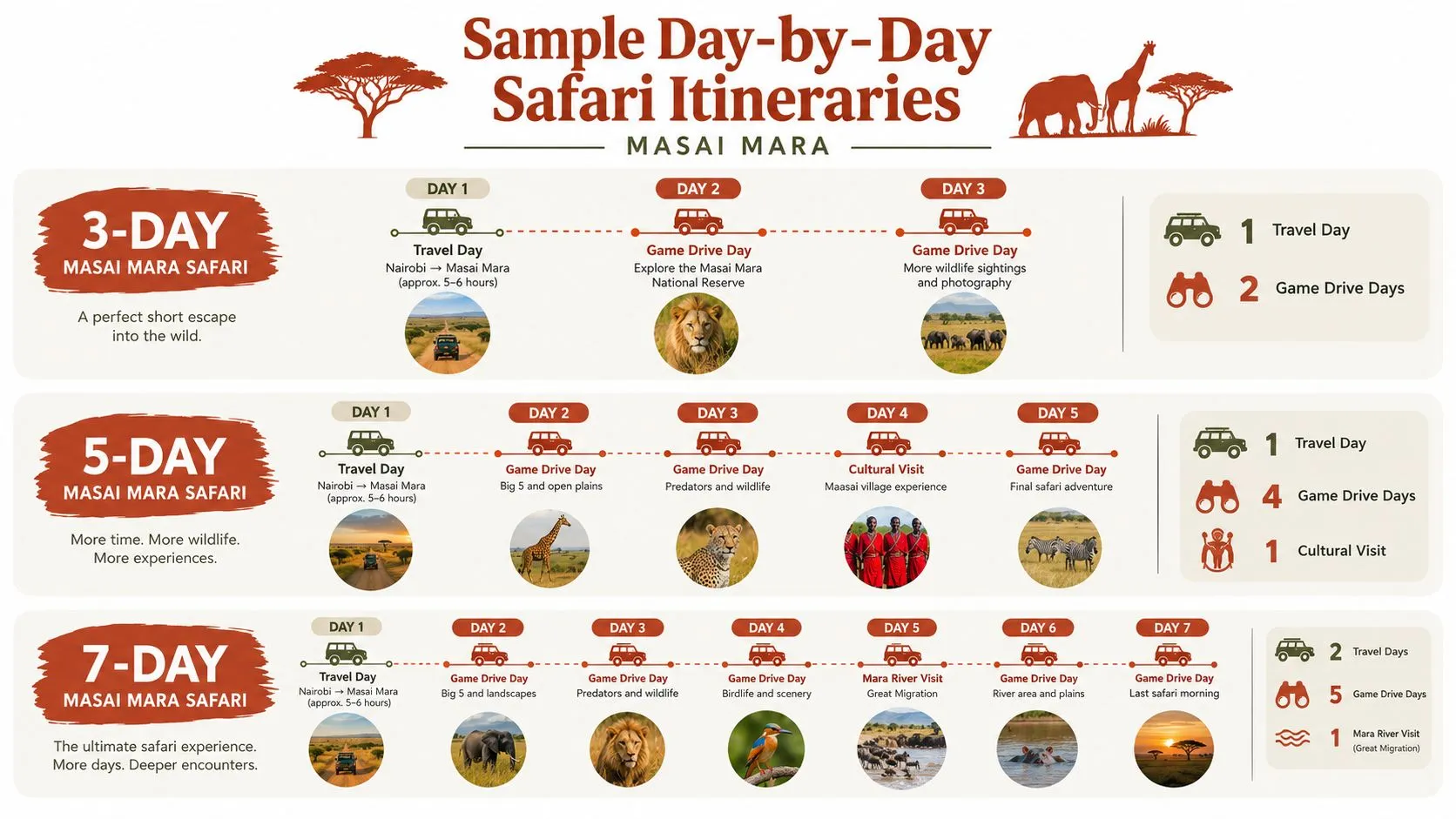
A safari itinerary tells you more than the price does. A 3-day trip, a 5-day trip, and a 7-day trip all look similar on paper, but they feel completely different on the ground. Short trips need tighter logistics, while longer trips can absorb road time, lodge moves, and slower game viewing without feeling rushed.
3-day safari
A 3-day safari is tight. Day 1 is travel and arrival, then you get two game-drive days before heading back. This format works best when the transfer is efficient, which is why many travelers prefer fly-in routing for short stays. It saves energy and protects the limited wildlife time you paid for.
5-day safari
A 5-day trip gives you breathing room. One travel day, four game-drive days, and space for a cultural stop make the trip feel less compressed. A route like this 5-day Maasai Mara safari is the kind of structure that usually suits travelers who want both wildlife and a bit of variety without changing camps every night.
7-day safari
A 7-day safari is for travelers who want to settle into the Mara rhythm. You can spend two days getting in and out, then use five game-drive days to cover different parts of the ecosystem, including the Mara River when conditions are right for migration viewing.
Rule of thumb: if your trip is under 4 days, don't waste time on a route that burns daylight in transit.
Park Fees, Conservancy Costs, and Surcharges
A lot of Masai Mara quotes look cheap until the fees are broken out. That is where the cost shows up. The reserve now uses a new USD 200 park-fee rate and a 12-hour rule for visits, which changes how operators build itineraries and how many entry days you need. If a package is structured badly, the low headline price stops being a bargain fast.
Why the new rules change package design
Too many park-entry days usually mean poor value. If your operator has to keep re-entering the reserve under a tight time window, the itinerary becomes awkward. You lose flexibility, burn hours on logistics, and spend more of your budget on movement than on game viewing.
Ask one blunt question: how many park days am I really buying, and how are they counted?
Conservancy value is real, but it is specific
Conservancy lodges often sit in the USD 900 to 1,500 per person per night range because they bundle exclusivity, off-road access, and night drives. That is expensive, but the value can be justified for couples, honeymooners, and premium travelers who want fewer vehicles and more room to move. You are paying for calmer sightings, better access, and activities that standard park entry does not allow.
If you want maximum value, do not compare a conservancy stay to a basic park lodge as if they were the same product. They are not.
Surcharges matter just as much. Fuel, drinks, transfers, and tipping sit outside the brochure price, and they can change the final bill quickly. A quote that looks lighter on paper can end up costing more at checkout. Ask for an itemized quote and compare the full bill, not the teaser.
Use the reserve guide at Masai Mara National Reserve as the reference point, then test every quote against it.
Choosing the Best Package for Your Travel Style
The right masai mara packages fit the way you travel, not the way a brochure is written. Couples should pay for privacy, quiet, and a better vehicle setup. Families need predictability, enough space, and an itinerary that does not turn transfers into a problem. Adventure travelers usually get more value from access and flexibility than from polished finishes.

Couples and honeymooners
If you are traveling as a couple, do not pay extra for a glossy package that still relies on shared logistics. Spend on privacy where it changes the trip, in the room, the vehicle, and the timing. A quieter conservancy or a well-run fly-in itinerary usually gives better value than a flashy camp with a long road transfer.
Families
Families need structure more than glamour. A mid-range package with solid meals, dependable transport, and a sensible daily rhythm usually beats a luxury quote that adds stress every time someone gets tired. If the operator cannot explain how the day runs, move on.
Solo travelers and value hunters
Solo travelers should look for clarity and group economics. Shared departures, plain inclusions, and transparent park fees matter more than lodge category. You want a package that cuts friction without hiding charges in the fine print.
The market is broad enough that you should filter by style, not by lodge count. With around 200 options today, the better questions are about vehicle privacy, transfer type, and how much time is spent on logistics. Pick the package that matches your tolerance for crowds, transfers, and extras, then judge it on the full landed cost, not the lowest headline number.
How to Request and Compare Quotes Using Explola
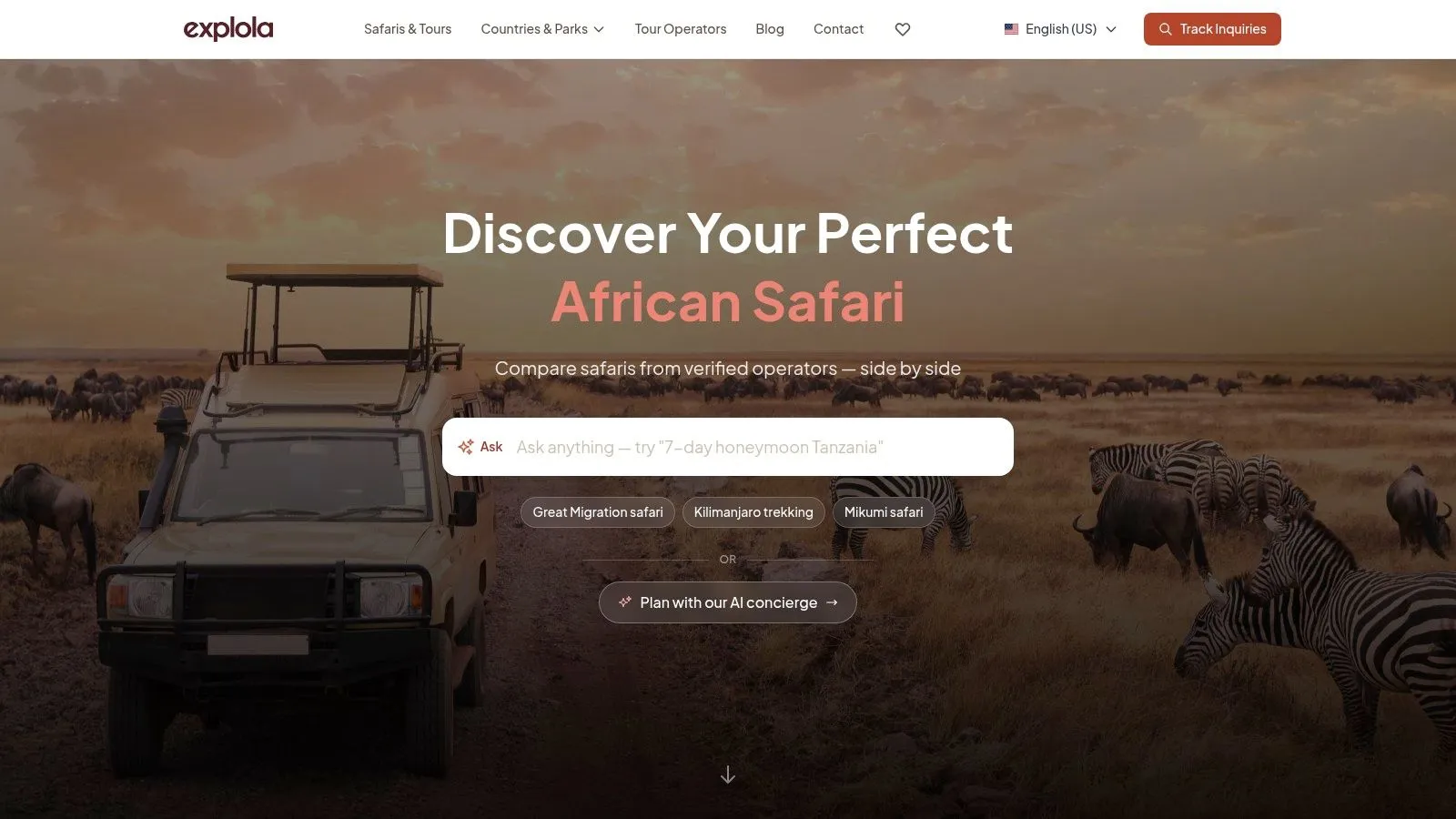
If you're tired of chasing separate WhatsApp threads and half-finished PDFs, centralize your search. Explola lets you compare safari tours side by side, filter by budget and lodge level, and send direct inquiries to verified operators without paying a booking fee. That matters because direct comparison exposes what each quote includes, instead of forcing you to decode every itinerary from scratch.
How to use the workflow
Start with the search filters, then narrow by duration, price band, and accommodation level. Save a few tours to a shortlist, then compare inclusions line by line. The point is to force transparency early, before an operator can hide important costs in the back-and-forth.
For a practical walkthrough of that process, use the platform's own guide to searching and finding your perfect safari. Once you have three quotes in front of you, compare park fees, vehicle type, transfers, and whether drinks or gratuities are included. That's how you stop paying for presentation.
Best habit: keep one note with the real all-in total for each quote, not just the advertised starting price.
When operators answer through one dashboard, it's easier to spot who is vague, who is slow, and who understands the itinerary they're selling. That saves time and reduces the usual booking chaos.
Verifying Operators and Avoiding Booking Risks
A cheap quote from an unknown operator is not a bargain. It's a risk. The safer move is to book through a platform that checks documents, shows a visible verified badge, and attaches genuine post-trip reviews to each operator profile. That gives you more to go on than a slick landing page and a polite email.
If you want to benchmark the market before you book, a travel competitor analysis can help you see how operators present themselves and where they're thin on detail. Use that as a research aid, not a substitute for verification.
What to check before paying
Verified status: Look for proof that the operator has been checked, not just advertised.
Review quality: Read recent traveler reviews attached to the actual operator, not generic testimonials.
Itinerary clarity: The quote should name the camp, the transfer type, and the inclusions.
Payment flow: Direct payment to the operator is fine if the provider is real and traceable.
A transparent booking flow matters because safari logistics are unforgiving. If a transfer is late or a fee is missing, the whole trip feels it. Verified operators are easier to hold accountable, and that's the standard you should demand.
Book your next safari with a quote that shows the cost, the inclusions, and the operator behind it. If you want a cleaner way to compare Masai Mara packages side by side, visit Explola and use it to shortlist verified safari tours before you commit.
Ready to experience this?
Explore Related Safaris
Destinations Mentioned

Daniel writes for the Explola blog, where he covers African safari destinations, wildlife, travel trends, and practical trip planning. His work is centered on making safari travel easier to understand, compare, and plan.
Get Safari Tips & Destination Guides
Join our newsletter for exclusive travel tips, wildlife insights, and safari planning advice.