You're probably looking at a quote for a Masai Mara hot air balloon flight and wondering whether the sunrise, champagne breakfast, and premium price justify giving up a morning game drive. That's the right question. The balloon is memorable, but it isn't a flying replacement for a safari vehicle, and the advertised flight time hides a much longer pre-dawn commitment.
The experience works best when you treat it as a carefully timed aerial view of the Mara, not as a guaranteed wildlife-spotting shortcut. The operator, launch location, wind, basket size, cancellation terms, and included transfers matter more than polished brochure language. Use those details to compare quotes, and you'll know whether the flight belongs in your itinerary.
What a Masai Mara Hot Air Balloon Safari Actually Feels Like
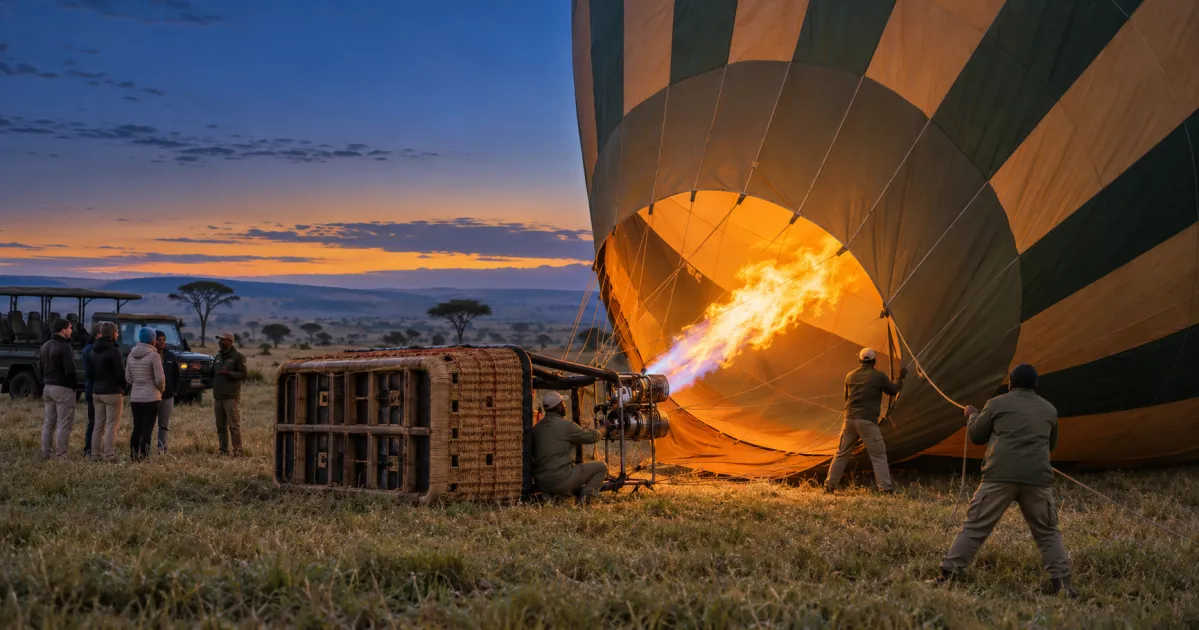
At around 4:30 a.m., a lodge attendant knocks on your tent. You drink hot tea in the dark, pull on a jacket, and climb into a game-drive vehicle while the Mara is still quiet. The transfer to the launch site offers little scenery, so the first vivid moment is usually the orange burner flame illuminating the balloon fabric as the crew inflates it.
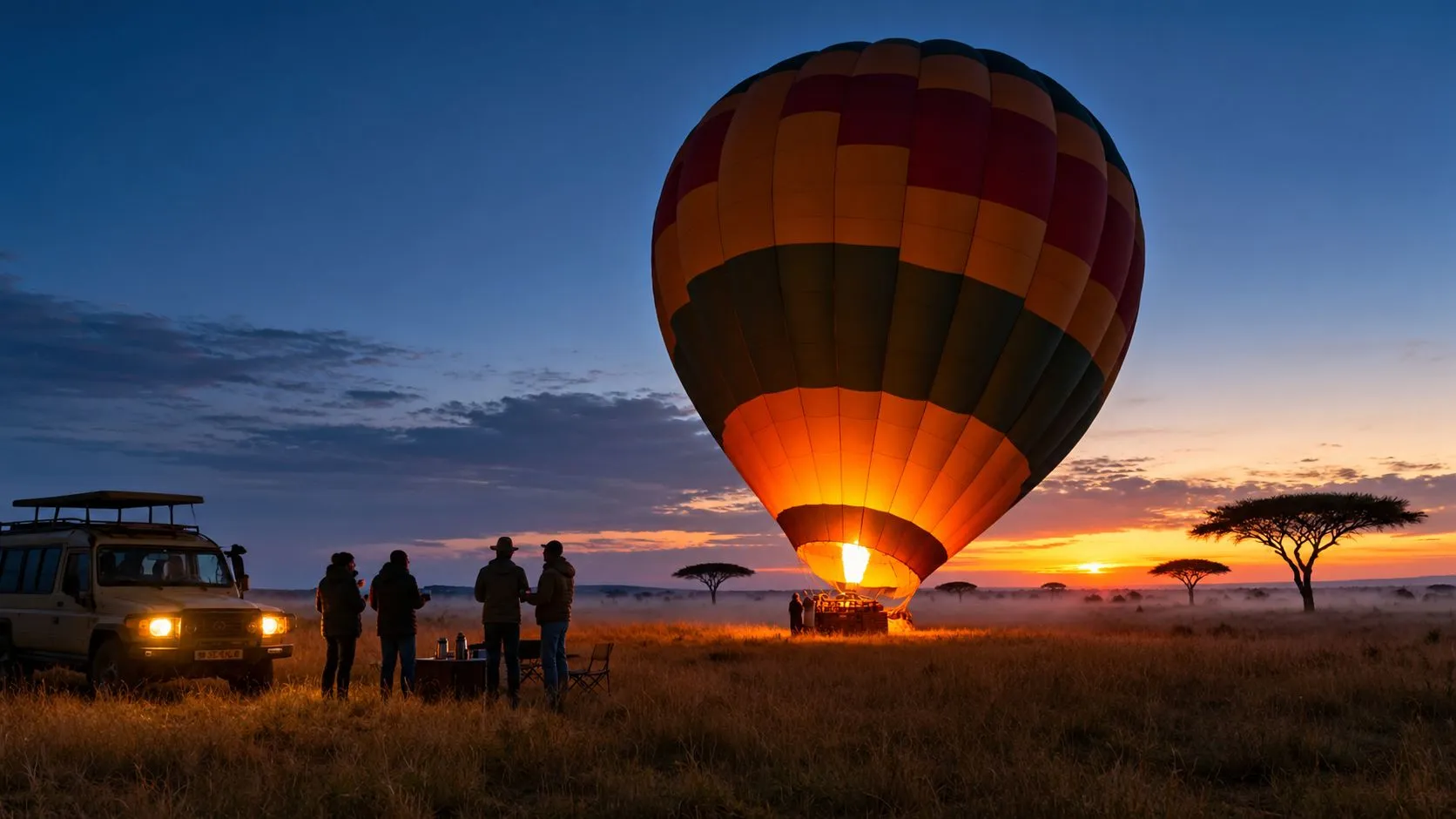
The launch is part of the experience
You board a wicker basket divided into passenger compartments. Shared flights feel sociable rather than private, and your view depends on your position, the basket's capacity, and whether nearby passengers keep their cameras raised. Inflation is noisy, with the burner roaring during launch and occasional adjustments. Once airborne, the sudden lack of engine noise becomes the defining sensation.
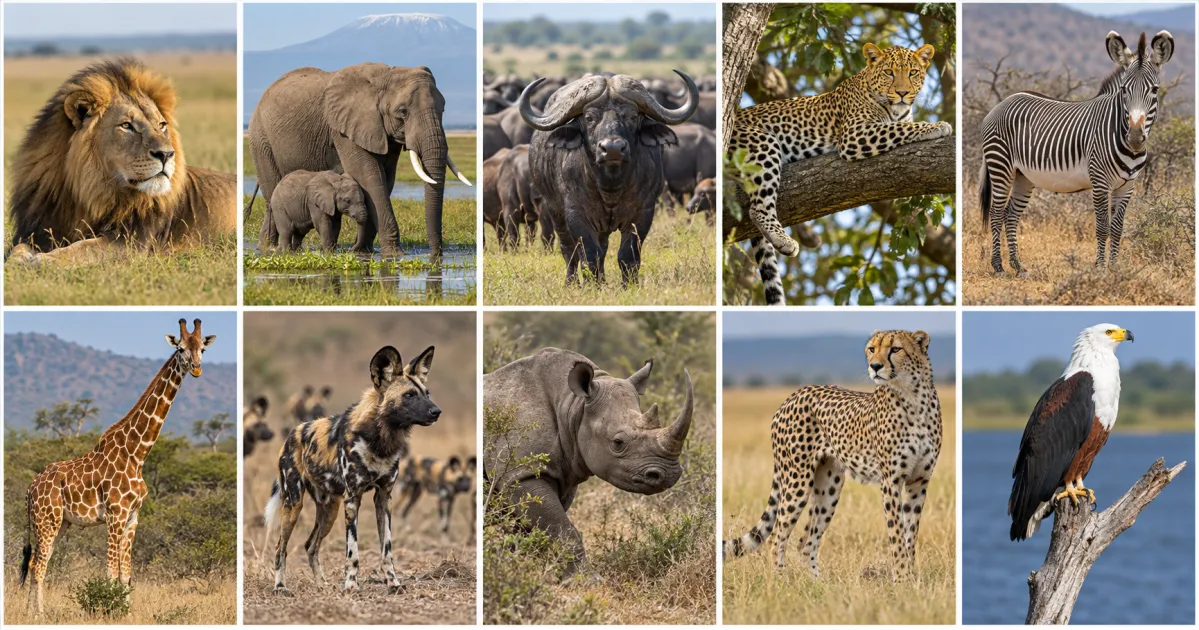
The balloon drifts over the reserve, giving you time to absorb the sunrise, distance, and changing patterns below. Elephants, predators, riverine forest, and tracks across the grassland may appear, but the scene remains broad and unscripted. Wildlife is part of the view, not a sequence of guaranteed close encounters.
Practical rule: Book the balloon for silence, sunrise, and the scale of the Mara. Book a game drive for controlled positioning and dependable ground-level viewing.
The flight generally lasts about 45 to 60 minutes, depending on wind conditions, according to this guide to Mara balloon flight duration. The landing site determines how quickly the recovery crew can reach you, so the experience continues after the airborne portion ends.
Landing turns into a social breakfast
A landing can be gentle or energetic. The basket may touch down and remain upright, or the crew may guide it across the grass before deflating the envelope. Once passengers are safely out, the setting changes quickly. Tables, linen, coffee, and sparkling wine appear on the plains for the traditional post-flight breakfast, depending on the operator's package and location.
Some operators add a flight certificate or signing ritual. Those details are pleasant, but they should not determine your purchase. The value is the aerial perspective and the atmosphere of the morning. A return transfer usually brings you back to camp by mid-morning, leaving time to rest or take a later drive.
Compare that schedule with the rest of your trip before booking. A balloon-inclusive safari itinerary can help you assess the flight alongside transfers, accommodation, and other safari days rather than judging the balloon quote in isolation.
How Timing, Wind, and Weather Shape Your Flight
Dawn provides the most stable conditions for a hot-air balloon because the ground has not yet heated strongly. That limits rising thermals and convective turbulence. Operators typically begin preparing between 5:00 and 6:30 a.m., then aim to finish before daytime heating makes low-level control less predictable, as outlined in this Mara balloon operations guide.
The early departure also matches the Mara's wildlife rhythm. Predators may still be active after the night, while herbivores move toward water and open grazing areas. These patterns can produce strong views from above, but no pilot can promise a particular species. The balloon follows wind layers, not a fixed wildlife route.
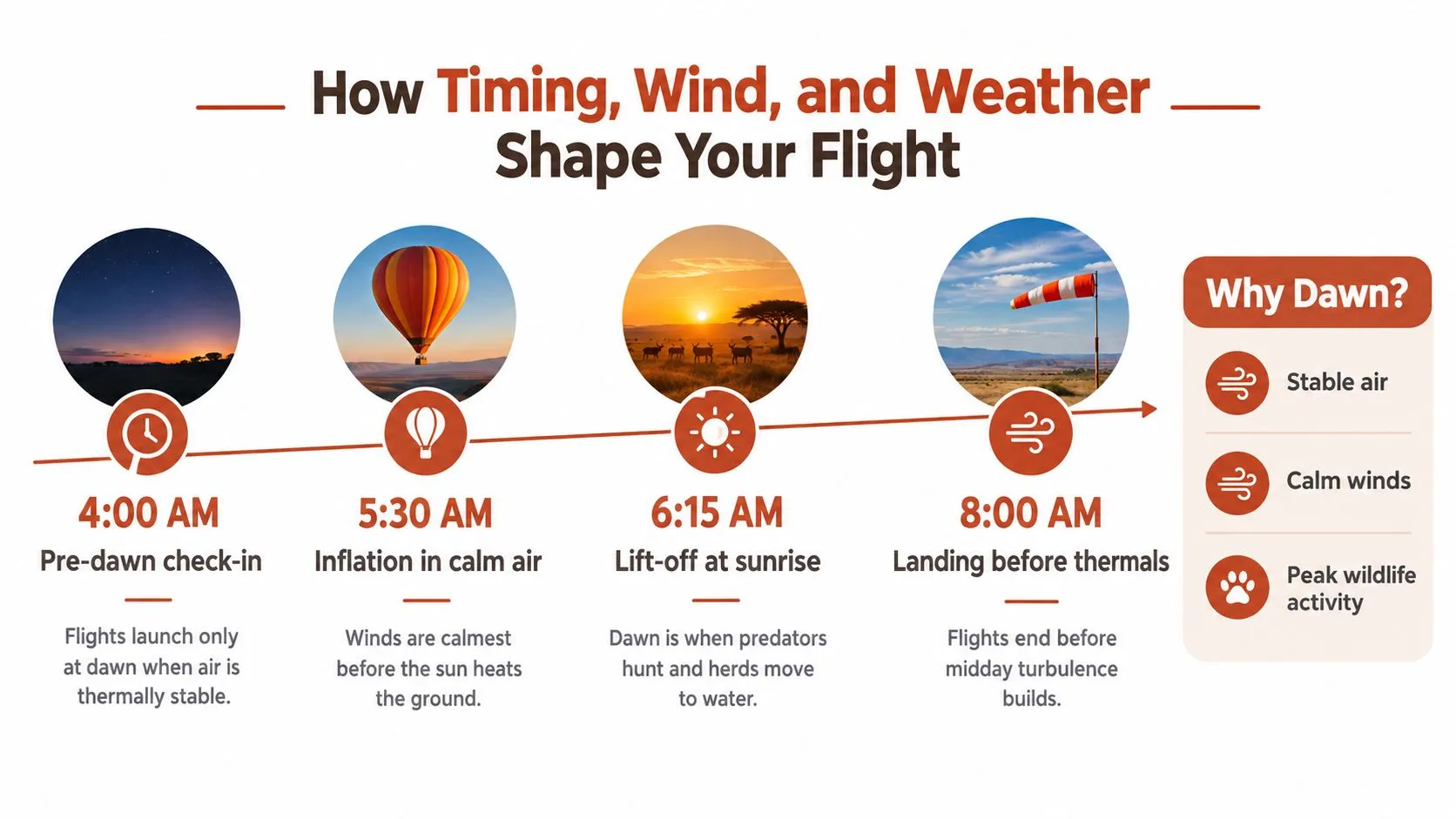
Wind determines the route
A balloon safari is a one-way drift. One guide estimates a typical track of 15 to 25 kilometres, with the wind often carrying the balloon southward into the reserve, as described in this explanation of Mara flight geometry. The pilot changes altitude to find another current, but those adjustments do not provide the positioning control of a safari vehicle.
That operational limit affects the entire morning. The ground team must follow the balloon, assess possible landing zones, and maintain communication as the flight crosses the reserve. A route near the Mara River or Talek corridor may offer excellent scenery, but the wind profile decides where you go. Treat any promised route as sales language, not a guarantee.
Weather decisions protect the schedule
Fog, rain, poor visibility, or unsafe wind can stop a launch. A responsible operator makes that decision before passengers board. Ask for the policy in writing:
Rebooking: Confirm whether another launch is available during your stay.
Refunds: Check whether the flight price is refunded after an operator cancels for safety.
Alternative activities: Ask whether a game drive replaces the balloon or is offered separately.
Communication: Confirm who contacts the lodge and how early you will receive the decision.
The Great Migration period, commonly associated with July to October, can add visual drama while bringing stronger demand and less booking flexibility. Shoulder periods and quieter seasons may offer a calmer process and different scenery. Use this guide to the best time to visit Kenya's safari parks to compare seasonal priorities before committing to a flight date.
Price Ranges and What Is Included in 2026
A balloon flight sits firmly in the premium end of Mara activities. Current published shared-flight rates commonly fall around US$450 to US$470 per adult, while children aged 5 to 11 are often listed around US$350 to US$370, according to published Maasai Mara balloon rates. Other 2026 listings reach roughly US$532 per person, with premium live-priced experiences listed around US$695 to US$765.
Those figures usually describe the flight product, not every cost attached to your morning. A standard booking may include the balloon, crew, breakfast, and some transfers, while park or conservancy charges, lodge pickups, gratuities, certificates, or special breakfast arrangements may be handled separately.
| Tier | Price per Person (USD) | Typical Inclusions | Common Add-Ons |
|---|---|---|---|
| Shared flight | About US$450 to US$470 | Balloon flight, shared basket, post-flight breakfast, scheduled logistics | Park fees, distant-camp transfer, tips, certificate |
| Higher-priced shared or premium experience | Up to about US$532, with some live-priced listings at US$695 to US$765 | Flight with enhanced logistics or premium package design | Private breakfast, special transfers, seasonal supplements |
| Private charter | Confirm directly with the operator | Exclusive balloon arrangement, subject to availability and operating conditions | Dedicated transfers, upgraded breakfast, private itinerary services |
Read the quote line by line
A couple paying standard shared rates can easily spend about US$900 to US$1,000 for the flight alone, before extra charges, as reflected in the published pricing guidance above. That makes a cheap-looking headline quote less useful than a complete written breakdown.
Ask whether the price includes:
Lodge transfer: Remote camps can require additional recovery and transfer logistics.
Reserve or conservancy charges: Some operators pass these through, while others absorb them.
Breakfast: Confirm whether it's a full bush breakfast, a simpler landing meal, or a lodge return.
Passenger extras: Check certificates, drinks, and gratuities separately.
Cancellation protection: A low quote with harsh terms isn't good value.
Don't accept a verbal promise that “everything is included.” Request a line-item quote for your dates, lodge, party size, and preferred basket. The cost of the flight is only one part of the decision. The operational fit determines whether you get a smooth morning or a frustrating surprise at check-in.
Choosing an Operator You Can Trust
Price should come after safety and operating competence. The Mara has a long ballooning history. The modern commercial story is commonly traced to 3 January 1976, when Alan Root flew the inaugural commercial hot-air balloon flight from Keekorok Lodge, an event associated with what later became Balloon Safaris Limited, as recorded in this history of Mara balloon routes. Governors' Balloon Safaris is described as operating from 1978, while Hot Air Safaris is listed as starting in 1994, so the market has developed beyond a single operator.
That history is useful context, but longevity alone doesn't prove that a current flight is right for you. Check the present operating documents and the crew assigned to your departure.
Six checks that deserve your attention
| Criterion | What to Verify | Priority |
|---|---|---|
| Aviation compliance | Current KCAA licensing and the specific balloon airworthiness certificate | Highest |
| Pilot competence | Mara operating experience, flight record, and current medical clearance | Highest |
| Basket capacity | Exact passenger capacity and compartment layout | High |
| Passenger insurance | Liability coverage for passengers, not just hull protection | High |
| Recent reviews | Current guest feedback on TripAdvisor or SafariBookings | Medium-high |
| Cancellation policy | Weather rules, refund process, rebooking terms, and notice periods | High |
The first question is not “How many years have you operated?” Ask for the specific balloon's airworthiness documentation and confirmation that the operator holds the required aviation approvals. A general tourism registration doesn't answer that question.
Pilot experience matters because the pilot chooses altitude, interprets changing wind layers, and selects a landing field. A pilot with limited Mara experience may still operate legally, but local familiarity affects how confidently the crew manages route uncertainty and recovery logistics.
Basket size changes the experience
A smaller basket can provide better sightlines and a less crowded photographic frame. A larger basket may reduce the per-person price but creates more movement around the compartments and more competition for the best viewing position. Ask for the actual capacity, not “small group” or “exclusive” as marketing language.
Insurance deserves the same scrutiny. Confirm passenger liability limits and ask whether the policy applies to the specific aircraft and flight operation. Finally, read the cancellation policy before paying. A policy that transfers most weather risk to the passenger may be acceptable if clearly stated, but you should know that exposure in advance.
My booking order: verify the aircraft, assess the pilot, confirm passenger insurance, then compare the price.
Comparing and Booking Operators with Explola
A marketplace can reduce the repetitive work of contacting several operators, but you still need to read the responses critically. On Explola, filter Kenya and Mara itineraries by the hot-air-balloon activity, then compare the departure camp, basket arrangement, breakfast format, and published inclusions in one place.
Start with the details that change the price most:
Enter your lodge or camp: The launch transfer may differ depending on where you stay.
Add travel dates and party size: Shared availability and seasonal pricing depend on the booking request.
Check the activity wording: Confirm that the balloon is included, rather than merely available as an optional extra.
Compare breakfast arrangements: A bush breakfast and a lodge breakfast aren't interchangeable experiences.
Open the cancellation terms: Look for weather cancellations, rebooking, refunds, and deposit deadlines.
Message before paying: Ask about basket capacity, aviation documents, insurance, and transfer surcharges.
Explola's operator marketplace is designed to centralize safari listings, direct inquiries, operator verification details, and quote responses. It can help you compare up to several operator replies through one inquiry workflow rather than managing a scattered email chain, but the final contract remains between you and the selected operator.
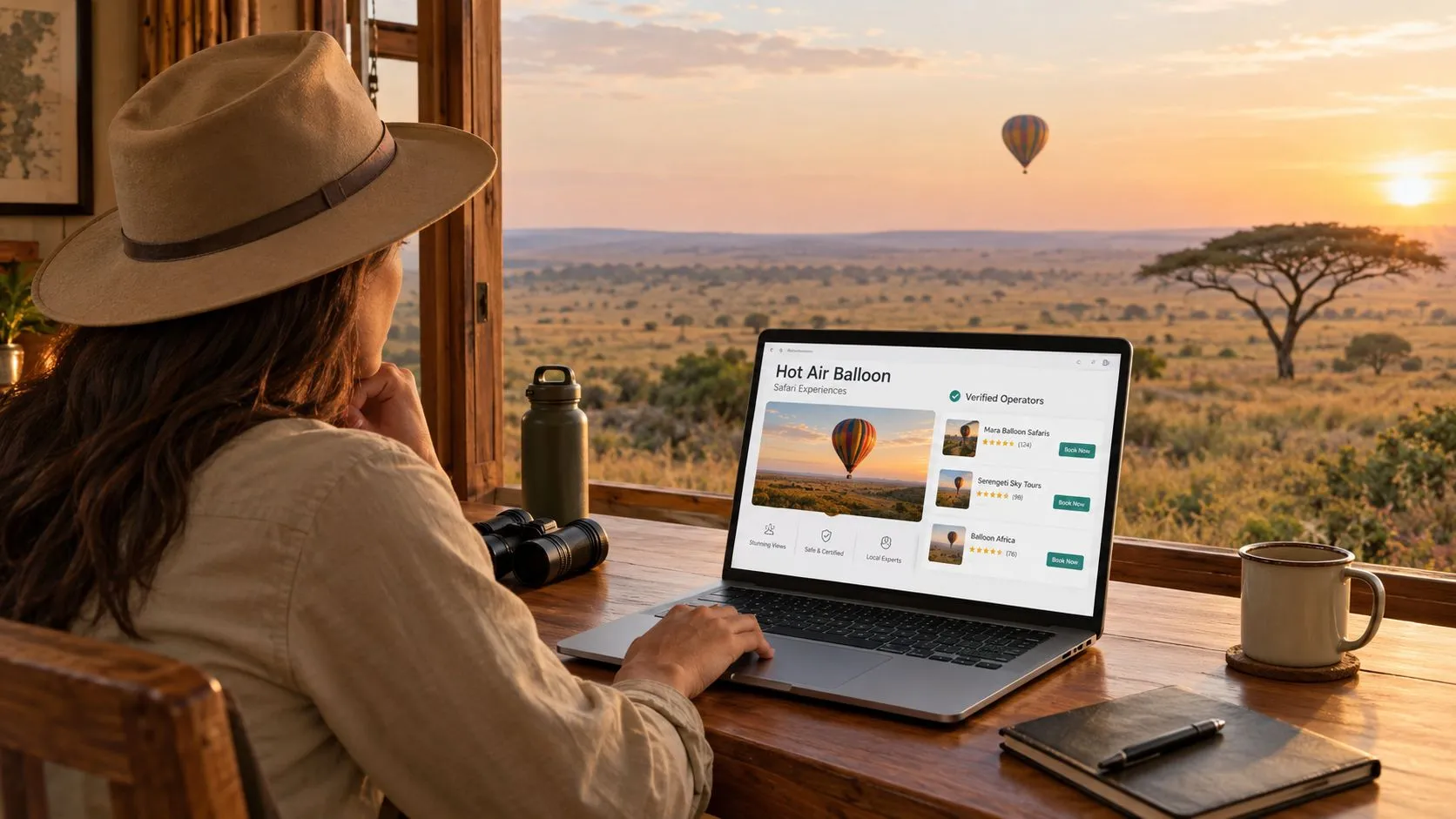
The useful comparison isn't the lowest number. Put each response into the same mental checklist: flight, transfer, breakfast, fees, insurance, basket capacity, cancellation terms, and payment schedule. If one quote is vague while another names every line item, the transparent quote is usually the safer basis for a decision, even if it isn't the cheapest.
Fitting a Balloon Flight Into a Multi-Day Mara Itinerary
A balloon flight belongs in the middle of a Mara stay, not on the morning you arrive and not immediately before an international connection. You need enough room for an early cancellation, a rebooking opportunity, and the simple fact that pre-dawn starts are tiring.
A practical three-day sequence
Day 1 is for arrival. Fly into a Mara airstrip, transfer to camp, settle in, and use the late afternoon for a short drive. That first drive helps you adjust to the terrain without turning arrival day into a demanding wildlife marathon.
Day 2 is balloon morning. Wake for the pre-dawn transfer, complete the flight, and take breakfast after landing. Keep the afternoon deliberately light. A camp deck, pool, nap, or short evening drive will serve you better than scheduling another major activity immediately after returning.
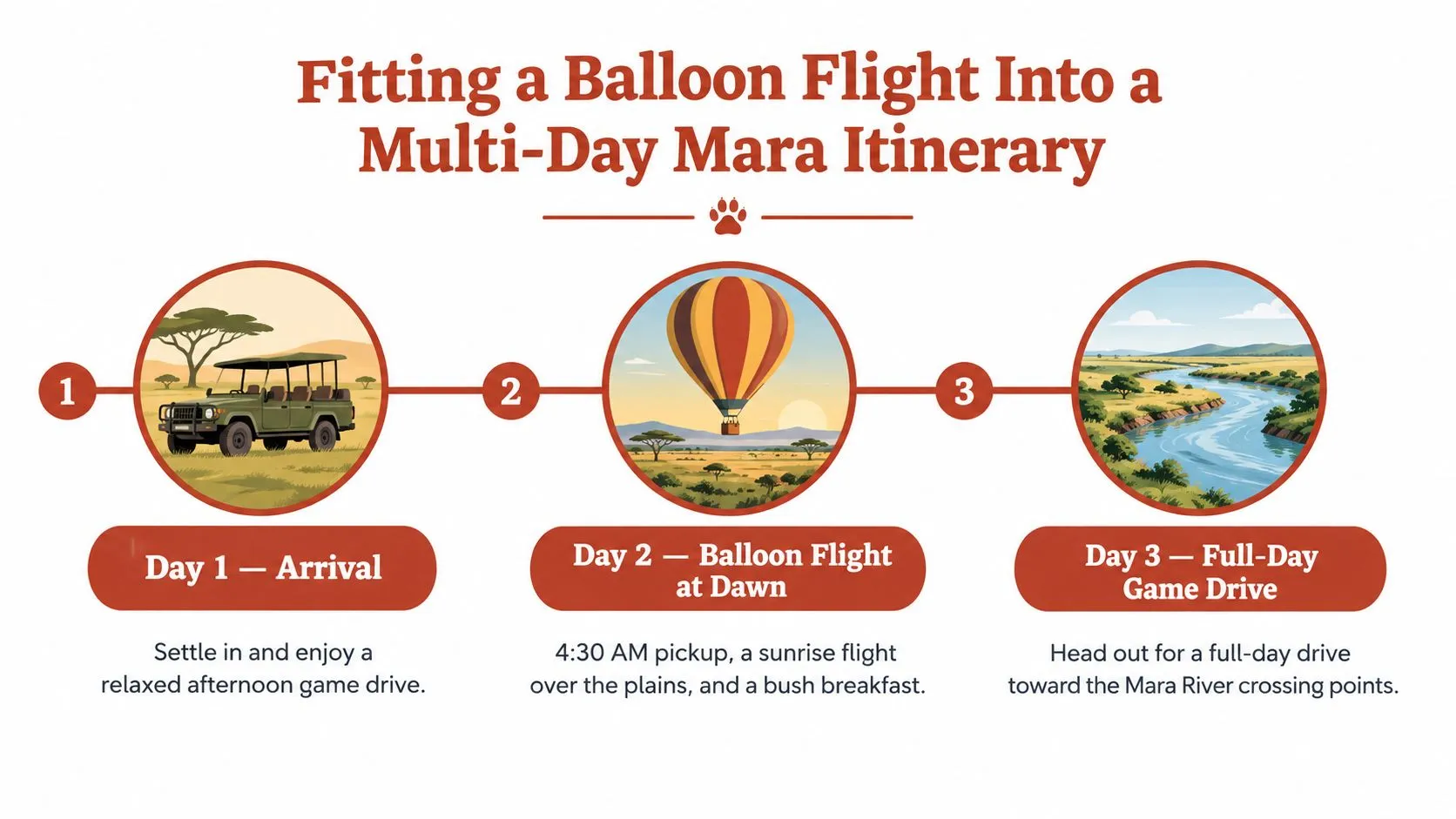
Day 3 is for the ground game drive. Use the full day for a longer route toward the Mara River area or another wildlife zone selected by your guide. The vehicle gives you the flexibility to stop, wait, reposition, and work with animal behavior in a way the balloon can't.
This arrangement also separates two distinct photographic experiences. The balloon gives you sunrise layers, broad plains, riverine vegetation, and abstract patterns. The ground drive gives you eye-level portraits, controlled composition, and time to follow behavior.
Pack for the basket, not the brochure
A large tripod is awkward in a shared basket. A beanbag is more practical once you're back in a vehicle, while a lens hood helps control low-angle glare. Carry spare batteries because charging access may be limited during the early transfer and landing sequence.
A wide-to-standard zoom is usually more useful in the basket than a very long lens. You'll photograph the balloon, horizon, sunrise, and scenery as much as wildlife. Keep equipment secured, avoid changing lenses during the busiest moments, and leave room for fellow passengers.
The five-day Maasai Mara safari itinerary from Explola shows why adding buffer days can make a balloon activity easier to fit than forcing it into a compressed visit. The flight should enhance the itinerary, not dictate every other morning.
Setting Honest Expectations for Wildlife and Photography
The balloon is not the Mara's best wildlife-viewing tool. A vehicle wins when you want to approach an animal carefully, wait for behavior, change position, or follow a sighting across open ground. The balloon offers something else, a high, quiet perspective that turns the reserve into a living map.
Altitude and wind limit close-up encounters. The basket moves passively, the pilot can't hover over a pride, and fellow passengers share the available viewing space. You may see lions, elephants, or herds, but you shouldn't book the flight expecting a sequence of frame-filling animal portraits.
The most reliable subject is the Mara itself, especially when first light separates the plains, trees, rivers, and moving herds.
Photograph the atmosphere deliberately
At lift-off, light levels can be low. Use a shutter speed fast enough to reduce movement blur, raise ISO when necessary, and check exposure as the sun appears. Burner bursts create dramatic color but can produce abrupt highlights, so watch the histogram rather than trusting the rear screen.
The basket introduces practical constraints:
Stabilize without crowding: Rest equipment carefully, but don't block another passenger's view.
Choose a flexible lens: A wide or standard zoom handles the scenery and shared-basket setting better than a heavy telephoto.
Protect the front element: A lens hood helps with glare from the rising sun.
Carry spare power: Batteries drain quickly in cold pre-dawn conditions and during repeated image review.
Keep gear attached: A strap or secure grip matters during inflation, landing, and vehicle transfers.
The landing breakfast can produce better close-range wildlife photographs than the flight itself. Animals may appear near the open grassland, and you're back at ground level with more compositional control. That possibility is a bonus, not a guarantee, so keep your camera ready without treating breakfast as a planned wildlife hide.
Migration months can provide broad patterns of wildebeest and zebra from above, while quieter periods may deliver more open space and a less crowded atmosphere. For image captions and ways to describe scenes without resorting to clichés, PostSyncer's nature caption ideas can help after the trip. Use the balloon for scale and mood, then reserve your serious animal photography for the game drives.
Quick-Reference Checklist and Common Questions
Before you pay, get the operational details in writing. A polished booking page isn't enough if it doesn't identify the aircraft, transfer, insurance, and weather procedure.
Checklist Item | What to Confirm |
|---|---|
Operator status | Current aviation approvals and aircraft airworthiness documentation |
Launch plan | Pickup time, launch area, expected flight duration, and return timing |
Insurance | Passenger liability coverage and policy applicability |
Transfers | Lodge pickup, remote-camp supplements, and recovery arrangements |
Price | Flight, breakfast, fees, certificate, gratuities, and any taxes |
Cancellation | Weather refund, rebooking window, and notice procedure |
Passenger suitability | Age limits, mobility needs, health restrictions, and basket access |
Common questions
What happens if weather cancels the flight?
Ask whether the operator offers a refund, another launch during your stay, or an alternative activity. Don't assume a game drive automatically replaces the balloon.
Is there a single supplement?
A solo traveler may pay a different rate if the operator requires a minimum booking or prices the experience around shared occupancy. Request a solo quote rather than dividing a couple's price by two.
Can children fly?
Age limits vary by operator, and the pre-dawn schedule can be demanding. Confirm the minimum age, height or mobility requirements, and whether the child can remain safely in the basket throughout the flight.
What should I tip?
Tipping is discretionary. If the pilot, chase crew, and breakfast team provide good service, ask your lodge or operator how gratuities are normally divided.
Can luggage travel with me on a game-drive day?
A basket isn't a luggage compartment. Arrange luggage storage and transfer timing with the camp before the balloon morning, especially if you're changing accommodation.
Do flights operate around the migration shoulder months?
Flights generally depend more on safe weather and operator scheduling than on migration sightings. Confirm availability for your dates, and book for the aerial experience rather than a promised crossing or animal encounter.
Request side-by-side quotes through Explola and compare the checklist against each operator's written response. That process exposes missing fees and vague cancellation language before you leave the deposit.
Explola lets you compare verified African safari operators, request direct quotes, and review itinerary details in one place, including Mara trips where ballooning may be added or included. Visit Explola with your lodge, dates, and party size ready, then use the written responses to choose the flight that fits your budget and operational priorities.
Tags
Ready to experience this?
Explore Related Safaris
Destinations Mentioned

Daniel writes for the Explola blog, where he covers African safari destinations, wildlife, travel trends, and practical trip planning. His work is centered on making safari travel easier to understand, compare, and plan.
Get Safari Tips & Destination Guides
Join our newsletter for exclusive travel tips, wildlife insights, and safari planning advice.