Most advice about a Tanzania safari on a budget starts with the wrong question. It asks how to make the trip cheaper, when the question is what the lowest realistic price buys once the hidden costs are added.
Tanzania is still worth the money, but it is not the cheap safari shortcut people hope for. Once you factor in park fees, crater charges, vehicle costs, guide time, and sometimes internal flights, the “budget” label starts looking a lot like tight mid-range rather than shoestring. Recent 2026 pricing guides show that a 7-day trip can land around $2,800–$4,900 in mid-range form, and internal flights alone can add about $600–$900 per person round trip (Venchatravel).
That does not mean you should avoid Tanzania. It means you should stop comparing it to fantasy pricing and start comparing it to value. If you know where the money goes, you can still build a smart trip, and you can avoid paying for “budget” choices that ultimately cost more than they save.
Why Tanzania Is Not Always the Cheapest Safari
Tanzania gets sold as the obvious budget safari answer because people see a low daily starting price and stop there. That's lazy advice. The park system is the core cost driver, and once you add in the big-name parks, the floor rises fast.
Serengeti entry for non-resident adults is around $70 to $83 per 24-hour day, and Ngorongoro Crater adds a separate service charge that pushes a single crater visit past $70 per vehicle in the fee structure used by current pricing guides (Venchatravel). On top of that, Tanzania's Northern Circuit often requires either flying in or committing to long overland transfers, and both choices affect the final bill. If you move into private blocks such as Grumeti or Loliondo, concession fees can push the trip further out of budget territory.
That is why I don't call Tanzania a shoestring destination. I call it a tight-budget or entry mid-range destination when you want the classic parks. It still makes sense because the route is famous for a reason. Serengeti, Ngorongoro, and Tarangire are the kind of parks people plan an entire Africa trip around.
Practical rule: if the itinerary includes the best-known parks, assume the quote is a starting point, not the final price.
Where the comparison gets interesting
Tanzania is not automatically the cheapest East Africa choice. Kenya's Masai Mara often comes in cheaper now because reserve fees fell relative to Tanzania's in 2024, South Africa's Kruger self-drive can be a fraction of the cost, and Uganda is a different product but not a radically cheaper overall trip once the rest of the itinerary is built out. That's why the better question is not, “How do I make Tanzania as cheap as possible?” It's, “When does Tanzania become good value for what I'm trying to see?”
The answer is simple. Tanzania becomes good value when you want the Migration, the crater, and a properly guided northern circuit, and you're willing to travel in a way that respects the cost structure instead of fighting it.
The Actual Cost Stack of a Budget Safari
A budget safari in Tanzania looks cheap until you break it apart line by line. The quote on a travel page usually hides the parts that matter most, especially on a 7-day northern circuit. I'd rather see a blunt quote than a polished one that leaves you guessing.
What you are really paying for
The unavoidable costs are the park and conservation fees, the Ngorongoro crater fee, the vehicle and guide, fuel, and accommodation. If your camp sits inside a private block, concession fees may also be buried in the rate. Then there are the softer costs operators often leave out of the headline price, such as tips, drinks, and sometimes the airport or park transfer logic.
The biggest mistake first-timers make is assuming the trip gets cheap because they chose camping. It doesn't. Camping removes some accommodation cost, but the park system still charges you, and the vehicle still needs a guide, fuel, and maintenance. For a 7-day trip, the realistic floor is not the brochure price. It's the full stack.
| 7-Day Northern Circuit Cost Stack (2026 estimate, per person) | Camping Version (USD) | Budget Lodge Version (USD) | Fixed or Flexible? |
|---|---|---|---|
| Park fees and conservation charges | High | High | Fixed |
| Ngorongoro crater service charge | Included in route cost | Included in route cost | Fixed |
| Vehicle and driver-guide share | High | High | Fixed |
| Fuel and road transfers | Moderate | Moderate | Fixed |
| Accommodation | Lower | Higher | Flexible |
| Internal flight | Usually avoided | Sometimes added | Flexible |
| Meals | Usually included | Usually included | Mostly fixed |
| Tips envelope | Often forgotten | Often forgotten | Flexible |
The useful split is simple. Park fees and crater charges are fixed, accommodation and internal flights are flexible. If you want to cut meaningfully, cut the flight first and then choose a lower accommodation tier. Everything else is structural.
Straight answer: camping is not the cheapest option if it forces a private vehicle for two people and you still pay all the park costs.
What a real budget stack looks like
A camping-based 7-day northern circuit can sit around $2,200–$2,800 per person excluding flights, while a budget lodge version can sit around $3,500–$4,500. Solo travelers need to be extra careful because a single supplement can add 30 to 50% to the quote if they are not on a shared departure. The best way to protect your wallet is to compare complete itineraries, not isolated nightly rates.
For tips, I'd set aside $150–$250 per guest for a 7-day trip and treat that as part of the safari budget, not an optional extra. That envelope matters because many first-time travelers spend only on the package and then get surprised at the end.
The two real levers are the internal flight and the lodging tier. If an operator tells you there's another major savings hiding somewhere else, ask them to show it line by line.
Best Time to Travel for Lower Prices
Season is where smart budget travelers win. Tanzania has a clear price rhythm, and the cheapest month is not always the smartest month. You want the moment when prices soften but the trip still feels like a proper safari, not a compromise you'll regret.
Dry season, shoulder season, green season
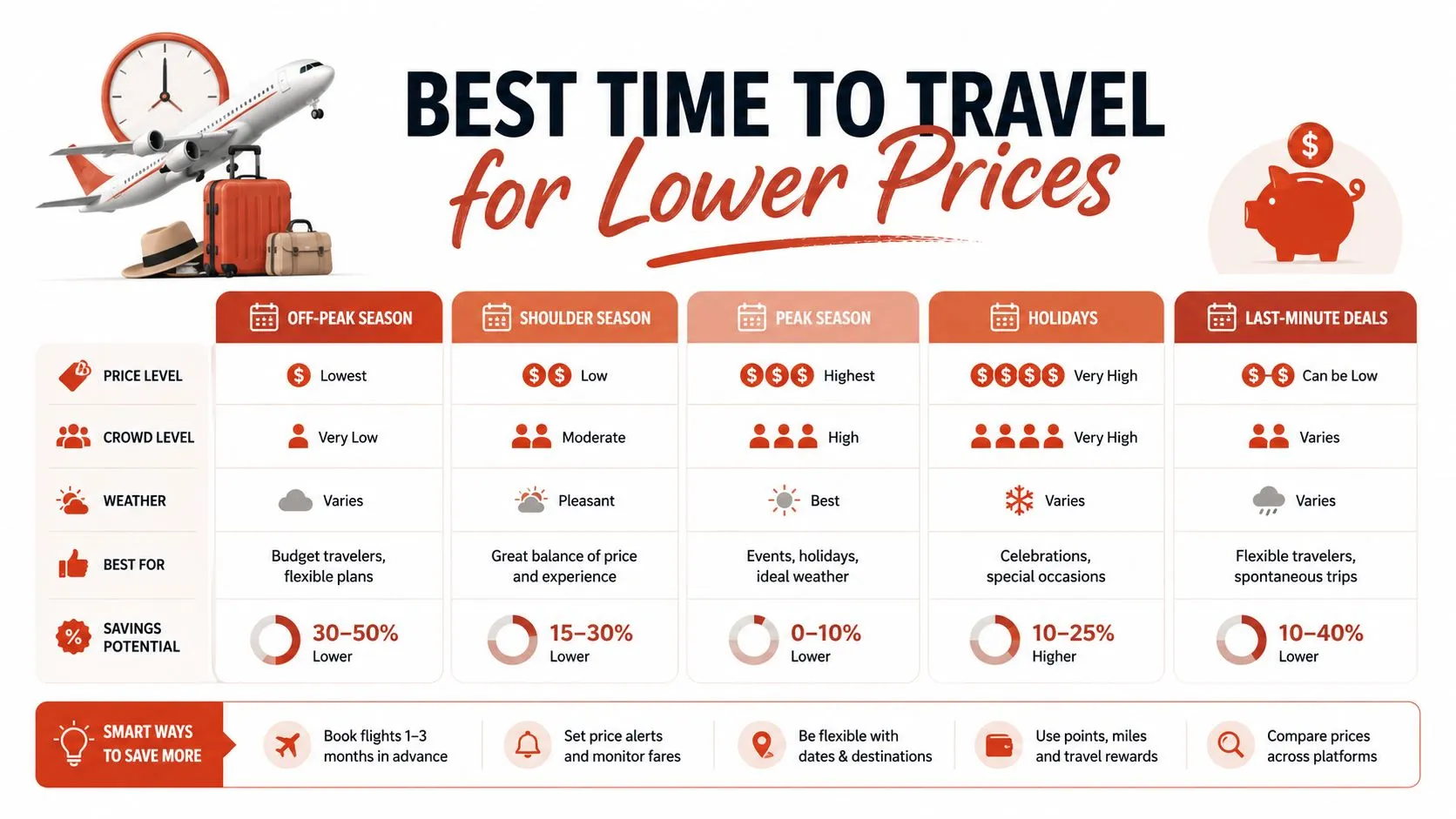
Late June to October is the classic dry season. Wildlife viewing is strongest, the Mara River crossings often peak in August and September, and prices are highest because demand is highest. The practical downside is that lodge rates can sit 40 to 80% above shoulder rates, and good 4WD vehicles get booked out early.
Shoulder months are the prime sweet spot for budget hunters. Early June, late October, and early November often offer a better balance, with crowds thinning before peak pricing fully disappears and rates dropping 15 to 30%. If you want to stretch money without ruining the experience, you should look here first.
Green season, especially November to March, is where serious savings appear. Lodge rates fall hard, operators release last-minute deals to fill vehicle space, and flexible travelers can often save 20 to 35% if they book late and accept weather risk. Rain can affect game drives, vegetation gets thicker, and cats are harder to spot, but the trade-off is real value.
The one exception I'd pay up for is Ndutu calving season. If that's your priority, don't obsess over the cheapest date. Pay for the experience you want.
My recommendation is blunt: choose late October or early November if you're a first-timer chasing value, and choose March if you're flexible enough to chase genuine deals.
Camping, Budget Lodges, or Mid-Range
Accommodation is where budget safaris either stay honest or become misleading. People hear “camping” and assume they've chosen the cheapest possible path, but that's only true when the whole package is structured properly. In Tanzania, the accommodation decision changes the feel of the trip, the logistics, and the final bill.
Camping is cheapest only in the right setup
Camping means shared or private sites inside or near parks like Serengeti and Tarangire. You usually get the tent, mattress, sleeping bag, and meals cooked by the crew, but you're also dealing with noise, early wake-ups, and limited privacy. It's the rawest version of the trip, and I'd only recommend it if you're fine with a no-frills routine.
Budget camping can save money, but not automatically. If the operator has to build the route around a campsite inside a park, the park-related overnight logic can still push the total up. That's why camping is most useful when it reduces the accommodation line without inflating the vehicle or routing costs.
Budget lodges are the sweet spot for most first-timers
Budget lodges and tented camps on the park edge usually give you en-suite bathrooms, fixed beds, and basic electricity, often with generator limits. You lose the campfire adventure, but you gain sleep, easier mornings, and a cleaner experience after long drive days. For many first-time travelers, this is the most sensible compromise.
The hidden cost risk here is assuming “outside the park” means cheap enough to ignore everything else. It doesn't. The lodge may be cheaper than an in-park option, but the rest of the safari still behaves the same way, which is why the savings are helpful but not dramatic.
Mid-range is where comfort starts to climb
Mid-range lodges inside the parks bring pools, stronger beds, easier vehicle access, and a noticeably smoother rhythm. They also push the price jump higher than many first-timers expect. If you want a cleaner sleep and better base camps, pay for mid-range intentionally rather than trying to hide it inside a “budget” label.
| Accommodation options on a Tanzania budget safari (per person per night, 2026) | Option | Price Range (USD) | Included | Main Trade-off | Hidden Cost Risk |
|---|---|---|---|---|---|
| Camping | Shared or private campsite | Lower end of the spectrum | Tent setup, mattress, sleeping bag, meals | Less comfort, more noise | Park camping logic can reduce savings |
| Budget lodge or tented camp | Park edge or nearby | Mid budget range | En-suite room or tent, fixed bed, meals | Less bush feel | Transfers can add up |
| Mid-range lodge | Inside or near parks | Higher budget range | Better beds, often stronger amenities | Bigger spend | Quietly turns a “budget” trip into mid-range |
For a direct example of how a budget camping route is usually packaged, look at this 6-day budget camping safari in Serengeti, Ngorongoro, Tarangire, and Lake Manyara and compare the inclusions carefully. The route matters less than the structure of the rate.
How to Compare Operators Without Hidden Fees
A good quote should tell you exactly what you're buying. A bad quote makes you do the math after the deposit is already paid. On a marketplace or with any direct operator, you need to treat the quote like a contract, not a sales pitch.
Start with the route, not the price
Filter by the actual circuit you want, then by travel month, then short-list three or four operators. If you're aiming for Tanzania's northern circuit, compare quotes on the same route and the same dates, otherwise you're not comparing like for like. A cheaper quote on the wrong itinerary is just noise.
From there, read the inclusions line by line. I want to see park fees, concession fees if relevant, vehicle and guide, fuel, drinking water, flights if any, and any gratuity expectations spelled out cleanly. If a quote hides those items in “extras,” it is not a clean budget quote.
The tricks that cost people money
The most common trap is “per person sharing” pricing that only works at maximum occupancy. Another is the single supplement, which can turn a reasonable quote into a painful one. I also watch for vehicle-only pricing, which looks low until you realize a proper guide is not included.
If you're using a marketplace like Explola's operator directory, use it to shortlist verified operators, then compare the actual inclusions, not just the starting price. That's the whole point of a comparison platform, it makes the quote structure visible before you ask for a deposit.
Good operators don't bury the extras. If you have to hunt for what's missing, the quote is already working against you.
Ask every operator these five questions before you pay anything:
What exactly is included in the per-person price, and what is not?
Are park fees, crater charges, and fuel included in full?
Is the vehicle private, shared, or only quoted by seat?
Will I pay a single supplement if I travel alone?
Are drinking water, flights, and tips part of the package or extra?
If the answers feel vague, keep shopping.
A Sample 7-Day Budget Itinerary at Three Prices
Take the same route and watch how fast the price changes. A 7-day northern circuit can look almost identical on paper and still land in completely different budget brackets depending on whether you share a vehicle, camp, or upgrade the lodging. The route itself is not the whole story.
One itinerary, three structures
A traveler starting in Arusha, visiting Tarangire, Ngorongoro, and the Serengeti, then returning via Ngorongoro and departing, can book this trip at very different levels. The cheapest version is usually a group camping safari with shared vehicle and guide costs. The middle version is a private budget trip for two. The top of this comparison is a private mid-range trip with better lodges and a cleaner transport setup.
| Same 7-day northern circuit at three budget levels (per person, 2026) | Tier | Price (USD) | Accommodation | Vehicle & Guide | Included | Excluded | Savings vs Tier 3 |
|---|---|---|---|---|---|---|---|
| Group camping safari | Tier 1 | About $1,800 | Basic tents | Shared | Core park circuit, meals, basic camping support | Internal flight, upscale lodging, many extras | High |
| Private budget trip for two | Tier 2 | Mid budget range | Budget tented camps | Shared vehicle window | Better privacy, same major parks | Flight upgrades, mid-range comfort | Moderate |
| Private mid-range trip for two | Tier 3 | Up to about $5,500 | Mid-range lodges | Private | Stronger comfort, shorter transfer stress | Lower-cost camping trade-offs | Baseline |
The important part is not the sticker price, it's where the money shifts. Tier 1 saves on lodging and spreads transport over more people. Tier 2 buys privacy without going all the way up the comfort ladder. Tier 3 pays for better beds, smoother logistics, and less friction on the road.
That is why the same 7-day itinerary can sit anywhere from roughly $1,800 to $5,500 per person depending on the structure you choose. The route hasn't changed. The economics have.
I'd choose Tier 1 only if you're happy camping and sharing. I'd choose Tier 2 if you want value without feeling squeezed. Tier 3 makes sense if comfort matters more than squeezing every last dollar out of the trip.
When to Choose Tanzania and When to Skip It
Tanzania is the right budget safari choice for some travelers and the wrong one for others. The difference comes down to flexibility, group size, and what you want to see. If you ignore that, you'll either overspend or choose the wrong country.
Who should still book Tanzania
First-time Africa travelers who want the Serengeti Migration or the Ngorongoro Crater once should still choose Tanzania. So should flexible travelers who can move into the long rainy season for better lodge rates, because that's where the value improves most. Small groups of four to six people also do well here because they can split fixed vehicle and guide costs more efficiently.
If you're planning the rest of the trip, the country guide on HeyLocals Tanzania destinations is a useful starting point for deciding some volunteer activities on your non-safari nights for projects with real impact or you can reach out to our partner operators who can also provide you with information on non-safari activities.
Who should look elsewhere
Solo travelers on a tight budget need to be honest with themselves. The single supplement can make Tanzania feel expensive fast. If your bucket list is mainly Big Five sightings and you'd be just as happy elsewhere, Kenya may give you a better price-value balance. If your dates are locked to July through September and you can't move, you lose the best budget flexibility right away.
Explola's Tanzania country page is useful if you want to compare actual trips instead of guessing from broad destination summaries. That's the smarter way to shop, because you can see what budget means in practice, not in marketing language.
Decision rule: if you can camp, share a vehicle, and avoid the July to September peak, Tanzania in 2026 is genuine value. If you can't, Kenya or Uganda will usually cost less for similar sightings.
If you're ready to compare real Tanzania safari quotes instead of vague package labels, visit Explola and shortlist itineraries by route, month, and budget tier. You'll see how the pricing stack changes before you commit, which is exactly what you need if you're trying to keep a safari affordable without getting surprised by hidden fees.
Ready to experience this?
Explore Related Safaris
Destinations Mentioned

Daniel writes for the Explola blog, where he covers African safari destinations, wildlife, travel trends, and practical trip planning. His work is centered on making safari travel easier to understand, compare, and plan.
Get Safari Tips & Destination Guides
Join our newsletter for exclusive travel tips, wildlife insights, and safari planning advice.