You're probably comparing two glossy brochures that both promise the same things: the Serengeti, the Maasai Mara, the Great Migration, and perhaps Ngorongoro Crater. The problem is that identical park names can hide very different amounts of driving, border time, game-drive time, accommodation quality, and seasonal logic.
A successful Kenya Tanzania safari itinerary isn't a checklist of famous parks. It's a route engineered around one ecosystem, two tourism jurisdictions, changing rainfall, and the number of usable safari hours you truly have. Before you compare prices, decide which wildlife sector fits your travel month, how much transfer time you can tolerate, and whether your priorities are migration behavior, predators, terrain features, privacy, or comfort.
What a Kenya Tanzania Safari Actually Requires
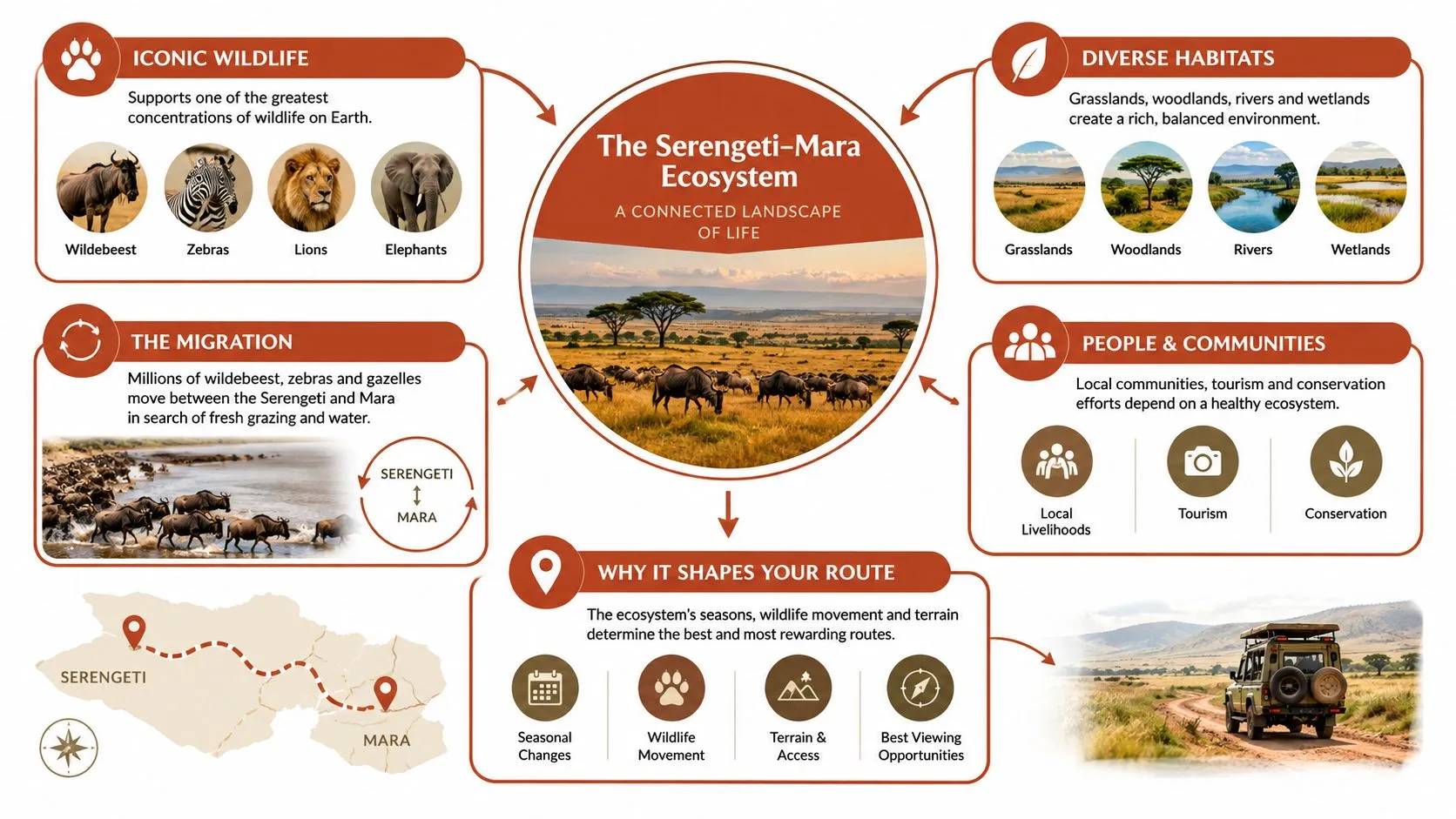
The central planning decision is simple: treat Kenya and Tanzania as one ecological system divided by an international border, not as two unrelated trips stitched together. The Serengeti–Mara ecosystem connects Tanzania's Serengeti with Kenya's Maasai Mara, and UNESCO describes the annual movement of animals across adjacent parts of both countries as extending for more than 1,000 kilometers in its overview of the Serengeti–Mara ecosystem.
Most disappointing cross-border safaris fail for one reason. The operator sells the parks individually, but nobody tests the route as a complete sequence. A lodge may look close to the next destination on a map while the transfer consumes a full day, crosses a busy border, or leaves you with too little time for a meaningful game drive.
Optimize the route before the brochure
Start with three constraints:
Duration: A short trip can include both countries, but it can't include every celebrated park without sacrificing time in the vehicle.
Park sequencing: Adjacent geographic clusters should follow one another. Northern Tanzania can combine Serengeti and Ngorongoro, while Kenya can combine Maasai Mara with nearby conservancies or lake destinations.
Transfer time: Count door-to-door movement, not just the advertised driving estimate. Include border formalities, vehicle changes, airstrip waits, baggage handling, and the game-drive hours lost along the way.
The ecosystem supports approximately 2 million wildebeest, 900,000 Thomson's gazelles, and 300,000 zebras, according to UNESCO's description of the migration and protected landscape. That scale is precisely why duration and sequencing matter. You're not visiting one compact attraction. You're following wildlife across a broad, shifting grazing system.
Practical rule: Compare itineraries from airport arrival to final departure, then ask how many full game-drive days remain after every transfer.
Choose an experience, not a country count
A couple chasing calving should prioritize southern Serengeti or Ndutu at the appropriate time of year. A family that values a relaxed pace may prefer fewer parks, shorter transfers, and a lodge with a swimming pool or family room. A honeymoon couple might reasonably pay for a flight if a long road transfer would turn a scenic safari into a transit day.
Don't ask an operator to “fit in Kenya and Tanzania.” Ask the operator to build the best route for your dates, then explain which country and sector deserves the available time. That's the difference between collecting names and planning a safari.
The Serengeti Mara Ecosystem and Why It Shapes Your Route
A couple booking a Kenya-Tanzania safari should plan one ecological system, not collect famous park names. The Serengeti–Mara ecosystem follows seasonal rainfall from Tanzania's southern short-grass plains toward northern Serengeti and Kenya's Maasai Mara. UNESCO identifies Serengeti National Park as the Tanzanian core and the Maasai Mara National Reserve as its northern section, covering approximately 1,672 square kilometers in its World Heritage information.
The broad pattern helps set expectations, but a calendar cannot specify where herds will be on your arrival day. The wetter period generally runs from November through May, followed by a drier period from June through October. Female wildebeest average approximately 4.5 kilometers of daily displacement, and research shows that movement spreads across changing grazing areas rather than staying fixed at one landmark in research on migration movement and environmental drivers.
Match the sector to the travel window
For December through March, put southern Serengeti and Ndutu at the center of the route if calving and predator activity are your priorities. Book enough nights in that sector to respond to local movement. A brief stop rarely delivers the experience you are paying for.
For July through October, connect northern Serengeti with the Maasai Mara for dry-season concentrations and the possibility of Mara River crossings. Crossings depend on rainfall, forage, river conditions, and herd behavior. NASA's explanation of migration variability notes that timing and location change each year, including seasons when an early dry period brings earlier crossings.
Build around sectors, then audit the quote
A sensible route may run from southern Serengeti to central or western Serengeti, continue north, and then enter the Mara. Another may pair Ngorongoro and northern Tanzania with the Mara, depending on the month and your tolerance for transfers.
Before comparing prices, send every operator the same questions: Which sectors are included on each night? How many full game-drive days remain after transfers? Which border crossing and vehicle change are planned? What happens if rainfall shifts herd movement? Are flights available for any transfer that would otherwise consume a game-drive day?
The right comparison is whether the chosen sectors form a coherent seasonal chain. For a focused comparison, read Maasai Mara versus Serengeti, then judge the operator's route, timings, and answers rather than the country count.
Sample Day-by-Day Itineraries for Every Trip Length
A seven-day trip can cover both countries, but it has no room for casual routing. Ten to twelve days create a more balanced journey, while fourteen days allow you to add a region or a slower park sequence without turning every morning into a departure.
| Itinerary Length | Typical Days | Parks Covered | Transfer Segments | Best For |
|---|---|---|---|---|
| Short cross-border route | 7 | Maasai Mara, central Serengeti, optional Ngorongoro | Nairobi to Mara, Mara to Serengeti, Serengeti to Ngorongoro or Arusha | First-time travelers with limited leave |
| Balanced northern circuit | 10 to 12 | Amboseli, Ngorongoro, northern Serengeti, Maasai Mara | Road and flight combination, usually with one main border plan | Couples and families wanting variety |
| Extended ecosystem route | 14 | Tarangire or Lake Manyara, Ngorongoro, Serengeti sectors, Maasai Mara | Clustered road transfers plus selected internal flights | Travelers who value pace and landscape diversity |
Seven days for decisive travelers
Day 1: Nairobi to Maasai Mara by road or internal flight.
Days 2 and 3: Full game drives in the Mara.
Day 4: Cross toward Serengeti, using the Isebania–Sirari route if the operator has engineered the border transfer properly.
Day 5: Central Serengeti game drives.
Day 6: Serengeti toward the Ngorongoro highlands.
Day 7: Ngorongoro or a final northern Tanzania drive, followed by departure logistics.
This plan suits travelers who want a concentrated first safari and accept a demanding transfer day. It doesn't suit families with very young children, travelers who dislike early starts, or anyone expecting relaxed time in every destination. If you want the Mara and Serengeti to receive proper attention, Ngorongoro may need to be removed rather than squeezed in.
Ten to twelve days for the strongest all-round plan
Days 1 and 2: Amboseli, with Kilimanjaro views and elephant-focused game drives.
Day 3: Transfer toward northern Tanzania, using Namanga for a Nairobi–Arusha-style crossing or a flight if the route makes that more efficient.
Days 4 and 5: Ngorongoro and the surrounding northern Tanzania terrain.
Days 6 and 7: Central or northern Serengeti, selected according to season.
Days 8 and 9: Northern Serengeti, with the Mara connection planned around the likely herd position.
Days 10 to 12: Maasai Mara and departure through Kenya.
This is the itinerary I'd recommend to most couples and families who want both countries without racing through them. Explola's 12-day Kenya and Tanzania luxury safari illustrates the kind of multi-park structure travelers can use as a comparison point, while still checking the exact transfer and inclusion details before booking.
Fourteen days for comfort and depth
Start with Tarangire or Lake Manyara, continue to Ngorongoro, then spend several nights across central, western, or northern Serengeti before finishing in the Maasai Mara. This version gives the operator room to separate long transfers from core game-drive days.
It's the right choice for travelers who want fewer compromises. You can include a distinctive scenery, preserve full days for wildlife, and use flights selectively instead of forcing every connection onto the road.
Cross-Border Logistics and the Road Versus Flight Trade-Off
Cross-border planning is where many attractive itineraries become inefficient. Kenya and Tanzania share an ecosystem, but they remain separate tourism jurisdictions with different entry requirements, vehicle arrangements, park rules, and border procedures.
The Namanga crossing commonly serves Nairobi–Arusha routes. In normal conditions, reported crossing times range from roughly 45 to 90 minutes, but busy periods can extend the process to two to three hours as highlighted in this practical guide to East African border crossings. The Isebania–Sirari crossing is relevant to Maasai Mara–Serengeti combinations and can also vary because of immigration processing and vehicle paperwork.
Documents need to be part of the itinerary
Travelers generally need separate Kenya and Tanzania entry authorizations. The East Africa Tourist Visa doesn't cover Tanzania, so ask the operator to state exactly which authorizations apply to your nationality and which country issues or verifies them.
Request the border plan in writing:
Crossing point: Confirm Namanga or Isebania–Sirari, rather than accepting “border transfer.”
Vehicle change: Ask whether you'll change vehicles and guides at the border.
Timing buffer: Confirm how the operator handles queues and paperwork delays.
Park validity: Check whether the timing of entry affects included park access.
Day impact: Ask whether the crossing removes a full game-drive period.
Road versus flight
Road travel gives you a more direct connection with the terrain and may create opportunities for additional wildlife viewing. It also exposes you to variable road conditions, border queues, vehicle changes, and lost game-drive hours.
Flights reduce transfer time, but they bring their own constraints. Weather can disrupt schedules, smaller airstrips may impose baggage rules, and charter or scheduled services can make the route less flexible than a private vehicle. A flight only improves the itinerary if it preserves usable safari time, not merely if it looks fast on a timetable.
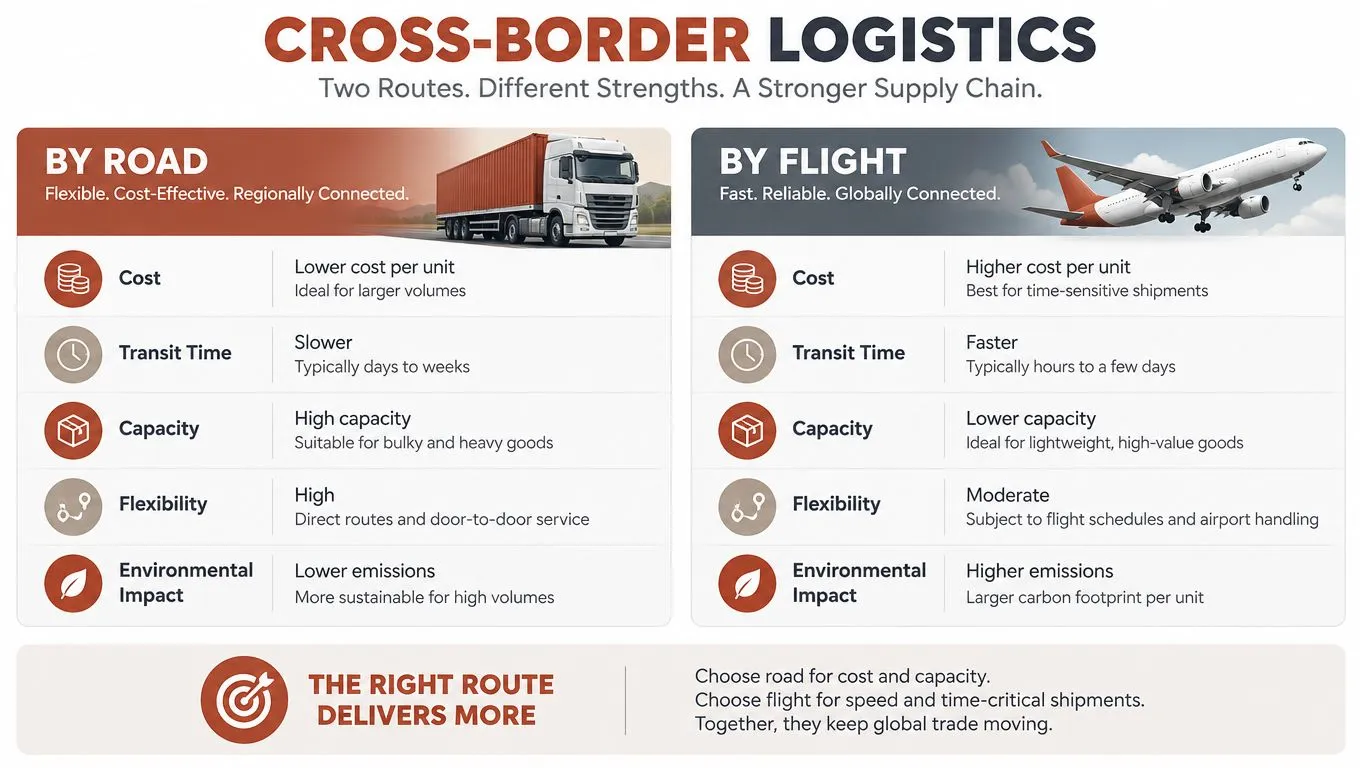
Ask for total transfer hours, border documents, vehicle type, baggage rules, and the contingency plan for a delayed flight or weather-disrupted road.
For honeymooners and families, a modestly more expensive flight can be the better decision if it protects a full game-drive day. For adventurous travelers who enjoy road travel, the overland route can be worthwhile, but the quote should make the time cost explicit.
When to Go and How to Match Months to Migration Sectors
Treat the migration calendar as a behavior pattern, not a promise. The ecosystem generally has wetter conditions from November through May and drier conditions from June through October, but rainfall timing changes the route the herds take and how long they remain in a particular sector.
December through March
Choose southern Serengeti and Ndutu when calving and predator activity matter most. This route places you closer to the short-grass plains associated with the southern wet-season range, but it still requires a flexible operator. The animals don't arrive because a brochure says they will.
July through October
Link northern Serengeti with the Maasai Mara when you want dry-season concentrations and a chance of river-crossing behavior. Don't pay a premium for a guaranteed crossing. No responsible planner can guarantee a behavioral event controlled by rainfall, forage, river conditions, and herd decisions.
Use this guide to the best time for a Tanzania safari as a starting point, then ask the operator to name the specific sector and lodge location for your dates.
Shoulder periods and crowd tolerance
Shoulder travel can offer a more flexible value proposition, but wildlife positioning is less predictable. That's a fair trade if you care more about lower pressure and scenery than a narrowly defined migration sighting.
Crowding also deserves a direct conversation. Kenya Wildlife Service recorded more than 300,000 visitors across Kenyan parks and reserves during the December 2025 holiday period, including about 82,500 international visitors, while Serengeti reportedly received an estimated 75,000 to 100,000 visitors in December in reporting on tourism demand and park pressure. Ask whether your camp sits near a high-traffic zone, whether private conservancy access is available, and whether the expected wildlife benefit justifies peak-season congestion.
Budget Tiers and How to Compare Quote to Quote
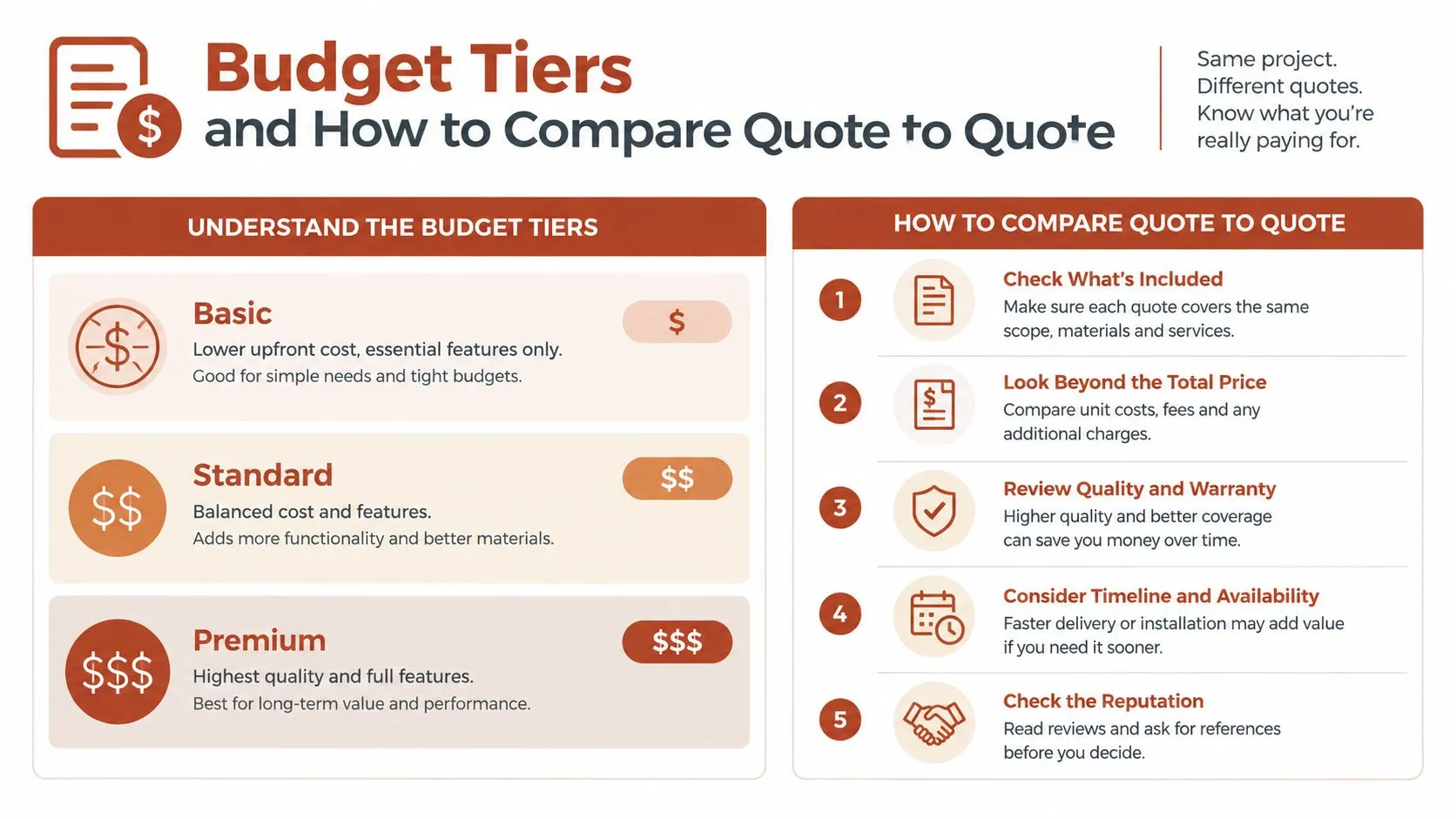
Safari pricing becomes understandable when you compare what the operator is buying for you. A low headline price may rely on shared vehicles, long road transfers, simpler camps, or fewer included activities. A premium quote may purchase privacy, internal flights, better positioning, and more control over the day.
Budget and camping
Budget itineraries generally prioritize shared road transport, basic camps or lodges, and a tightly controlled route. They can work well for active travelers who value time in the parks over room design, but border delays and long transfers feel more demanding when the vehicle is shared.
Mid-range lodge circuits
Mid-range is usually the sensible choice for couples and families who want reliable beds, private facilities, and a capable vehicle without paying for a fully fly-in operation. The important question is location. A comfortable lodge far from the relevant wildlife sector can weaken the itinerary more than a simpler camp positioned well.
Luxury and fly-in travel
Luxury itineraries typically buy time, privacy, stronger camp locations, private guiding, and selected flights. They're appropriate for honeymooners, multigenerational families, or travelers who won't enjoy spending a full day on a rough transfer. They don't eliminate weather or wildlife uncertainty, so don't confuse comfort with a guaranteed sighting.
Compare identical line items
Send every shortlisted operator the same questions:
Park and conservation fees: Are all required fees included, and for which dates?
Transport: Is the vehicle private or shared, and what is the maximum passenger capacity?
Game-drive time: How many included game-drive hours remain on transfer days?
Transfers: List every road and flight segment, including estimated door-to-door time.
Border plan: Which crossing will you use, and who manages immigration and vehicle paperwork?
Accommodation: Provide the exact camps or lodges, not only the property category.
Flights: State baggage limits, airstrip transfers, and the response plan for delays.
Exclusions: Identify visas, international flights, drinks, tips, insurance, and optional activities.
Contingency: Explain what happens if weather or a road closure changes the schedule.
Group size: Confirm whether the guide, vehicle, and itinerary remain private throughout.
Quote discipline: Don't compare “luxury” with “mid-range” as labels. Compare the exact vehicle, camp, park access, transfer plan, and included safari hours.
Park Highlights Worth Building a Route Around
Choose parks by the experience they add, not by how many names fit on the itinerary. The Serengeti and Maasai Mara provide the core ecosystem experience, while Ngorongoro, Amboseli, Tarangire, and Lake Manyara add different terrains and wildlife settings.
The main anchors
Southern Serengeti and Ndutu: Build here for the calving-focused season and predator activity. It's a poor choice if your dates point clearly toward the northern movement.
Central Serengeti: A practical all-round sector for predator viewing and access between southern and northern routes. It often works well in a seven-day or ten-day itinerary because it can connect major sectors without requiring a separate destination.
Northern Serengeti: Choose it for a dry-season route toward the Mara and the possibility of river-crossing behavior. The event remains unpredictable, so the sector must offer value beyond one crossing.
Maasai Mara: The Mara forms the northern section of the same ecosystem and works especially well for open-plains viewing, predators, and a Kenya finish. Nearby private conservancies can offer a different operating model and a quieter setting, depending on the booking.
Ngorongoro Crater: Add it for a concentrated crater-floor experience and a striking geological feature. It fits naturally with northern Tanzania, but it can make a short cross-border route feel rushed.
Amboseli: Include it when Kilimanjaro views, elephants, and a distinct terrain matter more than following the migration. It pairs naturally with Nairobi and northern Tanzania through the Namanga corridor.
Tarangire: Use it as an additional northern Tanzania region when you have enough days for a slower circuit. It's more defensible in a fourteen-day plan than in a tightly packed seven-day route.
Lake Manyara: Consider it for terrain variety and a northern Tanzania loop, but skip it if adding the stop would remove a full Serengeti day.
For each proposed detour, ask one blunt question: what experience does this park add that the existing route doesn't already provide? If the answer is vague, spend the night in a stronger wildlife sector instead.
Booking Through Explola With Confidence
Once you know your preferred season, sectors, transfer tolerance, and budget tier, use those criteria to compare operators rather than browsing endlessly. Explola lists African safari itineraries with filters for country, park, duration, budget, lodging level, group size, departure dates, and special interests.
The platform's operator profiles include a visible verification badge and traveler reviews attached to operators or tours. Tour pages can show day-by-day plans, inclusions, photographs, and starting prices, while the inquiry flow lets you request personalized quotes directly from operators.
Turn your questions into a booking brief
Paste the same requirements into each inquiry:
Your travel dates and preferred migration sector
Required parks and parks you're willing to remove
Private or shared vehicle preference
Maximum acceptable road-transfer time
Flight preferences and baggage needs
Accommodation level and room requirements
Border crossing and visa clarification
Full inclusions, exclusions, and contingency terms
Explola's inquiry tracking dashboard keeps operator responses, quote details, clarifications, and booking status together. For unusual requirements, such as honeymoon arrangements or family-focused logistics, use its concierge-style support to clarify the request before paying a deposit.
A good operator should answer the practical questions directly. If the quote only repeats “Great Migration safari” without naming the sector, transfer plan, vehicle capacity, and included game-drive hours, it isn't ready for comparison.
Use Explola to compare verified operators, filter Kenya and Tanzania safaris by route and budget, and request itemized quotes built around your actual travel dates. Visit Explola with your preferred migration sector and transfer limits ready, then ask operators to prove exactly how their itineraries protect your safari time.

Daniel writes for the Explola blog, where he covers African safari destinations, wildlife, travel trends, and practical trip planning. His work is centered on making safari travel easier to understand, compare, and plan.
Get Safari Tips & Destination Guides
Join our newsletter for exclusive travel tips, wildlife insights, and safari planning advice.