You've landed in Kenya in June expecting one simple answer to “what's the weather like?” At dawn near Nairobi or the Masai Mara, you may pull a fleece tight against a chilly breeze. By afternoon in Mombasa, you could be walking along a warm beach under very different skies. Both experiences can happen during the same week.
That contrast is why a national average can mislead safari travelers. Kenya stretches from cool highlands to warm Indian Ocean beaches, and June is a transition month rather than a perfectly uniform dry season. The Kenya travel guide from Explola is a useful starting point for matching destinations to the kind of trip you want, but your weather planning should go one step further.
This guide moves from the climate forces behind June conditions to regional temperatures, rainfall patterns, safari timing, and packing choices. Instead of treating Kenya as one climate zone, it compares inland safari corridors, Nairobi and the Central Highlands, and the coast, so you can build an itinerary around realistic local expectations.
Introduction to June Weather in Kenya
A June itinerary can begin with a chilly dawn in Nairobi, continue through a savanna reserve, and finish with a warm evening in Mombasa. The same week may feel like three different climates because altitude and distance from the Indian Ocean shape local conditions. Kenya's June–July–August season is generally its coolest period, as described in the Kenya Meteorological Department climate information, yet “coolest” does not mean cold everywhere.
Nairobi and the Central Highlands often bring brisk mornings and moderate afternoons. Inland safari corridors, including the Masai Mara, can feel especially cool before sunrise, when early game drives begin. Mombasa stays warmer and more humid, with the ocean softening the daily temperature change. Packing for one national forecast would therefore miss the practical differences between these stops.
June is also a transition month. Central and southern Kenya usually become drier and sunnier as the month advances, although the change is gradual rather than simultaneous across the country. The coast may still see intermittent showers, while some inland routes can retain the effects of late-season rain early in the month, according to the June weather overview for Kenya from Rough Guides.
A month of contrasts
The useful question is where you will be, when you will arrive, and how your days are arranged. A reserve-based safari calls for layers for dawn departures and flexibility on routes, while a safari followed by beach time also requires clothing suited to warmer, more humid air. Travelers comparing destinations can use this Kenya travel guide from Explola as a starting point, then check each stop's local outlook.
Planning principle: Treat June as a regional transition, not a single nationwide forecast.
Cool inland mornings may become comfortable after sunrise. Coastal showers remain worth allowing for when beach days matter.
Why June Feels Cool and Dry Across Kenya
A June morning can begin with a fleece in Nairobi or the Masai Mara, then end in a light shirt at midday. In Mombasa, that same week usually feels warmer and more humid. Kenya's June climate is easier to understand by comparing these travel corridors than by using one national average.
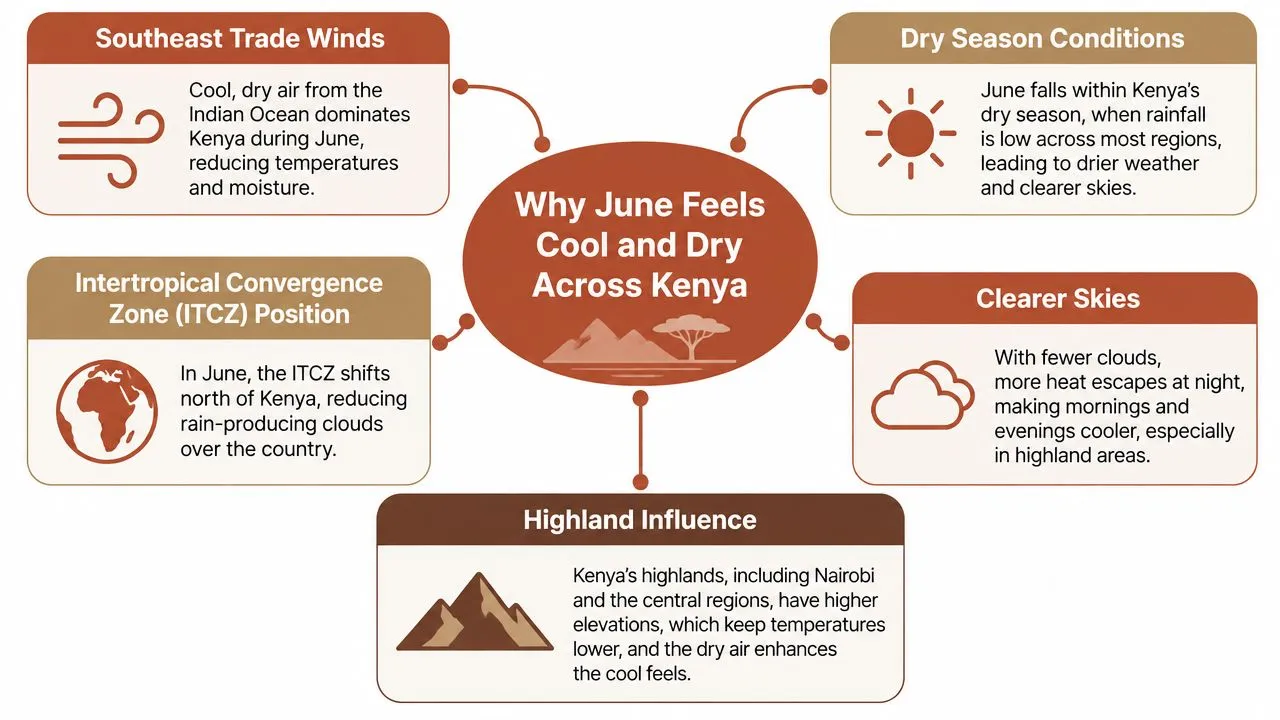
Several influences overlap. The Kenya Meteorological Department places the country in its coolest seasonal period, with typical mean temperatures ranging from about 16°C in the Highlands east of the Rift Valley to 30°C in north-western Kenya. The broad range reflects Kenya's changes in elevation and distance from the ocean.
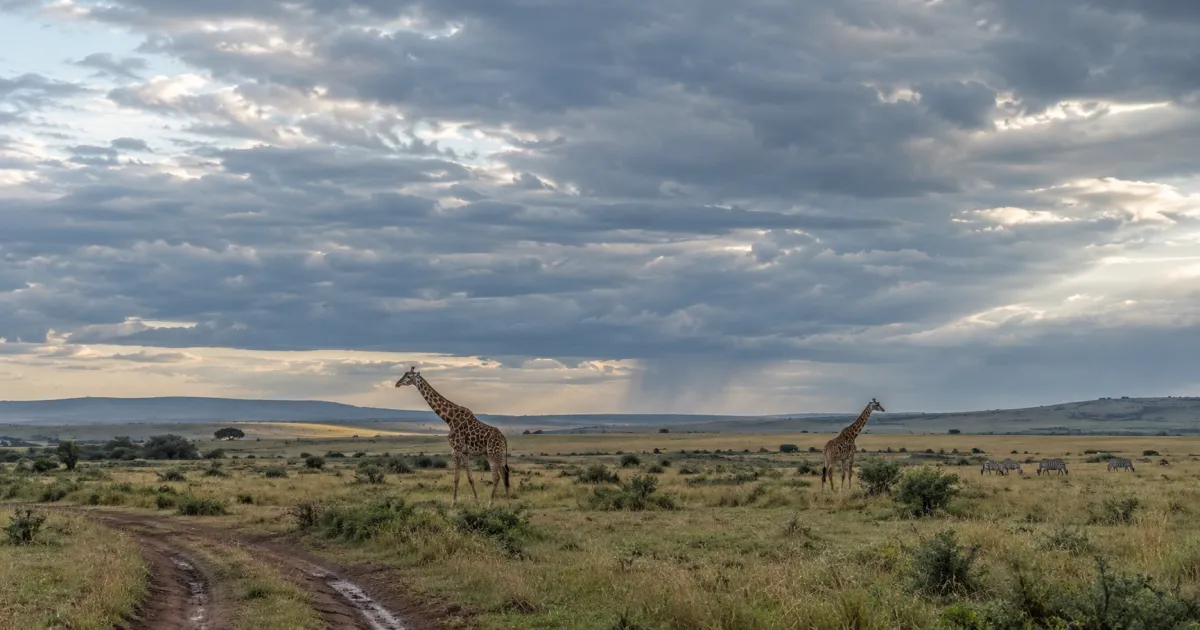
Nairobi sits at roughly 1,795 metres, so a 23°C afternoon can still be followed by a 06:00 start near 12°C. The Masai Mara's open plains can feel similarly cold before sunrise, especially during an early game drive. Once the sun is up, both places usually become more comfortable.
The monsoon and cloud effect
Southeast monsoon flow influences Kenya in June. Cloud cover can weaken daytime heating, while altitude and wind shape how cold an inland morning feels. The June to July to August seasonal bulletin places Nairobi around 18°C overall, with highs near 23–24°C and lows around 12–12.8°C. Coastal daytime conditions remain warmer, around 27–30°C (Kenya Meteorological Department JJA 2026 bulletin).
Clouds reduce the sun's strength during the day and can slow heat loss overnight. Their effect changes from one location to another, so two safari stops may feel different even when they are inland.
Rainfall also varies by region. Central and southern inland areas generally become drier and brighter, while the Indian Ocean keeps Mombasa and other coastal areas more humid, with occasional showers. June is therefore a gradual shift rather than a sharp national change.
Simple rule: The higher and farther inland you travel, the more seriously you should take cool early mornings.
Regional Temperatures and Rainfall You Can Expect
A June week can feel like three different seasons across Kenya. Leave Nairobi before sunrise in a light jacket, reach the Masai Mara for a chilly game drive, then find Mombasa warm and humid by the afternoon. Altitude, inland distance, and the Indian Ocean create these contrasts, so one national average cannot describe every route.
Nairobi, at high elevation, usually has cool afternoons and cold nights. Independent climate summaries put June daytime highs between 22.4°C and 23.6°C, with overnight lows of 12.1°C to 13.2°C. Rainfall is roughly 26.1 mm to 39 mm, spread across about 7 to 7.6 rainy days (TUI's Kenya weather guide for June). A shower remains possible, but the overall pattern is relatively cool and dry.
The Central Highlands follow a similar rhythm. Mornings feel crisp, while afternoons are moderate rather than tropical. Inland safari corridors, including the Masai Mara National Reserve, can feel especially cold at dawn. Wind, cloud cover, vegetation, and local altitude then determine how quickly the area warms.
| Region | Daytime High | Nighttime Low | Rainfall Pattern |
|---|---|---|---|
| Nairobi and Central Highlands | About 22.4°C to 23.6°C in Nairobi | About 12.1°C to 13.2°C in Nairobi | Roughly 26.1 mm to 39 mm in Nairobi, across about 7 to 7.6 rainy days |
| Inland savanna corridors | Moderate to warm afternoons, with regional variation | Cool dawn conditions, especially at higher elevations | Generally drying through June, but early-month conditions can vary |
| Kenyan coast, including Mombasa | About 27°C to 30°C | Warmer than inland areas | Near-average to above-average rainfall is possible, including heavy events |
| Wider Kenya | Mean temperatures vary from about 16°C in the eastern highlands to 30°C in north-western Kenya | Strong regional variation | June rainfall depends heavily on location |
For safari planning, follow the inland pattern rather than the coastal forecast. A cold departure can lead into a comfortable midday, so accommodation location, departure time, and removable layers all matter.
Why the coast needs separate planning
Mombasa and nearby coastal areas stay warmer because the Indian Ocean moderates temperatures. Sea temperatures are around 25–27°C during June to August, according to the seasonal bulletin from the Kenya Meteorological Department. Warmth does not guarantee uninterrupted sunshine.
The Kenya Meteorological Department's June 2026 outlook indicates that the Coast may receive near-average to above-average rainfall, with heavy events, while Nairobi and the Central Highlands are more associated with cool, cloudy conditions and light rain (Kenya Meteorological Department June 2026 forecast). A beach stay can still fit well into a June itinerary, but leave room for cloud and passing showers instead of planning every day around clear skies.
How June Weather Shapes Safari and Beach Plans
June weather affects your itinerary most clearly through timing. A dawn game drive in an inland reserve can feel cold because temperatures fall overnight, but the same departure may become comfortable once sunlight reaches the vehicle. Pack for the first hour, not just the forecasted afternoon high.
Drying conditions can also improve the practical rhythm of safari travel in central and southern areas. Roads generally become easier to use as rainfall decreases, and clearer conditions can make outdoor activities more predictable. Still, early June may carry over some effects from late-May rain, particularly on routes where the ground has not yet dried fully.
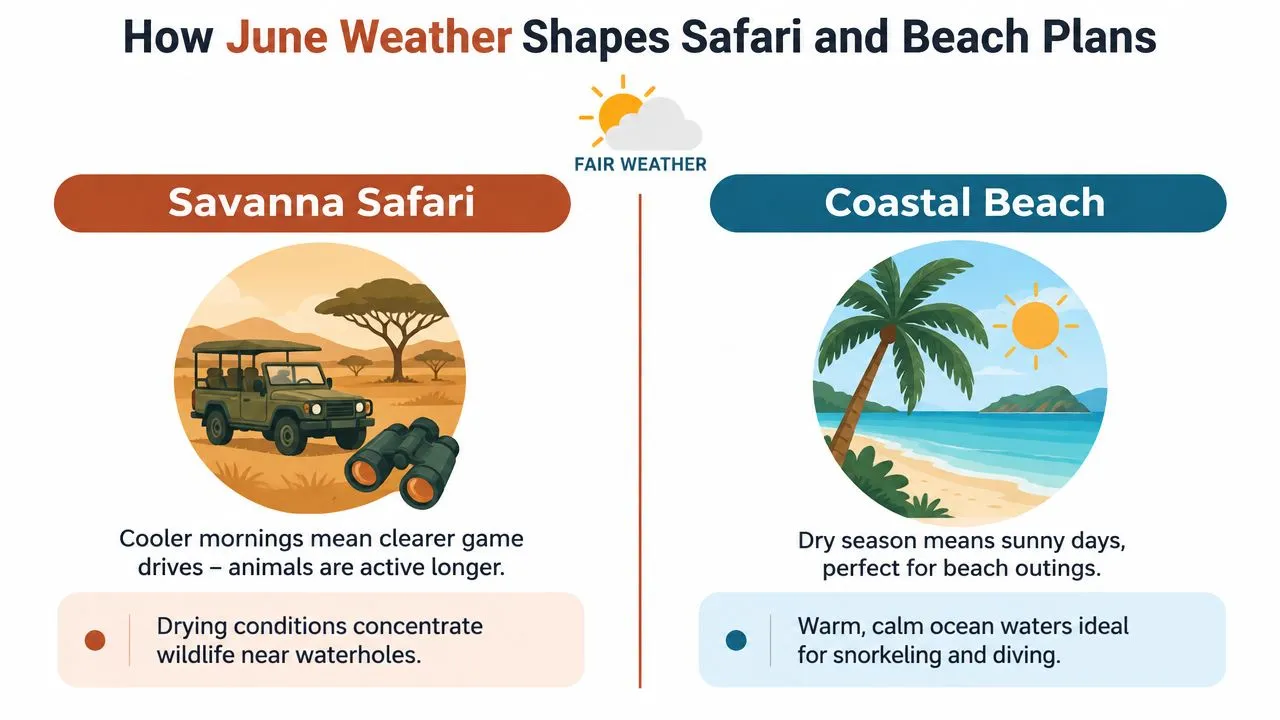
Make the day work for the conditions
Use a simple daily approach:
Start warm. Wear a fleece or light jacket for the first game drive. You can remove layers as the vehicle warms in the sun.
Use midday strategically. Moderate inland temperatures make midday suitable for lunch, rest, photography preparation, or a shorter activity.
Keep plans flexible near the coast. A shower may change the best beach window, so leave room for a walk, meal, or indoor activity if weather moves in.
Ask about roads. Early-June operators should be able to explain whether recent rainfall affects transfers, park access, or specific tracks.
Cloud cover changes the quality of light as well as the temperature. Overcast skies can soften harsh contrast, while breaks in the cloud may create strong highlights across the savanna. If photography matters, ask guides how they adjust departure times and routes rather than assuming a fixed schedule will suit every day.
Useful decision test: Choose the safari first if wildlife is your priority, then add the coast with enough flexibility to absorb local showers.
Beach travelers should also distinguish warm water from guaranteed sunshine. The coast can deliver pleasant sea conditions and comfortable outdoor time, but the June outlook means a coastal add-on needs realistic rain expectations. For practical travel administration, travelers sending funds to family or service providers can also review the Africhange mobile money transfer option, especially when managing arrangements across countries.
What to Pack and How to Prepare for June
Your June packing list should follow the route, not the country name. A Nairobi and safari itinerary needs more warmth for early departures, while a coast-focused trip needs lighter clothing and a plan for intermittent showers. If you combine both, use a flexible layering system rather than packing separate wardrobes.
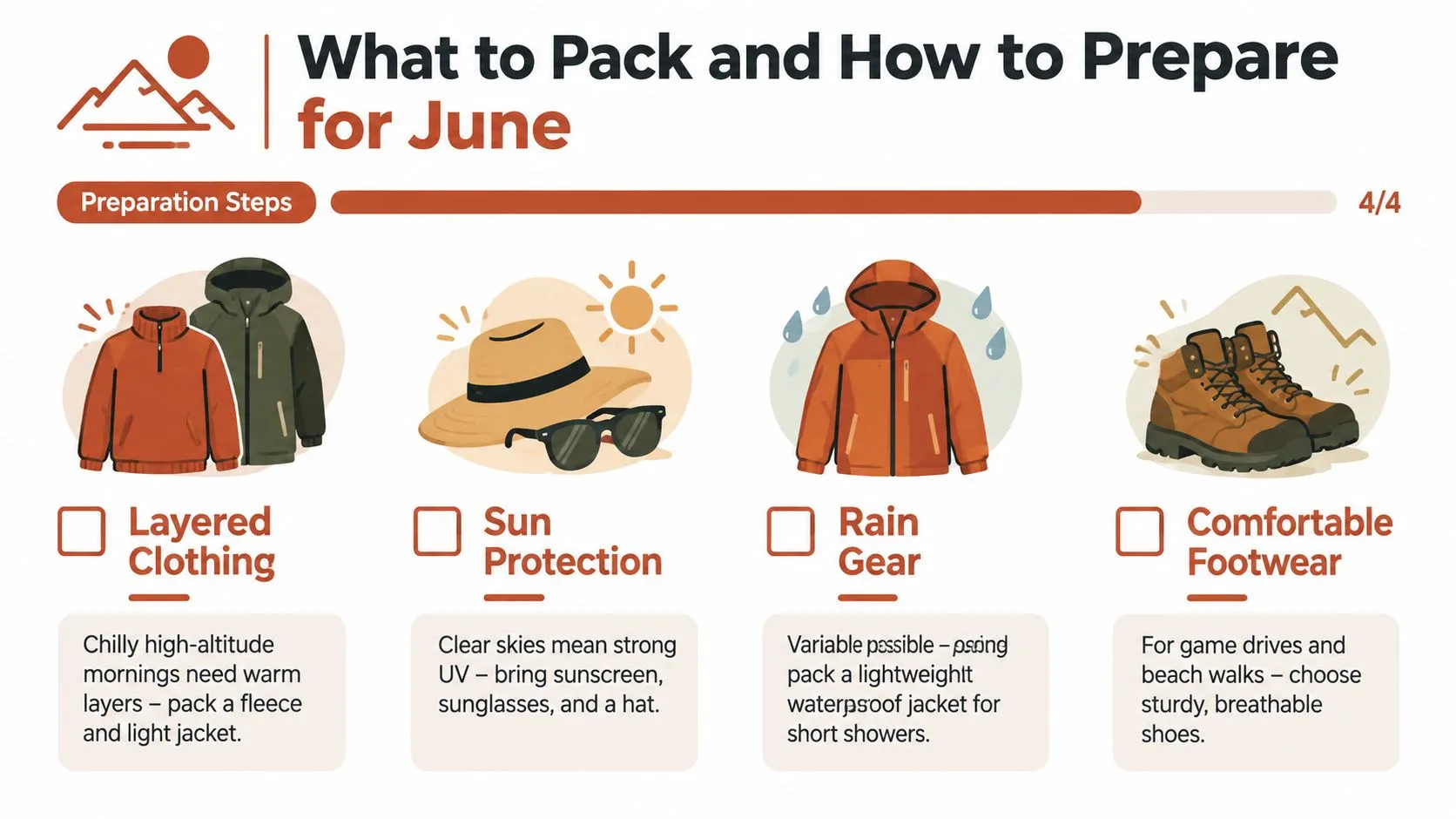
A location-aware checklist
Layered clothing: Pack a fleece and light jacket for chilly high-altitude mornings. A shirt underneath lets you adjust quickly once the day warms.
Sun protection: Bring sunscreen, sunglasses, and a hat. Mild temperatures don't remove the need for protection during long outdoor drives.
Light rain gear: A compact waterproof jacket is useful for coastal showers and early-June travel when some routes may still be drying.
Comfortable footwear: Choose sturdy, breathable shoes that work for vehicle stops, lodge paths, and beach walks.
Small daypack: Keep your outer layer, water, camera equipment, and rain protection within reach instead of buried in luggage.
Camera protection: A simple waterproof cover or dry bag helps protect equipment if a shower arrives during a drive.
Adjust your timing
For safari, wear your warmest layer at departure and keep it accessible rather than packing it away in the vehicle's luggage area. Schedule relaxed midday periods when possible, especially if cloud, wind, or road conditions make a full-day drive tiring.
At the coast, plan beach walks and water activities around the clearest local window. A flexible day plan is more useful than assuming every morning or afternoon will have identical conditions. Before departure, check the route-specific forecast and confirm whether your operator expects any early-June road limitations.
The Kenya safari packing guide from Explola can help you refine the list for lodge style, activities, and luggage limits. The main principle remains simple: warm layers inland, breathable clothing at the coast, and light rain protection everywhere on a mixed itinerary.
Planning Your June Safari with Confidence
A good June itinerary begins with a weather question that's specific enough to answer. Instead of asking an operator whether Kenya will be dry, ask how recent conditions affect your chosen park, whether dawn drives are exposed to wind, and how the coastal section is handled if showers interrupt a beach day.
Compare itineraries by more than park names. Look at transfer routes, departure times, accommodation location, included activities, and the operator's approach to changing conditions. A shorter route with sensible timing may suit you better than a packed schedule that leaves no room for weather-related adjustments.
For travelers weighing timing options, this guide to when to visit Kenya for a luxury safari offers additional planning context. Use it alongside location-specific forecasts, since a broad seasonal recommendation can't replace questions about your exact route.
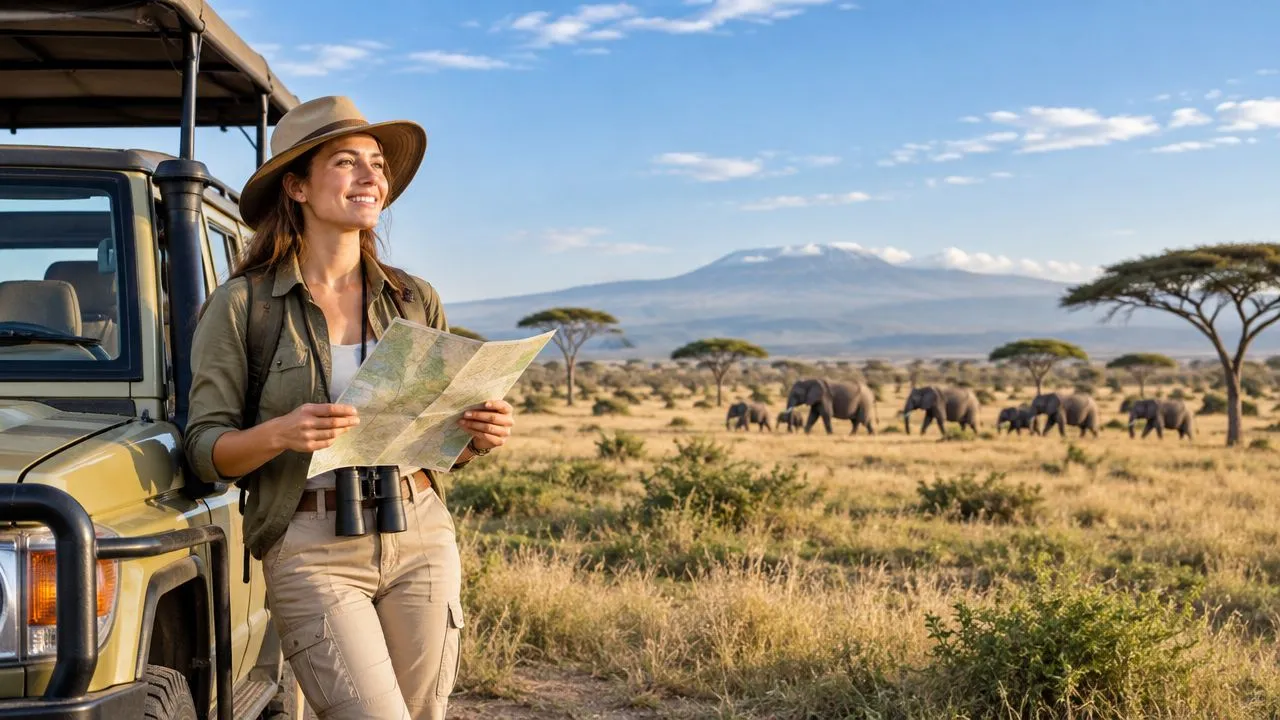
Explola provides a catalog where travelers can compare Kenya safari itineraries, review inclusions and starting prices, and send direct inquiries to verified operators. That makes it easier to shortlist a savanna-focused trip, a safari and coast combination, or a more comfortable luxury route based on how you want June to feel.
Visit Explola to compare Kenya safari itineraries by destination, accommodation, dates, and budget. Shortlist operators that match your preferred June experience, then ask direct questions about dawn-drive temperatures, road conditions, and coastal flexibility before you book.

Daniel writes for the Explola blog, where he covers African safari destinations, wildlife, travel trends, and practical trip planning. His work is centered on making safari travel easier to understand, compare, and plan.
Get Safari Tips & Destination Guides
Join our newsletter for exclusive travel tips, wildlife insights, and safari planning advice.