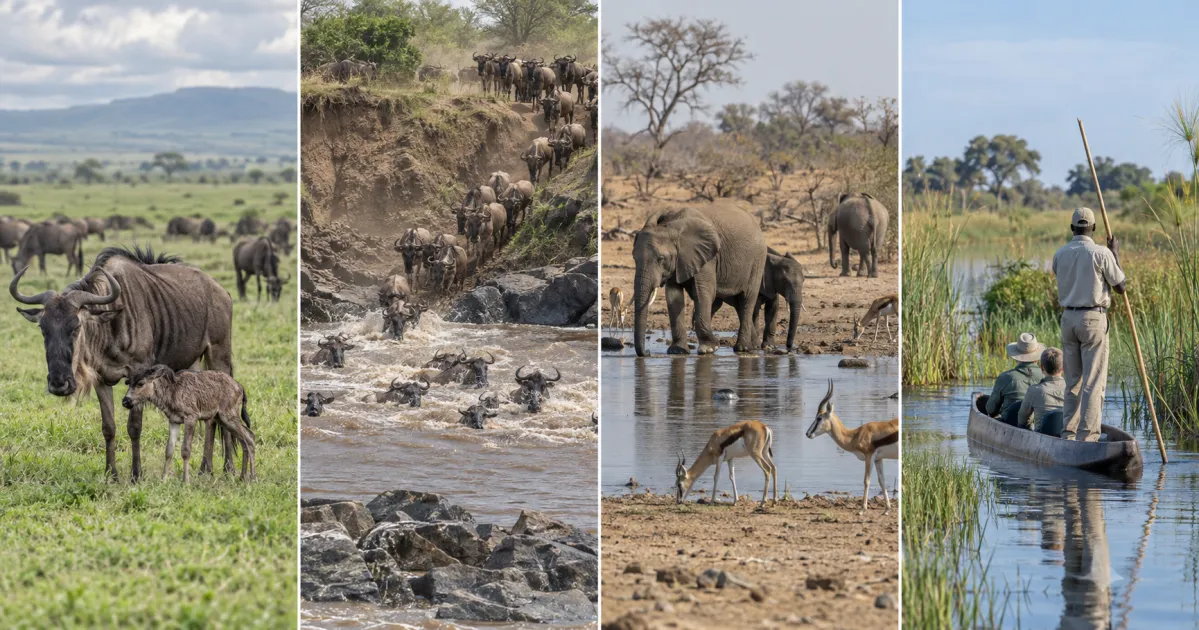
June is the month when Tanzania's safari climate changes character. Across the country, rainfall commonly falls to about 23–50 mm, with only around 3–8 rainy days in many climate summaries, while sunshine can reach roughly 8–11 hours a day (Weather Atlas climate data). But “dry season” doesn't describe one uniform experience. A dawn drive in the Crater Highlands can feel cold enough for gloves, while Zanzibar stays warm, humid, and beach-friendly.
That regional contrast matters more than a single national forecast. Your ideal June itinerary depends on whether you're following predators across the Serengeti, climbing Kilimanjaro, exploring Ruaha, or adding a few nights on the Swahili Coast. The right packing list, booking strategy, and expectations will change with every stop.
What June Means for Tanzania's Weather
June is Tanzania's seasonal hinge. The long rains have usually eased, and the country begins moving into its long dry season, but different regions respond at different speeds. Inland safari areas generally clear first, while parts of the coast and southern parks can retain humidity, mist, green vegetation, or occasional showers.
Tanzania lies close to the equator, so it doesn't follow a simple spring, summer, autumn, and winter pattern. Travelers plan around rainfall cycles, altitude, and regional geography instead. June belongs to the southeast monsoon phase, when Indian Ocean trade winds help push moisture away from much of the mainland interior. That shift brings clearer skies and firmer travel conditions across the northern safari circuit.
The practical result is straightforward. June is often the first dependable dry-season month for northern safaris, particularly around the Serengeti, Ngorongoro, Tarangire, and Lake Manyara. Roads tend to become easier to manage, vegetation gradually opens sightlines, and early-morning drives benefit from lower humidity.
Planning rule: Treat June as the start of dry-season conditions, not as a promise of identical weather everywhere.
Travelers combining several regions should avoid planning from a single national average. The Tanzania rainy season guide for safari planning is useful background, but your operator should still match each destination to its local conditions.
The Crater Highlands bring cold mornings and quick temperature changes. The Serengeti usually feels dry and bright inland, with a pronounced difference between dawn and afternoon. Zanzibar and the mainland coast stay warmer, and the southern parks can hold more of the post-rain greenery. That diversity is one of June's strengths, but it also explains why a safari-and-beach itinerary needs more than one type of clothing.
Regional Conditions Across the Country
Tanzania's national average is only a starting point. Historical June records based on hourly observations and model reconstructions from January 1, 1980 through December 31, 2016 show a daily mean near 21.7°C, with average lows of 16.2°C and highs of 27.2°C (WeatherSpark historical climate report). Altitude, inland distance, and the Indian Ocean then reshape those figures from one destination to the next.
Northern safari circuit
The Serengeti can reach about 26°C by day, while nights fall to roughly 14–15°C (Weather Atlas June conditions). Arusha and the northern parks may feel cooler at dawn, particularly in an open vehicle. Safari climate guidance places many northern daytime highs around 22–27°C, with early mornings and evenings near 10–15°C.
Ngorongoro is often the coldest stop. Its elevation makes the rim chilly in the morning and after sunset, so a fleece or insulated jacket remains useful even when the afternoon turns comfortable. Tarangire and Lake Manyara are generally warmer than the highlands, yet they still move from cool mornings to mild or warm afternoons.
This regional split affects both comfort and itinerary choice. The northern circuit offers familiar dry-season conditions and strong road access, but June also begins a busier, potentially more expensive travel period. Southern parks can provide a quieter alternative, with different vegetation and wildlife patterns.
Southern parks
Ruaha and Nyerere, formerly known as Selous, follow their own June rhythm. Ruaha's historical June rainfall is near 0.3 mm, while some coastal and island locations reach roughly 95 mm in the same month (WeatherSpark regional climate data). The southern parks may also retain thicker vegetation and more standing water after the rains than northern destinations.
Wildlife can be more dispersed where water remains available, so sightings may require patience and longer searches. In return, the south can feel less exposed and less heavily visited. Warm days, dry roads, river habitats, and boat safaris create a different June experience from the classic Serengeti route, often with a different crowd and cost profile.
Swahili Coast and Zanzibar
Dar es Salaam and Zanzibar commonly reach about 29–30°C during the day, then cool to around 22–23°C at night (Weather Atlas coastal climate data). Sea breezes can make the shoreline pleasant, although humidity remains noticeable. Brief tropical showers are still possible, particularly early in the month, so a compact rain layer belongs in a beach bag.
Highlands and Kilimanjaro
Altitude changes the packing list again. Historical comparisons show highs of about 20°C on Mount Kilimanjaro, compared with highs near 33°C in hotter inland locations such as Kwangwazi (WeatherSpark destination comparisons). The Crater Highlands can therefore feel dramatically colder after sunset than the plains below.
| Region | Avg High (°C) | Avg Low (°C) | June Rainfall | Humidity / Notes |
|---|---|---|---|---|
| Serengeti and northern safari areas | Around 26 | Around 14–15 | Generally low | Clear, dry conditions with cold dawns |
| Ruaha and southern parks | Varies by location | Cooler at night | Ruaha near 0.3 mm | Drier in many areas, with thicker cover in places |
| Dar es Salaam and Zanzibar | Around 29–30 | Around 22–23 | Coastal variation, locally much wetter | Warm, humid, sea breezes, occasional showers |
| Kilimanjaro and highlands | Around 20 on Kilimanjaro | Can become very cold at altitude | Varies by elevation | Layering is essential |
Match the route to the conditions you want. The Serengeti National Park travel guide can help connect June's climate with the safari style, regional atmosphere, and travel trade-offs you prefer.
How a Typical June Safari Day Feels
A June safari day usually starts colder than first-time visitors expect. At a northern camp, coffee may arrive before sunrise, and the vehicle can leave while the air still feels close to 8–10°C around exposed highland areas. On the Serengeti plains, the cold is less severe than on the Ngorongoro rim, but wind moving through an open vehicle makes a warm layer essential.
The first hours are often the most rewarding for both comfort and wildlife activity. As the sun rises, temperatures move toward the low 20s, shadows shorten, and the terrain becomes easier to read. Dry roads may throw dust behind the vehicle, while lions and other big cats gradually look for shade as the morning warms.
By late morning, the safari has usually become brighter and warmer. A reading near 26°C is comfortable for many travelers, but direct sun can feel intense when you're sitting still in an open vehicle. Camps often offer a relaxed midday pause, giving you time to eat, rest, sort photographs, and drink water rather than staying out through the hottest light.
The afternoon shift
Afternoon drives often begin as the heat starts to soften. Animals become more active around water and shaded routes, while the lower sun improves texture and contrast for photography. Around sunset, the temperature can drop quickly, especially when the vehicle stops in an exposed area.
What to wear at dawn: Start with a base layer, fleece, windproof jacket, and a hat. You can remove layers as the day warms, but you can't replace a missing jacket once you're several hours from camp.
After dinner, long sleeves and a light fleece usually feel appropriate again in the inland parks. Clear skies make the night visually striking, but they also allow heat to escape quickly. By late evening, temperatures in the low teens are a normal part of the June safari experience, not a sign that the weather has gone wrong.
Wildlife Viewing in June
June improves safari visibility through a combination of drying vegetation, clearer air, and shrinking surface water. As temporary pools disappear, animals increasingly use dependable rivers, springs, and waterholes. That doesn't mean every animal gathers in one place, but it gives guides stronger areas to search and often opens views through grass and bush.
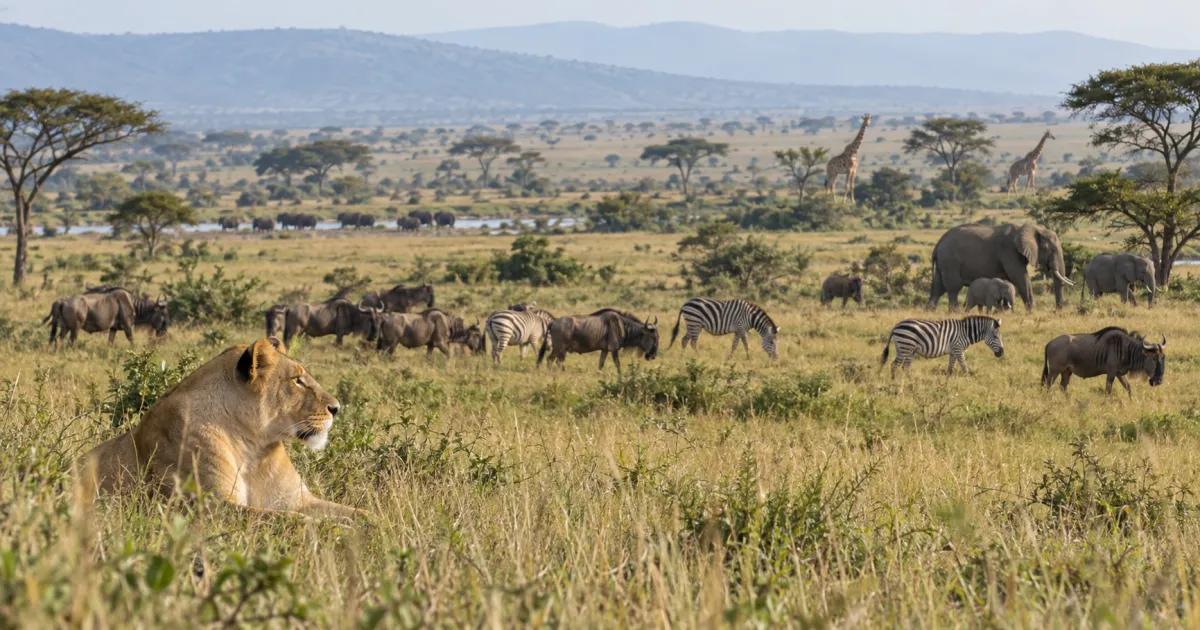
In the northern circuit, the short-grass Serengeti plains can be especially favorable for spotting lions, cheetahs, and other large predators. Sparse cover makes movement easier to follow, while dry air reduces the hazy look that can soften distant views. Cooler mornings also let game drives continue comfortably through the active early hours.
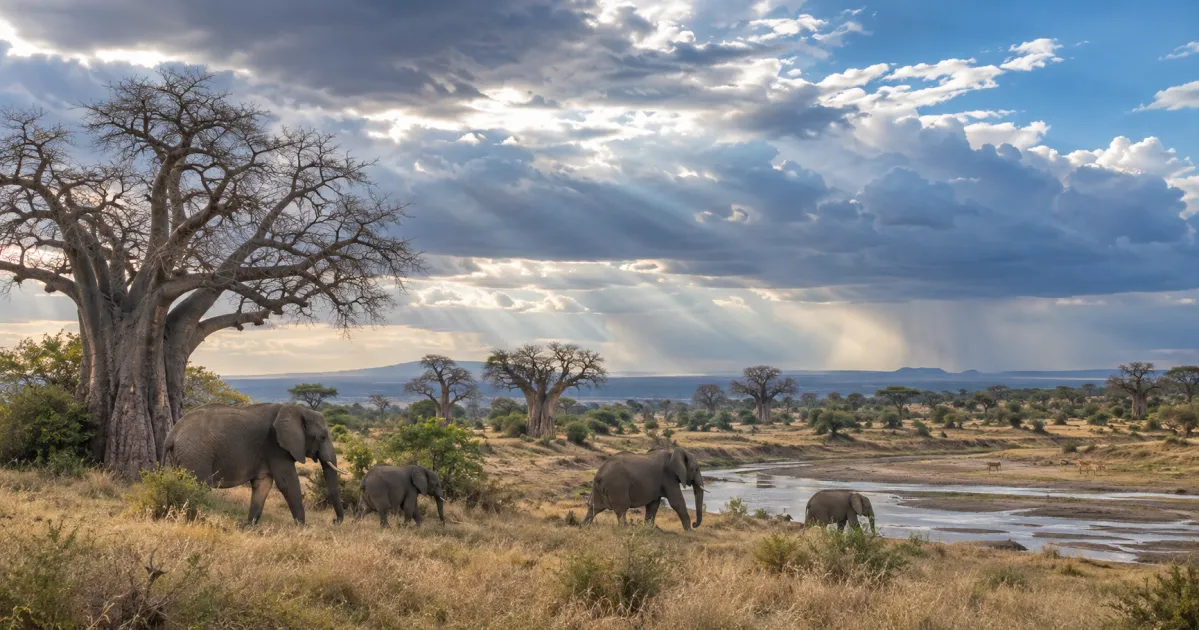
Tarangire offers a different dry-season pattern. Elephants and other large herbivores are drawn toward the Tarangire River and remaining water sources, while the park's woodland creates excellent close-range viewing. Ruaha can reward travelers who want a quieter southern setting, although thicker vegetation and lingering water may require more patient guiding.
What June can and can't promise
June can provide strong migration encounters, including movement through the Western Corridor and possible Grumeti River activity. However, travelers should distinguish that from the more famous Mara River crossings, which typically peak from July through September according to Tanzania travel climate guidance (Rough Guides June travel information). River crossings are controlled by herd movement and conditions, so no month guarantees a crossing at a specific location.
Birding also changes as some migrants depart, although resident species remain important throughout the year. Night drives, where permitted, can reveal species that stay hidden during daylight, including nocturnal predators and smaller mammals. Ask your operator which parks and camps allow this activity, because regulations differ.
| Park/Region | June Highlights | Limitations |
|---|---|---|
| Serengeti | Open visibility, predator searches, migration movement | Mara River crossings usually come later |
| Ngorongoro | Clear highland air and strong crater-floor viewing | Cold dawns and limited route flexibility |
| Tarangire | Elephants and wildlife around reliable water | Woodland can still conceal smaller animals |
| Ruaha | Dry-season waterhole searches and quieter drives | Thicker cover may make sightings less immediate |
| Nyerere | River habitats and boat-safari possibilities | Wildlife can remain spread across greener areas |
The best June wildlife plan balances visibility with habitat. A northern route suits travelers focused on classic predator viewing, while the south appeals to those who prefer a broader, less crowded ecosystem experience.
Peak Season Trade-Offs You Should Weigh
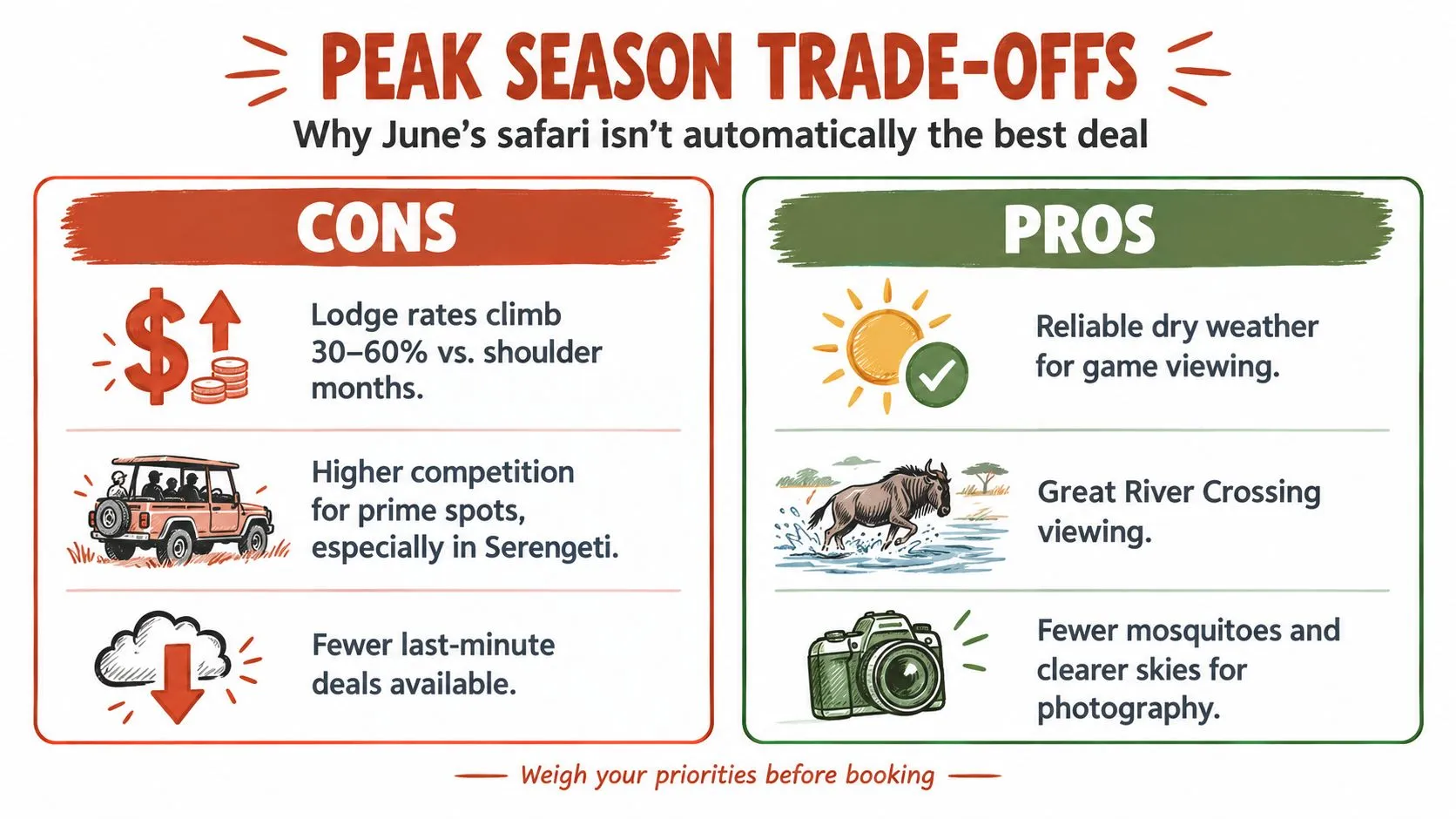
June is often presented as an automatic winner because it begins the long dry season. The weather advantage is real, but the value equation is more complicated. Many Tanzania safari guides classify June as peak or high season, which can mean stronger demand, tighter availability, and higher prices than shoulder periods (Tanzania Experience on June travel).
The premium buys practical benefits. Dry roads generally simplify transfers, clearer conditions support game viewing, and established camps operate within a reliable safari rhythm. Yet you may share popular sightings with other vehicles, especially in the Serengeti and Ngorongoro during prime drive hours.
Some planning claims frequently repeated in travel content cannot be treated as universal rules. Lodge pricing varies by camp, route, room type, and booking conditions, so ask for an itemized quote instead of assuming a fixed seasonal increase. Availability also depends on whether you're choosing a private mobile camp, a small lodge, or a highly sought-after permanent property.
Ways to reduce the pressure
Shift the route south: Ruaha and Nyerere can provide a less conventional alternative to the busiest northern highlights.
Consider mobile camping: Seasonal camps can place you closer to wildlife while avoiding the feel of a large lodge hub.
Book around your priority: Reserve the location and dates tied to your main goal first, then build the rest of the itinerary around remaining availability.
Compare shoulder months: July may bring stronger migration focus in some areas, while October can offer different crowd and climate conditions. Neither automatically delivers better value for every traveler.
June makes sense when reliable inland weather matters more than finding the lowest possible rate. It's less compelling if your main goal is solitude, flexible last-minute planning, or a green setting at shoulder-season pricing.
Packing Smart for Each Region
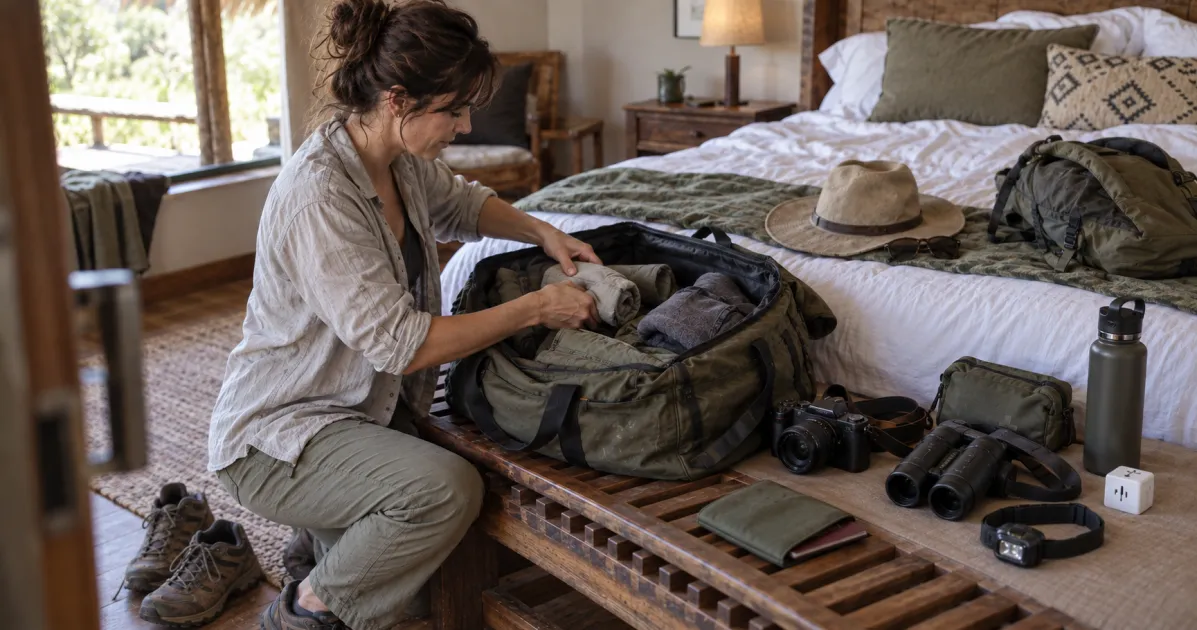
A single Tanzania packing list often fails because the country's climate changes with altitude and distance from the coast. Pack for the itinerary, not the destination label. Someone visiting Serengeti and Zanzibar needs cold-weather safari layers, breathable beach clothing, and a respectful outfit for town visits.
Northern safari circuit
For dawn drives, use a layered system rather than one heavy coat. A moisture-managing base layer, fleece, windproof outer layer, warm hat, and light gloves can handle the cold start. Remove pieces as the vehicle warms, then keep a long-sleeved shirt and sun hat available for the afternoon.
Neutral colors are practical for dust and wildlife photography, although comfort matters more than rigid color rules. Choose broken-in walking shoes or boots, trousers that dry easily, sunglasses, lip balm, and high-protection sunscreen. A small day bag keeps water, camera batteries, medication, and an extra layer within reach.
Kilimanjaro
Kilimanjaro requires a separate technical system. Summit-night conditions can fall below freezing, so a down jacket or equivalent insulated layer is essential. Add gloves suitable for cold exposure, a warm hat, moisture-managing base layers, trekking socks, waterproof outerwear, and footwear already tested on uneven ground.
Do not use your safari wardrobe as a substitute for summit equipment. A fleece that works on a Serengeti dawn drive won't replace proper insulation at high elevation.
Zanzibar and the coast
The coast calls for lightweight, breathable clothing, swimwear, sandals, and sun protection. Bring reef-conscious sunscreen if you'll snorkel or dive, plus a light rain layer for brief showers. In Stone Town and nearby communities, pack clothing that covers shoulders and knees so you can move comfortably and respectfully beyond the beach.
Insect protection remains useful, particularly at dusk. A small flashlight, reusable water bottle, and dry bag can also help during boat trips and wet activities.
| Item Category | Northern Safari Circuit | Kilimanjaro Climb | Zanzibar & Coast |
|---|---|---|---|
| Main clothing system | Warm layers for cold dawns and lighter daytime pieces | Technical base layers and full insulation | Breathable clothing and swimwear |
| Outer layer | Windproof jacket or fleece | Insulated jacket plus waterproof protection | Light rain shell |
| Footwear | Broken-in closed shoes or boots | Tested trekking boots with suitable socks | Sandals plus comfortable walking shoes |
| Sun protection | Hat, sunglasses, sunscreen | Hat, sunglasses, high-SPF sunscreen | Hat, sunglasses, reef-conscious sunscreen |
| Extra protection | Gloves, beanie, insect repellent | Warm gloves, hat, trekking accessories | Insect repellent, modest town clothing |
| Useful equipment | Binoculars, camera batteries, day bag | Headlamp, trekking poles, personal medical kit | Dry bag, reusable bottle, small day bag |
Across every region, carry prescription medication in hand luggage, copies of important documents, a headlamp, and binoculars. For a broader category-by-category checklist, use this African safari packing guide before you separate your safari, mountain, and beach bags.
Is June the Right Month for You
June suits travelers who value dependable inland conditions and strong wildlife visibility more than low-season pricing. It's less universally ideal for people chasing a specific migration event, photographing lush green scenery, or leaving all bookings until the last minute.
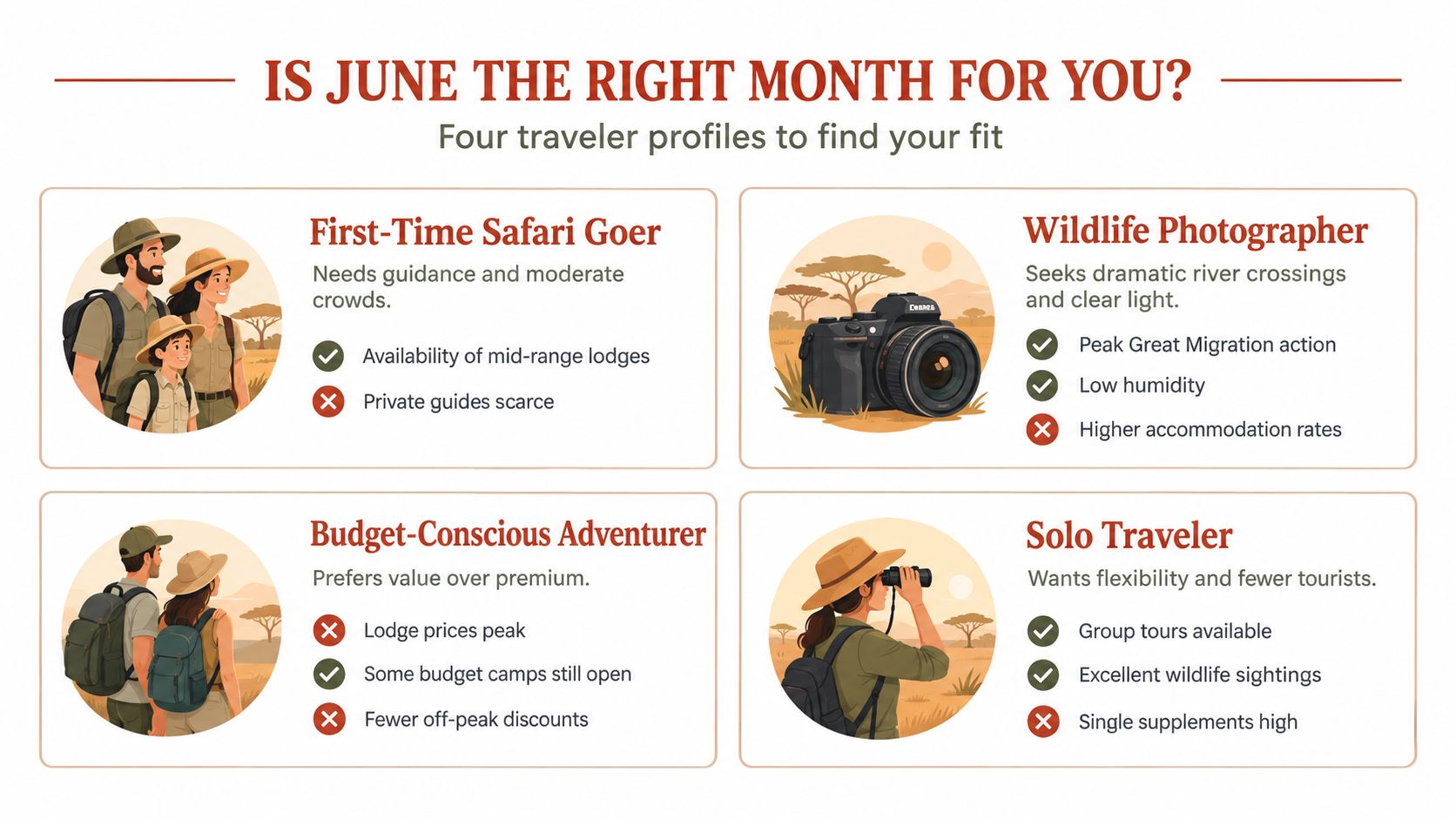
The right decision becomes clearer when you compare traveler profiles rather than asking whether June is “good.”
Four useful traveler profiles
First-time safari traveler: June is a strong choice if you want clear routes, comfortable daytime conditions, and a straightforward introduction to northern parks. July may bring more intense migration interest and demand, while October can suit travelers seeking a later dry-season itinerary. Compare lodge categories carefully because the cheapest available option may not be in the location that best supports your priorities.
Repeat visitor focused on crossings: June can work if you're interested in early Western Corridor or Grumeti activity, but it isn't the safest choice for the main Mara River spectacle. July through September is the more relevant period for that goal, although actual crossings remain unpredictable.
Wildlife photographer: June offers clear air, open views, and strong dawn and evening light. October can provide a different balance of dry conditions and demand, while July may place you closer to headline migration action. Decide whether your priority is clean visibility, a particular behavior, or fewer vehicles around a sighting.
Budget-conscious traveler: June usually isn't the first month to choose when price is the main constraint. Compare shoulder-season departures and southern routes, and request several lodging levels rather than assuming a northern flagship itinerary is your only option.
Use this three-question check
Can you plan well ahead? High-season availability can tighten, so June works better for travelers prepared to commit early.
Can you handle warm midday exposure? Inland afternoons can reach the mid-to-upper 20s Celsius, even when mornings feel cold.
Can you share sightings? Popular parks may have more vehicles around major wildlife encounters than quieter seasons or less visited routes.
If you answer yes to all three, June is likely a yes. If you want the Mara crossings above everything else, wait for a later migration window. If your budget or solitude matters most, pivot toward a shoulder month or the southern circuit.
Driving independently adds another planning layer. Before renting a vehicle or crossing borders, find Tanzania licence translation rules so you understand the documentation requirements before departure.
Use a comparison platform such as Explola to review verified operators, day-by-day itineraries, lodging levels, prices, and traveler reviews side by side. It can also help you send direct inquiries and compare responses before choosing a route.
Tell Explola whether your priority is northern-circuit wildlife, Kilimanjaro trekking, a quieter southern safari, or a safari-and-Zanzibar combination. Visit Explola to compare Tanzania itineraries from verified operators and request a plan that matches June's regional weather to your budget and travel style.

Daniel writes for the Explola blog, where he covers African safari destinations, wildlife, travel trends, and practical trip planning. His work is centered on making safari travel easier to understand, compare, and plan.
Get Safari Tips & Destination Guides
Join our newsletter for exclusive travel tips, wildlife insights, and safari planning advice.