Tarangire Treetops is a rare, unfenced luxury tree lodge in a private 77,000-acre conservancy beside Tarangire National Park, and it sits in a setting that gives you both exclusivity and real safari pressure from free-roaming wildlife. It's the kind of place you choose when you want the treehouse romance, but you still care about the transfer time, the inclusions, the safety setup, and whether the premium delivers something tangible.
You usually arrive with a mix of excitement and skepticism. The tree lodge concept sounds dramatic on paper, but the key question is whether it holds up once you're paying luxury rates, sharing the bush with elephants, and trying to decide if the activity package justifies the bill.
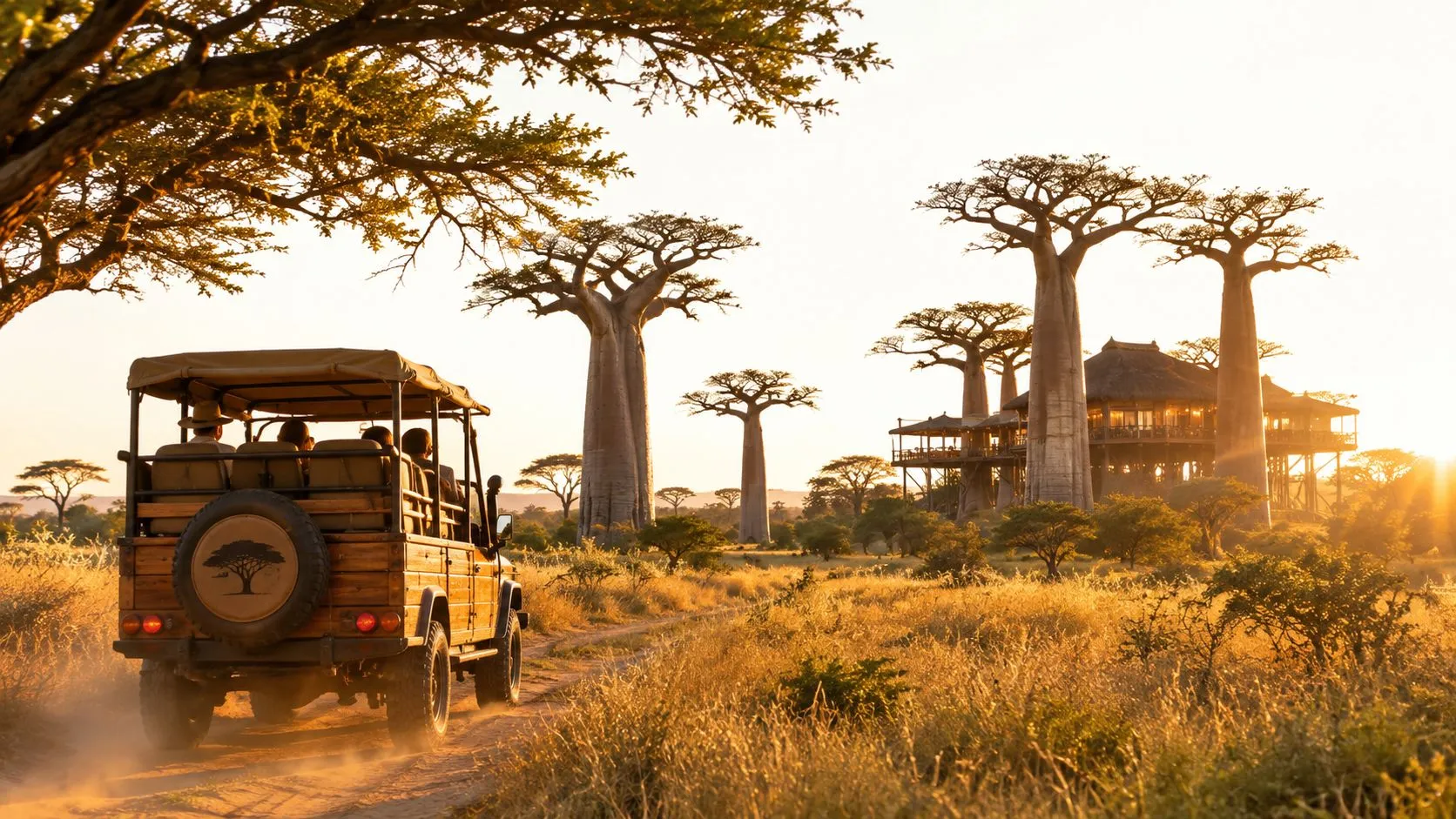
Setting Foot in the Baobab Canopy
The first thing you notice at Tarangire Treetops is scale, then quiet, then the odd feeling of sleeping above the ground in old baobab trees. One source places the lodge about 1.5 hours by road from Arusha and about 22 km from the park boundary, so it feels remote without turning arrival into an all-day transfer (Expert Africa - Tarangire Treetops).
Arrival changes the mood fast
The drive into the private conservancy shifts you out of the usual safari rhythm and into a property built for immersion. Tarangire National Park covers 2,850 sq km or 1,096 sq miles, and the lodge sits in a connected area just beyond the northeastern edge, which helps explain why the setting still feels tied to the same wildlife system.
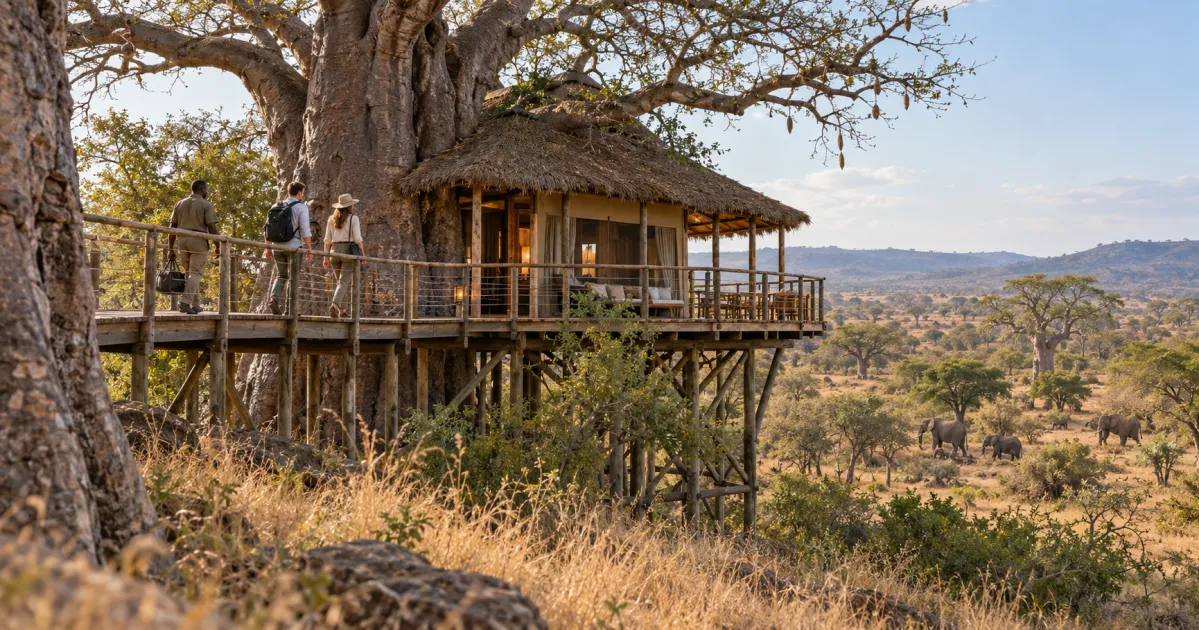
The architecture is the main draw. Public descriptions place the main areas and some guest rooms in baobab trees, which makes the design more than a visual flourish, it changes how the stay works in practice. You hear birds, insects, and the occasional movement in the brush that is close enough to register, yet not so close that the property feels harsh.
The canopy setting works best for travelers who want the bush close, but not crude.
What the setting delivers
Tarangire Treetops sits within the Elewana Collection, and that matters because the property is set up for travelers who want a high-end base with a clear sense of place, not a standard room near a park gate. The baobabs frame the public areas and give the lodge its visual identity, which is why the stay feels distinct from the moment you arrive.
The trade-off is straightforward. You pay for atmosphere, privacy, and a setting that feels fully tied to Tarangire, not for proximity to a conventional lodge at the edge of the road. Against a standard property near the gate, the difference is not just mood, it is the raised treehouse position, the wider view line, and the sense that wildlife is part of the day rather than a short drive away. That premium makes sense if the setting itself is part of the trip.
Accommodation Types and Room Amenities
Tarangire Treetops has 20 rooms, which is small enough to keep the property intimate without feeling overly bare-bones. The practical takeaway is simple, there isn't a huge range of room categories to sort through, so the decision is less about chasing a specific tier and more about deciding whether the treehouse format suits your comfort level.
What to expect in the room mix
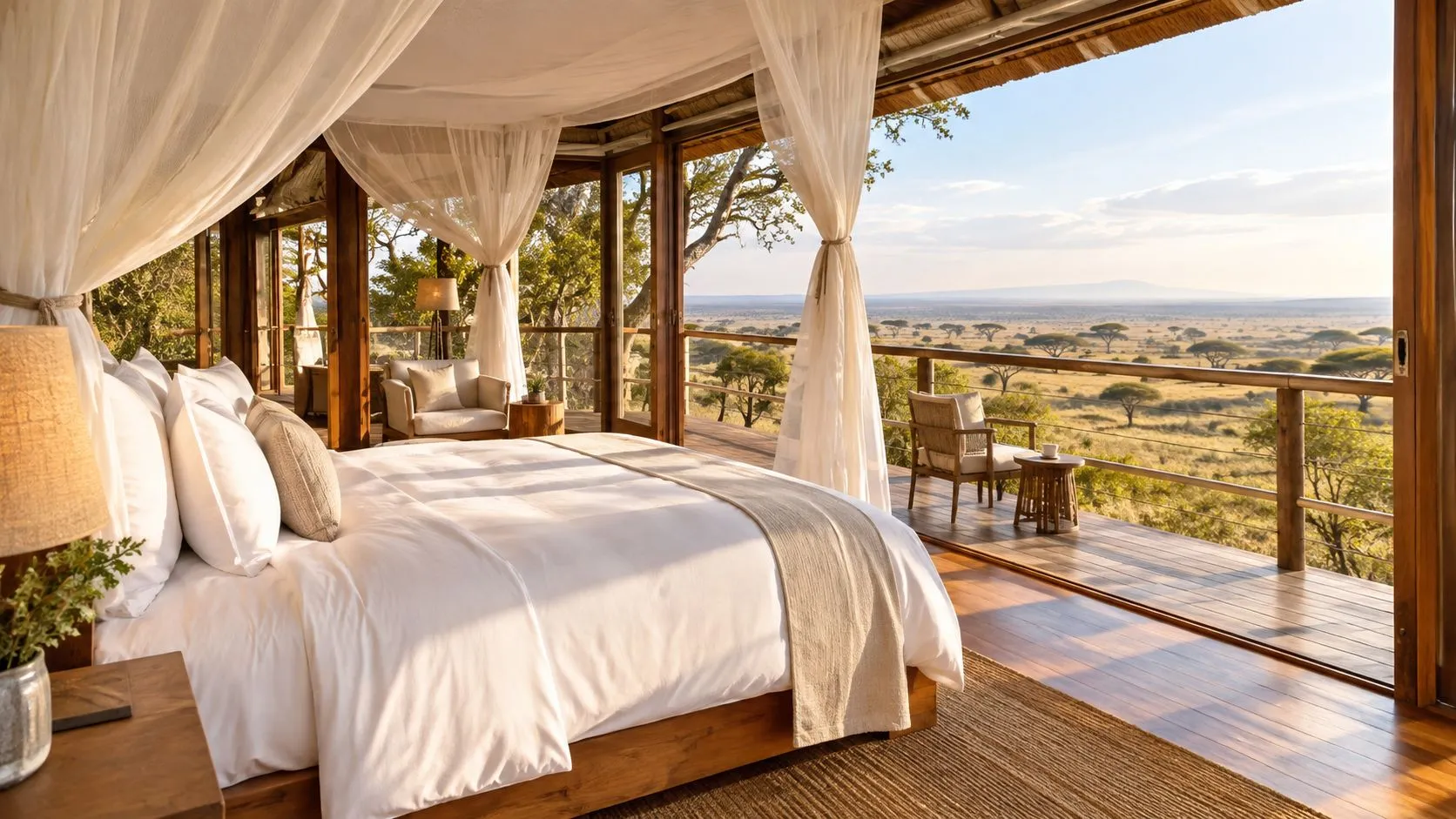
The lodge's core idea is the tree lodge concept, with guest spaces built up into baobab trees and designed to feel airy, private, and scenic. That raised design is part of the appeal, but it also shapes the sleeping experience in ways some travelers overlook, especially if they're used to ground-level suites with conventional layouts.
Public descriptions point to en-suite facilities, spacious private decks, and a comfortable luxury standard rather than rugged camping (Accommodations in Tarangire national park). The point isn't to pretend you're roughing it. It's to give you a sheltered base where you can step outside and still feel the park around you.
How to judge if it fits your style
If you like your safari stay to feel like an architectural experience, the lodge works. If you're sensitive to height, stairs, or a more open bush feeling, the treehouse format may be less relaxing than the brochure suggests. That's not a flaw, it's a design trade-off, and it's worth making clear before you book.
Practical rule: book Tarangire Treetops for the experience, not just the bed.
For travelers managing a broader safari portfolio, a booking platform that centralizes lodge details can save time when you're comparing inclusions and room style. One such option is Global Hospitality Collective (TGHC), especially if you're trying to line up a lodge stay with the rest of a multi-stop itinerary.
Wildlife and Exclusive Activities
The biggest practical advantage at Tarangire Treetops is not the room, it's the access. The property sits on a private 77,000-acre conservancy, which changes what the lodge can offer compared with a standard stay inside a national park.
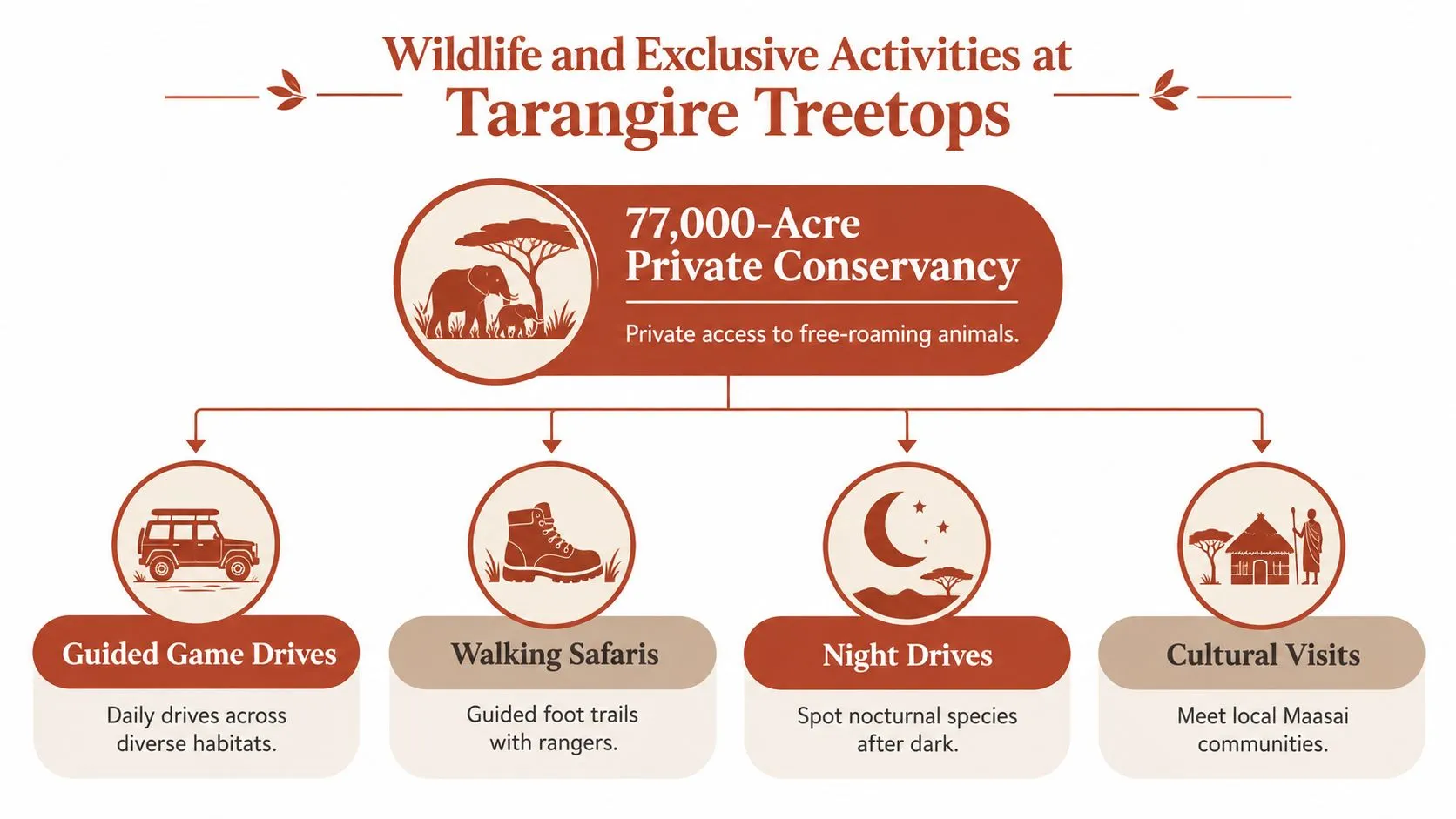
Why the private conservancy matters
Private-concession logic is what justifies a lot of the premium. Tarangire Treetops can offer night drives, walking safaris, and Maasai village visits, experiences that are often restricted inside national parks and therefore harder to buy at a regular lodge (Elewana Tarangire Treetops). That matters because activities become part of the value equation, not just add-ons.
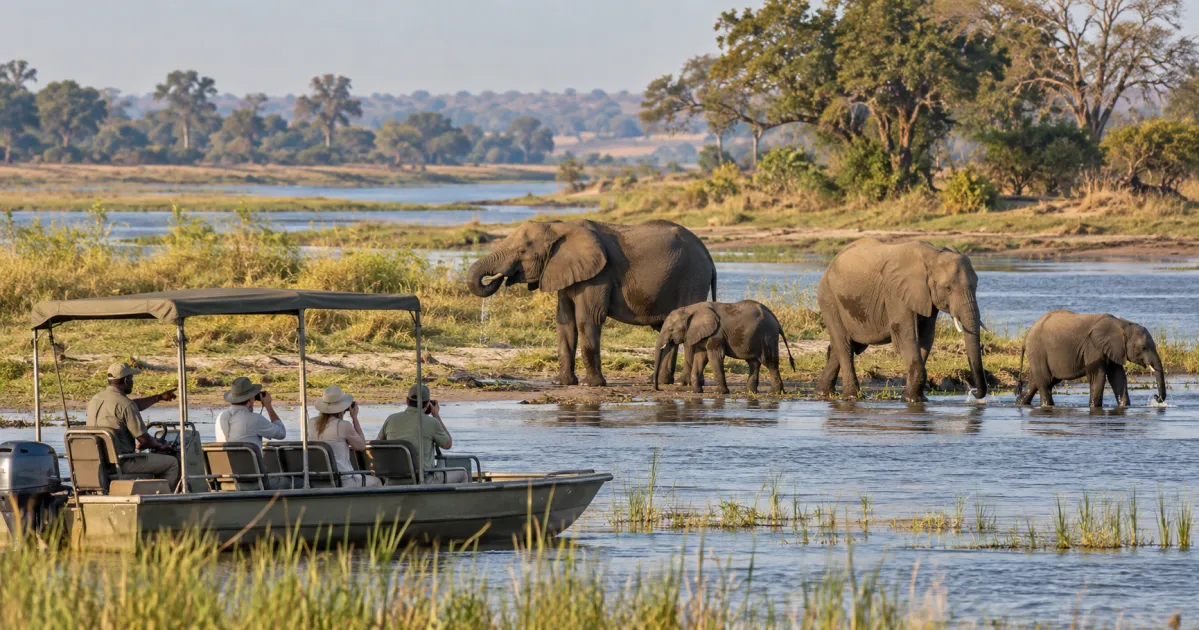
The seasonal wildlife pattern also helps. During the June-to-October dry season, animals congregate around the Tarangire River, which serves as the park's key water source. In practical terms, that means your dawn and afternoon game-viewing windows can feel more concentrated than they do in greener months.
What a day can look like here
A good stay uses the private land properly. Start with a morning drive, return for lunch and shade, then use the late afternoon for a second outing or a slower cultural visit. If you've booked well, the lodge can become a base for activities that would be impossible or heavily limited in a more regulated setting.
Explore Tarangire National Park tours on Explola if you want to compare how this area is packaged inside broader safari itineraries.
The wildlife argument is strong, but it's not abstract. Tarangire National Park is known for large elephant concentrations, and one overview mentions roughly 300 elephant herds, while another authority says the park hosts over 550 bird species and some of Africa's largest elephant herds (Tarangire Treetops). Those numbers matter because they explain why Tarangire keeps showing up in serious safari planning, not just romantic lodge write-ups.
Operator reality: the best value here comes when you actually use the concession, not when you treat the lodge like a scenic hotel.
Itineraries and Day-by-Day Planning
Tarangire Treetops works best as a deliberate stop in a Northern Safari Circuit plan, not as an isolated splurge. Its proximity to Arusha and to Tarangire's edge makes it useful at the start of a trip, when travelers are fresh and want a softer landing, or at the end, when they want to decompress without losing safari momentum.
A simple 3-night structure
One strong pattern is arrival, full safari day, then departure. Day one is mostly transfer and settling in, day two is when the private-concession activities earn their keep, and day three becomes useful for either another game drive or a culture-focused outing before you move on. That rhythm helps avoid the common mistake of squeezing too many lodges into too little time.
A broader route can stack Tarangire with Ngorongoro and Serengeti, but the order matters. Putting Tarangire first usually makes sense because the lodge offers a calmer introduction to wildlife viewing before you move to more famous and often busier ecosystems. It also gives you time to tune into the safari pace without rushing.
When to use it as a recovery base
Some travelers use Tarangire Treetops as a recovery lodge after a high-activity stretch elsewhere in Tanzania. That's sensible if you want better sleep, less packing, and evenings that feel more private than the standard circuit stopover.
A good planning rule is to keep the lodge for the moments when the setting itself is part of the trip, not an incidental overnight. If you're trying to maximize vehicle hours above all else, a simpler camp near a park gate may be better. If you want a strong evening atmosphere and access to both wildlife and downtime, Tarangire Treetops fits neatly.
Use this 3-day Tarangire and Ngorongoro safari itinerary as a comparison point when you're deciding how Tarangire Treetops should slot into a larger route.
Best Time to Visit and Pricing Realities
The best time to visit depends on what you care about most. If wildlife concentration is the priority, the June-to-October dry season is the clearest fit because animals cluster around the Tarangire River. If you value softer light, fewer hard edges in the terrain, and a less crowded feel, the greener periods can still work, though the viewing logic changes.
Why the price range needs careful reading
Publicly visible rates for Tarangire Treetops show a wide spread. Tripadvisor excerpts show standard-room ranges around $1,887–$3,732 and other recent snapshots around $1,602–$2,748, while specialist safari sellers list rates from about US$1,145–US$1,335 per person per night depending on season and board basis (Tripadvisor). That spread tells you one thing clearly, the room rate alone doesn't answer the central question.
What matters is what's included. Board basis, transfers, and seasonal pricing can move the effective total a lot, so comparing only the headline rate is how people end up disappointed. For this lodge, the right comparison is not “is it expensive?”, it's “what activities, meals, and logistics are bundled into the price I'm seeing?”
A useful way to compare windows
The dry season usually gives you stronger wildlife density, while green-season travel may trade some of that intensity for a different atmosphere. If you want a broader Tanzania timing framework, this Tanzania safari timing guide can help you map Tarangire Treetops against the rest of your route.
That same logic applies outside Africa too. If you've ever planned around weather, like using a Badlands RV travel guide to match season with road conditions and crowd levels, the principle is identical here, timing changes both experience and value.
The plain truth is that Tarangire Treetops is an all-in safari-value decision, not just a room booking. The premium can be justified if you use the private setting and included activities, but it makes less sense if you're only chasing the word “treehouse.”
Booking Your Safari Through Explola
Tarangire Treetops is easier to book cleanly when you can compare safari itineraries, inclusions, and operator quotes in one place. Explola is built for that kind of workflow, with verified operators, side-by-side tour comparison, and direct inquiry handling for safari trips.

Why comparison matters here
This lodge sits in the zone where hidden costs can creep in through transfers, board basis differences, and activity inclusions. A platform that lets you inspect day-by-day itineraries side by side is useful because the room rate alone never tells the full story. That's especially true for safari trips, where the itinerary matters as much as the property.
Explola also emphasizes transparent pricing and direct communication with verified operators, which helps reduce the usual back-and-forth when you're trying to confirm what is included. If you're planning Tarangire around a broader Northern Circuit route, that transparency is practical, not cosmetic.
Booking rule: compare the itinerary first, then compare the price.
How to use it without overcomplicating the process
Search by park, duration, and comfort level, then shortlist tours that include Tarangire in a way that matches your pace. If a trip mentions Tarangire Treetops or a Tarangire stay, read the inclusions line by line before you send an inquiry, because the value lives in the detail.
Used well, Explola functions as a filter against vague safari marketing. It won't replace judgment, but it does make the decision tree cleaner when you're trying to separate a real value stay from a glossy description.
Traveler Tips and Nearby Alternatives
Tarangire Treetops suits couples who want atmosphere, privacy, and a memorable setting, while families need to be comfortable with an unfenced wildlife area where large animals can pass through. That setting adds excitement, but it also means parents should pay attention to lodge guidance, movement after dark, and how kids handle the bush environment.
For travelers who want a different fit, nearby options on the Tarangire circuit range from larger, more conventional lodges to simpler tented camps. Tarangire Safari Lodge gives a more traditional safari base, Tarangire Sopa Lodge is larger and more hotel-like, and Maramboi Tented Camp trades the baobab-tree identity for a distinct natural environment and a more tented style (Uganda Safari Tours).
If Tarangire Treetops appeals but the price feels heavy, compare it against properties that offer stronger room counts or a less dramatic design. If the treehouse concept is the main reason you want to go, then pay for that story and use the lodge properly. If your priority is pure game density at the lowest practical cost, there are easier ways to stay in the area.
Explola helps you compare Tarangire Treetops against other Tanzania safari options with clear itineraries, direct operator contact, and transparent booking workflows. If you're planning a Tarangire stay and want to see what's included before you commit, visit Explola and start with the tours that match your route, budget, and comfort level.
Ready to experience this?
Explore Related Safaris
Destinations Mentioned

Daniel writes for the Explola blog, where he covers African safari destinations, wildlife, travel trends, and practical trip planning. His work is centered on making safari travel easier to understand, compare, and plan.
Get Safari Tips & Destination Guides
Join our newsletter for exclusive travel tips, wildlife insights, and safari planning advice.