You're comparing safari lodges for a Botswana trip, and the word tent keeps appearing beside rooms with hardwood decks, private bathrooms, and full-size beds. Or perhaps you're an operator pricing a new camp and trying to decide whether a lightweight mobile system will survive the wet season. In both cases, the label can mislead you.
African safari tents range from simple shelters that a crew carries into a remote wilderness site to heavily engineered suites built on raised platforms. They can be moved every few days, left in place seasonally, or designed as long-term hospitality buildings with canvas walls. The right choice depends less on whether a tent sounds luxurious and more on how it handles movement, weather, maintenance, privacy, and guest expectations.
What an African Safari Tent Actually Is
A safari tent is a fabric accommodation structure designed around the realities of the bush. It normally combines a weatherproof outer shell, a supporting frame, screened ventilation, anchoring systems, and an interior arranged for sleeping, relaxing, or living. Unlike a regular camping tent, it may include a floor, furniture, lighting, plumbing, an attached bathroom, and a serviceable entrance.
The important distinction is between a tent used as equipment and a tent used as accommodation. A basic mobile shelter prioritises low weight and fast packing. A permanent tented suite prioritises stability, insulation, drainage, fire safety, and the ability to support furnishings and bathroom fittings. Both may look like canvas tents from outside, but they solve very different problems.
Planner's rule: Ask where the tent will be used, how often it will move, and what happens when weather changes. Those answers matter more than the word “luxury” in a brochure.
Four families you'll encounter
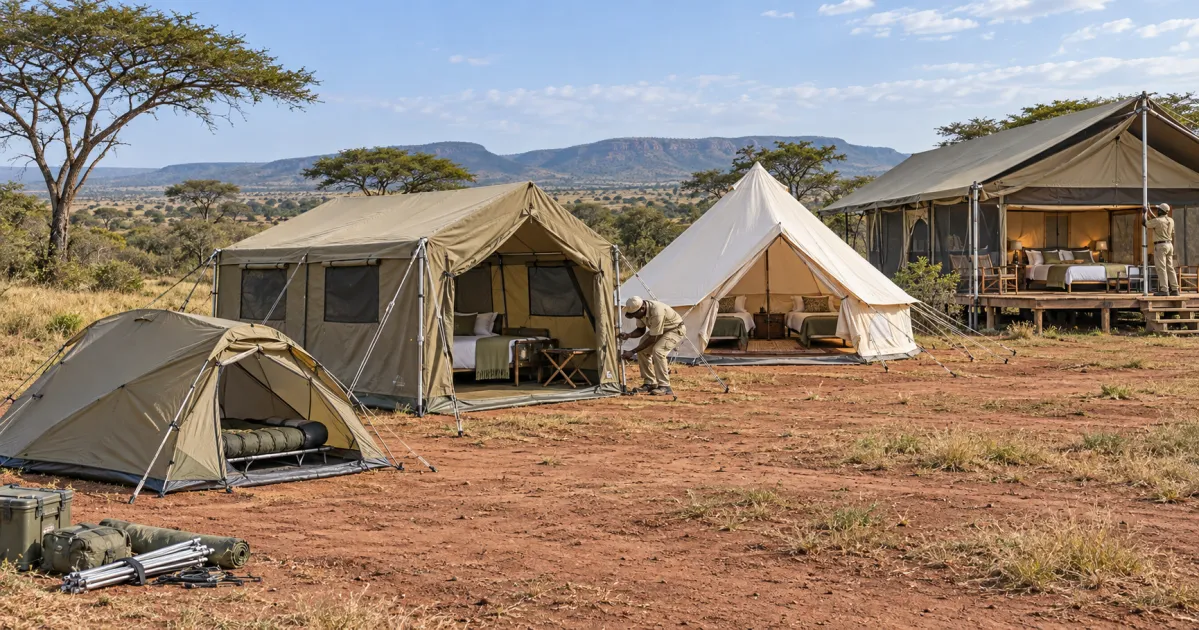
Mobile fly camps are lightweight systems taken into remote areas and moved as the safari route changes. Crews pitch them quickly, often with limited furniture and shared facilities.
Traditional canvas walk-ins offer more interior space and a sturdier guest setup. Seasonal camps commonly use this format when comfort matters but the camp still needs to close or relocate.
Bell tents rely on a simple central-pole design and are easy to understand, assemble, and furnish. They suit straightforward camping operations, group trips, and less elaborate facilities.
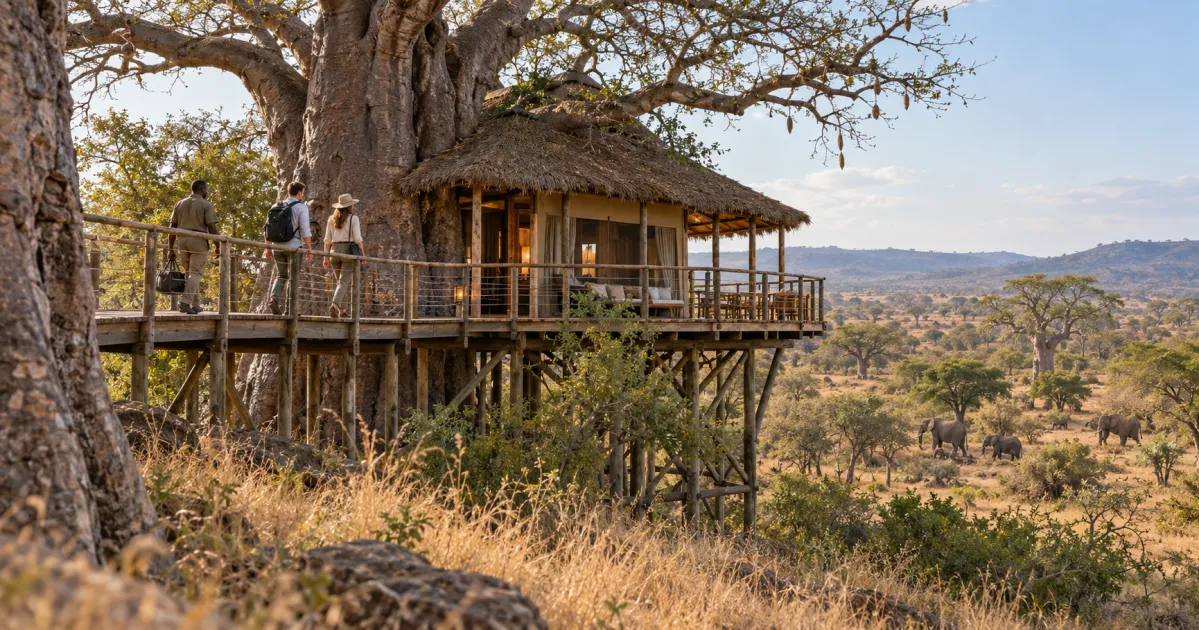
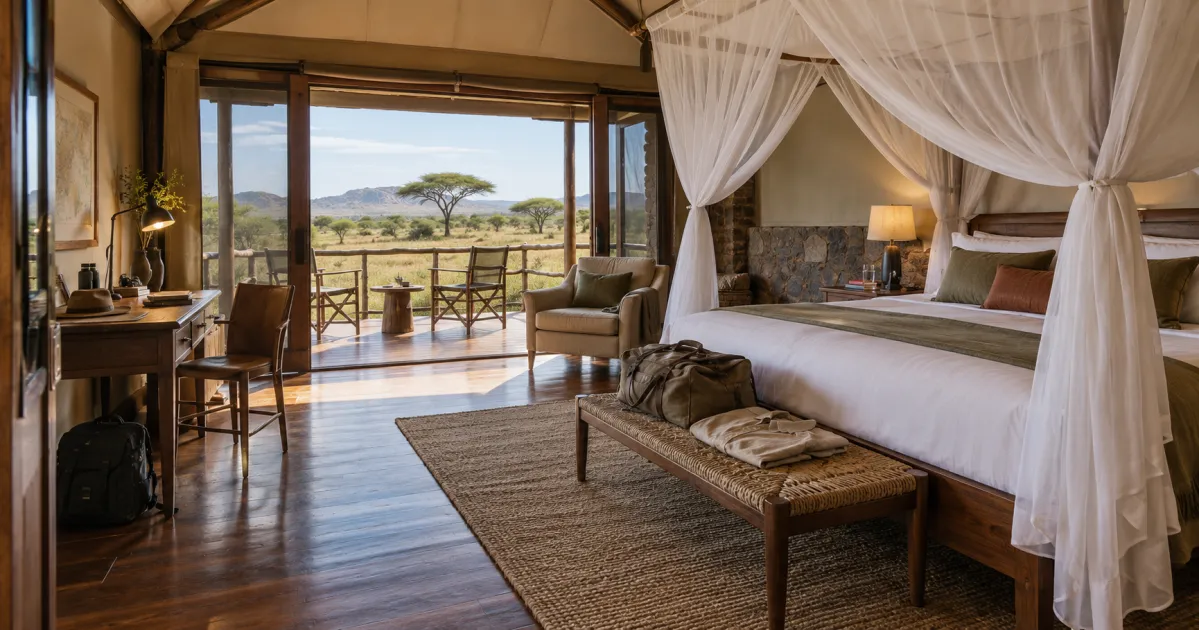
Permanent or luxury tented suites usually stand on platforms and may include en-suite bathrooms, private decks, substantial furniture, and a heavier frame.

When you compare options, look beyond photographs. Ask about frame gauge, hydrostatic head, fire classification, mosquito screening, flooring, bathroom construction, and the intended operating season. A tent designed for one remote camp style may be uncomfortable, wasteful, or impractical in another.
The Origins of Tented Safari Travel
The safari tent's character comes from a period when travel through East and Southern Africa required a self-contained camp. During the late nineteenth and early twentieth centuries, wealthy British and American travellers on East African hunting trips used large canvas camps supported by staff, furnishings, and formal dining arrangements. Those camps were not minimalist backpacking setups. They were temporary households transported into remote terrains.
Historical accounts describe this tradition as a foundation for modern safari-tent accommodation, with the early 1900s and the 1920s often identified as formative periods for the tented safari format. The practical arrangement was simple to understand: a canvas sleeping space, a camp kitchen, service areas, washing facilities, and a dining area assembled close to the route of travel. Historical background on safari tent glamping traces how that model influenced the recognizable form used by camps today.
Why the old silhouette remains
Canvas survived because it offers a useful balance. It can be packed, repaired, and adapted more easily than a rigid building, while still creating a cooler and more atmospheric interior when paired with shade and ventilation. Timber or metal frames provide the structure, while fabric walls preserve the feeling of being close to the natural surroundings.
The familiar bucket shower also reflects that earlier logic. A camp in a remote area may not have the infrastructure of a conventional hotel, so water storage, simple plumbing, and careful allocation of resources become part of the design. Modern camps can conceal much of that work, but the underlying arrangement remains visible in the outdoor shower, open-sided dining area, and canvas bedroom.
The safari tent feels authentic because it keeps the boundary between guest and environment visually light, while the camp team manages the practical systems behind it.
From hunting camp to photographic safari
As safari travel shifted toward wildlife viewing and photographic tourism, the tented camp became less about supporting a hunting expedition and more about positioning guests near wildlife areas with comfort and responsible site management. The four modern families inherit different pieces of that history. Mobile fly camps retain movement and simplicity. Canvas walk-ins preserve the traditional camp atmosphere. Bell tents simplify the structure. Luxury suites add platforms, bathrooms, and engineered durability without abandoning the canvas silhouette.
That is why a safari tent doesn't automatically mean roughing it. It can mean a bed under canvas, a screened view of the bush, and a service model that ranges from self-sufficient camping to full lodge hospitality.
The Main Safari Tent Types Explained
The easiest way to understand the market is to ask three questions about each tent. What supports it? Where does it operate? What comfort does it sacrifice or provide in return for mobility?
Mobile fly-camp tents
A mobile fly camp uses lightweight tents that a crew can transport, pitch, dismantle, and move along with the itinerary. The structure usually stays deliberately simple. Guests may have proper beds and bedding, but bathrooms and dining facilities can be separate or shared.
This format suits a remote walking or wildlife camp where the value comes from reaching areas without permanent buildings. Its advantage is access and flexibility. Its trade-off is limited storage, less acoustic separation, and fewer fixed amenities. A Serengeti-style mobile camp can feel wonderfully close to the surroundings, but it isn't the right match for someone expecting a private bathroom and a broad deck.
Traditional canvas walk-in tents
A walk-in tent has enough height and floor area for guests to enter comfortably and move around without crawling through a low opening. Operators use this format for seasonal camps, overland circuits, and established sites where the camp may remain in place for a meaningful operating period.
Compared with a fly-camp shelter, it can support better furniture, more generous storage, and a more substantial sleeping arrangement. The structure still has a camping character, especially if bathrooms are shared or placed in separate blocks. It offers a useful middle ground for travellers who want canvas and bush sounds without giving up basic room to move.
Bell tents
Bell tents use a central support pole and a circular or near-circular floor plan. They're straightforward to pitch and visually distinctive, which makes them popular for group camping, introductory safari experiences, and simple accommodation operations.
Their simplicity is also their limitation. A central pole affects furniture placement, and the rounded shape can provide less usable wall space for storage or bathroom divisions. Bell tents work well when the operation values easy setup and an uncomplicated guest experience. They're less suitable when an operator needs a large sleeping area, integrated plumbing, or a heavily furnished suite.
Permanent and luxury tented suites
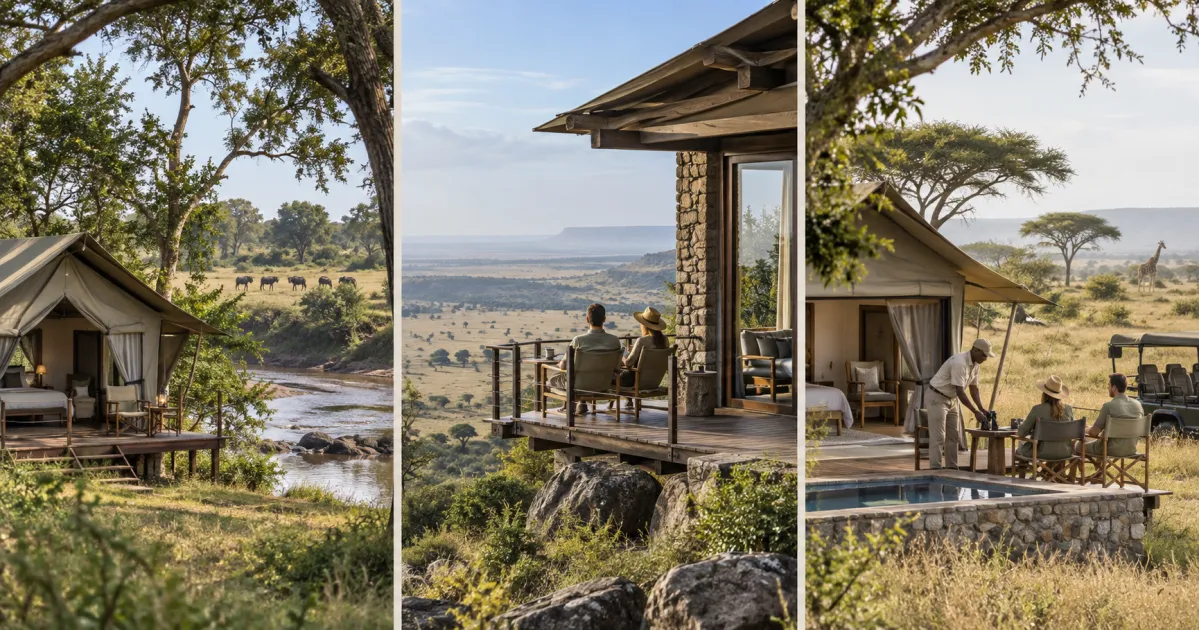
A permanent or luxury suite usually sits on a raised platform with a substantial frame, an enclosed bathroom, private outdoor space, and furniture that resembles a lodge room. A Sabi Sand-style suite may feel like a hotel room in function, but the canvas walls, screened openings, and sounds of the bush preserve the tented identity.
The benefit is comfort and reliable service. The cost is reduced mobility, more complex maintenance, and greater dependence on a carefully prepared site.
| Tent Type | Structure & Frame | Mobility | Typical Use |
|---|---|---|---|
| Mobile fly camp | Lightweight poles and fabric system | High | Remote seasonal or walking camps |
| Canvas walk-in | Moderate frame with spacious canvas shell | Moderate | Established seasonal camps and overland travel |
| Bell tent | Central pole and simple circular shell | Moderate to high | Basic, group, and budget camping |
| Permanent or luxury suite | Heavy frame, platform, and integrated services | Low | Lodge-based and long-term tented accommodation |
Materials, Frames, and Weather Performance
A safari tent's specifications translate directly into what guests feel. A weak frame can flex or rattle in wind. Poor ventilation can leave the interior damp. Inadequate waterproofing can turn a night of rain into a maintenance emergency. Operators should judge the complete system, not just the fabric name.
For permanent or semi-permanent lodge and eco-resort applications, a common technical benchmark is heavy-duty PVC-coated polyester around 850g/m², paired with a waterproof rating of at least ≥3000mm H₂O and a B1 fire-retardant classification. The coating adds resistance to punctures and tears, the hydrostatic head helps limit seepage during prolonged storms, and fire retardancy supports hospitality safety requirements in enclosed guest areas. Safari tent material and safety guidance explains why these specifications matter in resort and lodge applications.
Reading the frame
A practical benchmark for medium-sized African safari tents is a hot-galvanised steel frame using roughly φ76×2mm pipe sections, with wind resistance around 80 km/h. Breathable inner canvas and mesh layers can support cross-flow ventilation and help reduce condensation in tropical camp conditions. African safari tent and wind-resistance details gives useful context for interpreting these structural choices.
The guest doesn't need to memorise pipe dimensions. They need to know what those dimensions indicate. Galvanised steel resists corrosion more effectively than untreated steel, a firm frame feels quieter and more stable in gusts, and mesh ventilation reduces the need to keep the tent sealed throughout the day.
What to inspect before approving a tent
Seams and stress points: Double stitching, reinforced corners, and properly secured attachment points reduce failure where fabric carries the greatest load.
Weather seals: Zippers, door overlaps, rainfly edges, and groundsheets often reveal more about real-world weather performance than a product photograph.
Hardware finish: Galvanised or appropriately protected metal is valuable in humid and wet environments, where corrosion can weaken connections.
Repairability: A camp should carry patch materials, spare guy lines, replacement fasteners, and tools suited to the frame system.
For procurement teams comparing poles, anchoring equipment, and outdoor infrastructure, Material Handling USA outdoor equipment can provide a useful reference point when reviewing adjacent outdoor hardware categories. It shouldn't replace a safari-tent specification sheet, but it can help teams think systematically about durability, handling, and field use.
| Specification | Mobile Tents | Canvas Walk-Ins | Permanent/Luxury Tents |
|---|---|---|---|
| Fabric priority | Low weight and packability | Breathability and practical durability | Heavy-duty weather and fire performance |
| Frame priority | Fast assembly and low transport burden | Stability with manageable relocation | Load-bearing strength and long-term corrosion resistance |
| Ventilation | Mesh panels and adjustable openings | Inner canvas plus screened windows | Designed cross-flow, screened doors, and controlled openings |
| Guest outcome | Closer contact with the environment | More room and dependable shelter | Stable comfort, privacy, and integrated services |
| Main trade-off | Fewer fixed amenities | More labour and transport effort | Reduced mobility and higher maintenance complexity |
Matching the Tent to the Safari Style
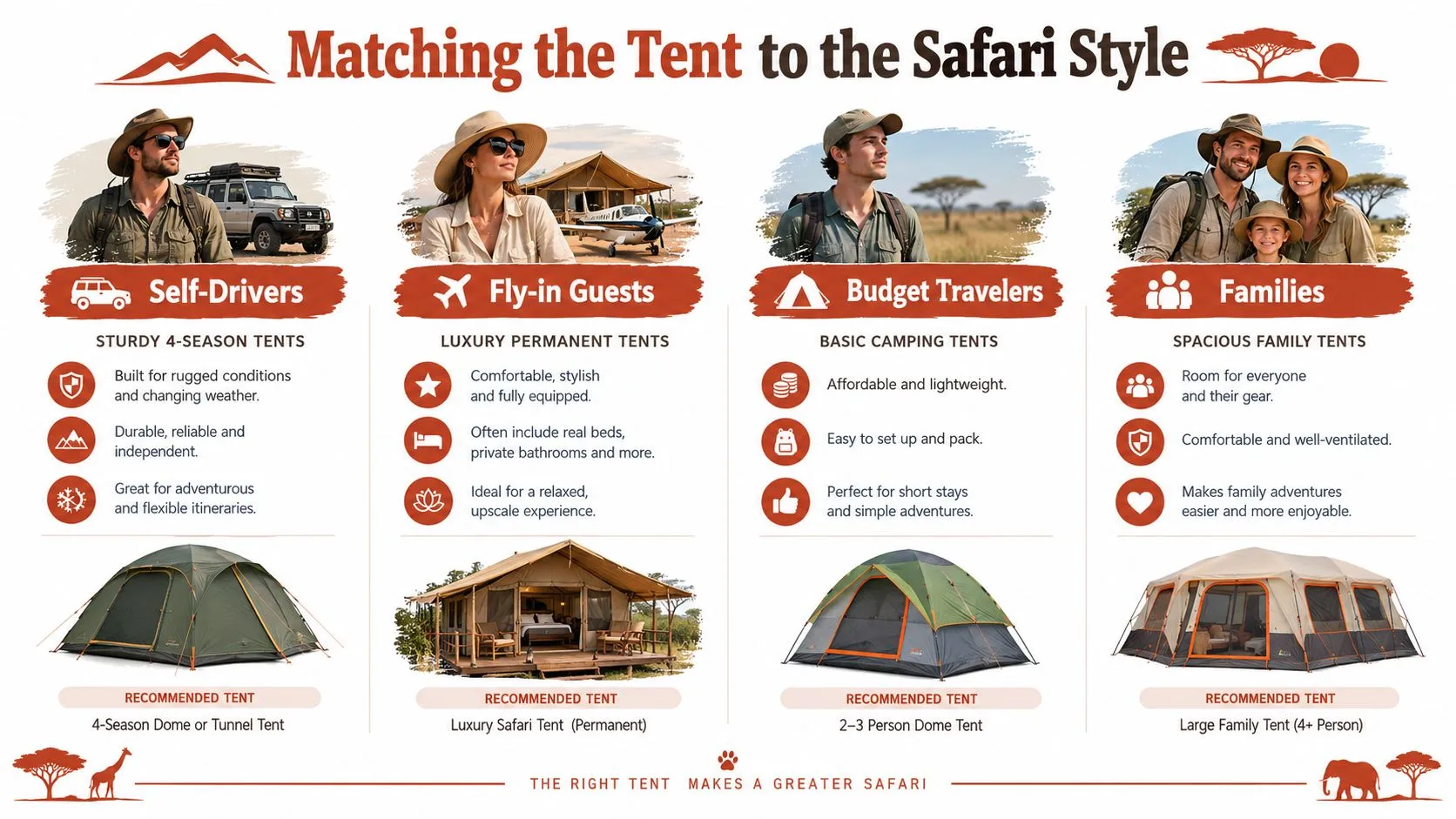
The right tent follows the itinerary. A traveller who drives between camps, packs equipment repeatedly, and spends daylight on the road has different needs from a honeymoon couple flying into one property for a carefully managed stay.
Self-drivers
For a self-drive route through Etosha or Kruger, choose equipment that tolerates repeated handling and imperfect setup conditions. A sturdy rooftop tent or canvas walk-in can make sense when you need predictable sleeping space, quick access to gear, and a system that fits your vehicle and campsite routine.
Check the packed size, ladder or platform arrangement, mattress storage, rain cover, and repair support. A beautiful permanent suite won't help if your itinerary requires you to dismantle camp each morning.
Fly-in guests and honeymooners
Travellers flying into the Okavango or a private reserve such as Sabi Sand usually benefit from a permanent or luxury tented suite. The raised platform, private bathroom, deck, lighting, and staff-supported camp routine remove the logistical work that matters on a self-drive trip.
The decision isn't just about spending more. It's about paying for a fixed setting, a complete service system, and the ability to enjoy the tent as a room rather than as equipment. For first-time visitors comparing camping styles, this Tanzania safari camping guide for first-time visitors offers useful context for separating mobile camping from more established tented stays.
Families
Families need internal volume, safe movement, and a bathroom arrangement that doesn't create friction at night. A larger canvas walk-in or a two-bedroom configuration can work better than several small independent tents, particularly when children need supervision and luggage needs to stay organized.
Ask whether the walls divide sleeping areas, whether the doors can be secured, how far the bathroom is from the sleeping space, and whether the camp can accommodate the family configuration you need.
Adventure travellers
Walking safaris and remote fly camps call for lightweight systems that crews can carry and pitch in changing locations. The reward is access to quieter areas and a stronger sense of immersion. The compromise may include simpler washing facilities, less insulation, and fewer places to store personal gear.
Before booking, state your priorities. Some guests need a private bathroom, some want a light footprint and mobility, and others care most about sleeping close to the sounds of wildlife. The tent should serve that priority rather than forcing you to adapt your entire safari around a photograph.
Buying Versus Renting and Booking
For most travellers, booking is the sensible choice. You get a maintained tent, an established campsite, staff support, and a clear accommodation arrangement without taking responsibility for transport, storage, repairs, insurance, or site preparation.
Renting can make sense for serious overlanders who already understand their route and want control over where they sleep. It can also suit an operator testing a seasonal concept before committing to a fleet. But rental terms need careful review. Confirm what the price includes, who handles damage, whether delivery and collection are included, and what happens when weather delays a return.
When operators should buy
An operator should consider purchasing when the tent fits a stable operating model. That means the site, occupancy pattern, maintenance capacity, and seasonal plan all support ownership. A permanent lodge owner may invest in custom-built luxury tents because the structures become long-term operating assets. A mobile operator may prefer a rented fleet to avoid storing equipment during quiet periods.
Ownership gives the operator control over layout, branding, materials, and repair schedules. It also creates responsibility for every component, from guy ropes and groundsheets to platform drainage and bathroom fittings. A tent that sits unused still needs inspection and appropriate storage.
Commercial test: Don't ask only whether the tent is affordable. Ask who will transport it, inspect it, clean it, repair it, store it, and replace it when the fabric no longer meets guest or safety expectations.
When renting wins
Renting is attractive when demand is uncertain, the camp moves between seasons, or the operator wants to preserve cash for vehicles, guides, kitchens, and site infrastructure. It can also provide access to a known system without committing to a custom design.
For travellers, renting a mobile tent makes sense when self-drive independence is the main objective and the rental company provides reliable equipment and practical support. For everyone else, booking an existing camp avoids a long list of operational tasks. Travellers comparing lower-cost itineraries can also use this Tanzania safari on a budget guide to think about where accommodation simplicity fits into the wider trip.
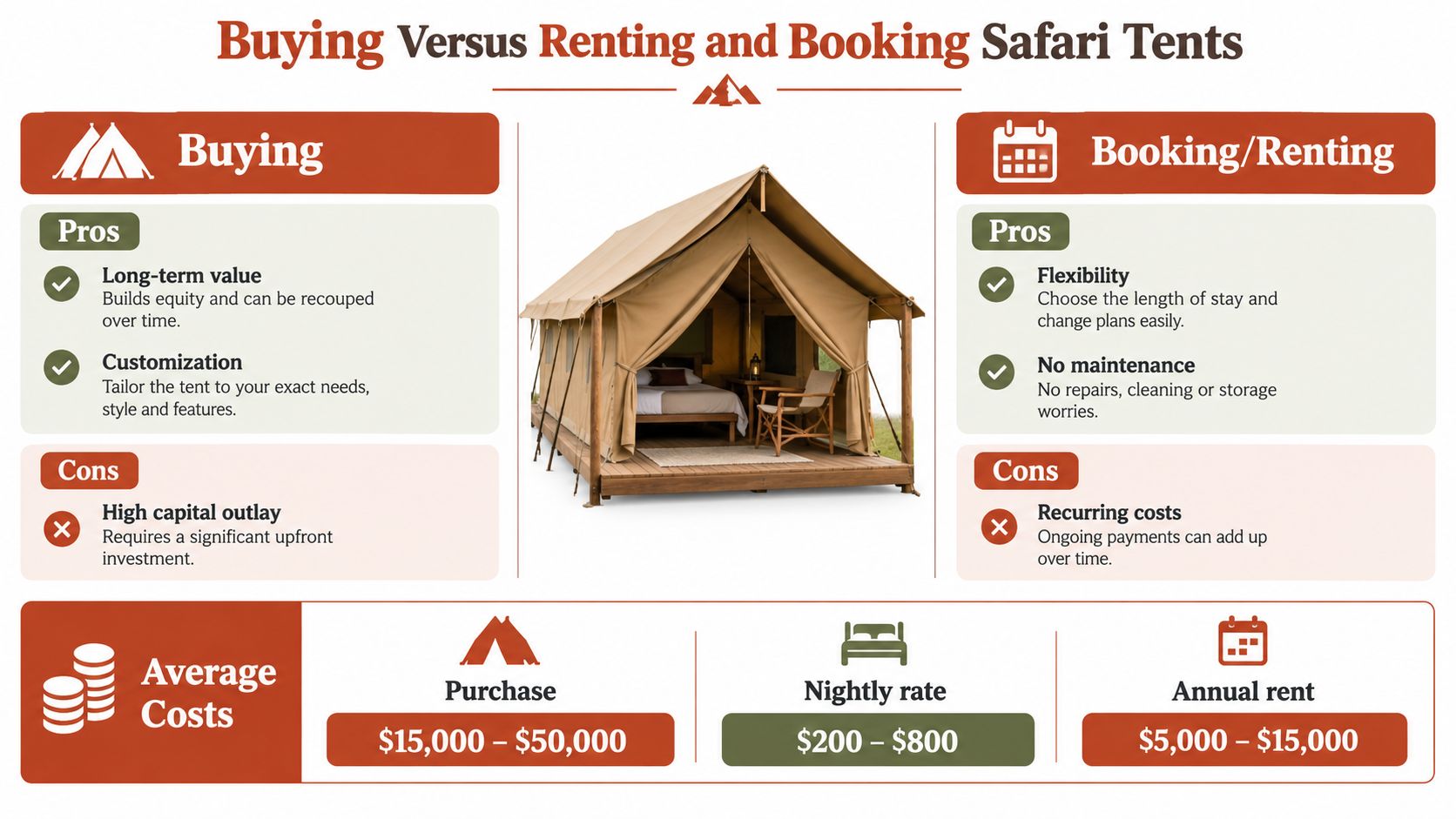
My position is straightforward. Most travellers should book. Serious overlanders should consider renting. Operators should buy only when the operating model justifies ownership.
Setup, Care, and Maintenance Essentials
A well-built tent still fails when a crew chooses the wrong site or stores wet fabric. Setup starts before the first pole is connected. Look for firm ground, natural drainage, useful shade, and protection from the strongest wind exposure, while avoiding depressions where runoff can collect.
Anchor the structure with suitable pegs and guy ropes before tensioning the fabric. Assemble the frame in the manufacturer's sequence, check each connection, and position the rainfly so water sheds away from sleeping areas and entrances. Once the shell is secure, inspect the floor, screens, zippers, and interior fittings before guests arrive.
A practical maintenance rhythm
Before the season, inspect every tent on the ground. Check frame joints, galvanised surfaces, fabric seams, zipper tracks, guy lines, pegs, groundsheets, and bathroom connections. Replace worn parts before occupancy begins, because a small failure is easier to fix in a workshop than during a storm.
During the season, crews should perform short spot checks rather than waiting for visible damage. Look for loose anchors after strong weather, mud on fabric, standing water under platforms, blocked drainage, stretched seams, and insects entering through damaged mesh.
At the end of the season, clean the fabric, remove organic matter, dry every component fully, and store the tent in a dry, ventilated place. Wet canvas or coated fabric packed into storage can develop odours, mildew, and avoidable damage.
Habits that protect guest comfort
Travellers also affect tent performance. Keep zips closed at night to limit insects, air the tent each morning, and report a damaged screen, leaking seam, or faulty zipper early. Staff can often repair a small problem between occupations, but they need to know about it.
Mud should be removed before it dries into the fabric. Seams and stress points deserve particular attention because a small opening can expand under tension. Operators should keep patch materials, spare guy ropes, compatible fasteners, cleaning supplies, and frame tools together rather than scattering them across vehicles and stores.
Experienced travellers can use this African safari packing list to prepare for the realities of tented accommodation, including clothing, footwear, lighting, and personal items. The goal isn't to turn guests into repair technicians. It's to help them arrive prepared and treat the tent as working outdoor equipment.
Practical Takeaways for Travelers and Operators
Start with the safari, not the tent. Decide whether you're self-driving, joining a mobile camp, flying into a lodge, travelling as a family, or prioritising a walking experience. Then choose the tent family that supports that style.
Travellers should confirm the details that photographs often hide:
Safety: Ask whether the tent has documented fire-retardant treatment and how cooking or heating equipment is separated from guest areas.
Protection: Check for intact mosquito screening, secure zippers, functioning rain protection, and a floor suited to the site.
Facilities: Confirm whether the bathroom is en suite, attached, private but separate, or shared.
Movement: Find out whether the camp moves, how often it relocates, and what guests should expect from packing and unpacking.
Comfort: Ask about beds, storage, power, lighting, ventilation, and noise separation.
Operators should prioritise the frame, fabric, anchoring, drainage, fire performance, and maintenance plan before choosing decorative details. Solar lighting, lighter composite frames, and lower-impact mobile camps may influence future designs, but each innovation still has to work in the field. For broader accommodation procurement decisions, Simply Hospitality's holiday park guide provides a useful reminder that equipment choices affect both guest experience and operating routines.
The four tent families aren't a ladder from inferior to superior. They're tools for different jobs. A mobile fly camp values reach, a canvas walk-in balances movement and space, a bell tent keeps the system simple, and a permanent suite turns canvas into a fully serviced room. Match the structure to the safari, and the tent will feel intentional rather than like a compromise.
Explola helps you compare African safari tours by destination, accommodation style, budget, group size, and itinerary, including trips that use camping equipment and tented camps. Visit Explola to review verified operators, compare safari options side by side, and send direct inquiries about the tent setup and facilities included in your trip.
Ready to experience this?
Explore Related Safaris

Daniel writes for the Explola blog, where he covers African safari destinations, wildlife, travel trends, and practical trip planning. His work is centered on making safari travel easier to understand, compare, and plan.
Get Safari Tips & Destination Guides
Join our newsletter for exclusive travel tips, wildlife insights, and safari planning advice.