Most guides still sell Amboseli as a quiet postcard stop, as if you'll have the plains to yourself and the elephants will pose on cue. That advice is outdated. Kenya safari Amboseli is a high-value, high-demand safari choice now, and the difference between a brilliant trip and a frustrating one comes down to timing, lodge placement, and whether you accept that popular places get busy.
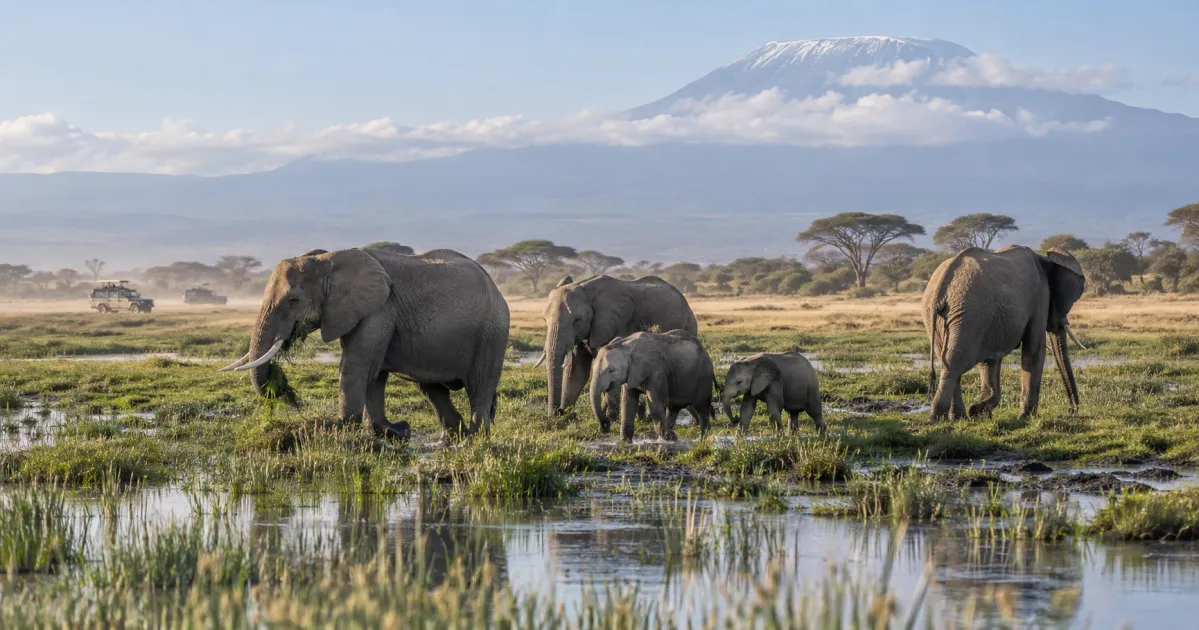
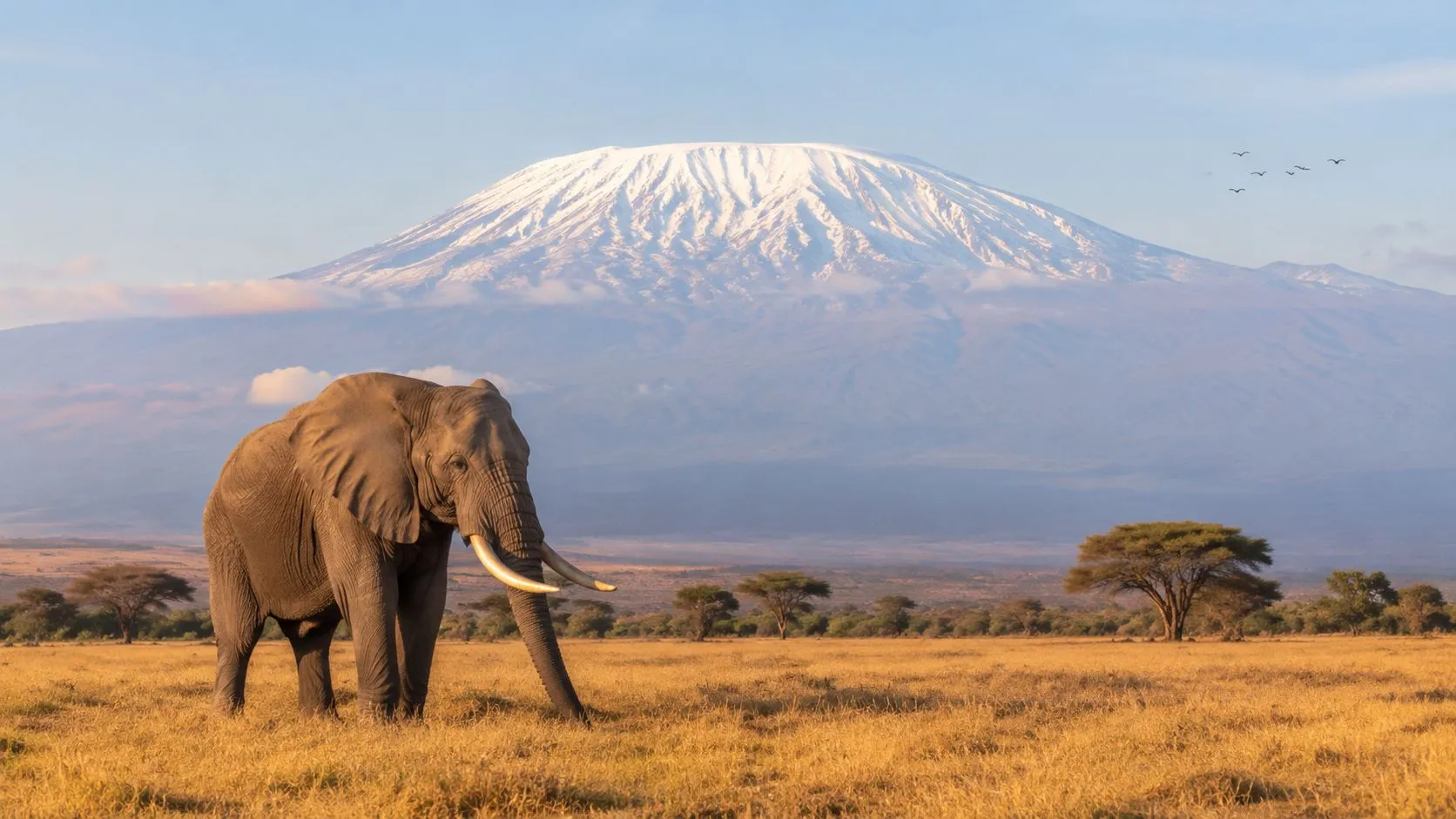
Amboseli is still worth the trip because it gives you something few safari destinations can match, reliable elephant viewing with Mount Kilimanjaro in the frame. The park itself is compact, about 392 km², but it sits inside a much larger wildlife system of roughly 8,000 km² that crosses the Kenya–Tanzania border near Kilimanjaro, and that wider corridor is what makes the whole experience work (Amboseli National Park overview). If you plan it like a strategist instead of a romantic, Amboseli pays off.
Why Amboseli Deserves a Spot on Your Kenya Safari
Amboseli gets oversold as a quiet, untouched plain. That version is wrong. The park is busy, especially at popular times, and you should plan for other vehicles if you want the best views. The question is whether the wildlife payoff justifies the crowding. It does.
What Amboseli does deliver is reliable game viewing in an open, readable setting. UNESCO describes it as a semi-arid basin with low annual rainfall, closed drainage, saline-alkaline soils, and freshwater inputs from Kilimanjaro that feed permanent swamps in the southern basin (UNESCO tentative listing). That water pattern keeps animals concentrated in visible areas instead of hiding them in thick cover. You spend less time searching and more time watching.
Why I still recommend it
Amboseli is a planning park, not a luck park. Choose the right season and lodge placement, and it can deliver some of the most satisfying wildlife viewing in Kenya. Arrive casually and expect solitude, and you will waste time behind other vehicles.
The park's long conservation history is part of the appeal. The area was first set aside in 1948, a Presidential Decree in 1971 reserved 390 km² for wildlife conservation and tourism, the park was officially established in 1974, and UNESCO later recognized it as a Man and the Biosphere Reserve in 1991 (Amboseli history). That record matters because Amboseli is not a rushed tourism product. It is a heavily managed area with a deep research and protection background.
Practical rule: If elephants are your priority, Amboseli belongs on the shortlist. If you want absolute solitude, the park itself will not give you that on peak dates.
That is why I still send travelers here. Kenya delivers many iconic safari scenes, but Amboseli packages the elephant experience into a compact, high-return itinerary without forcing long days of game driving. Just do not confuse compact with quiet. They are different things.
Understanding the Amboseli Ecosystem and Elephant Population
Dawn at Enkongo Narok Swamp tells you more about Amboseli than any general brochure does. Herds fan out across the marsh edge, calves stay tight to the adults, and drivers who know the ground position their vehicles early because the best viewing disappears fast once the crowds arrive.
Amboseli runs on water, but the value for a safari planner is understanding how that water shapes movement. Freshwater from Mount Kilimanjaro feeds the permanent swamps in the southern basin, while the rest of the park stays dry and open for much of the year. That creates a hard rhythm. Elephants move when forage and shade shift, then settle back near reliable water when the terrain dries out. For visitors, that means the park rewards a plan built around the right swamp, not random cruising.
What the elephant numbers tell you
The elephant population is the headline for a reason. UNESCO notes about 1,800 elephants, while other conservation references put the figure around 1,800 to 1,900. Born Free later reported 2,065 individually identified elephants at the end of 2025 after drought-related shifts in the ecosystem (Amboseli National Park overview) (Born Free update). Treat those figures as a snapshot, not a fixed count. They move with drought, calf survival, and seasonal movement.
The other thing that matters is the depth of monitoring. Elephant work in the ecosystem has been tracked for decades, and that long record is part of why guides here can read family groups and movement patterns with unusual accuracy. As noted in the Amboseli park guide, that experience helps travelers spend less time guessing and more time at the right sightings.
How to read the park
The open plains give you distance, but the swamps give you the action. Woodland edges matter too, because elephants shift between forage, shade, and water through the day. A good driver will tell you which swamp has been active, then build the circuit around that instead of wasting time on empty tracks.
Crowding changes how you should use the park. Around the most reliable water, vehicles stack up quickly, especially in the better seasons. Travelers who want cleaner viewing should book a lodge with quicker access to the productive zones and insist on an early departure. Travelers who hate vehicle congestion should accept that Amboseli is a high-demand park and choose a quieter camp outside the busiest approach roads. Good planning does not remove other vehicles, but it does keep you from spending the day trapped behind them.
Practical rule: In Amboseli, go where the water is, then get there before everyone else does.
Choosing the Best Time to Visit Amboseli
Dry season gets too much credit. Yes, it improves sightings, but it also brings more vehicles, tighter parking at the best viewing points, and less patience from everyone on the road. Wet months are harder to manage, yet they often suit photographers and travelers who want a calmer park.
Dry months versus wet months
The dry period, usually June to October and January to February, pulls elephants toward swamps and reduces the cover across the plains. That gives first-time visitors the clearest odds of seeing wildlife without much searching. It also means more safari traffic, so you need to accept delays and crowded sight lines at the most reliable spots.
The wet period, November to December and March to May, changes the pace. The park turns greener, the sky can look far better for photography, and the sense of pressure drops. Roads can be trickier, and animals spread out more across the wider ecosystem, so you have to be more patient and rely on a guide who knows where movement tends to build.
| Factor | Dry Season (Jun-Oct, Jan-Feb) | Wet Season (Nov-Dec, Mar-May) |
|---|---|---|
| Wildlife visibility | Higher around swamps and open plains | More dispersed, but still rewarding |
| Crowd levels | Busier, especially at prime sightings | Quieter and more relaxed |
| Photography | Cleaner sightlines and dustier, sharper scenes | Better skies, richer color, dramatic clouds |
| Road conditions | Easier overall | Can be more challenging |
| Kilimanjaro views | Best chance at dawn when skies are clear | Can be beautiful, but more weather dependent |
For photography, I would choose the greener shoulder months before a packed dry-season weekend. You get better color, more space, and less vehicle clutter in your frame. For a first safari, dry season still gives the cleanest, most predictable elephant viewing. Budget travelers can also get strong value in the wetter months if they are fine with slower game drives and occasional road friction.
What matters on the ground
Kilimanjaro is fickle, and dawn gives you the best odds. Afternoon light is not the same story. Early departures matter more here than in many parks because you are chasing a short weather window, not just animal movement.
My blunt recommendation: Choose dry season if you want the highest chance of straightforward sightings. Choose wet season if you care more about space, atmosphere, and photography.
Crowding is part of the Amboseli story now. Visitor numbers have climbed, with 295,000 visitors in 2025, up from 266,000 in 2024, and tourism and conservation there generate Sh2.36 billion annually (Business Daily Africa). That figure is the reality you need to plan around.
Lodging Options Across Every Budget Tier
Lodging in Amboseli is not just about comfort. It shapes your access, your departure times, and how much of the day you waste in transit. A cheap bed far from the park can steal the best light. A well-placed camp keeps the safari moving at the right pace.
What each tier gives you
Budget stays usually mean campsites or simple tented camps. Use them if you want a practical base and can live with basic rooms, straightforward meals, and less polished service. One solid starting point is Nyati Safari Camp, on the edge of Amboseli near Kimana Gate, where you trade refinement for a more workable safari budget.
Mid-range lodges are the safest choice for most travelers. You get better beds, steadier food, and more consistent service without paying for luxury extras. Kibo Safari Camp, near Kimana Gate, is a common fit for couples and families who want comfort, access, and a simple daily rhythm without overcomplicating the trip.
Luxury properties change the experience most. They usually offer more privacy, fewer vehicles, and sometimes activities such as walking or night drives where the setting allows it. Tortilis Camp, in the Kitirua Conservancy west of Amboseli, is a strong example for travelers who want a quieter, more private stay and are willing to pay for it.
Location beats branding
A famous Kilimanjaro view does not guarantee a better safari base. Big lodges can feel crowded, and a smaller camp with faster access to wildlife areas often delivers a better day on the ground. If early game drives matter most, stay inside the park or right near a gate. If solitude matters more, accept that you may give up the classic postcard angle.
| Tier | Price Range (per night) | Location | Key Advantages | Trade-offs |
|---|---|---|---|---|
| Budget | Lower-cost camps and simple tents | Usually outside or near park edges | Lower cost, flexible for self-drive trips | More basic rooms, longer gate access |
| Mid-range | Moderate lodge rates | Often near gates or in prime access corridors | Strong balance of comfort and safari value | Can still be busy and vehicle-heavy |
| Luxury | Higher-end conservancy or upscale lodges | Park-adjacent or private settings | Privacy, better service, possible walking or night activities | Higher cost, sometimes less iconic views |
Choose the tier that fits your main goal. For elephant-focused viewing, put access first and avoid extra road time. For a honeymoon, choose a lodge with better dining and fewer guests. For photography, a smaller camp with quick swamp access beats a grander property that slows every departure.
A Sample Three-Day Amboseli Safari Itinerary
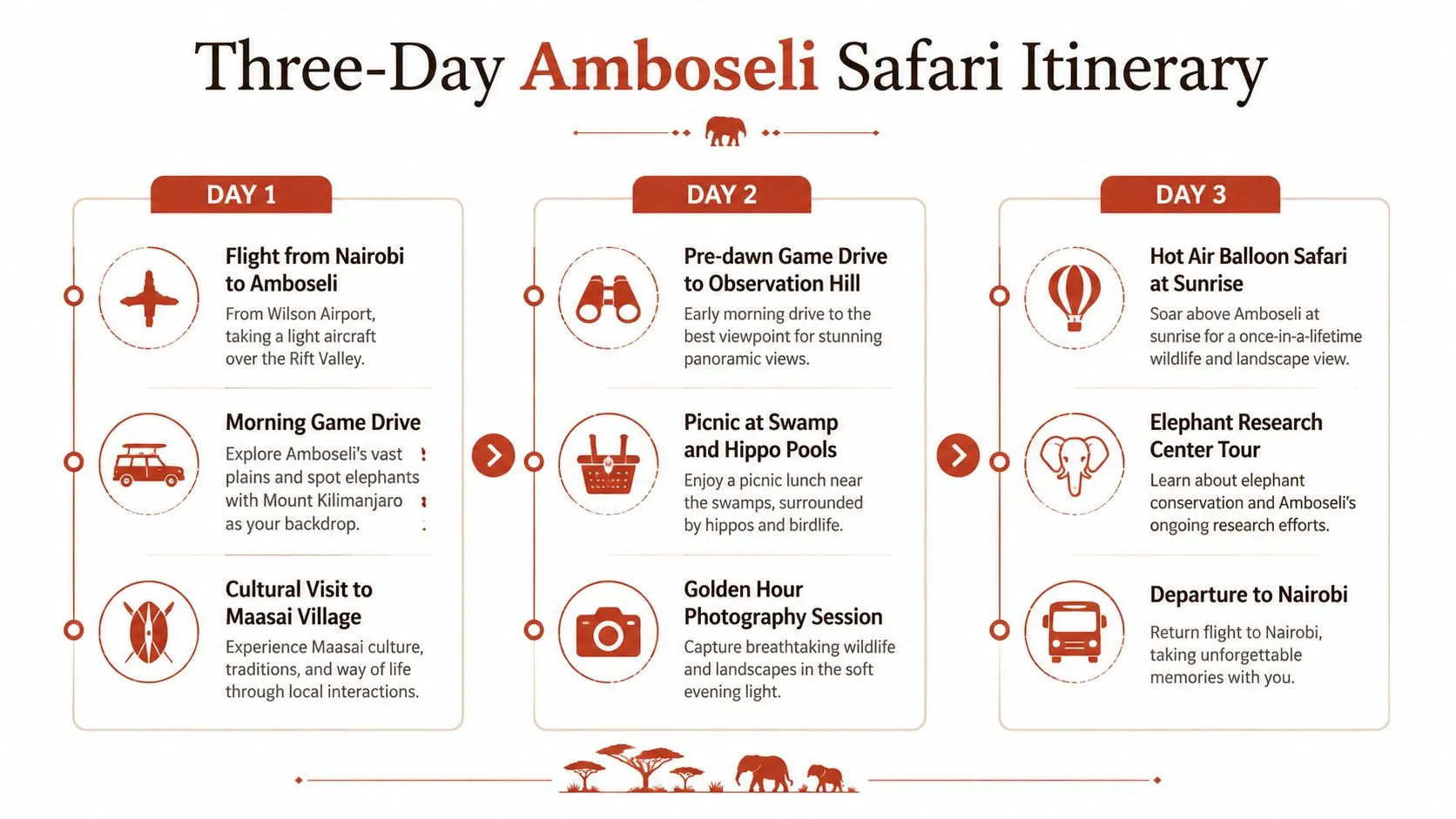
A good Amboseli trip doesn't try to do everything. It uses the park's rhythm properly, which means early starts, a midday break, and another drive when the light softens again. If you force long, all-day movement through the hottest hours, you burn energy and don't get much extra wildlife.
Day one, arrive and get oriented
If you're flying from Nairobi, you'll spend far less time in transit than by road. If you're driving, plan the day around the road, not the game drive, because the arrival window matters more than squeezing in a rushed afternoon. Either way, check in first, settle your bags, then head out late in the afternoon when heat softens and elephants begin moving again.
Your first drive should target swamp zones where herds often gather in the cooler part of the day. This is the time to read the park, not to chase every species on a checklist. You're trying to understand where the animals are concentrating so you can shape the next morning properly.
Day two, use the light properly
Pre-dawn departures are essential if you care about Kilimanjaro in the frame. As noted in the earlier section, dawn gives you the best chance of a clear summit view, and it also gives you a head start before the busiest vehicle clusters form. Get to the viewpoints early, then move back toward the open plains and known elephant routes.
Mid-morning is ideal for tracking family groups across open ground. Then stop during the hottest stretch instead of grinding through it. You'll lose very little wildlife time, because elephants and many other animals shift into shade or reduce movement when the temperature rises.
Day three, keep it light and leave room for a final stop
Use your last morning for one final focused drive, or pair the departure with a short cultural visit if that fits your style. If you have extra time, extending toward Tsavo West or the Chyulu Hills makes sense because Amboseli alone is a compact destination and doesn't need a bloated stay. A lot of travelers overbook the park and then wonder why the experience starts to feel repetitive.
Simple rule: Two to three nights is usually the right shape for Amboseli. Less than that feels rushed, more than that only makes sense if you've added a conservancy or a second destination.
If you want a Maasai visit folded into the trip, the Amboseli Maasai village and mount views tour on Explola is the kind of side activity that can fit neatly into a short itinerary without forcing you to redesign the whole safari.
Essential Planning Logistics and Entry Requirements
Amboseli looks simple on a map, but the logistics are where many travelers get tripped up. The details matter because a well-planned arrival saves you time at the gate, while poor prep wastes one of the few places in Kenya where sightings can be this reliable.
Before you go
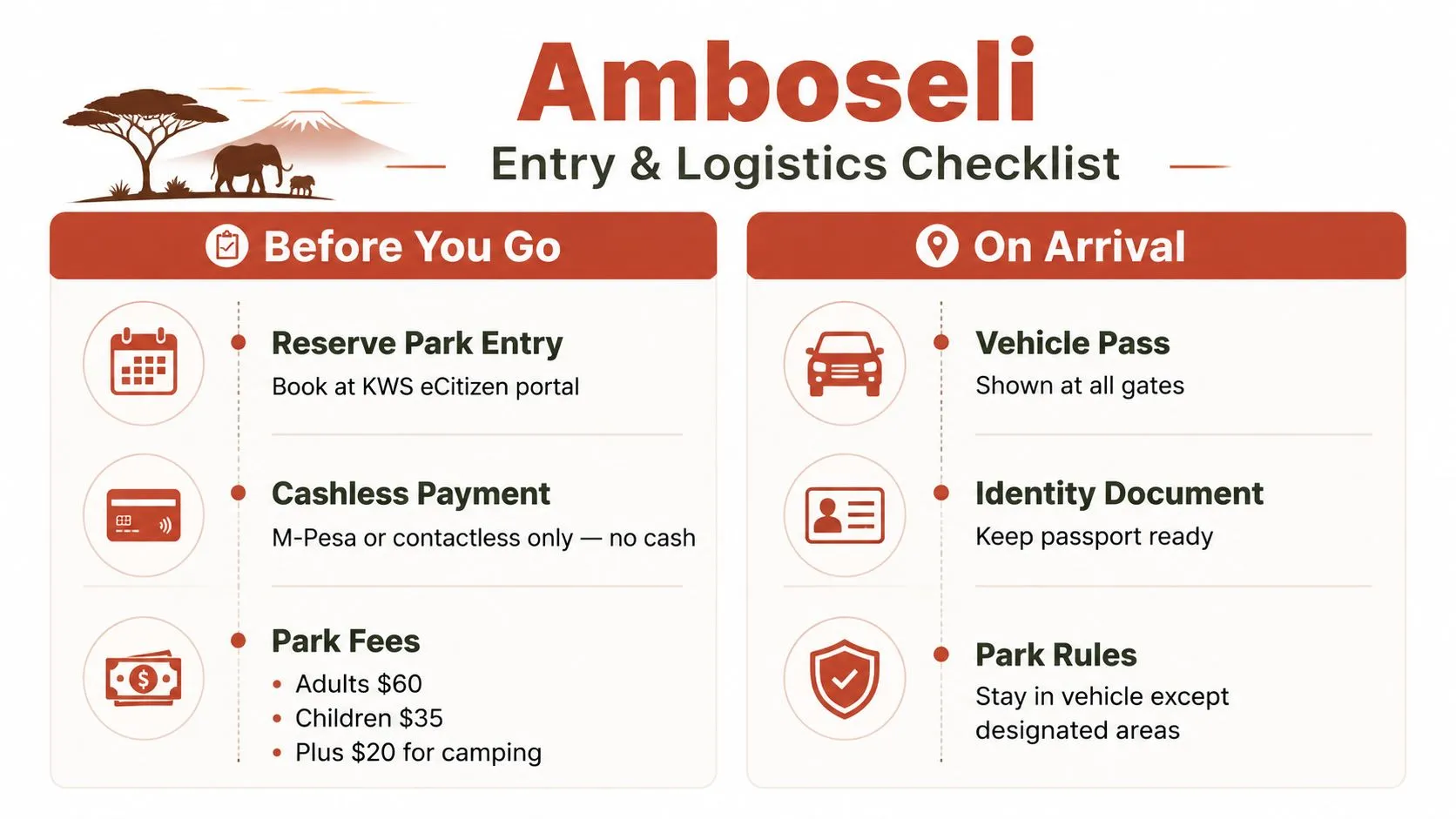
The KWS eCitizen portal is the place to sort park entry, and pre-paying is smarter than arriving to figure it out on the spot. The current park pages emphasize entry rules, hours, and contact details, and current travel-health guidance says malaria prophylaxis is strongly recommended and Yellow Fever documentation may be required depending on origin (KWS Amboseli park page). That's not paperwork to leave for the airport.
Road access from Nairobi is roughly 240 kilometers via Emali, and a 4x4 is the sensible choice even if you think the main route looks manageable. If you'd rather skip the road, a charter flight from Wilson Airport to Amboseli airstrip keeps transfer time down, though you'll still need a ground transfer to your lodge.
On arrival
Carry your passport and booking details. Mobile coverage is decent in many safari areas, but don't assume you'll have stable service everywhere, especially once you move deeper into the park. Also, drones are not something to improvise with inside a national park, so check permissions well before travel rather than asking after you land.
Pack for dust, not just sun. A lens-cleaning kit, camera protection, layered clothing, and something warm for early departures are all worth space in your bag. Open vehicles kick up more dust than new safari travelers expect, and a filthy camera body can ruin good shooting days.
| Before You Go | On Arrival |
|---|---|
| Reserve park entry early with the KWS eCitizen system | Keep your passport ready for checks |
| Confirm health paperwork based on your route | Hold onto your booking references for lodge or transfer staff |
| Choose road or air transfer based on time and comfort | Stay aware of park rules about movement and vehicle use |
For travelers comparing Kenya safari regions more broadly, the Explola Kenya country page is useful because it lets you sanity-check Amboseli against other destination types before you commit to one route.
How to Book Your Amboseli Safari with Confidence
Start with three decisions, not one. First, decide how much comfort you want. Second, decide whether you care more about Kilimanjaro views or closer elephant access. Third, decide whether Amboseli is a standalone stop or part of a wider Kenya circuit.
The biggest mistake is booking a pretty lodge and assuming the rest will sort itself out. It won't. You need to match the season to the experience you want, then choose a lodge based on how early you want to be on the road, and only then compare transfer options and inclusions. That order keeps you from paying premium rates for a weak itinerary.
What to ask before you pay
Ask whether your guide knows the swamp timings, how close the lodge is to the gate, and whether the package includes all park-related costs or hides them in extras. Ask how crowded the vehicle circuit is likely to be on your dates. Ask what happens if road conditions change and whether the oper
Destinations Mentioned

Daniel writes for the Explola blog, where he covers African safari destinations, wildlife, travel trends, and practical trip planning. His work is centered on making safari travel easier to understand, compare, and plan.
Get Safari Tips & Destination Guides
Join our newsletter for exclusive travel tips, wildlife insights, and safari planning advice.