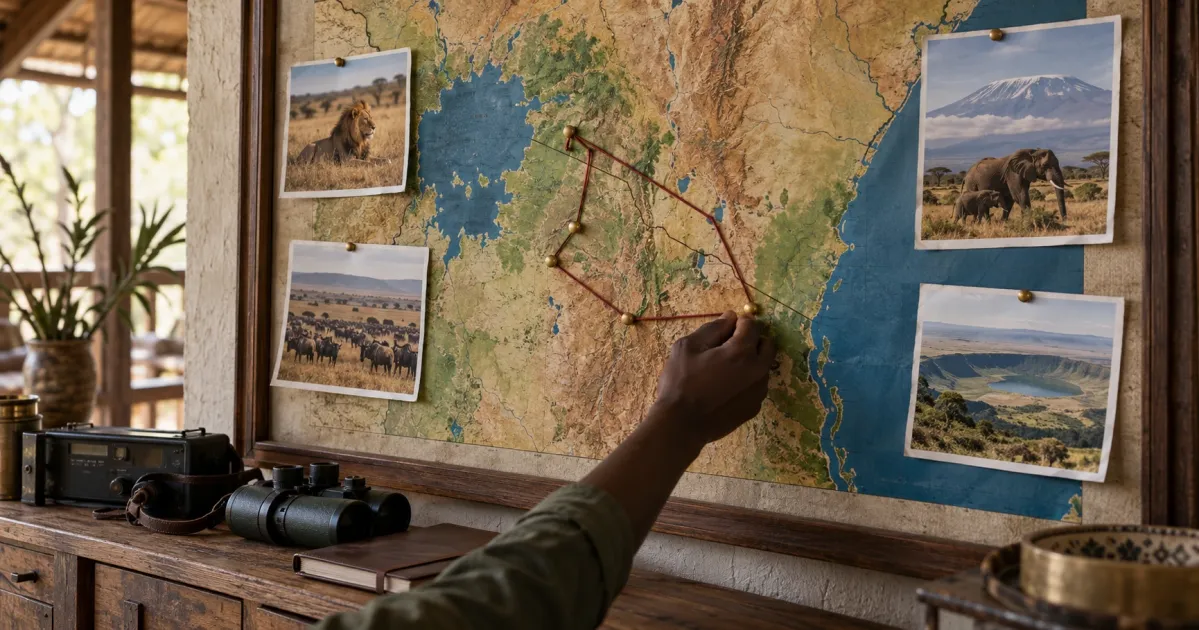
You've probably reached the same awkward point as many parents planning a safari. The adults are excited about elephants, lions, and wide-open views, while someone is asking how long they'll have to sit in a vehicle, whether there'll be food they'll truly eat, and what happens if a child gets sick far from a town.
A successful safari for families isn't built around the most famous park alone. It's built around the youngest traveler's age, weight, energy, medical needs, tolerance for long drives, and ability to follow lodge and wildlife rules. Get those logistics right, and the trip can feel relaxed and extraordinary. Ignore them, and even an excellent destination can become exhausting.
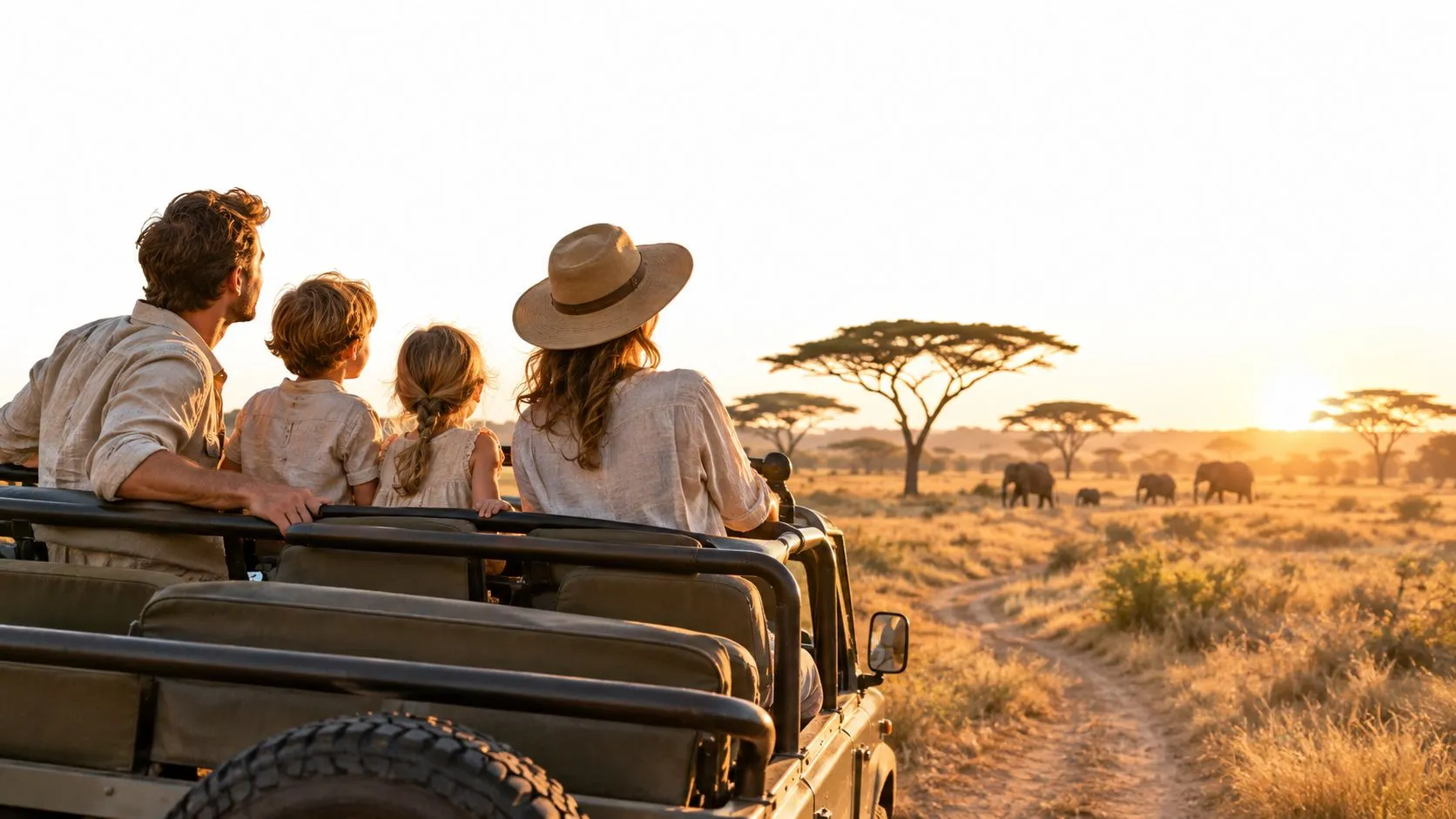
What a Family Safari Actually Looks Like
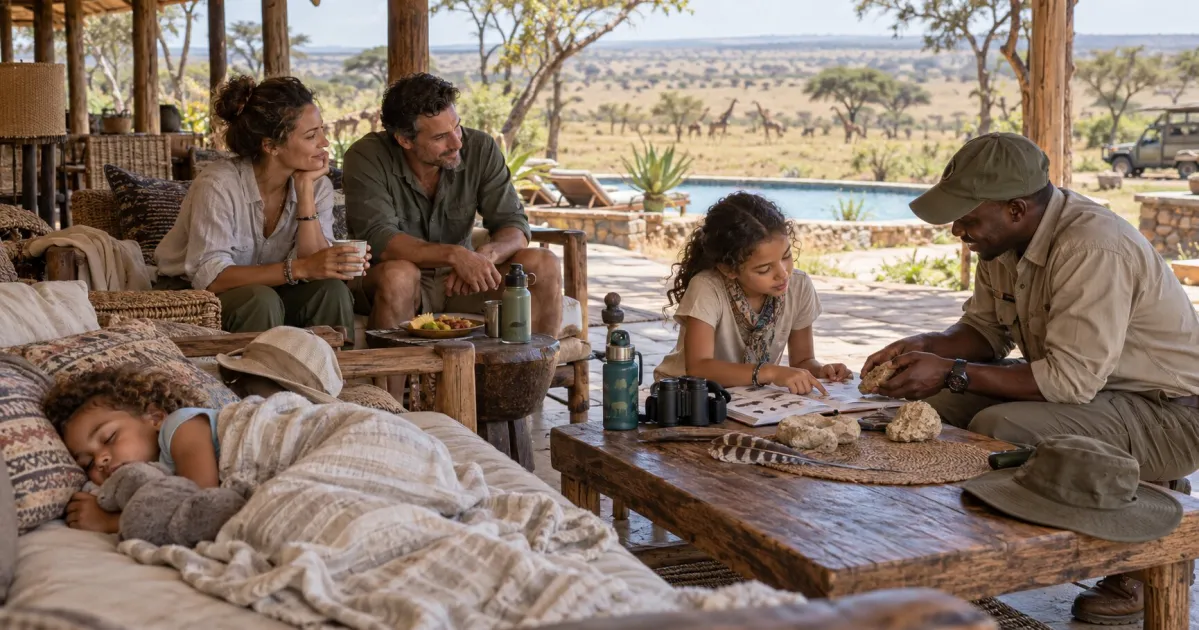
At dawn, the lodge wakes the family before the animals become active. Adults may be ready immediately. A young child may need help dressing, a familiar breakfast, and a few quiet minutes before climbing into the vehicle. That difference sets the tone for the entire day.
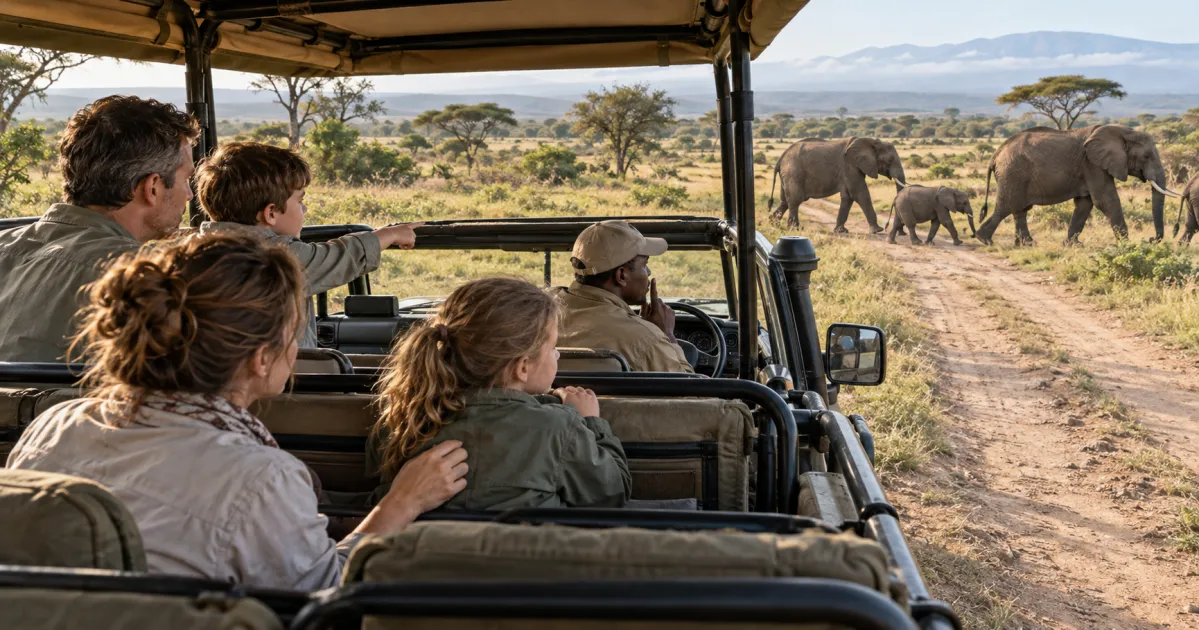
A typical family safari day combines an early game drive, a return for breakfast or brunch, several hours of rest, and an afternoon activity or drive. Younger children often need a nap or pool time rather than another scheduled outing. Older children can handle more time in the vehicle, especially when the guide turns sightings into questions about tracks, feeding behavior, and habitats.
The vehicle matters as much as the wildlife. A shared drive follows the group's schedule, while a private vehicle lets the guide shorten the outing, return to the lodge, or pause when a child needs a toilet, snack, or change of pace. That flexibility can justify the extra cost for families with toddlers, mixed-age siblings, or grandparents.
Read demand as a logistics signal
Family travel is a substantial safari market. A 2025 safari-travel analysis reported that families represented 28% of all safari inquiries, behind couples at 46%, according to the State of Safari 2025 analysis. Families therefore account for more than one in four observed planning inquiries, not a marginal audience that lodges can serve with an extra bed and a children's menu.
The same analysis found that families represented 32% of travelers interested in South Africa, 30% of those interested in Kenya, and 28% of those interested in Tanzania. These figures aren't a wildlife-quality ranking. They're a useful proxy for the breadth of accommodation, activity, and itinerary choices available to families.
South Africa often works well when parents want safari combined with urban, coastal, or cultural stops. Kenya offers the iconic Maasai Mara experience and a strong choice of family-oriented conservancy and lodge arrangements. Tanzania delivers the Serengeti and Ngorongoro ecosystems, but families need to examine park fees, transfer distances, vehicle arrangements, and accommodation carefully.
Allow for different generations and different rhythms
Multigenerational travel is increasingly part of the family-safari market, with grandparents, parents, and children sharing the same trip. That changes the rooming and vehicle questions. Ask whether a lodge offers interconnecting rooms, a family unit, or separate rooms close together. Confirm whether the vehicle can seat everyone comfortably without making one age group absorb every long transfer.
Practical rule: Choose the itinerary that protects the least energetic traveler. Everyone benefits when the youngest child and oldest adult have room to rest.
A family may love wildlife but dislike repeated long road transfers. Another may accept a longer journey for the chance to visit the Serengeti. The right shortlist starts with those preferences, then tests each itinerary against accommodation configuration, drive time, child suitability, malaria exposure, and opportunities outside the vehicle.
Matching the Trip to Your Child's Age
“Family-friendly” is too vague to guide a booking. A useful itinerary states minimum ages, drive-time expectations, activity restrictions, private-vehicle availability, and what children can do when they can't join an excursion.
Under five
Build around short drives, lodge-based viewing, naps, and flexible meal times. Don't assume a camp will accept a toddler on every game drive. Some camps restrict primary drives for young children, and a private vehicle is often the cleanest solution when parents need control over departure and return times.
A pool, garden, simple wildlife activities, and child-minding options can matter more than a longer list of excursions. Verify vehicle safety arrangements directly rather than assuming a standard car seat will fit a safari vehicle.
Ages five to seven
Children in this range usually benefit from interactive drives, junior ranger activities, short nature walks where permitted, and guides who communicate at their level. Restrictions still vary by camp, and some walking or balloon activities have separate minimum ages.
Keep consecutive driving periods manageable. A private vehicle becomes particularly valuable when siblings have different stamina or when the family wants to leave after a good sighting instead of waiting for other guests.
Ages eight to twelve
Older children can usually engage with longer drives, wildlife tracking, conservation discussions, and age-appropriate walking activities. Their trip can include more structured learning, but don't fill every day with excursions. Heat, early starts, and bumpy roads still accumulate.
Teens
Teenagers can handle a more ambitious schedule, including photography, conservation talks, and carefully selected walking or cultural experiences. Balloon flights and walking activities still require confirmation, and gorilla and chimpanzee trekking in Rwanda and Uganda generally requires participants to be at least 15, as noted in the family-safari age guidance.
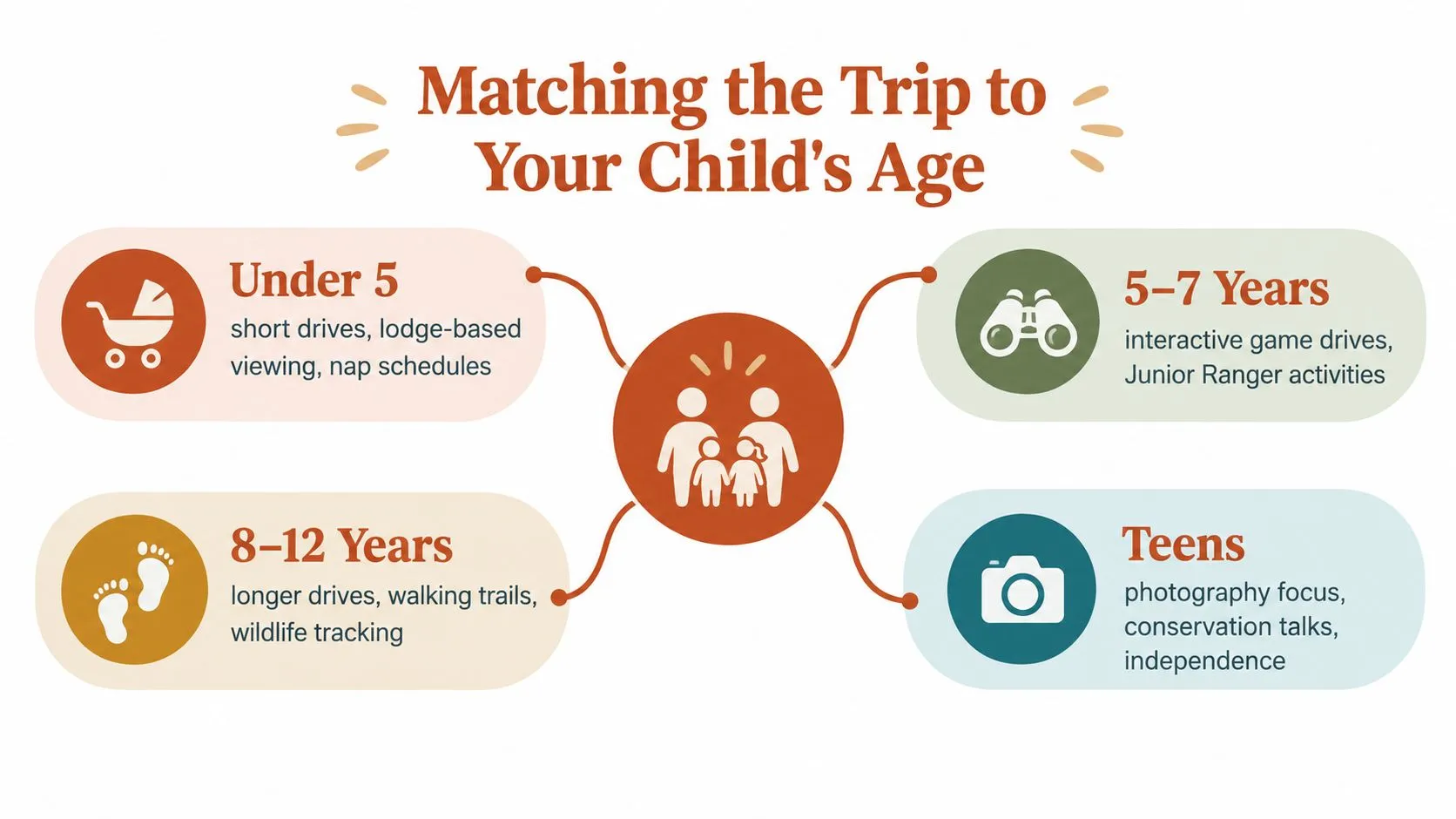
For every age, compare minimum age, total drive time, private-guide access, child-minding, and the fallback plan for a restricted activity. That's how you distinguish a lodge that merely permits children from one that has designed the experience around them.
Health Prep and Medical Logistics
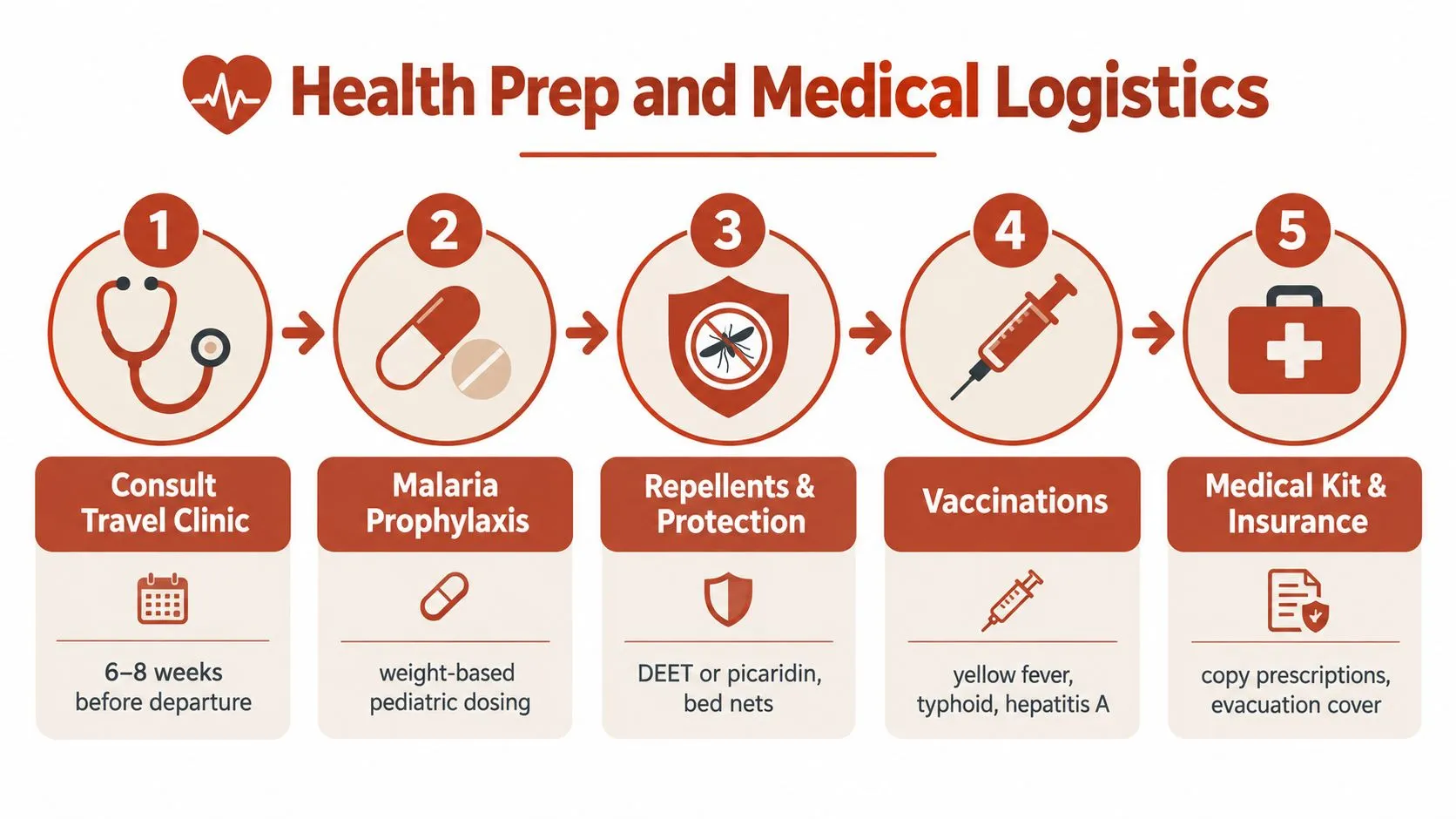
Health planning starts before you choose the lodge. Malaria transmission occurs in most sub-Saharan African game parks, so destination, season, accommodation, exposure controls, and medical access need to be assessed together.
Schedule a travel-medicine consultation roughly six to eight weeks before departure. Bring the route, flight connections, child ages, weights, allergies, medical history, and planned activities. If your pediatrician needs a concise record, an export for pediatrician can help organize relevant information before the appointment.
Work through malaria protection in order
Children are particularly vulnerable to malaria when prophylaxis is omitted. Atovaquone-proguanil is generally available for children weighing at least 5 kg, doxycycline is restricted to children older than 8 years, and primaquine or tafenoquine require G6PD testing. The appropriate choice depends on destination, health history, contraindications, and tolerability, so parents should obtain individualized clinical advice.
For atovaquone-proguanil, CDC weight bands include one-half pediatric tablet daily for children weighing 5 to 8 kg, three-quarters for those over 8 to 10 kg, one for those over 10 to 20 kg, two for those over 20 to 30 kg, and three for those over 30 to 40 kg. The medicine starts 1 to 2 days before entering the risk area, continues daily with food during exposure, and runs for 7 days after departure, according to CDC safari and climbing guidance.
Repellent, long sleeves, and permethrin-treated netting add protection but don't replace prescribed prophylaxis. Confirm screened rooms, air conditioning, or intact bed nets at every lodge. CDC guidance also recommends netting over infant carriers when screens or air conditioning aren't available, as explained in CDC advice for infants and children.
Check the route for yellow-fever dependencies
Yellow-fever requirements can be triggered by routing, not only by the safari destination. CDC recommends vaccination for travelers at least 9 months old entering areas with endemic or transitional risk, while some countries require an International Certificate of Vaccination or Prophylaxis.
South Africa requires proof of vaccination at least 10 days before arrival for travelers aged 1 year or older who come from, or transit for more than 12 hours through, a country with yellow-fever transmission risk. Use the essential East Africa travel tips for first-time visitors alongside country-specific medical advice, then ask the operator to confirm the latest requirements for your exact routing.
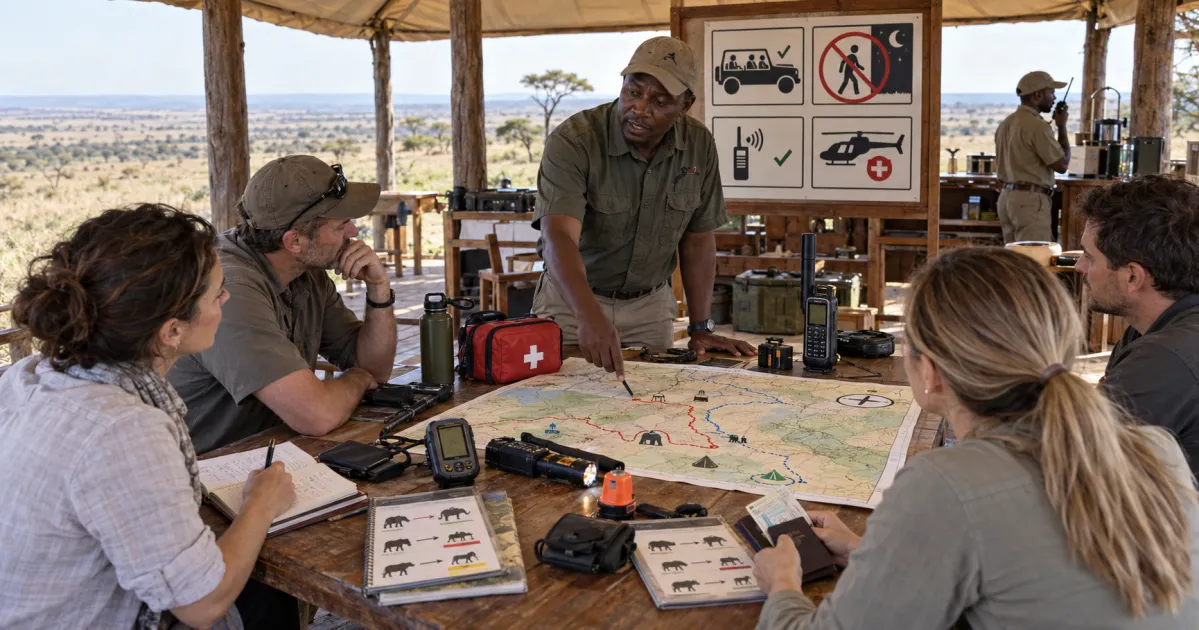
Request the nearest clinic, evacuation pathway, emergency contacts, and expected response process in writing. Treat those details as itinerary fields, not assumptions.
Choosing Family-Friendly Lodges and Rooms
A high room category doesn't automatically make a lodge suitable for children. Compare properties by sleeping arrangements, supervision, meal flexibility, and distance from the vehicle area, not only by photographs or star labels.
A tented camp can deliver an immersive experience but may involve canvas walls, shared bathrooms, or escorted movement after dark. A bush lodge may offer more space and family suites, while a larger resort may provide pools, children's programs, and easier meal logistics. The trade-off is atmosphere. A family may prefer a comfortable mid-range lodge with a pool and flexible dining over a luxury property designed primarily for couples.
Ask precise questions before paying:
Sleeping arrangements: Are there interconnecting rooms, triple rooms, family units, or extra beds?
Bathrooms: Is the bathroom private, shared, open-plan, or separated from the sleeping area?
Meals: Can the kitchen provide familiar child meals, high chairs, and early dinner seating?
Activities: What are the minimum ages for drives, walks, balloon flights, and child programs?
Guiding: Can the guide adapt explanations for toddlers, school-age children, teenagers, and grandparents?
Supervision: Is child-minding available, and who provides it?
A private guide or vehicle earns its place when it solves a real problem, such as nap timing, different activity interests, or a child who can't manage a group departure. For a useful comparison of accommodation styles, review seven Kenya safari lodges for different travelers, then ask each operator to match the room plan to your children's ages.
Building a Realistic Family Safari Budget
Start with an itemized quote, not a headline price. Operators may include park fees, game drives, meals, transfers, accommodation, and community levies, while international flights, gratuities, travel insurance, visas, and optional balloon flights may sit outside the package.
Tanzania's tariff system makes child ages especially important. Children under 5 enter free, child rates apply from ages 5 through 15, and visitors aged 16 and older pay adult rates, according to the Tanzania National Parks tariff information. The conservation fee is valid for 24 hours from entry, so consecutive park days can create a new fee period. Carry identification or proof of age where required.
Use three planning tiers rather than pretending every family needs the same level of comfort:
Value-focused: Choose simpler lodging, shared transfers where appropriate, and fewer paid add-ons. Protect money for health preparation, reliable transport, and a private vehicle when younger children need flexibility.
Mid-range: Prioritize family rooms, pools, flexible dining, private or small-group drives, and shorter transfers. This is often the most balanced option for families with mixed ages.
Premium: Spend on private guiding, larger suites, made-to-order meals, direct transfers, and activities that suit the teenagers or adults without forcing younger children into them.
Families comparing broader household spending can also use these practical budgeting tips for families to organize the non-safari portion of the trip.
| Cost component | Typical inclusion | Family consideration |
|---|---|---|
| Park and conservation fees | Often included in the operator quote | Check child age bands and the number of 24-hour fee periods |
| Game drives | Shared or private drives | A private vehicle may cost more but protects nap and meal schedules |
| Accommodation | Room, suite, tent, or family unit | Confirm extra-bed charges and bathroom configuration |
| Meals | Set meals or full board | Ask about child portions, high chairs, and early seating |
| Transfers | Road or internal-air transfer | Compare total drive time and luggage restrictions |
| Activities | Walks, cultural visits, balloon flights | Confirm minimum ages and optional pricing |
| Insurance and gratuities | Often excluded | Budget separately and verify evacuation coverage |
Packing and On-Trip Logistics
Pack by function, not by imagined safari wardrobe. Children need layers for cold early drives, sun protection, insect protection, comfortable shoes, and clothes that can get dusty without causing distress.
Neutral colors are practical for vehicle viewing, but matching khaki outfits aren't necessary. Avoid overpacking formal clothes. A light fleece, hat, sunglasses, sunscreen, repellent, refillable water bottle, and a small health kit will work harder than extra outfits.
Keep medication in original packaging with prescriptions and dosing instructions. Carry passports, vaccination certificates where required, insurance details, emergency contacts, and proof of age for child rates. Tanzania's park rules make age documentation particularly relevant when families expect reduced entry charges.
Internal flights may impose luggage limits, so confirm allowances before choosing hard-sided cases. For road transfers, prepare a small day bag with snacks, wipes, books, headphones, a camera, and compact games. Store electronics securely because rough roads can damage loose devices, and don't hand a child every screen immediately. Give them a simple wildlife challenge, drawing prompt, or field guide to make quiet stretches useful.
The departure checklist should be short:
Documents: Passports, certificates, insurance, prescriptions, and proof of age.
Health: Medicines, repellent, sunscreen, first-aid supplies, and clinician instructions.
Vehicle bag: Snacks, water, layers, wipes, entertainment, and motion-sickness supplies if advised.
Lodge needs: Preferred foods, sleep aids, swimwear, and any mobility equipment.
Technology: Chargers, power adapters, camera protection, and offline copies of essential documents.
Two Sample Family Safari Itineraries
These examples show how age, health, and budget shape the schedule. They're planning models, not fixed packages.
Seven days with younger children
Day 1: Arrive near the safari area, keep the afternoon free, and sleep early.
Day 2: Take a short private morning drive, return for breakfast and a nap, then use the lodge pool.
Day 3: Repeat a flexible morning drive, with no afternoon obligation.
Day 4: Transfer during the child's most reliable travel window, then settle into a family room with flexible dining.
Day 5: Choose a short wildlife outing or lodge-based activity.
Day 6: Take one final private drive, returning before fatigue peaks.
Day 7: Depart after breakfast, allowing extra time for the airport or onward transfer.
This plan favors shorter transfers, a private vehicle, a pool, and flexible meals. Parents should still confirm malaria exposure, accommodation protection, and medical access before booking. For quiet evenings between drives, families can borrow ideas from Playz family game night activities and adapt them to a lodge room.
Seven days with teens
Day 1: Arrive and rest, with a short orientation from the guide.
Day 2: Take a longer morning drive focused on tracking and photography.
Day 3: Add a cultural or conservation experience, keeping the evening light.
Day 4: Transfer to a second wildlife area, checking drive duration before confirming.
Day 5: Choose a walking activity where age rules permit, or substitute a guided conservation visit.
Day 6: Schedule an optional balloon flight or community visit only after confirming minimum ages and weather contingencies.
Day 7: Finish with a final drive, then depart.
The teen itinerary can absorb longer drives and more varied activities, but it still needs recovery time. Families comparing Tanzania options can examine the 4-Day Mid-Range Tanzania Family Safari as a shorter reference point, then ask an operator to extend or restructure it around their children's ages and health requirements.
Your Family Safari Planning Checklist
Use this list while comparing countries, lodges, and quotes. Don't accept “family-friendly” as the answer to any practical question.
Confirm age rules: Get the minimum age for every drive, walk, balloon flight, and trekking activity in writing.
Match the vehicle: Ask whether a private vehicle is available and whether it changes departure, return, and meal flexibility.
Measure the transfers: Review every road and air connection, not just the number of nights in each park.
Verify medical timing: Share the route, transit countries, ages, weights, and medical history with a travel-health clinician.
Check lodge protection: Confirm screened rooms, air conditioning, bed nets, and safe movement procedures after dark.
Map medical access: Request the nearest clinic, emergency contact, evacuation pathway, and response plan.
Read inclusions line by line: Separate park fees, meals, transfers, activities, insurance, gratuities, visas, and optional extras.
Check child pricing: Confirm age bands, fee periods, extra beds, meals, and proof-of-age requirements.
Test communication: Ask a detailed pre-booking question and judge whether the operator answers clearly and specifically.
Get the fallback plan: For every restricted activity, find out what the child can do instead.
The most effective habit is simple: treat every itinerary attribute as a confirmed answer. Malaria exposure, room configuration, child rates, drive time, minimum ages, vehicle access, and clinic logistics should appear in the proposal, not remain implied by a glossy description.
Explola lets families compare verified safari operators, day-by-day itineraries, inclusions, lodging levels, pricing, and reviews in one place. Build a shortlist around your children's ages and practical requirements, then visit Explola to request direct quotes and compare the details before you pay.

Daniel writes for the Explola blog, where he covers African safari destinations, wildlife, travel trends, and practical trip planning. His work is centered on making safari travel easier to understand, compare, and plan.
Get Safari Tips & Destination Guides
Join our newsletter for exclusive travel tips, wildlife insights, and safari planning advice.