Why community matters for safari operators: boost bookings
TL;DR:
Most safari operators overestimate how tourism benefits local communities. Genuine community engagement requires transparent benefit-sharing and local empowerment. Strong community ties enhance conservation, guest experience, and long-term business success.
Most safari operators assume their presence automatically benefits the communities around them. The reality is more complicated. Research shows that local people near major game reserves often acknowledge tourism’s economic contributions but consistently report that benefits are insufficient or unevenly distributed. That gap between perception and reality is where operator reputations are built or broken. If you run a safari business in East or Southern Africa and want to grow direct bookings while making a genuine difference, understanding the community dynamic is not optional. It is one of the most powerful levers you have.
Key Takeaways
| Point | Details |
|---|---|
| Community ties drive success | Building partnerships with local people is the foundation of lasting bookings and positive impact. |
| Challenges are real but solvable | Land rights, benefit sharing, and transparency need proactive attention from operators. |
| Sustainable engagement pays off | Operators that invest in genuine community partnerships build loyalty and weather industry changes. |
| Move beyond tokenism | Superficial efforts can backfire; real involvement means shared governance and lasting benefits. |
The realities of community involvement in safari areas
Community engagement sounds straightforward on paper. In practice, it plays out very differently depending on the region, the operator, and the governance structures in place. Let’s look at what the data actually says.
Near South Africa’s Kruger National Park, surveys show over 80% of local residents support non-consumptive wildlife tourism. That is a strong foundation. But support does not mean satisfaction. Empirical data shows mixed perceptions, with benefits acknowledged but often insufficient or unevenly distributed. In Tanzania’s Wildlife Management Areas (WMAs), outcomes are similarly uneven. Some communities report meaningful income from tourism fees and employment, while others see little tangible return despite living alongside high-value game.
Here is a snapshot of how community benefits typically break down across different models:
| Benefit type | Common delivery method | Consistency of impact |
|---|---|---|
| Employment | Direct hiring by operators | Moderate, often seasonal |
| Infrastructure | Roads, schools, clinics | Variable, project-based |
| Revenue sharing | Conservancy fees, levies | Low to moderate |
| Skills training | Guides, hospitality roles | Inconsistent |
| Wildlife protection | Community ranger programs | High where well-funded |
The most common misconception is that any tourism presence automatically lifts local communities. It does not. Community conservation outcomes depend heavily on how benefits are structured, who controls the funds, and whether local voices shape decision-making.
What operators often miss:
Jobs created are frequently low-wage and seasonal
Revenue sharing mechanisms are often opaque or poorly managed
Infrastructure projects can be one-off gestures rather than sustained investment
Community members closest to wildlife bear the highest costs (crop raiding, livestock loss) but may receive the least compensation
“The communities living alongside Africa’s wildlife corridors often carry the conservation burden while the financial rewards flow elsewhere.”
If you want to explore proven community tourism strategies that move beyond surface-level giving, the starting point is honest assessment of your current model. Understanding responsible tourism benefits means recognizing both what works and what falls short.
Challenges safari operators face with local communities
Understanding the context leads naturally to the challenges safari operators must navigate to be effective partners. These are not abstract policy problems. They show up in your day-to-day operations and long-term reputation.
Challenges include unequal benefit distribution, land conflicts, governance issues, and overreliance on tourism. Let’s break these down practically.
The four core challenges operators face:
Uneven benefit distribution. When revenue flows to a small group of community leaders or politically connected individuals, resentment builds fast. Other community members may actively undermine conservation efforts or become hostile to tourists.
Land tenure and displacement risks. Safari operations sometimes expand into areas where communities have informal or customary land rights. Without clear agreements, this creates conflict that can escalate into legal disputes or reputational damage.
Overreliance on tourism income. Communities that depend almost entirely on tourism revenue are extremely vulnerable to shocks like pandemics, political instability, or climate events. When tourism collapses, so does community goodwill.
Governance gaps. Weak local governance structures mean that even well-intentioned benefit-sharing programs can be mismanaged, leaving communities worse off and operators exposed to criticism.
| Challenge | Risk to operator | Risk to community |
|---|---|---|
| Uneven benefit distribution | Conflict, negative reviews | Resentment, poverty |
| Land tenure disputes | Legal exposure, project delays | Displacement, loss of livelihood |
| Tourism overreliance | Community instability | Economic vulnerability |
| Governance gaps | Program failure, reputational damage | Funds mismanaged |
Transparent, respectful engagement is not just ethical. It is a business protection strategy. Operators who ignore these dynamics often find themselves caught in conflicts that damage their brand with international travelers who increasingly research an operator’s community record before booking.
Pro Tip: Before launching any community program, hold a structured listening session with a cross-section of local stakeholders, not just community leaders. What you hear will surprise you and help you design programs that actually work.
Looking at collaborative operator models that have navigated these challenges successfully can give you a practical framework to adapt for your own context.
Why community engagement builds lasting success
Having explored the challenges, it is critical to see how strong community ties directly improve outcomes for operators. The business case is real and measurable.
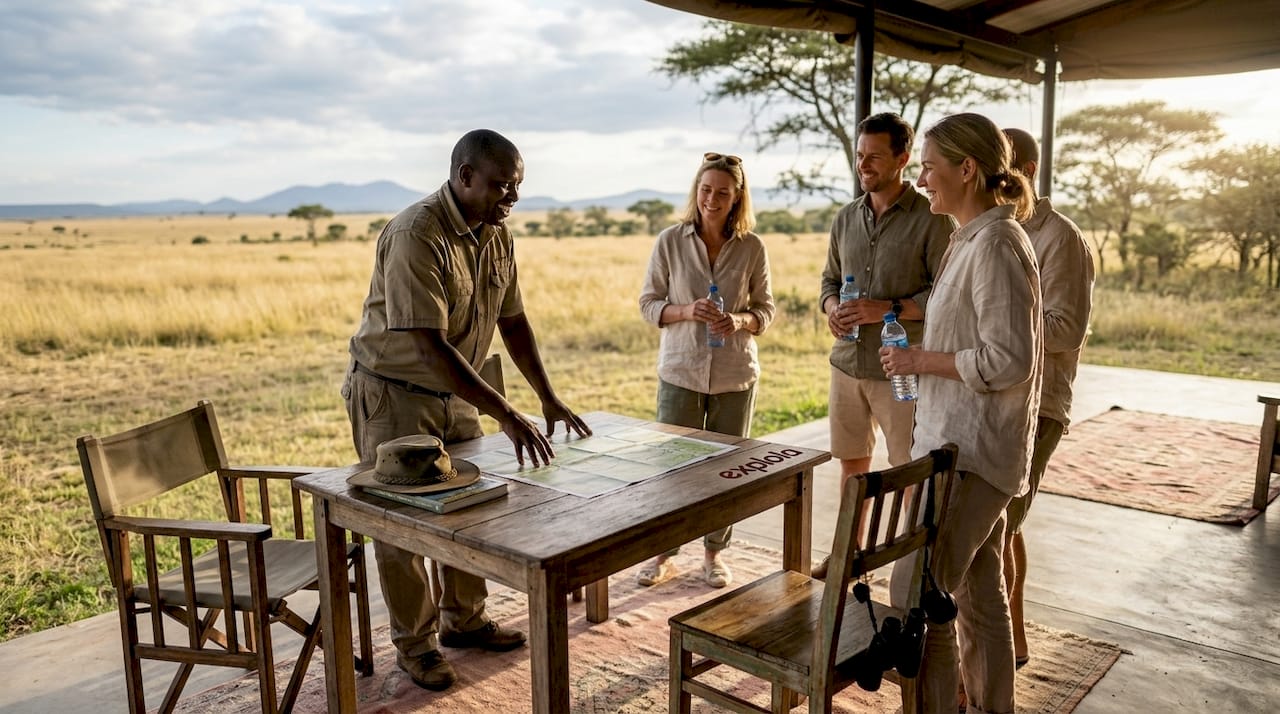
When communities genuinely benefit from safari tourism, they become its most powerful defenders. Rangers drawn from local villages know the land intimately and have personal stakes in protecting it. Guides who grew up near the reserve bring authenticity that no amount of training can replicate. Guests feel it immediately.
Here is what genuine community engagement delivers for operators:
Repeat bookings and referrals. Travelers who witness authentic community partnerships share their experiences. Word-of-mouth from a guest who saw a community school your operation helped build is worth more than any paid ad.
Wildlife protection. Empowered communities actively reduce poaching and habitat encroachment because they have a direct stake in the ecosystem’s health.
Stronger guest experiences. Cultural visits, community meals, and interactions with local artisans add depth to a safari that guests rate highly in reviews.
Regulatory goodwill. Operators with strong community ties tend to have smoother relationships with local authorities and conservation agencies.
Statistic: Properties with documented community benefit programs report up to 30% higher guest satisfaction scores compared to those without, according to hospitality research across East African lodges.
The tension is real, though. Conservation can empower communities and protect wildlife, but it can also burden communities with costs without a fair share of the returns, and in the worst cases, risk exploitation. The difference between these two outcomes is almost entirely about how the operator structures the relationship.
Pro Tip: Feature your community partnerships prominently in your safari guest experiences marketing. Travelers in 2026 actively seek operators who can demonstrate genuine local impact, not just claim it.
Long-term sustainability in this industry depends on mutual benefit. Operators who treat communities as stakeholders rather than scenery build businesses that last.
From principles to practice: Steps to strengthen local partnerships
Translating ideals into action, here is how any safari operator can practically deepen their community engagement, starting today.
Genuine benefit sharing and local empowerment are critical, and operators must avoid letting communities become over-dependent on tourism as a single income source. Here is a step-by-step approach:
Map your current community footprint. Identify every community within your operational zone. Understand their primary livelihoods, land rights, and existing relationship with tourism. Do not assume you already know.
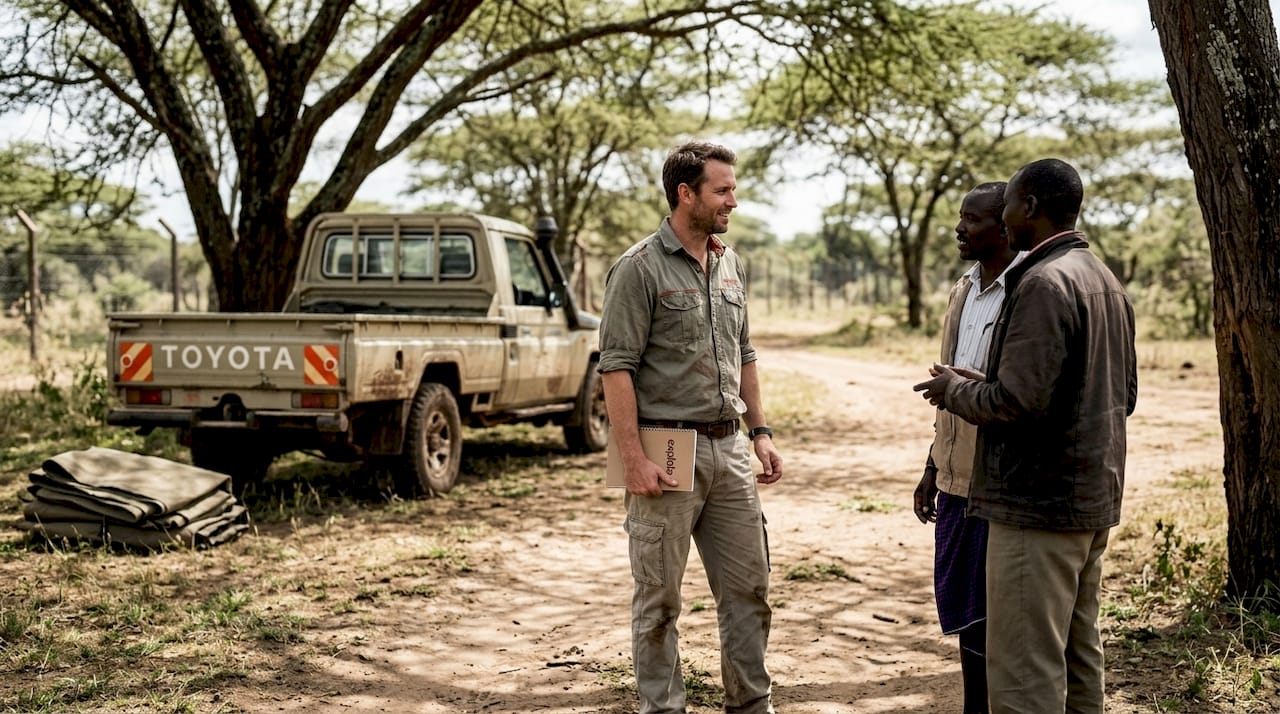
Establish a community liaison role. Hire or designate someone specifically responsible for maintaining community relationships. This person should be trusted by both your operation and local leaders.
Create transparent benefit agreements. Put revenue-sharing arrangements in writing. Specify amounts, payment schedules, and how funds will be managed. Involve community representatives in drafting these agreements.
Diversify community income sources. Support micro-enterprises, farming cooperatives, or craft businesses that give communities income streams independent of tourism. This reduces vulnerability and builds genuine goodwill.
Set up feedback loops. Hold quarterly community meetings where local people can raise concerns, report problems, and suggest improvements. Act visibly on what you hear.
Document and share your impact. Track employment numbers, revenue shared, and community projects completed. Share this data publicly on your website and in your booking materials.
Creative partnerships work. Some operators co-own campsites with community trusts. Others fund community ranger programs where local members receive professional training and a salary. These models create shared accountability that pure charity programs never achieve.
Pro Tip: Use your direct booking content to tell community stories. Content strategies for direct bookings that highlight real community partnerships consistently outperform generic wildlife photography in converting travelers who care about impact. Pair this with direct engagement models that let you communicate your values directly to travelers without a middleman filtering your message.
Why most safari operators get community engagement wrong
Here is the uncomfortable truth most industry guides will not tell you. The majority of community programs run by safari operators are designed for the operator’s marketing needs, not the community’s actual priorities. A freshly painted school with your logo on it photographs well. It does not necessarily address what the community said it needed.
Mixed perceptions persist because benefits are acknowledged but consistently reported as insufficient or unevenly distributed. That is not a funding problem. It is a design problem. Operators consult community leaders, who are often not representative of the broader population, and then implement programs that serve political relationships rather than real needs.
The fix is not spending more money. It is changing who holds the decision-making power. Operators who share governance, not just profits, with communities build relationships that survive staff changes, ownership transitions, and tourism downturns. Real responsible travel is built on structural partnership, not seasonal charity. If your community program would disappear the moment it stopped generating good press, it is not a partnership. It is a PR exercise.
Move from insight to action with Explola
If you have read this far, you already understand that community engagement is not a side project. It is central to building a safari business that travelers trust and return to.
Explola is built for operators who want to connect directly with travelers and communicate their real value, including the community partnerships that set them apart. When you work with Explola experts, you get a platform that eliminates the 25% commission middlemen, gives you full control of your operator profile, and provides AI-powered tools to help you tell your community story to the travelers who are actively searching for it. Launching Q2 2026, Explola is where operators who do things right get discovered.
Frequently asked questions
How do safari operators share benefits with local communities?
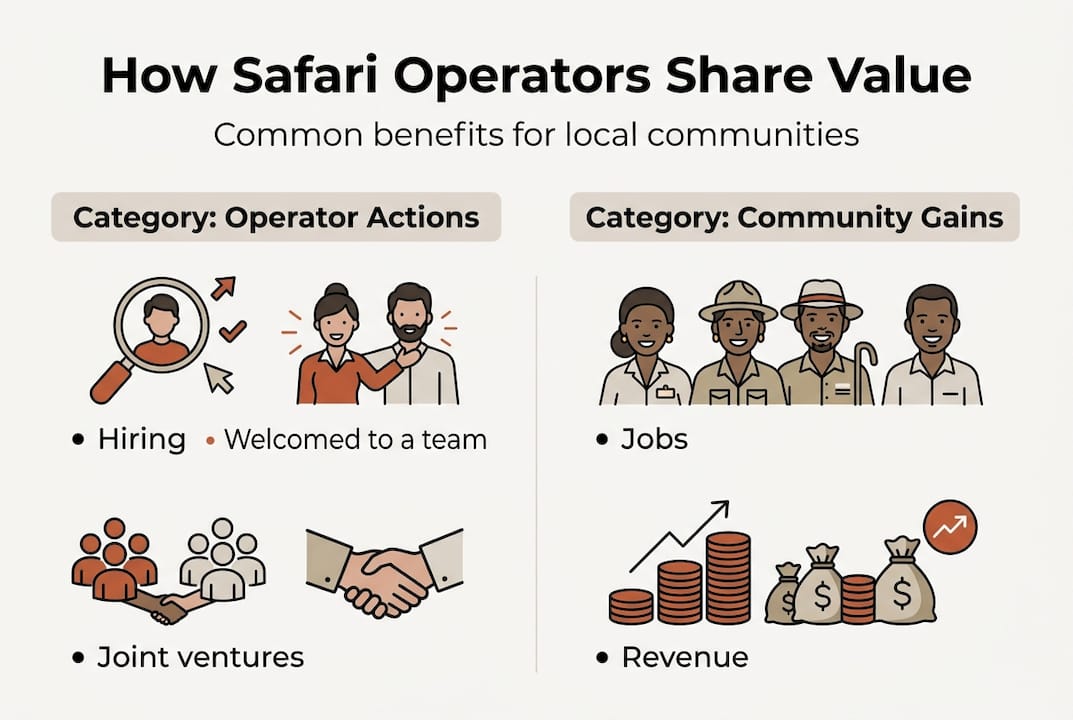
Operators typically share benefits through employment, conservancy fees, and joint ventures, but distribution is often uneven and highly context-dependent. The structure of the agreement matters as much as the amount shared.
What is the biggest risk in community-based tourism for safari operators?
Overreliance on tourism leaves both operators and communities exposed when downturns hit, making income diversification a critical part of any sustainable community model.
What steps can operators take to build stronger community partnerships?
Operators should prioritize transparent benefit agreements, shared governance, and regular feedback sessions. Genuine local empowerment requires giving communities real decision-making power, not just a share of revenue.
What are the main misconceptions about operator-community relationships?
Many assume all operators benefit local people equally, but impact varies widely by approach, region, and governance structure. Presence alone does not create positive community outcomes.
Recommended

Daniel writes for the Explola blog, where he covers African safari destinations, wildlife, travel trends, and practical trip planning. His work is centered on making safari travel easier to understand, compare, and plan.
Get Safari Tips & Destination Guides
Join our newsletter for exclusive travel tips, wildlife insights, and safari planning advice.